

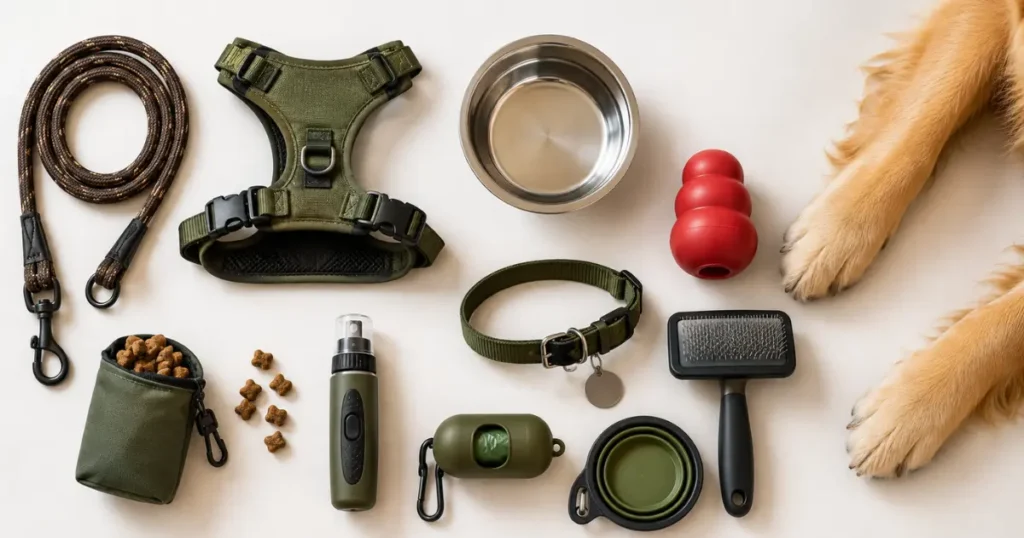
I spent $430 on dog products in my first month as a dog owner. More than half of it was wasted.
The $45 retractable leash? Replaced within a week because it taught my dog to pull harder.
The $60 plush bed? Destroyed in three days because it had zero structure.
The $25 plastic food bowls? Caused chin acne within two weeks.
The cute matching collar and leash set? Did not fit by month two.
The products I actually still use — two years later — cost a total of about $200. A front-clip harness. A wire crate with a divider. Stainless steel bowls. A KONG toy. A nail grinder. A first aid kit.
That is the gap this guide closes. Not a list of every product that exists — a list of the essential dog products that actually matter, organized by what you need them for, with links to our detailed reviews where we compare specific brands and models.
This guide is the hub. The detailed reviews are the deep dives. Start here, then follow the links to the specific product category you need.
Total budget: $200 to $400 covers every genuine need.
Skip anything “cute” that does not solve a real problem.
Walking and Training Gear — Where Most Owners Overspend
Walking gear is where most new owners waste money first — buying retractable leashes, back-clip harnesses, and decorative collars that look good on Instagram but fail on the sidewalk.
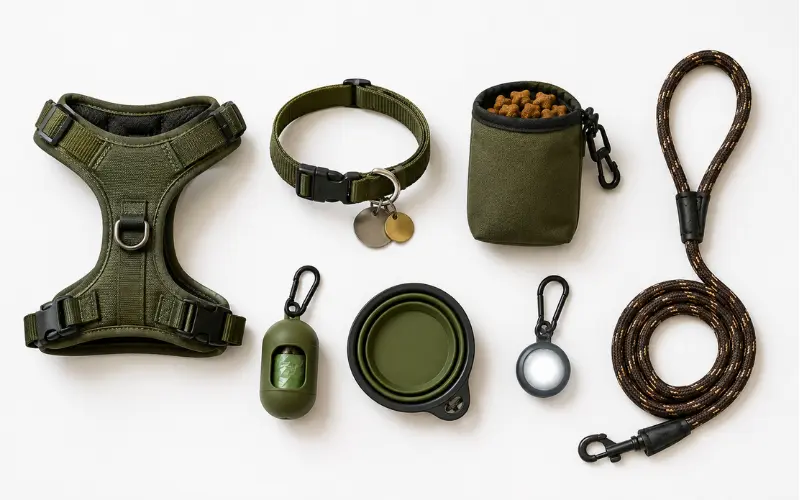
The three essential dog products for walking are a front-clip no-pull harness, a standard 6-foot fixed-length leash, and a flat collar with visible ID tags — retractable leashes and back-clip harnesses are the two most common purchases that actually make pulling behavior worse.
No-Pull Harness — The Single Most Important Walking Tool
A front-clip harness redirects your dog’s forward momentum back toward you when they pull.
Physics does the work — no pain, no choking, no corrections.
Every trainer and vet I have spoken to recommends front-clip over back-clip.
For our full comparison of 6 harnesses from $13 to $55, read our detailed guide on the best no pull dog harness.
GPS Tracker — Peace of Mind That Pays for Itself Once
A GPS tracker is essential dog products insurance.
You hope you never need it.
But if your dog ever gets loose — through a fence gap, an open door, a dropped leash — the difference between finding them in 3 minutes versus 11 hours is a $50 device.
For our comparison of 6 GPS trackers from $29 to $430 including 3-year cost analysis, read our guide on the best GPS dog collar tracker compared.
According to the American Kennel Club, essential supplies for any new dog include a properly fitted harness, a 6-foot leash, a collar with ID tags, and a plan for identification that includes microchipping alongside visible tags.
Home Setup — Crate, Bed, and Feeding Station
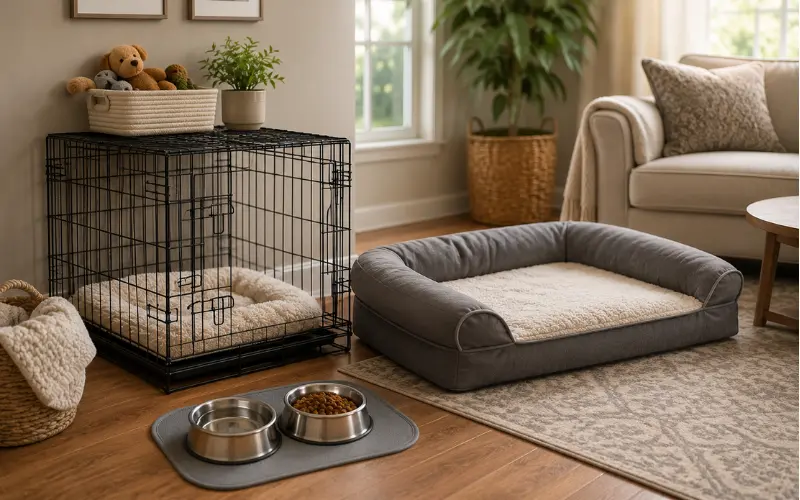
The home setup gets used 14+ hours every day — sleeping, eating, resting, and crate time.
Cheap products here cost more long-term because they compress, break, or cause health problems.
Dog Crate — The Tool That Does 3 Jobs at Once
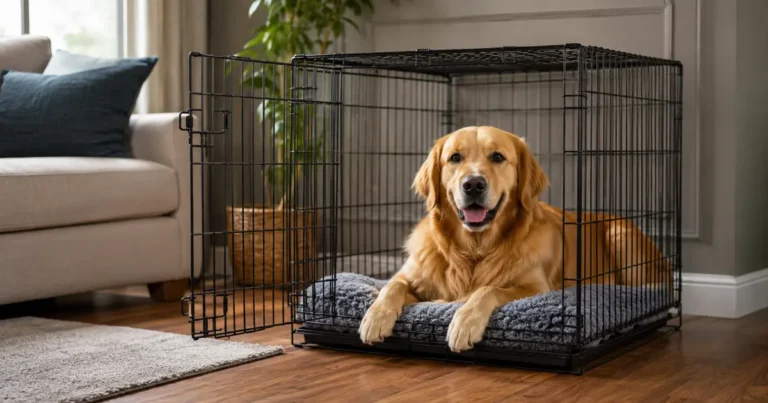
A properly sized crate is a potty training tool, a safe space, and a travel container.
One purchase replaces three separate products.
Buy the adult size with a divider panel — one crate for your dog’s entire life.
For our comparison of 6 crates from $45 to $600 including escape-proof options, read our guide on the best dog crate for large dogs.
Orthopedic Dog Bed — Not a Luxury
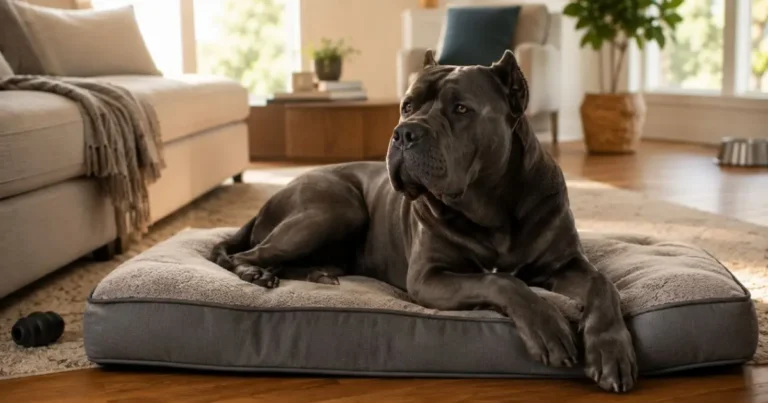
An orthopedic bed is not a luxury — it is joint protection.
Dogs spend 10 to 14 hours sleeping daily.
A compressed polyfill bed means their joints press against a hard surface for half their life.
Memory foam prevents this.
Dogs spend 10 to 14 hours per day sleeping — making the sleeping surface one of the highest-impact essential dog products for long-term joint health, with orthopedic memory foam beds distributing weight evenly and preventing the pressure point damage that causes arthritis in senior dogs.
For our comparison of 6 orthopedic beds from $35 to $280 including the only clinically studied option, read our guide on the best dog bed for senior dogs.
Automatic Feeder — Consistency You Cannot Match
An automatic feeder is not about being lazy.
It is about portion consistency.
The exact same amount, at the exact same time, every single day — regardless of whether you are home, stuck in traffic, or working late.
For our comparison of 6 feeders from $35 to $120 including WiFi and camera options, read our guide on the best automatic dog feeder for busy owners.
Toys and Enrichment — The Most Underrated Category
Most owners buy toys as entertainment.
That is backwards.
Toys are mental health tools.
Fifteen minutes of interactive puzzle toy engagement produces cognitive fatigue equivalent to roughly 30 minutes of physical exercise — making enrichment toys one of the most essential dog products for preventing the boredom-driven destructive behaviors that affect over 50 percent of under-stimulated dogs.
A bored dog chews furniture.
A mentally stimulated dog chews a frozen KONG.
The difference is a $15 investment and 10 minutes of daily setup.
The three types every dog needs:
- One stuffable toy: KONG Classic — freeze with peanut butter
- One puzzle board: Nina Ottosson — spinning compartments
- One foraging mat: snuffle mat — mealtime scent hunt
Rotate 2 to 3 toys every few days to maintain novelty.
For our comparison of 6 interactive toys from $12 to $22, read our guide on the best interactive dog toys to prevent boredom.
Grooming Tools — Save $500+ Per Year
Professional grooming costs $60 to $100 per session, every 6 weeks.
That is $500 to $900 per year.
A home grooming kit costs $30 to $140 once — and pays for itself after the first or second use.
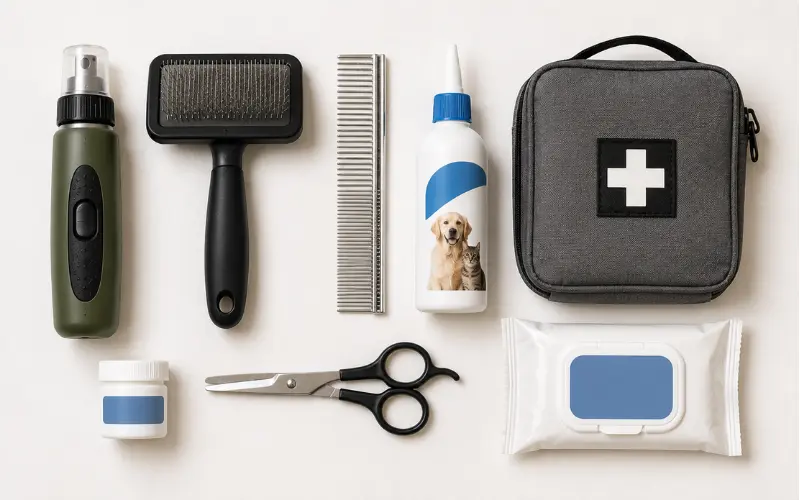
The essential dog products for home grooming:
- A grooming vacuum or clipper kit for coat maintenance
- A nail grinder, which is safer than clippers for beginners
- Grooming scissors with rounded tips for face, paws, and detail work
Home dog grooming with a $100 vacuum grooming kit saves $500 to $900 per year compared to professional grooming appointments every 6 weeks — with vacuum kits capturing 99 percent of loose hair during brushing to eliminate post-grooming cleanup.
For our comparison of 6 grooming kits from $15 to $140 including vacuum systems, read our guide on the best dog grooming kit for home use.
For the step-by-step grooming method that teaches you how to use these tools, read our guide on how to groom a dog at home step by step.
Health and Safety — The Products You Hope You Never Need
Safety products are the ones you buy hoping you never use — and the ones you are desperately grateful for the one time you do.
First Aid Kit
A cut paw pad at 8 PM with no gauze, no styptic powder, and no antiseptic — that is how most owners discover they need a first aid kit.
By then it is too late to build one calmly.
For our complete guide on building a first aid kit with 15 essential items, read our guide on dog first aid kit essentials.
Calming Treats
Storm anxiety, separation anxiety, vet visits, car rides — calming treats take the edge off enough for training and comfort to actually work.
For our comparison of 6 calming treats with honest ingredient breakdowns, read our guide on the best calming treats for anxious dogs.
According to the ASPCA, preparing for common emergencies and maintaining consistent daily care routines are the two most effective ways to protect your dog’s health long-term.
The Essential Dog Products Budget — What to Actually Spend
Here is honest budgeting — not the “$1,000 starter kit” lists that scare new owners into overspending or the “$50 total” lists that leave critical gaps.
The budget column covers every genuine need. The premium column is for owners who want the absolute best in every category. Most owners land somewhere in between — $350 to $500 total.
Everything else can wait a week.
Owners who buy everything at once before knowing their dog’s personality waste money on products that do not fit.
A crate and harness on day one, then add products as specific needs appear.
Products to Skip — Do Not Waste Money on These
Retractable leashes teach dogs to pull by rewarding forward movement with more line.
They are the number one product professional trainers wish did not exist.
Back-clip harnesses give dogs sled-dog leverage.
A $15 front-clip harness does the opposite — and costs less.
Plastic food bowls harbor bacteria in microscopic scratches and cause chin acne.
Stainless steel bowls cost the same and last forever.
Decorative matching sets look nice in photos and serve no functional purpose.
Buy products for function first.
Aesthetics are a bonus, not a priority.
Rawhide chews are a genuine choking hazard.
Bully sticks, frozen KONGs, and dental chews are safer alternatives that last longer and clean teeth.
The five most commonly wasted purchases by new dog owners are retractable leashes, back-clip harnesses, plastic food bowls, decorative accessory sets, and rawhide chews — all of which are either actively counterproductive or replaceable by cheaper, safer alternatives.
According to the AKC, one of the most important early investments is getting the right supplies before your dog comes home — choosing function over aesthetics and quality over quantity saves money and prevents behavioral setbacks.
If the answer is “no” or “it looks nice” — skip it.
This single filter eliminates 80% of impulse purchases that end up unused in a closet.
The Order to Buy — Priority Sequence
Not everything needs to arrive on day one.
This priority sequence prevents overwhelm and ensures you spend money on what matters first.
- Week 1 — essentials only: Crate with divider, front-clip harness, 6-foot leash, collar with ID tags, stainless steel bowls. Total: $100 to $150.
- Week 2 — enrichment: One stuffable toy, KONG Classic, one puzzle toy. Total: $25 to $35.
- Week 3 — grooming basics: Nail grinder, slicker brush. Total: $25 to $40.
- Month 2 — upgrades as needs appear: Orthopedic bed if current bedding is inadequate, automatic feeder if schedule is inconsistent, GPS tracker if escape risk exists. Total: varies.
- Month 3+ — specialized: Calming treats if anxiety appears, grooming vacuum if shedding is heavy, first aid kit should have already, but better late than never. Total: varies.
Dogs with specific medical conditions, breed-specific needs, or behavioral issues may require specialized products.
Always consult your veterinarian for recommendations related to conditions such as arthritis, allergies, or chronic pain.
Product recommendations are based on personal use, published reviews, and professional endorsements.
Every dog is different — what works for one may not work for another.
Frequently Asked Questions (FAQ)
What products does a new dog owner need first?
The five immediate essential dog products are a front-clip no-pull harness, a 6-foot fixed leash, a wire crate with divider panel, stainless steel food and water bowls, and a collar with visible ID tags.u003cbru003eThese cover the most critical first-week needs — walking, potty training, feeding, and identification.u003cbru003eTotal cost: $100 to $150.
How much should I spend on dog supplies?
A complete set of genuine essential dog products costs $250 to $500 depending on whether you choose budget or premium options.u003cbru003eThe budget path covers every real need for approximately $260.u003cbru003eAvoid u0022$1,000 starter kitu0022 lists that include unnecessary products — most new owners overspend on decorative items and under-spend on functional ones.
What dog products are a waste of money?
Retractable leashes teach pulling, back-clip harnesses give dogs pulling leverage, plastic food bowls cause chin acne, decorative matching sets have no function, and rawhide chews are a choking hazard.u003cbru003eThese are the five most commonly wasted purchases.u003cbru003eEach has a cheaper, safer, more effective alternative.
Should I buy a crate or a dog bed first?
Buy the crate first.u003cbru003eA crate serves as a potty training tool, a safe space, and a travel container — three functions in one product.u003cbru003eAn orthopedic bed is important, but it is secondary to the crate during the first month.u003cbru003ePlace a washable crate pad inside the crate initially, then add a standalone bed when potty training is established.
What is the best harness for a dog that pulls?
A front-clip no-pull harness like the PetSafe Easy Walk ($15) is the most effective single product for reducing pulling.u003cbru003eThe front chest attachment redirects your dog’s forward momentum back toward you.u003cbru003eBack-clip harnesses give dogs sled-dog leverage and worsen pulling.u003cbru003eFor our full comparison of 6 harnesses, read our best no-pull dog harness guide.
Do I need a GPS tracker for my dog?
If your dog has any escape risk — a yard without perfect fencing, a tendency to bolt through doors, or you walk in areas where a dropped leash means a lost dog — a GPS tracker is one of the most valuable essential dog products you can buy.u003cbru003eThe Tractive DOG 6 costs $50 plus $5 to $8 per month and provides live tracking every 2 to 3 seconds.
Are automatic dog feeders worth buying?
Yes — for any owner with an inconsistent schedule.u003cbru003eAutomatic feeders dispense the same portion at the same time every day, eliminating the overfeeding inconsistency that contributes to the 50% obesity rate in US dogs.u003cbru003eA basic timed feeder costs $35.u003cbru003eA WiFi smart feeder with app control costs $100.
What grooming tools does every dog owner need?
The three baseline grooming tools are a slicker brush for regular brushing, a nail grinder that is safer than clippers for beginners, and grooming scissors with rounded tips for face and paw detail work.u003cbru003eFor heavy shedders, add a grooming vacuum kit.u003cbru003eFor the full comparison, read our best dog grooming kit guide.
$430 Down to $200 — Final Thoughts
Four hundred and thirty dollars in my first month.
More than half of it wasted on products I replaced, returned, or threw away.
The essential dog products that survived two years of daily use cost $200 total.
A front-clip harness.
A wire crate.
Stainless steel bowls.
A KONG.
A nail grinder.
A first aid kit.
Every detailed review linked in this guide compares 6 specific products in that category — with honest pros, cons, pricing, and “who should skip it” for each one.
Start with the categories that solve your most immediate problem:
- Your dog pulls on walks → best no pull dog harness
- You need a crate for training → best dog crate for large dogs
- Your senior dog needs joint support → best dog bed for senior dogs
- Your dog is bored and destructive → best interactive dog toys
- You worry about losing your dog → best GPS dog collar tracker
- You want to groom at home → best dog grooming kit
- Your dog has anxiety → best calming treats for anxious dogs
- You need consistent feeding → best automatic dog feeder
Three things to take with you:
- Function first, aesthetics second. Every dollar spent on a product that looks nice but does not solve a problem is a dollar that could have bought something your dog actually needs.
- Buy crate and harness on day one. Everything else can wait until you know your specific dog’s needs. One week of observation tells you more than any product list ever will.
- Quality in 6 categories beats quantity across 20. Six well-chosen essential dog products that you use daily are worth more than 20 impulse purchases that collect dust.
- Supplements are optional, not essential. If you’re considering adding one, our UltraK9 Pro review walks through what to actually check before buying.
For the complete approach to caring for your dog beyond products — training, nutrition, health, and grooming — start with our guide on how to take care of a puppy for the first time.


Pingback: Best Dog Dental Chews — VOHC-Verified Picks for 2026
Pingback: Oral vs Topical Flea and Tick Prevention for Dogs: 99.9% vs 88.4% Effective