


Learning how to take care of a puppy for the first time can feel overwhelming once the excitement wears off and the questions start flooding in.
What do I feed them?
How much?
Where do they sleep?
What if they cry all night?
Am I already doing something wrong?
If your pup is anything like most, they walked through your door looking adorable and immediately made you question everything you thought you knew.
Don’t worry — that’s completely normal.
Every single first-time dog owner has been exactly where you are.
Here’s the thing: knowing how to take care of a puppy for the first time isn’t complicated — but it does require a solid plan.
And that’s exactly what this guide gives you.
From feeding schedules and sleep routines to potty training and vet visits, you’ll find everything you need to feel confident and ready starting from day one.
Most puppies adjust to their new home within 2 to 4 weeks with a consistent daily routine.
What to Set Up Before Your Puppy Comes Home
The best thing you can do as a first-time puppy owner is prepare before your pup even walks through the door.
Scrambling to find a food bowl at 10 pm on night one? Not fun. Trust me.
Puppies need a crate, food and water bowls, an enzymatic cleaner, and a vet appointment booked within 72 hours before coming home.
Here’s What You Need Ready in Advance
Set up these essential supplies before your new puppy arrives so their first night is comfortable, safe, and stress-free.
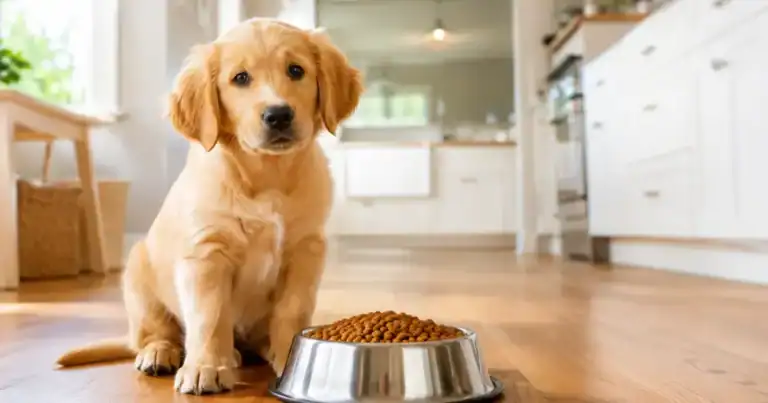
🥣 Food and Water Bowls
Must-Have- Go with stainless steel: They’re easier to clean and don’t harbor bacteria the way plastic ones do.
- Have them set up in a consistent spot before your puppy’s arrival.
🍗 The Right Puppy Food
Breeder First- Ask the breeder or shelter what exact brand your puppy has been eating.
- Stick with the exact same food for at least the first week. Switching cold turkey is a fast way to upset their stomach.
- The last thing you want on night one is a sick puppy.
🏠 A Crate & Cozy Pad
Top Investment- This is one of the best investments you’ll make as a new dog owner.
- A crate gives your puppy a safe, den-like space and makes potty training dramatically easier.
- Add a soft pad or blanket inside to make it cozy for sleep.
🐾 Collar, ID Tag, and Leash
Safety Essential- Get the collar and ID tag on before anything else — even before they’re microchipped.
- Include your phone number on the tag: Puppies are fast and curious, and accidents happen.
- Pair it with a 6-foot leash for all bathroom trips outside.
🧼 Enzymatic Cleaner
Odor Eliminator- Nature’s Miracle is the gold standard: Regular household cleaners don’t fully break down accident scents.
- Without an enzymatic cleaner, your puppy will keep going back to the same spot.
- Enzymatic cleaner eliminates the smell completely.
🧻 Puppy Training Pee Pads
Potty Backup- Helpful as a backup protection layer, especially if you live in an apartment.
- Great for long hauls when getting outside quickly isn’t immediately possible.
Place it in the crate on night one. That familiar scent reduces first-night anxiety dramatically — it’s a small thing that makes a big difference.
Your Puppy’s First 24 Hours — What to Actually Expect
Let’s set realistic expectations: the first 24 hours can feel chaotic.
Your puppy might cry, refuse to eat, hide under furniture, or just look completely lost.
This is totally normal and expected.
Think about it from their perspective.
They’ve just left their mom, their littermates, and every familiar smell they’ve ever known.
Everything in your home is new and overwhelming.
Your job right now isn’t to entertain them — it’s to make them feel safe.
Here’s what to do step by step in the first 24 hours
1. Take them outside immediately. Before they even step inside your home, take them straight to the spot where you want them to go to the bathroom. Most puppies will go right away because of the stress and car ride. This is how potty training starts — on the very first minute.
2. Keep the house calm. No big welcome parties, no kids running around screaming with excitement, no strangers crowding them. Give your puppy time to breathe and adjust quietly.
3. Show them their space. Their crate, their water bowl, where they’ll sleep. Keep it consistent so they start building a mental map of their new home.
4. Let them explore at their own pace. Don’t force cuddles or pick them up constantly. Sit on the floor and let them come to you. This builds trust faster than anything else.
5. Feed them at the same time you plan to always feed them. Routine starts on day one, not day three.
What About the First Night?
If your puppy cries in the crate that first night — and there’s a good chance they will — resist the urge to immediately pull them out. A short whimper period is normal. Picking them up every time they cry teaches them that crying gets results. Instead, try placing the crate right next to your bed so they can smell and hear you. That alone makes a huge difference.
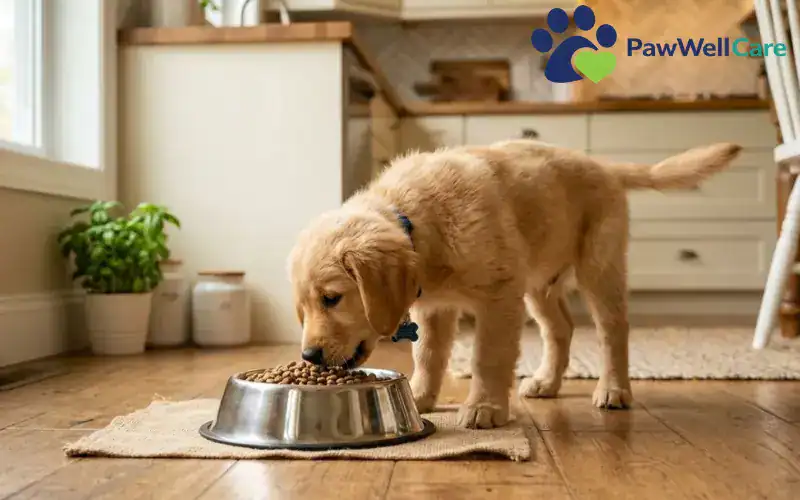
How to Take Care of a Puppy – Feeding the Right Way
When learning how to take care of a puppy for the first time, feeding is where most owners get confused. Feeding is one of the most common areas where new puppy owners get confused. Here’s a simple, clear breakdown so you never have to guess.
An 8-week-old puppy needs 4 meals a day — at 7 am, 12 pm, 5 pm, and 9 pm — with portions based on the food bag guide for their current weight.
For a complete age-by-age breakdown, read our puppy feeding schedule by age.
How much to feed:
Every bag of quality puppy food has a feeding guide printed on the back based on your dog’s current weight. Start there. As a general reference, most small breed puppies at 8 weeks eat around 1/4 cup per meal. Larger breeds eat more. Always follow the package guide and confirm with your vet at your first visit.
What to look for in puppy food:
Choose puppy-specific food — not adult dog food. Puppies have completely different nutritional needs. Look for a real protein source like chicken, beef, or salmon listed as the first ingredient. Avoid foods with corn syrup, artificial dyes, or vague fillers like “meat by-products” near the top of the ingredient list.
According to the American Kennel Club, puppies need significantly more calories, protein, and fat per pound of body weight than adult dogs — so skipping puppy-specific food is a mistake that can affect their growth.
Fresh water: Always available. Change it at least twice a day. Puppies dehydrate faster than you’d expect.
For the complete weaning process, read our guide on when do puppies start eating solid food.
Scheduled meals = fewer accidents.
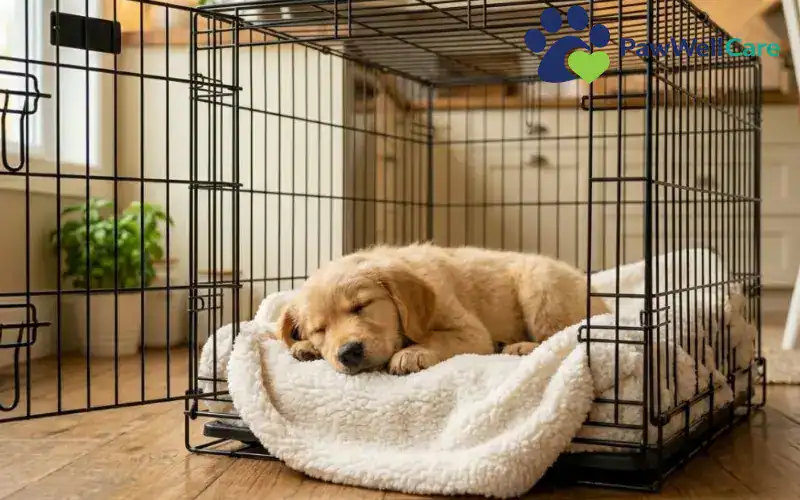
Puppy Sleep — How Much Is Normal and How to Handle It
If your puppy seems to sleep constantly, you’re not imagining things. Puppies sleep between 16 and 20 hours a day. That’s completely normal and critical for their brain and body development. Don’t try to keep them awake to play more — let them rest.
What a typical puppy day looks like:
- Short energy burst of 15 to 30 minutes
- Long nap of 1 to 2 hours
- Repeat throughout the day
Using the crate for sleep:
🏠 Use the Crate for Sleep Training
The crate is your single best tool for sleep training.
Puppies naturally don’t want to soil the place where they sleep, which is exactly why crates are so powerful for potty training at the same time.
Use the crate for:
- All naps
- Nighttime sleep
- Starting from day one
🌙 What to Expect at 8 Weeks
At 8 weeks old, most puppies can only hold their bladder for about 2 to 3 hours overnight.
That means:
- Expect at least one middle-of-the-night bathroom run for the first few weeks.
- Set an alarm so you don’t miss it.
- Remember, it’s temporary and worth it.
💤 When Will Your Puppy Sleep Through the Night?
By around 3 to 4 months old, most puppies can sleep through the night without a trip outside.
Hang in there — it gets better fast.
For a complete breakdown of what a healthy puppy sleep routine looks like week by week, check out our puppy sleep schedule guide for the first week at home — it covers exactly what to expect each night and how to make the transition smoother.

How to Start Potty Training on Day One
This is the part that stresses most new owners out, but it’s actually straightforward when you follow a consistent process.
Step 1: Pick one bathroom spot and stick to it.
Choose a specific area outside — or a specific spot if you’re in an apartment. Always take your puppy to the same location. The familiar smell from previous trips triggers them to go faster.
Step 2: Know exactly when to take them outside.
Take your puppy out-
- First thing in the morning, immediately
- Within 10 minutes after every meal
- After every nap
- After playtime
- Every 2 hours during the day
- Right before bed
Step 3: Use a cue word every single time.
As they’re going, say “go potty” or “outside” in a calm, consistent voice. Over time they’ll associate the words with the action and eventually go on command. This becomes incredibly useful later.
Step 4: Reward the moment they finish.
Not when you walk back inside. Not a minute later. The second they finish, give enthusiastic praise and a small treat. The reward needs to happen within 3 seconds of the behavior for your puppy to make the connection.
Step 5: Never punish accidents.
If you find an old accident, just clean it up. Rubbing their nose in it or scolding them accomplishes nothing except making them afraid of you. If you catch them mid-accident, a calm firm “ah-ah” and immediate trip outside is all you need.
For a deeper walkthrough of this whole process, read our full guide on how to potty train a puppy fast at home it includes a daily schedule and tips for apartment owners too.
Puppy-Proofing Your Home — What Most New Owners Miss
Puppies are essentially tiny toddlers who chew everything and have no concept of danger. Before they have full access to your home, do a proper safety sweep.
Hazards to remove or secure:
- Electrical cords — tape them to baseboards or use cord covers.
- Toxic houseplants — lilies, pothos, philodendron, and aloe are all toxic to dogs. Check the ASPCA‘s full toxic plant list before assuming any plant is safe.
- Cleaning products and medications — move everything to high shelves or locked cabinets.
- Small objects — coins, hair ties, kids’ toys, and rubber bands are all choking hazards.
- Trash cans — get ones with lids or move them inside lower cabinets.
- Stairs — use a baby gate until your puppy has better coordination, usually around 12 weeks.
Limit their space at first.
Don’t give your puppy access to your entire home right away. Use baby gates to keep them in one or two rooms. Expand their freedom as they earn it through good potty habits and better behavior. Too much space too soon leads to accidents in corners you won’t find for hours.
Vet Visits and Vaccinations — What You Need to Know
Your puppy’s first vet visit should happen within 72 hours of bringing them home, even if they seem perfectly healthy. This sets a baseline and catches anything the breeder or shelter might have missed.
What to bring to the first vet appointment:
- Any health records from the breeder or shelter.
- A small stool sample in a sealed bag — yes, really. They’ll check for parasites.
- A list of questions you want to ask.
Standard Puppy Vaccination Schedule
According to the American Veterinary Medical Association, core vaccines are essential for all puppies regardless of lifestyle or living situation. Your vet will also recommend flea and tick prevention plus heartworm prevention — both are critical in the US.
For a full vaccine timeline, read our dog vaccination schedule for puppies USA.
Socialization — The Step Most First-Time Owners Skip
Here’s something a lot of new puppy owners don’t realize until it’s too late: the window for socializing your puppy closes fast.
Between 3 and 14 weeks old, your puppy’s brain is in a critical developmental period. Whatever they experience during this window — or don’t experience — shapes how they respond to the world for the rest of their life. Dogs that miss this window often grow up fearful, reactive, or anxious around anything unfamiliar.
The puppy socialization window closes at approximately 16 weeks of age — the most important developmental period in a dog’s life.
What Socialization Actually Means
Socialization isn’t just meeting other dogs. It means positive exposure to as many different things as possible:
People of all types — men, women, children, people wearing hats, glasses, or uniforms
Sounds — traffic, vacuum cleaners, thunderstorms, doorbells, babies crying
Surfaces — grass, gravel, tile, hardwood, stairs, wet pavement
Environments — pet stores, parking lots, parks, busy sidewalks
Situations — car rides, vet offices, elevators, crowds
How to do it safely before vaccines are complete:
You can’t take your puppy to dog parks before they’re fully vaccinated, which is usually around 16 weeks. But you can carry them in your arms at pet-friendly stores, invite vaccinated friendly dogs to your home, enroll in a puppy socialization class that requires at least one round of vaccines, and take car rides to let them observe the world from inside the vehicle.
The AKC recommends beginning socialization as early as 7 to 8 weeks, even while the vaccine series is still in progress. Talk to your vet about the best approach for your specific area.
For the complete week by week plan, read our puppy socialization checklist by age and For the specific issue of biting, read our complete guide on how to handle puppy biting and nipping.
Common Mistakes First-Time Puppy Owners Make
Even the most loving new owners make these — knowing them ahead of time saves you a lot of stress.
Too many visitors on day one
Your puppy just arrived in a completely foreign environment. A house full of excited people is overwhelming, not welcoming.
Skipping the crate
Many new owners skip the crate because it feels cruel. It isn’t. Dogs are den animals. A properly introduced crate becomes their favorite safe space — and it’s the number one tool for potty training success.
Inconsistent rules
This one ruins more training efforts than anything else. If the puppy isn’t allowed on the couch, every single person in the household has to enforce that rule, every single time. Mixed messages create a confused and eventually misbehaved dog.
Overstimulating them
An overtired puppy doesn’t just fall asleep — they get hyper, mouthy, and difficult. Watch for signs of tiredness like yawning, losing interest in play, or getting nippy. Put them in the crate for a nap before it escalates.
Punishing accidents
Accidents are your fault, not theirs. If they had an accident, you either missed a cue or waited too long. Clean it up, move on, and take them out more frequently
Frequently Asked Questions (FAQ)
How long does it take for a puppy to adjust to a new home?
Most puppies start feeling comfortable within 3 to 7 days, but the full adjustment period is typically 2 to 4 weeks. During this time they might eat less, sleep more than usual, or cry at night. Keep their routine consistent, give them space to decompress, and they’ll settle in faster than you’d expect.
What should a puppy’s first week at home look like?
The first week should be calm, consistent, and low-stress. Focus on establishing a feeding routine, a sleep schedule, and regular bathroom breaks. Limit big changes and extra visitors. Start crate training and basic potty training from day one — the earlier you start, the faster it clicks.
How do I know if my puppy is sick?
Watch for loss of appetite lasting more than 24 hours, vomiting or diarrhea more than twice, unusual lethargy, coughing, sneezing, discharge from the eyes or nose, or a bloated belly. Any of these symptoms in a young puppy warrants a call to your vet right away. Puppies can go downhill quickly — when in doubt, call.
Is it okay to leave a puppy alone during the day?
Puppies under 3 months shouldn’t be left alone for more than 2 to 3 hours at a time. As they grow, this increases — most 6-month-old puppies can handle 4 to 5 hours. If you work full time, consider a dog walker, puppy daycare, or a neighbor to check in during those early months.
When should a puppy start basic training?
Right now. Training starts the moment your puppy comes home. Simple commands like sit, stay, and come can begin at 8 weeks old. Keep sessions short — 5 to 10 minutes maximum — and always end on a positive note. Positive reinforcement only: treats, praise, and play.
How often does a puppy need a bath?
Most puppies only need a bath every 4 to 6 weeks unless they get into something messy. Use a gentle puppy shampoo and make sure to dry them completely, especially in cooler weather. Bathing too frequently strips the natural oils from their coat and can cause dry, itchy skin.
What’s the biggest mistake first-time puppy owners make?
Inconsistency, without question. Pick your rules on day one and stick to them as a team. If the puppy isn’t allowed on the furniture, everyone enforces that — always. If the crate is for sleeping, use it consistently. Puppies thrive on predictability. The more consistent you are, the faster they learn, and the easier everything gets.
Always monitor your puppy closely when trying anything new. If you notice any unusual symptoms or behaviors, consult your veterinarian immediately.
Wrapping It Up
Knowing how to take care of a puppy for the first time gets easier every day once you build a consistent routine and start understanding your puppy’s needs better.
Taking care of a puppy for the first time may feel overwhelming at first, but with proper training, good nutrition, regular vet care, and a little patience, you’ll settle into it faster than you think.
Here are your three big takeaways:
1. Prepare before they arrive — crate, food, vet appointment booked. Don’t wing it.
2. Routine is everything — consistent feeding times, bathroom breaks, and sleep schedules make your puppy feel safe and speed up training.
3. Socialization is urgent — that window between 3 and 14 weeks is short. Use it while you have it.
You’ve got this. Every new dog owner figures it out — and so will you.
Want to go deeper on what comes next? Check out our complete guide on bringing home a new puppy — the first day checklist for a step-by-step breakdown of exactly what to do hour by hour on day one.

Pingback: Best Dog Dental Chews — VOHC-Verified Picks for 2026
Pingback: Complete Guide to Keeping Your Dog Healthy and Happy — Prevention First
Pingback: How Long Can You Leave a Puppy Alone? Age Chart (2026)
Pingback: Dog Dental Disease: Complete Guide (Why 80% of Dogs Get It by Age 3)