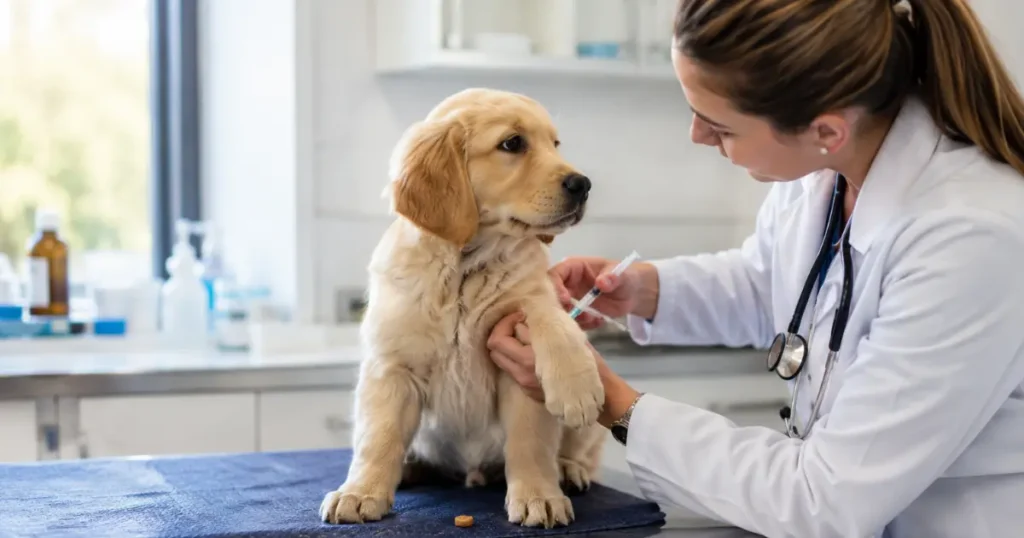
My puppy’s first vet visit lasted twelve minutes and cost me $280.
I walked in with a list of zero questions.
I walked out with a puppy who had received two injections I could not name, a sheet of paper with dates I immediately lost, and a vague understanding that I needed to “come back in three weeks for the next round.”
I did not know what vaccines he had received.
I did not know why he needed more.
I did not know which ones were required by law and which ones were optional.
I did not know how much the full series would cost by the time we were done.
And I definitely did not know that missing even one appointment in the vaccination sequence could leave him vulnerable to diseases that kill puppies within days.
That was the moment I realized I needed to understand the dog vaccination schedule — not just follow it blindly.
Understanding what each vaccine does, when it is given, and why the timing matters turned me from a confused owner handing over a credit card into someone who could actually participate in my dog’s health decisions.
This guide gives you the complete dog vaccination schedule for puppies and adult dogs in the United States.
Core vaccines, non-core vaccines, the week-by-week timeline, costs, side effects, and the answers to every question I wish I had asked during that first $280 visit.
After the puppy series, adult dogs need DHPP boosters every 1 to 3 years and rabies boosters every 1 to 3 years depending on state law.
Total first-year vaccination cost: $150 to $350.
Core vs Non-Core — What the Terms Actually Mean
Every conversation about the dog vaccination schedule starts with this distinction — and most owners do not learn it until their third or fourth vet visit.
Core vaccines are recommended for every dog regardless of breed, location, or lifestyle — they protect against diseases that are widespread, highly contagious, or fatal, and include distemper, parvovirus, adenovirus (hepatitis), parainfluenza, and rabies.
Core vaccines protect against diseases that are so dangerous, so contagious, or so widespread that every dog in the United States needs them.
No exceptions.
No “my dog stays indoors” exemption.
These diseases kill unvaccinated dogs — and some of them, like rabies, are required by law in every state.
Non-core vaccines protect against diseases that only some dogs are at risk for — based on where they live, what they do, and what environments they frequent.
A dog that goes to daycare every week has different non-core vaccine needs than a dog that never leaves the house.
Your vet determines which non-core vaccines your specific dog needs based on their lifestyle, your geographic location, and the disease risks in your area.
This is not a one-size-fits-all decision.
According to the American Veterinary Medical Association, core vaccines are recommended for all dogs and cats unless there is a specific medical reason not to vaccinate — while non-core vaccines are recommended based on individual risk factors including lifestyle and geographic location.
The Core Vaccines — Every Dog Needs These
These are the vaccines that appear on every dog vaccination schedule in the United States.
No negotiation.
DHPP (Distemper, Hepatitis, Parainfluenza, Parvovirus)
This combination vaccine — sometimes called the “5-in-1” or “DA2PP” — is the backbone of puppy vaccination.
It protects against four separate diseases in a single injection.
Distemper attacks the respiratory, gastrointestinal, and nervous systems.
Mortality rate in unvaccinated puppies: 50% or higher.
Survivors often have permanent neurological damage.
Parvovirus is the disease that terrifies every puppy owner for good reason.
It attacks the intestinal lining, causing severe bloody diarrhea, vomiting, and dehydration.
Mortality in unvaccinated puppies without treatment: up to 90%.
Treatment costs: $2,000 to $5,000 for hospitalization.
The vaccine costs about $25.
Adenovirus (Hepatitis) causes liver inflammation and can progress rapidly from mild illness to fatal liver failure.
Parainfluenza is a respiratory virus that contributes to kennel cough — highly contagious in environments where dogs gather.
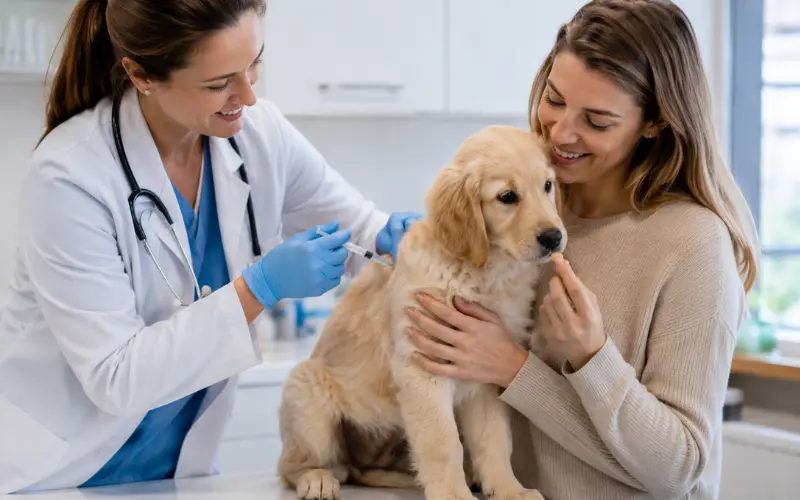
The DHPP combination vaccine protects puppies against four potentially fatal diseases — distemper, hepatitis, parainfluenza, and parvovirus — and is administered in a series of 3 to 4 doses starting at 6 to 8 weeks of age, spaced 3 to 4 weeks apart, with the final dose given at 16 weeks or older.
Rabies
Rabies is the only vaccine required by law in every state in the United States.
It is fatal in 100% of unvaccinated animals and humans once symptoms appear — there is no treatment and no cure after clinical signs develop.
First dose: 12 to 16 weeks of age.
Booster: 1 year later.
After that: every 1 to 3 years depending on your state’s law and the vaccine used.
You cannot board your dog, cross state lines with your dog, or license your dog without proof of current rabies vaccination.
According to the American Kennel Club, the cost of the full puppy vaccination series depends on geographic location — veterinarians in urban areas generally charge more — but low-cost rabies clinics sponsored by local governments are available in many areas.
Leptospirosis — Recently Added to Core
In 2024, the American College of Veterinary Internal Medicine updated its recommendations to include leptospirosis as a core vaccine for all dogs.
Previously considered non-core, rising infection rates across the United States prompted this change.
Leptospirosis is a bacterial infection spread through contaminated water and soil — particularly from the urine of infected wildlife like raccoons, rats, and deer.
It causes kidney and liver failure in dogs and is zoonotic — meaning it can spread from dogs to humans.
Initial series: 2 doses spaced 4 weeks apart, starting at 12 weeks of age.
Boosters: annually.
Non-Core Vaccines — Based on Your Dog’s Lifestyle
These vaccines are not for every dog — they are for dogs whose lifestyle puts them at specific risk.
Your vet recommends these based on your dog’s exposure patterns.
Bordetella (Kennel Cough)
Recommended for dogs that visit boarding facilities, daycare, grooming salons, dog parks, or training classes — any environment where dogs gather in close proximity.
Most boarding facilities require current Bordetella vaccination before accepting your dog.
Boosters are needed every 6 to 12 months depending on the vaccine type.
Canine Influenza (H3N2 and H3N8)
Recommended for dogs in areas with active canine influenza outbreaks and dogs that attend social gatherings, shows, or boarding.
Initial series: 2 doses spaced 2 to 4 weeks apart.
Annual boosters.
Some boarding and daycare facilities now require this vaccine.
Lyme Disease
Recommended for dogs in areas with high tick populations — particularly the Northeast, upper Midwest, and Pacific coast regions.
Initial series: 2 doses spaced 2 to 4 weeks apart.
Annual boosters.
Not all vets recommend this vaccine even in endemic areas — discuss your specific situation with your vet.
Canine Coronavirus
Not commonly recommended.
Most infections are mild and self-limiting.
This is not the same virus as the human coronavirus.
According to the AKC, not all dogs need every available vaccine — the decision about non-core vaccines should be made between you and your veterinarian based on your specific dog’s lifestyle, geographic location, and individual risk factors.
The Complete Dog Vaccination Schedule — Week by Week
This is the standard dog vaccination schedule used by most veterinary practices across the United States.
Your vet may adjust timing based on your puppy’s individual needs.
The standard puppy vaccination series requires 3 to 4 vet visits between 6 and 16 weeks of age, spaced 3 to 4 weeks apart — with the final DHPP dose at 16 weeks being the most critical because maternal antibodies have fully faded by this age and the puppy’s own immune system must take over protection entirely.
Why the Timing Matters — Maternal Antibodies
Puppies are born with antibodies from their mother’s milk that provide temporary immunity.
But these maternal antibodies fade gradually between 6 and 16 weeks — and while they are present, they can actually interfere with vaccine effectiveness.
This is why puppies need multiple doses.
The series of 3 to 4 DHPP shots is not because one dose is not strong enough.
It is because veterinarians cannot know exactly when maternal antibodies will fade enough for the vaccine to work.
By giving multiple doses across the 6 to 16 week window, at least one dose will hit the sweet spot where maternal antibodies have faded but the puppy has not yet been exposed to disease.
The final dose at 16 weeks or older is the most critical.
By 16 weeks, maternal antibodies have nearly always faded completely — making this the dose that reliably produces lasting immunity.
For the complete first-week puppy care guide including scheduling that first vet visit, read our guide on how to take care of a puppy for the first time.

Socialization Before Full Vaccination — The Balancing Act
Here is the dilemma every new puppy owner faces: the critical socialization window closes at around 14 to 16 weeks — the same time the vaccination series is completing.
Wait until full vaccination to socialize, and you miss the most important developmental window for reducing fear and behavioral problems.
Socialize before full vaccination, and you expose your puppy to potential disease in high-risk environments.
The solution is controlled socialization in low-risk environments:
Safe During the Vaccination Series
- Homes of fully vaccinated dogs
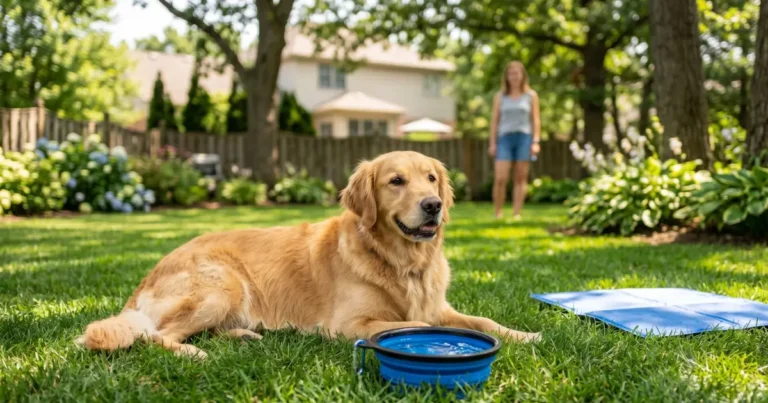
- Your own yard
- Car rides
- Carrying your puppy through stores (not walking on floors)
- Puppy socialization classes that require vaccination proof and clean environments
Not Safe Until Fully Vaccinated
- Dog parks
- Pet stores (walking on floors)
- High-traffic sidewalks
- Areas where unvaccinated or unknown dogs frequent
For the complete socialization approach that balances safety with developmental needs, read our puppy socialization checklist by age.
These controlled environments give your puppy critical social exposure while minimizing disease risk during the vaccination window.
Adult and Senior Dog Vaccination Schedule
The puppy series gets the most attention, but the dog vaccination schedule does not end at 16 weeks.
Adult dogs need ongoing boosters to maintain immunity.
Adult Dogs (1 to 7 years)
- DHPP booster: every 1 to 3 years. The AAHA (American Animal Hospital Association) recommends boosters every 3 years after the initial adult booster, but some vets prefer annual boosters. Discuss with your vet.
- Rabies booster: every 1 to 3 years depending on state law and the specific vaccine used. The 1-year vaccine is most common for the first adult booster, followed by 3-year vaccines for subsequent boosters.
- Leptospirosis: annually. Unlike DHPP, leptospirosis immunity does not last 3 years — annual boosters are necessary.
- Bordetella: every 6 to 12 months if your dog attends boarding, daycare, or group activities.
- Canine Influenza: annually if recommended for your dog.
Senior Dogs (7+ Years)
Senior dogs still need vaccination — but the conversation with your vet may change.
Some vets recommend titer testing for senior dogs instead of automatic boosters.
A titer test measures the antibody levels in your dog’s blood to determine whether they still have protective immunity from previous vaccines.
If antibody levels are adequate, the booster may not be needed.
Titer testing does not replace the rabies vaccine — rabies vaccination is required by law regardless of titer results.
Annual wellness exams become more important for senior dogs — not just for vaccination, but for blood work, organ function screening, and early detection of conditions like kidney disease, thyroid disorders, and cancer.
For the complete approach to senior dog health monitoring, read our guide on keeping your dog healthy and happy.
How Much Do Dog Vaccinations Cost
Money should never be the reason a puppy goes unvaccinated — but understanding the dog vaccination schedule costs helps you budget and avoid surprise bills.
The total cost of puppy vaccinations during the first year ranges from $150 to $350 in the United States — with individual DHPP combination shots costing $25 to $45 each and rabies vaccination costing $15 to $35 — though low-cost vaccination clinics offered by local governments and nonprofits can reduce these costs significantly.
First-year puppy vaccination costs (approximate US averages):
- DHPP series (3 to 4 doses): $75 to $180
- Rabies (1st dose): $15 to $35
- Leptospirosis (2 doses): $30 to $60
- Bordetella (if needed): $20 to $45
- Canine Influenza (if needed): $40 to $70
- Exam fees per visit (3 to 4 visits): $50 to $75 each
Total first year: $150 to $350 for core vaccines.
Add $50 to $150 for non-core vaccines if recommended.
Annual adult vaccination costs: $50 to $150 depending on which boosters are due.
Low-Cost Vaccination Options
If cost is a barrier, several options exist:
Low-cost clinics: many cities and counties offer reduced-price vaccination clinics — particularly for rabies.
Check with your local animal control or humane society.
Nonprofit organizations: many animal welfare organizations offer low-cost vaccination days.
Veterinary school clinics: if you live near a veterinary college, teaching hospitals often provide services at reduced rates.
Pet store vaccine clinics: chains like Petco and PetSmart offer walk-in vaccination clinics at competitive prices — typically $20 to $35 per vaccine.
Side Effects and Reactions — What Is Normal
Most vaccine side effects are mild and short-lived.
Understanding the dog vaccination schedule includes knowing what to expect after each appointment — which prevents unnecessary panic.
Normal Side Effects (Resolve in 24 to 48 Hours)
- Mild soreness at the injection site
- Slight decrease in energy for the rest of the day
- Mild decrease in appetite for 12 to 24 hours
- Low-grade fever
- Slight swelling at the injection site that resolves within 1 to 2 weeks
These are signs that the immune system is responding to the vaccine — which is exactly what should happen.
Call Your Vet If You See These
- Persistent vomiting or diarrhea lasting more than 24 hours
- Swelling of the face, eyes, or muzzle (allergic reaction)
- Difficulty breathing
- Hives or red itchy bumps across the body
- Collapse or extreme weakness
- Swelling at the injection site that persists beyond 3 weeks, seems painful, or is growing
Severe allergic reactions are rare but can be life-threatening.
They typically occur within minutes to hours after vaccination.
According to the AVMA, serious side effects from vaccination are rare — and the risk of side effects is far outweighed by the protection vaccines provide against potentially fatal diseases.
This gives you the rest of the day to monitor your puppy for any adverse reactions while your vet’s office is still open.
If a reaction occurs at 2am after a 5pm vaccination, your only option is an emergency vet at $200+ for a visit.
A morning appointment gives you 8 to 10 hours of observation during business hours.
Common Vaccination Mistakes Owners Make
These mistakes undermine the dog vaccination schedule and leave puppies vulnerable during the most dangerous period of their lives.
Missing the final dose at 16 weeks is the most common and most dangerous mistake.
The first two doses prepare the immune system.
The final dose at 16 weeks or older is the one that produces reliable, lasting immunity.
Skipping or delaying this dose leaves a gap in protection during the exact period when maternal antibodies have faded and the puppy is most vulnerable.
Taking an unvaccinated puppy to dog parks or pet stores exposes them to parvovirus, distemper, and other diseases that survive on surfaces for months.
One walk through a contaminated area can be fatal to an unvaccinated puppy.
Wait until 2 weeks after the final puppy dose before visiting high-traffic dog areas.
Assuming indoor dogs do not need vaccines is factually wrong.
Distemper and parvovirus are airborne or surface-transmitted.
You can carry these viruses into your home on your shoes and clothing without knowing it.
Core vaccines are required regardless of lifestyle.
Delaying the start of the vaccine series past 8 weeks gives diseases a larger window to infect your puppy before any protection is in place.
If your puppy is 8 weeks old and has not started vaccines — schedule the first appointment immediately.
Over-vaccinating by skipping titer tests can expose adult dogs to unnecessary vaccine loads.
Ask your vet about titer testing for adult dogs instead of automatic annual boosters — particularly for the DHPP combination.
According to the AKC, taking your pet to the vet for all their vaccinations and boosters might seem like a chore — but these visits can be life-saving, as the diseases that vaccines protect against are potentially deadly and largely preventable.
Parvovirus alone kills thousands of unvaccinated puppies every year in the United States — and the treatment for a parvovirus infection costs $2,000 to $5,000 with no guarantee of survival.
The entire puppy vaccination series costs $150 to $350.
Prevention is not just cheaper — it is the only reliable protection.
The vaccination schedule in this guide follows generally accepted US guidelines from the AVMA, AKC, and AAHA.
Your veterinarian may recommend a different schedule based on your puppy’s individual health, breed, and geographic risk factors.
Always follow your vet’s specific recommendations for your dog.
Frequently Asked Questions (FAQ)
What vaccines do puppies need in the first year?
All puppies need the DHPP combination vaccine (distemper, hepatitis, parainfluenza, parvovirus) given in a series of 3 to 4 doses between 6 and 16 weeks of age, a rabies vaccine at 12 to 16 weeks, and leptospirosis (now considered core) starting at 12 weeks with a booster 4 weeks later.
Depending on lifestyle, your vet may also recommend Bordetella and canine influenza vaccines.
How much do puppy vaccinations cost?
The total cost of first-year puppy vaccinations ranges from $150 to $350 in the United States.
Individual DHPP combination shots cost $25 to $45 each, and rabies vaccination costs $15 to $35.
Exam fees add $50 to $75 per visit.
Low-cost vaccination clinics offered by local governments and nonprofits can significantly reduce these costs.
What happens if I miss a puppy vaccination appointment?
If you miss an appointment, contact your vet immediately to reschedule.
Missing one dose in the series does not mean starting over, but it does extend the window during which your puppy is vulnerable to disease.
The sooner you reschedule, the smaller the gap in protection.
The final dose at 16 weeks is especially critical — do not skip or significantly delay it.
Are puppy vaccinations really necessary?
Yes — without exception for core vaccines.
Parvovirus kills up to 90% of unvaccinated puppies that contract it.
Distemper kills over 50% of unvaccinated dogs.
Rabies is 100% fatal once symptoms appear and is required by law in every US state.
The diseases that vaccines prevent are genuinely life-threatening, and vaccination is the only reliable protection available.
Can my puppy go outside before all vaccinations are complete?
Your puppy can go outside in controlled, low-risk environments — your own yard, the yards of fully vaccinated dogs, and carried in your arms through stores.
Avoid dog parks, pet store floors, and any area where unknown or unvaccinated dogs may have been until 2 weeks after the final puppy vaccination dose at 16 weeks.
What is a titer test, and when should I get one?
A titer test is a blood test that measures antibody levels to determine whether your dog still has protective immunity from previous vaccinations.
It can help avoid unnecessary boosters for adult dogs — particularly for the DHPP combination.
Titer tests are not a legal substitute for rabies vaccination and typically cost $50 to $100.
Ask your vet about titer testing at your dog’s annual wellness exam.
Do senior dogs still need vaccinations?
Yes, but the approach may be modified.
Core vaccines should be maintained throughout a dog’s life.
However, your vet may recommend titer testing instead of automatic boosters and may modify the non-core vaccine schedule based on your senior dog’s health status and reduced exposure risk.
Annual wellness exams with blood work become more important than ever for senior dogs.
What are the side effects of dog vaccines?
Most side effects are mild — slight soreness at the injection site, reduced energy, mild decrease in appetite, and low-grade fever — all of which resolve within 24 to 48 hours.
Serious reactions are rare but include facial swelling, difficulty breathing, hives, and collapse.
Schedule vaccinations in the morning so you can monitor during the day while your vet is available.
That $280 Was the Best Money I Ever Spent — Final Thoughts
Twelve minutes.
That is how long my puppy’s first vet visit lasted.
I walked out confused, overwhelmed, and $280 lighter.
But looking back two years later, that visit — and the three that followed to complete the puppy series — was the single best investment I made in his health.
He never got parvo.
He never got distemper.
He was never rushed to an emergency vet for a preventable disease that would have cost $2,000 to $5,000 to treat with no guarantee of survival.
Understanding the dog vaccination schedule turned me from a passive participant into someone who could ask the right questions, understand the answers, and make informed decisions about my dog’s health.
That is what this guide is designed to do for you.
Three things to take with you:
The final dose at 16 weeks is the most important one.
Do not skip it.
Do not delay it.
Maternal antibodies have faded by this age and your puppy’s immune system needs that final dose to build lasting protection.
Every other dose in the series leads to this one.
Core vaccines are non-negotiable — indoor dog or outdoor dog, apartment or farm, city or country.
Distemper, parvovirus, and rabies do not care about your dog’s lifestyle.
The diseases are everywhere and the consequences are fatal.
Ask your vet questions.
Ask what each vaccine is for.
Ask which non-core vaccines your specific dog needs.
Ask about titer testing for adults.
You are not bothering them — you are participating in your dog’s health care.
That is exactly what good owners do.
For puppy nutrition that supports a strong immune response during the vaccination period, read our puppy feeding schedule by age.
For the complete first-year puppy care guide including health, training, and socialization, read our guide on how to take care of a puppy for the first time.