
I picked up my puppy at 8 weeks old and assumed the hardest food question was answered — he was already eating kibble, easy.
Three days later, I was on the phone with my breeder asking why he had stopped eating.
Was something wrong? Was the food bad? Was he sick?
Turns out — nothing was wrong.
He just wasn’t quite ready for the dry kibble I was giving him.
He needed it slightly softened with warm water for another week. A 5-minute fix that I’d been losing sleep over for two days because I didn’t understand the weaning process at all.
If you’re wondering when do puppies start eating solid food and what that actually looks like week by week, this guide gives you the complete picture. From the first introduction of mush at 3 to 4 weeks to a full bowl of kibble by 8 weeks, you’ll know exactly what to feed, when, and how to handle every stage of the transition.
Let’s make this simple.
By 7 to 8 weeks most puppies are fully weaned and eating dry kibble. The transition is gradual — start with very soft mush and slowly reduce water content over 3 to 4 weeks.
When Do Puppies Start Eating Solid Food? The Exact Age
This is the question that brought you here — so let’s answer it directly before diving into the why and how.
Puppies start eating solid food at 3 to 4 weeks of age, when their baby teeth begin coming in, and they can no longer rely entirely on their mother’s milk for nutrition.
The Weaning Process Starts at 3 to 4 Weeks
Between 3 and 4 weeks of age, puppies begin a natural transition called weaning. Their baby teeth start to emerge, which can make nursing uncomfortable for the mother. At the same time, the mother’s milk alone is no longer enough to support their rapidly growing bodies.
This is when puppies are first introduced to solid food — but not in the form you might expect. At this stage, “solid food” usually means a very soft, wet mush that resembles porridge more than dry kibble.
Fully Weaned by 7 to 8 Weeks
By 7 to 8 weeks of age, most puppies are fully weaned from their mother and able to eat solid puppy food on their own. This is one reason reputable breeders and shelters typically do not allow puppies to go to their new homes until they are at least 8 weeks old.
According to the American Kennel Club, puppies should remain with their mother and littermates until at least 8 weeks of age to complete the weaning process and develop essential early social skills.
If You Get a Puppy That’s Already Weaned
Most new owners bring their puppy home at 8 weeks or older, when the weaning process is already complete. However, some puppies may still be adjusting to solid food during the transition period.
If your puppy seems uninterested in dry kibble, the most likely reason is that the food still needs to be softened with warm water for another week or two — something I learned the hard way.
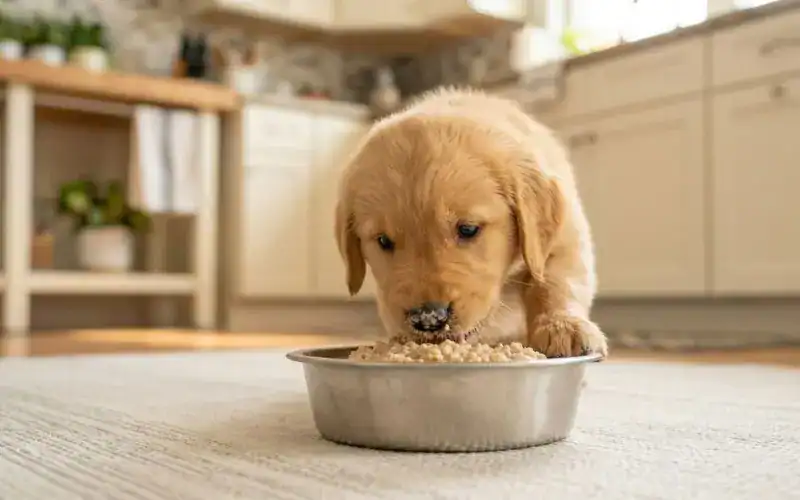
Week by Week Puppy Weaning Schedule
Knowing when puppies start eating solid food is just the beginning. The real value is in understanding what each week looks like — so you can either guide the process yourself if you’re a breeder or recognize where your puppy is in the journey when they come home.
Week 3 — The First Taste of Solid Food
At exactly 3 weeks old, you can introduce the very first taste of solid food. The texture should be extremely soft — closer to porridge than chunky food.
How to prepare it:
- Take quality puppy kibble — small breed formula for small breeds, large breed formula for large breeds
- Soak the kibble in warm water or puppy milk replacer
- Mash with a fork or briefly blend until smooth
- Consistency should be like baby cereal
Offer it once or twice a day in a shallow, easy-to- reach dish. Don’t worry if they walk through it more than eat it on day one — this is completely normal. The goal is simply to introduce the concept.
Stainless Steel Puppy Weaning Bowls – 2-pack, 10.2-inch, 35 oz — made for puppy litters, with a low side for easy feeding and a raised middle that helps stop puppies from sitting directly in the food.
Not For : Not ideal for a single older puppy that already eats neatly from a regular bowl — this makes more sense for breeders, litters, or very young puppies learning to eat mush.
Weeks 4 to 5 — Building the Habit
By 4 weeks, most puppies have figured out that this mushy stuff is actually food and start eating it enthusiastically. This is when feeding frequency increases.
Schedule at this stage:
- 3 to 4 mush meals per day
- Still nursing from mother in between
- Water content can start to reduce slightly
- The mixture should still be quite soft but less liquid than week 3
At 4 to 5 weeks of age, puppies typically eat 3 to 4 small meals of softened puppy food per day while continuing to nurse from their mother.
Weeks 6 to 7 — Approaching Full Solid Food
This is the key transition stage. Each day, slightly less water gets added until the puppy is eating mostly solid kibble with just enough moisture to keep it appealing.
By the end of week 7, most puppies are eating essentially dry kibble with just a few drops of warm water to soften it slightly.
Week 8 — Fully Weaned and Ready for Home
By 8 weeks, weaning is complete. Puppies should be:
- Eating dry puppy kibble independently
- No longer nursing from mother
- On a schedule of 3 to 4 meals per day
- Ready to transition to a new home
Complete Weaning Schedule — Quick Reference Table
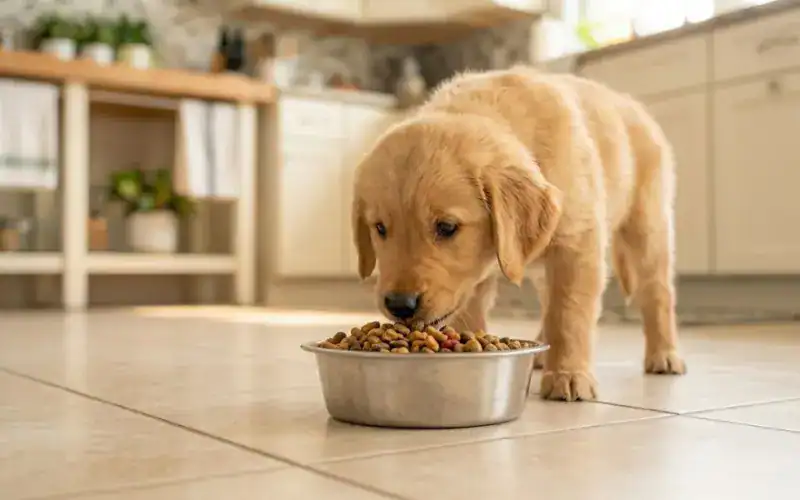
What Foods Are Safe for Weaning Puppies
This is where a lot of new puppy parents go wrong — not because they don’t care, but because well-meaning advice from family can lead to feeding the wrong foods at this critical stage.
The Right Food — Quality Puppy Kibble
The single best food for weaning puppies is a high- quality puppy-specific kibble formulated for their breed size:
Look for the AAFCO statement on the bag confirming the food meets nutritional standards for growth. According to the Association of American Feed Control Officials (AAFCO), only foods labeled “complete and balanced for growth” provide adequate nutrition for weaning puppies.
For a broader breakdown of balanced meals, labels, nutrients, and safe feeding basics, read our complete dog nutrition guide for beginners.
Puppy Milk Replacer for Mixing
In the early weeks, mixing kibble with puppy milk replacer instead of plain water provides extra calories and easier digestion. Brands like Esbilac are widely available at pet stores. After 5 to 6 weeks, plain warm water is usually sufficient.
Pet-Ag Esbilac Puppy Milk Replacer Powder – 12 oz – a powdered puppy formula for newborn to six-week-old puppies, made with prebiotics, probiotics, vitamins, minerals, and trace nutrients to support digestion and early growth during weaning.
Not for – Not ideal for puppies already eating softened kibble well with warm water after 5 to 6 weeks — at that stage, most puppies usually don’t need milk replacer unless a breeder or vet suggests it.
Foods to NEVER Feed a Weaning Puppy
Some foods that seem harmless can be dangerous or inappropriate at this stage:
Sudden food changes during this stage cause diarrhea, weight loss, and digestive stress. Transition to a new food gradually over 7 to 10 days only after your puppy is fully settled in their new home.
How to Transition a Puppy to a New Food Safely
When your puppy comes home, you may want to switch them to a different food brand than what the breeder was using. This is fine — but never do it cold turkey.
The safe way to transition a puppy to new food is to do it gradually over 7 to 10 days, slowly increasing the new food and decreasing the old food.
The 7 to 10 Day Transition Method
This gradual transition prevents stomach upset, diarrhea, and the food refusal that often comes with abrupt changes. If your puppy shows signs of diarrhea or vomiting at any stage — slow down the transition and stay at the current ratio for 2 more days before progressing.
If your puppy is already fully weaned but you need to change brands, follow our step-by-step guide on how to switch dog food without upset stomach before making the transition.
Signs the Food Isn’t Agreeing With Your Puppy
Watch for these signs during any food transition:
Large breed puppy food has controlled calcium levels that prevent rapid bone growth, which is critical for preventing joint problems in breeds like Labradors, Golden Retrievers, and German Shepherds.
Always confirm with your vet before switching foods for a large breed puppy.
Common Weaning Mistakes That Cause Problems
Most weaning problems come from a small set of mistakes that are easy to avoid once you know what to watch for.
Starting Weaning Too Early
Some breeders start weaning at 2 weeks to free up the mother. This is too early. Puppies need their mother’s milk for full immunity transfer and proper development. 3 to 4 weeks is the correct starting age — not before.
Switching to Adult Food Too Soon
Puppy food has higher calories, more protein, and specific nutrients for growth. Switching to adult food before 12 months for most breeds — or 18 months for large and giant breeds — deprives a growing puppy of critical nutrition.
Free Feeding During Weaning
Leaving food out all day during weaning makes potty training significantly harder later and prevents owners from monitoring how much each puppy is eating. Scheduled meals work better in every way.
For the complete feeding schedule after weaning is complete — read our puppy feeding schedule by age guide.
Skipping the AAFCO Check
Some “puppy foods” are actually labeled for “all life stages” — which means they meet minimum standards for adult dogs but may not meet the higher requirements for growth. Always check the AAFCO statement to see if it specifically says “complete and balanced for growth” or “complete and balanced for all life stages including growth of large size dogs.”
Adding Supplements Without Vet Advice
Calcium supplements, vitamins, and other additives can do more harm than good for a weaning puppy. A quality puppy food already contains the right balance of nutrients. Never supplement without specific veterinary guidance.

Signs Your Puppy Is Weaning Well
How do you know weaning is going correctly? Here are the clear signs of healthy progression.
Positive Signs
- Steady weight gain — puppies should gain weight consistently from week to week
- Active and playful between meals
- Firm, well-formed stools — not loose or watery
- Drinking water on their own by 5 to 6 weeks of age
- Eagerly approaching the food bowl at mealtime
- A soft, shiny coat
- High energy levels during awake periods
Warning Signs
- Weight loss or no weight gain over a 2-week period
- Refusing all food for more than 24 hours
- Persistent diarrhea or repeated vomiting
- Lethargy or unusual weakness
- Visible ribs or spine — appearing underweight
- Excessive thirst
- A dull coat or noticeable skin problems
If you see any of these warning signs, contact your veterinarian immediately. The VCA Animal Hospitals network recommends that a vet examine any weaning puppy showing signs of weight loss or persistent digestive issues within 24 hours.
Steady weight gain is the single best indicator of healthy feeding and weaning. If the line stops going up — or starts going down — that’s your earliest warning sign that something needs attention.
Amazon Basics Digital Kitchen Scale — LCD display, tare button, multiple measurement units, and up to 11-pound capacity — an easy way to track small puppy weight changes without guessing during the first 12 weeks.
Not For : Not ideal for medium or large-breed puppies that are already too heavy or too wiggly to weigh safely on a kitchen scale — use a bathroom scale instead.
Every puppy is different — always confirm specific feeding amounts and any health concerns with your veterinarian, especially during the critical weaning period.
Frequently Asked Questions (FAQ)
At what age can puppies eat dry food?
Puppies can eat dry food starting at around 6 to 7 weeks, when their teeth are developed enough to chew kibble.
Before this age, dry food should be softened with warm water or puppy milk replacer.
By 8 weeks, most puppies can eat dry kibble without any softening.
Always choose puppy-specific kibble appropriate for your puppy’s eventual adult size.
Can a 4-week-old puppy eat solid food?
Yes — but only in the form of soft mush, not dry kibble.
At 4 weeks, puppies eat 3 to 4 small meals of softened puppy food per day while still nursing from their mother.
The mixture should be roughly the consistency of thick oatmeal — wet enough to lap up easily but solid enough to start their digestive system processing the kibble.
What’s the best food to start weaning a puppy?
The best food to start weaning is a high-quality puppy-specific kibble formulated for the puppy’s eventual adult size — small breed, medium breed, or large breed.
Mix the kibble with warm water or puppy milk replacer, such as Esbilac, to create a soft porridge consistency.
Avoid cow’s milk, adult dog food, and any human food during this stage.
How do I know if my puppy is ready for solid food?
Most puppies show clear signs around 3 to 4 weeks of age.
Their baby teeth become visible, they show interest in their mother’s food bowl, they try to lick or sniff what their mother is eating, and they become more active and curious about exploring.
If your puppy is at least 3 weeks old and showing any of these signs, you can offer a small amount of soft, mushy puppy food in a shallow dish.
Can puppies eat regular dog food?
No — puppies should never eat regular adult dog food during their growth period.
Puppy food contains higher levels of protein, fat, calcium, and other nutrients critical for proper growth and development.
Feeding adult food to a growing puppy can result in nutritional deficiencies, slow growth, and long-term health problems.
Most puppies should stay on puppy food until 12 months old, or 18 months for large and giant breeds.
How many times a day should a weaning puppy eat?
At 3 to 4 weeks, weaning puppies eat 1 to 3 small meals per day while still nursing.
At 4 to 6 weeks, this increases to 3 to 4 meals per day.
By 6 to 8 weeks, fully weaned puppies eat 4 meals per day on a consistent schedule.
After 3 months, this drops to 3 meals per day, and after 6 months to 2 meals per day.
What if my puppy won’t eat solid food?
If your puppy refuses solid food, the most common reason is that the food is too dry for their current stage of development.
Try softening it more with warm water or puppy milk replacer until it reaches porridge consistency.
Other common causes are: a new home with too much stimulation, food temperature too cold, an upper respiratory issue affecting smell, or starting the transition too early.
If refusal lasts more than 24 hours, contact your vet.
When should I switch my puppy from puppy food to adult food?
Small breed puppies — Chihuahua, Yorkie, Pomeranian — typically switch to adult food at 9 to 12 months.
Medium-breed puppies — Beagles, Cocker Spaniels — switch at 12 months.
Large breed puppies — Labrador Retriever, Golden Retriever, German Shepherd — switch at 12 to 15 months.
Giant breeds like the Great Dane and the Saint Bernard stay on puppy food until 18 to 24 months.
Always confirm the timing with your vet based on your puppy’s specific growth.
Always monitor your puppy closely when trying anything new. If you notice any unusual symptoms or behaviors, consult your veterinarian immediately.
You’ve Got This — Final Thoughts
That stressful phone call with my breeder at week one feels like a lifetime ago now. My puppy is fully grown, healthy, and thriving — and the entire weaning concern that consumed two whole days of my life turned out to
be a 5-minute fix.
If you take one thing from this guide, take this: weaning is a natural process. Your puppy’s body knows what it’s doing. Your job is to support the transition, not engineer it perfectly.
Now that you know exactly when do puppies start eating solid food — here are your three key takeaways:
- Weaning starts at 3 to 4 weeks with soft mush — never earlier. Puppies need their mother’s milk to fully transfer immunity in those early weeks.
- The transition is gradual over 3 to 4 weeks — from porridge consistency to dry kibble. Don’t rush the process. Each puppy moves at their own
pace. - By 8 weeks, your puppy should be fully weaned and eating dry puppy kibble 3 to 4 times per day — ready for their new home and life with you.
For everything else you need to know in those first overwhelming weeks home, read our complete guide on how to take care of a puppy for the first time — feeding, sleep, potty training, biting, socialization, all in one place.
And if your puppy is at the age where socialization is the next priority — our puppy socialization checklist by age covers everything you need from 6 weeks to 16 weeks.