

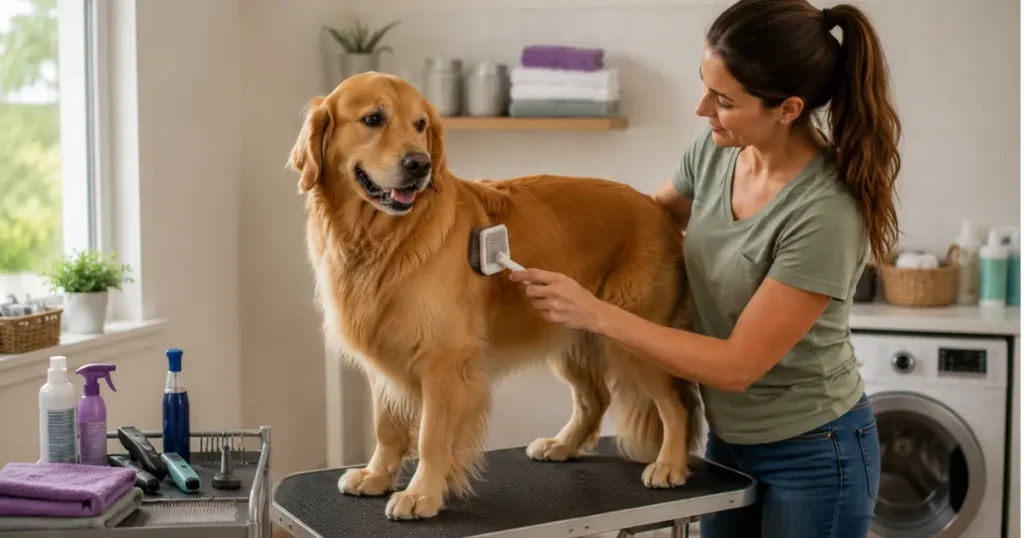
I used to think grooming meant an occasional bath when my dog started smelling like he’d rolled in something questionable.
That approach worked fine for about a year.
Then he developed a mat behind one ear that I did not notice until it had pulled tight enough to make him flinch when I touched it.
The groomer had to shave a section down to the skin to remove it — and gently pointed out that regular brushing would have caught it in week one, not month three.
That was the moment grooming stopped being an occasional chore and became a routine.
Not an elaborate one. Just consistent enough that I catch problems early instead of discovering them the hard way — which is the whole reason a complete dog grooming guide needs to cover the full system rather than any single task on its own.
This guide covers everything that routine actually involves — coat care by type, bathing frequency, nails, ears, teeth, and the schedule that ties it all together.
Each section links to a detailed guide if you want the full step-by-step for that specific task; this page is the map that shows how they all fit together, rather than repeating any single task in isolation.
Building these into a simple recurring schedule prevents the mats, overgrown nails, and skin issues that come from irregular, reactive grooming.
Why a Grooming Routine Matters More Than Any Single Session
One thorough grooming session feels productive.
But a single session, done occasionally, misses the entire point a complete dog grooming guide is actually built around — consistency, not any one perfect session.
Regular grooming sessions allow owners to examine a dog’s coat, skin, ears, teeth, and nails closely enough to catch developing problems — lumps, skin irritation, ear infections, dental issues — while they are still minor and easy to address, rather than discovering them once they have become painful or require professional treatment.
The mat behind my dog’s ear did not appear overnight.
It built up gradually over roughly six weeks of inconsistent brushing — exactly the kind of problem that a weekly routine catches in its early, easily combed-out stage.
According to the American Kennel Club, routine grooming sessions let owners examine a dog’s coat, teeth, eyes, ears, and nails for early signs of problems that otherwise go unnoticed between longer gaps in care.
Beyond early detection, grooming has a second, less obvious benefit: it builds tolerance for handling.
A dog used to having paws touched, ears checked, and teeth examined during routine grooming is a dog who tolerates those same things far more calmly during an actual vet exam.
Know Your Dog’s Coat Type Before You Build a Routine
The single biggest mistake in home grooming is applying one generic routine to every coat type.
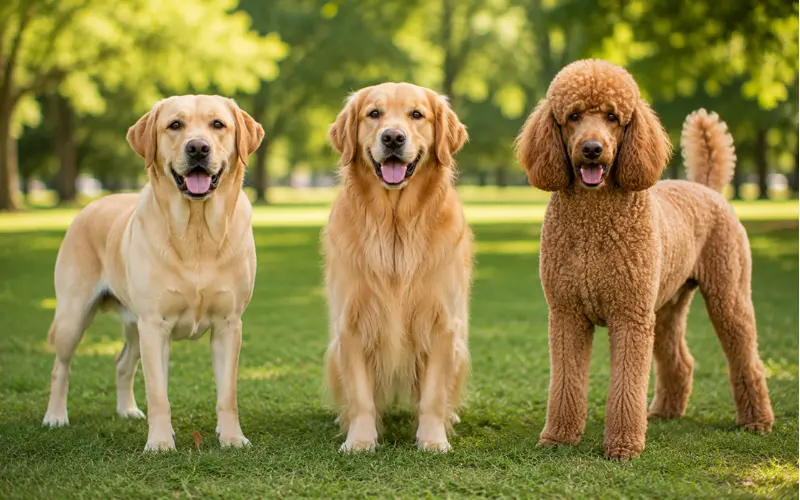
A weekly brush that is plenty for a short-haired Labrador leaves a double-coated Husky matted and overheated.
Short, Smooth Coats (Labs, Boxers, Beagles)
Lowest maintenance coat type.
A weekly brushing with a rubber curry brush or grooming mitt removes loose hair and distributes natural oils.
These breeds still shed consistently — often more than owners expect from a “low maintenance” coat — but rarely mat.
Double Coats (Golden Retrievers, Huskies, German Shepherds)
The coat type most owners under-groom.
A soft topcoat over a dense, insulating undercoat that requires brushing 2 to 3 times weekly, more during seasonal shedding (“blowing coat”).
Never shave a double coat — it disrupts the insulation that regulates body temperature in both heat and cold.
For the complete deshedding method for this coat type, read our guide on how to deshed a dog at home.
Curly and Wool Coats (Poodles, Doodles, Bichons)
The highest maintenance category.
These coats do not shed in the traditional sense — loose hair gets trapped within the curl instead of falling out, which means daily to every-other-day brushing is needed to prevent matting, plus professional trims every 4 to 8 weeks.
Wire and Long Coats (Terriers, Yorkies, Shih Tzus)
Wire coats need hand-stripping or clipping depending on whether the coat texture is being maintained for show or kept simple for pets.
Long coats need daily brushing and are highly prone to matting around the ears, armpits, and hindquarters if brushing lapses even a few days.
How Often Should You Groom Your Dog — The Actual Schedule
This is the section most grooming guides skip past quickly, and it is the one that actually prevents problems — the practical core of any complete dog grooming guide.
Most dogs need bathing every 4 to 6 weeks, nail trims every 2 to 4 weeks, and ear cleaning weekly to biweekly — with brushing frequency varying most significantly by coat type, from a weekly session for short-haired breeds to daily brushing for curly and long-coated breeds.
According to the ASPCA, most dogs do not need bathing more than a few times a year unless they have skin issues or spend significant time outdoors — over-bathing can actually strip natural oils and dry out the skin and coat.
This is worth sitting with for a moment, because it contradicts a common assumption: more bathing is not automatically better care.
The 4 to 6 week range works for most dogs specifically because it balances cleanliness against skin health — bathing weekly “to keep them extra clean” often does more harm than good.

Nails especially creep up gradually — by the time you notice the clicking sound on hardwood floors, they have usually been too long for a couple of weeks already.
A reminder every 3 weeks catches it before it becomes visibly obvious.
The Five Areas of a Complete Grooming Routine
Each of these deserves its own detailed method — this section is the overview, with links to the full guide for each one.
Coat Care and Bathing
Brushing before bathing (never after) prevents mats from tightening when they get wet.
Use lukewarm water and a dog-specific shampoo — human shampoo disrupts the pH balance of a dog’s skin and can cause dryness or irritation.
For dogs with itchy or sensitive skin specifically, read our guide on the best dog shampoo for itchy sensitive skin.
Nail Trimming
The task most owners dread and most commonly avoid until nails are already too long.
Overgrown nails alter how a dog’s foot bears weight and can eventually cause posture and gait problems.
For the complete safe nail-trimming method including how to avoid the quick, read our guide on how to trim dog nails at home.
Ear Cleaning
Particularly important for floppy-eared breeds (Cocker Spaniels, Basset Hounds, Labradors) where reduced airflow creates a warm, moist environment prone to infection.
For the complete step-by-step ear cleaning method, read our guide on how to clean dog ears at home.
Teeth Brushing
The most commonly skipped grooming task, despite dental disease affecting most dogs by age 3.
Daily brushing is ideal; 2 to 3 times weekly is the realistic minimum that still makes a measurable difference.
Full-Body Grooming Sessions
Bringing brushing, bathing, nails, ears, and a general health check together into a single structured session — rather than five separate scattered tasks — is what most owners mean by “grooming day.”
For the complete step-by-step full grooming session, read our guide on how to groom a dog at home step by step.
Starting Grooming Habits Early — Puppies and First-Timers
The dog most resistant to grooming as an adult is usually the dog who was never introduced to handling gradually as a puppy.
Short, low-pressure sessions in the first weeks — just touching paws, ears, and mouth with treats and praise, with no actual grooming task attached yet — build the tolerance that makes every future grooming session easier.
This applies just as much to adult rescue dogs new to a household as it does to puppies.
Puppies introduced to gentle handling of paws, ears, and mouth during their first weeks at home — even without any actual grooming task attached — develop significantly more tolerance for brushing, nail trims, and ear cleaning as adults than dogs whose first grooming experience happens later without this groundwork.

According to the American Kennel Club, most dogs enjoy the attention involved in grooming once they are used to being handled, and the process itself becomes an opportunity to build trust between dog and owner.
Building Your Home Grooming Kit
The right tools are the last piece of this complete dog grooming guide — they make the difference between a routine that feels manageable and one that feels like a fight every time.
At minimum: a brush matched to your dog’s coat type, a nail trimmer or grinder, dog-specific shampoo, ear cleaning solution, and a toothbrush with dog-safe toothpaste.
Beyond that minimum, a vacuum-style grooming system can significantly cut down on cleanup time for heavy shedders.
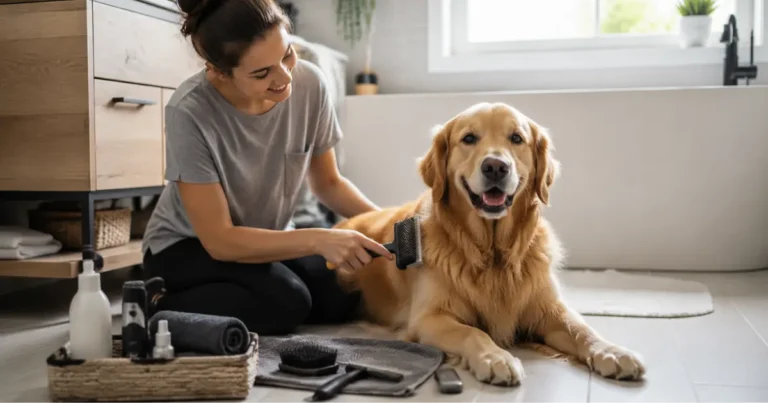
Keeping these tools in one dedicated spot — a small basket or drawer near wherever grooming actually happens — matters more than it sounds like it should.
A kit scattered across a bathroom cabinet, a hallway closet, and a kitchen drawer is a kit that quietly stops getting used, simply because gathering everything becomes its own small chore before the actual grooming can start.
For the complete comparison of grooming kits from basic to premium, read our guide on the best dog grooming kit for home use.
A quality nail grinder or slicker brush lasts years; a $5 version from a discount bin often gets abandoned within a few uses because it does not work well enough to make grooming feel worthwhile.
Common Grooming Mistakes to Avoid
Bathing too often strips natural oils and can leave skin drier and more irritated than before — more frequent is not automatically better, as covered above.
These are the mistakes that undo an otherwise complete dog grooming guide’s worth of good intentions:
- Skipping brushing before a bath lets mats tighten into something far harder to remove once wet.
- Using human shampoo disrupts a dog’s skin pH and often causes dryness or irritation that owners then mistake for a separate skin condition.
- Shaving double coats removes the insulation layer that regulates body temperature in both hot and cold weather — a mistake made with good intentions that often causes more discomfort, not less.
- Ignoring nail length until it is audibly clicking on hard floors means the quick has likely grown longer too, making trims more difficult and increasing bleeding risk.
Grooming is not a substitute for a professional exam, but it is often how these signs are noticed first.
Adjusting Your Grooming Routine as Your Dog Ages
A complete dog grooming guide has to account for the fact that grooming needs change significantly as dogs get older — and that most owners keep following the same routine that worked at age three well into a dog’s senior years, when it no longer fits.
Senior dogs often develop thinner, drier coats that mat more easily even without a change in brushing frequency, simply because the hair itself has changed texture.
Arthritis and joint stiffness can make standing for a full grooming session uncomfortable, which means shorter, more frequent sessions often work better than one long weekly session.
Nail growth patterns shift too.
Senior dogs are frequently less active, which means nails wear down naturally less than they did during years of daily walks — often requiring more frequent trims than the standard 2 to 4 week guideline, even though the dog itself has slowed down in every other way.
Senior dogs typically need more frequent nail trims than younger adult dogs because reduced activity levels mean nails wear down naturally less often, while their thinner, drier coats can require adjusted brushing techniques even without an increase in overall shedding.
Ear and dental issues also become more common with age, which makes the twice-weekly (at minimum) grooming check described earlier more important for senior dogs, not less — they are the group most likely to be quietly developing a problem between checks.
If your grooming sessions have started to feel like a struggle for a dog who used to tolerate them easily, that shift itself is often the first sign something has changed — worth mentioning at the next vet visit rather than assuming it is simply stubbornness.
Seasonal Adjustments This Complete Dog Grooming Guide Recommends
Grooming needs shift with the seasons more than most owners plan for, and treating every month the same is another common way a good routine quietly stops working.
Spring brings “coat blow” for double-coated breeds — a concentrated shedding period as the winter undercoat releases all at once.
Brushing frequency often needs to increase temporarily from 2-3 times weekly to daily for several weeks during this window, specifically to keep loose undercoat from matting into the topcoat before it can be removed.
Summer heat makes bathing and brushing schedules more about comfort than appearance.
A slightly more frequent brushing routine helps remove loose hair that traps heat, and paw checks become more important as pavement temperatures rise.
Double-coated breeds typically shed their winter undercoat in a concentrated period each spring known as “coat blow,” which often requires increasing brushing frequency from a normal 2 to 3 times weekly to daily for several weeks to prevent the loosening undercoat from matting into the topcoat.
Winter brings drier indoor heating that can dry out skin and coat more than the cold weather itself does — some owners find a slightly richer, moisturizing shampoo formula helps during the driest months, used at the same 4 to 6 week bathing frequency rather than more often.
Building these seasonal shifts into your calendar reminders, rather than treating grooming as one fixed year-round schedule, is what actually keeps a routine working through every season instead of just the ones it was originally built around.
The guidance in this post is based on published resources from the AKC and ASPCA.
For breed-specific grooming needs, matted coats, or any skin issue you are unsure about, consult a professional groomer or veterinarian.
Frequently Asked Questions
How often should you groom your dog at home?
A complete grooming routine includes brushing (frequency depends on coat type, from daily for curly and long coats to weekly for short coats), bathing every 4 to 6 weeks, nail trims every 2 to 4 weeks, ear cleaning weekly to biweekly, and teeth brushing at least 2 to 3 times weekly.
Building these into a recurring schedule prevents the most common grooming-related problems.
Is it bad to bathe my dog too often?
Yes — bathing more than every few weeks without a medical reason can strip natural oils from the skin and coat, leading to dryness and irritation.
Most dogs do not need bathing more than every 4 to 6 weeks unless they have a skin condition, spend significant time outdoors, or have gotten visibly dirty or smelly.
What grooming tools does a beginner actually need?
At minimum: a brush matched to your dog’s specific coat type, a nail trimmer or grinder, dog-specific shampoo, an ear cleaning solution, and a toothbrush with dog-safe toothpaste.
This covers all five core grooming areas without requiring a large upfront investment.
Can I use human shampoo on my dog?
No. Human shampoo is formulated for human skin pH, which differs from a dog’s, and can cause dryness or irritation with regular use.
Always use a shampoo specifically formulated for dogs, and choose a sensitive-skin formula if your dog has any history of skin irritation.
Why does my dog’s coat mat even though I brush regularly?
Matting usually indicates that the brushing frequency does not match the coat type or that bathing is happening without brushing first.
Double, curly, and long coats need more frequent brushing than most owners initially expect, and any coat can mat if bathed while already tangled, since water tightens existing knots.
Should I shave my dog to keep them cool in summer?
Not if your dog has a double coat.
The double coat insulates against both heat and cold, and shaving it removes that protection while also increasing the risk of sunburn on newly exposed skin.
Regular brushing and deshedding provide the cooling benefit without the risks associated with shaving a double coat.
At what age should I start grooming my puppy?
As early as possible, even before any actual grooming task is needed.
Gentle handling of paws, ears, and mouth during the first weeks at home — paired with treats and calm praise — builds the tolerance that makes every future grooming session significantly easier, both for you and for your dog.
How do I know if my dog’s nails are too long?
If you can hear your dog’s nails clicking against hard flooring while they walk, the nails are already too long.
The general guideline is that nails should not touch the ground at all when your dog is standing normally — checking every 2 to 3 weeks catches this before it becomes noticeable by sound.
One Missed Mat Taught Me the Whole System — Final Thoughts
That mat behind my dog’s ear cost him an uncomfortable shave and cost me a groomer’s gentle but pointed comment about consistency.
It also taught me the one thing this complete dog grooming guide is built around: grooming works as a system, not as an occasional task.
Three things to take with you:
- Match your routine to your dog’s actual coat type, not a generic weekly-brush default. A double coat needs 2 to 3 brushings a week. A curly coat needs almost daily attention. Getting this wrong is the single most common reason grooming routines fail.
- More bathing is not better care. The 4 to 6 week range exists because over-bathing strips protective oils just as reliably as under-bathing lets dirt and odor build up.
- Build the five tasks into a recurring schedule rather than reacting to visible signs that something is overdue. By the time nails click on the floor or a mat is visible, the easy window for prevention has usually already passed.
For the complete step-by-step method that ties all five areas into one grooming session, read our guide on how to groom a dog at home step by step.
For the complete beginner overview of grooming costs and tools before you buy anything, read our guide on dog grooming tips for beginners — cost and tools.



Pingback: How Often Should You Bathe Your Dog? Complete Guide (2026)