My dog scratched his belly raw before I figured out it was the shampoo.
Not the dirt. Not fleas. Not food allergies.
The shampoo I was using every two weeks — the one with the pretty label and the coconut scent that I thought was “gentle” — was stripping the natural oils from his coat and leaving his skin dry, irritated, and itchier than it was before the bath.
I figured this out when the vet asked one question:
“What shampoo are you using?”
I showed her. She shook her head.
“This has sulfates, artificial fragrance, and parabens. You’re washing him with skin irritants.”
That was the day I learned that finding the best dog shampoo for itchy sensitive skin is not about picking the nicest-smelling bottle on the shelf.
It is about understanding which ingredients actually soothe irritated skin and which ones make the problem worse — regardless of how “natural” the label claims to be.
This guide gives you everything — the ingredients that genuinely help, the ones to avoid completely, the 6 best dog shampoo for itchy sensitive skin options available right now, and exactly how to bathe a sensitive-skinned dog without making things worse.
Your dog’s skin is fixable. The right shampoo is where it starts.
Earthbath Oatmeal and Aloe (fragrance-free version) is the top overall pick.
Bathe sensitive dogs every 4 to 6 weeks only — more frequent bathing strips natural oils and makes itching worse.
Why Your Dog’s Skin Is Itchy — Understanding the Real Problem
Before choosing the best dog shampoo for itchy, sensitive skin, you need to understand what is actually causing the itch.
The shampoo fixes the symptom — but the cause determines which formula works and how often to use it.
Nearly 20% of all dogs suffer from some form of skin sensitivity, making itchy, irritated skin one of the most common health concerns seen by veterinarians and one of the top reasons owners seek specialized grooming products.
The Most Common Causes of Itchy Skin
Dry skin is the most straightforward cause — and the most common.
Low humidity, over-bathing, harsh shampoos, and poor diet all strip the skin’s natural moisture barrier.
Once that barrier is compromised, the skin dries out, cracks microscopically, and itches.
Environmental allergies are the second most common cause.
Pollen, dust mites, mold spores, and grass settle on the coat and skin during walks and outdoor time.
These allergens trigger an inflammatory response that causes itching, redness, and hot spots.
A good hypoallergenic shampoo physically washes these allergens away while soothing the inflammation they have caused.
Contact allergies happen when the skin reacts directly to something it touches — carpet cleaner, laundry detergent on bedding, floor polish, or even the chemicals in the wrong shampoo.
This is exactly what happened with my dog.
Food allergies cause skin symptoms too — itching, ear infections, paw chewing — but a shampoo alone will not fix a food allergy.
If itching persists despite using a gentle shampoo, a dietary investigation may be needed.
For the complete guide on food-related skin issues, read our guide on best dog food for puppies with allergies.
The Shampoo Paradox — When Bathing Makes It Worse
This is what catches most owners off guard.
You bathe your dog to fix the itching — and 24 hours later, the itching is worse than before.
Dogs have a skin pH of 6.5 to 7.5 — significantly different from human skin at 4.5 to 5.5 — which is why human shampoo and many commercial dog shampoos with incorrect pH levels strip natural oils and actually cause the dry, itchy skin they claim to treat.
The problem is almost always the shampoo itself.
Harsh detergents strip the natural oils that form the skin’s moisture barrier.
Without that barrier, moisture evaporates from the skin surface within hours.
The skin dries out, the itching returns — worse than before — and the owner bathes again, creating a cycle that gets progressively worse with each wash.
According to the American Kennel Club, the most important factor in choosing dog shampoo is matching the formula to your dog’s specific skin needs — and using a mild, pH-balanced formula is essential for dogs with sensitive or irritated skin.

Ingredients That Heal — What to Look For
The best dog shampoo for itchy sensitive skin works because of specific ingredients backed by veterinary dermatology — not because of marketing claims on the bottle.
The Ingredients That Actually Soothe
Colloidal oatmeal is the gold standard for itchy skin relief.
It creates a physical protective barrier over irritated skin cells, locks moisture in, and contains natural anti-inflammatory compounds called avenanthramides that reduce redness and itching on contact.
This is the single most important ingredient in any sensitive skin formula.
Organic aloe vera hydrates deeply, reduces inflammation, and promotes healing of cracked or irritated skin.
Look for it as a primary ingredient — not listed 15th on a 30-ingredient list.
Coconut-based cleansers replace harsh sulfates as the cleaning agent.
They lift dirt and oil gently without stripping the skin’s protective barrier — meaning your dog gets clean without getting dry.
Vitamins A, D, and E provide antioxidant protection and support skin cell repair.
These accelerate healing of existing irritation while protecting against future damage.
Chamomile and calendula are natural anti-inflammatory botanicals that calm redness and soothe itch without chemical intervention.
Colloidal oatmeal is the most effective ingredient for soothing itchy dog skin — it forms a physical protective layer over irritated skin cells, locks in moisture, and contains natural anti-inflammatory compounds that reduce redness within minutes of application.
Ingredients That Make Itching Worse — Avoid These
Sulfates (SLS, SLES) are aggressive detergents that strip natural oils completely.
They create the satisfying lather that makes owners feel the shampoo is “working” — but that lather comes at the cost of the skin’s moisture barrier.
Artificial fragrances are chemical irritants that serve zero purpose for your dog.
Dogs do not care how they smell. Every artificial scent molecule is a potential irritation trigger on already-sensitive skin.
Parabens and phthalates are chemical preservatives linked to skin irritation and endocrine disruption.
They extend shelf life at the expense of skin health.
Artificial dyes — Red 40, Yellow 5, Blue 2 — provide color for the owner’s benefit and irritation for the dog’s skin.
Alcohol-based ingredients dry the skin on contact.
Any formula listing “alcohol” in the first 10 ingredients will worsen sensitive skin.
Best Dog Shampoo for Itchy Sensitive Skin — Top 7 Picks
Every product below meets three criteria: pH balanced for dogs, free from sulfates and parabens, and containing at least one clinically proven soothing ingredient.
These are not just popular — they are the formulas that veterinarians and professional groomers consistently recommend for dogs with sensitive, itchy skin.
1. Wahl Oatmeal Formula Shampoo — Coconut Lime Verbena
This is the shampoo I’d pick when a dog’s skin feels dry, flaky, and a little irritated from regular bathing.
After the first bath, the coat feels cleaner without that rough, stripped feeling.
After a few washes, the dry patches usually settle down, and the coat feels softer and easier to brush.
Wahl Oatmeal Formula Shampoo uses oatmeal, aloe, coconut, lime, and lemon verbena in a gentle, concentrated formula made for dry and itchy skin.
No parabens. No PEG-80. No harsh alcohols.
Leave it on for 1–2 minutes before rinsing so the oatmeal and aloe get a little time to work.
Wahl Oatmeal Formula Shampoo — Coconut Lime Verbena — a good choice for dry, itchy coats that need moisture, softness, and regular gentle cleaning.
Not ideal for: dogs with open wounds, active skin infections, or serious itching that needs a vet-prescribed medicated shampoo.
2. Earthbath Oatmeal and Aloe — Fragrance Free — Top Pick
This is the shampoo that fixed my dog’s skin after months of using the wrong product.
Within two baths — spaced 3 weeks apart — the scratching reduced by about 80%.
By the third bath, his belly had healed completely and the coat was noticeably softer.
Earthbath Oatmeal and Aloe — Fragrance Free uses colloidal oatmeal and organic aloe vera as its primary active ingredients in a completely soap-free, pH-balanced formula.
The fragrance-free version eliminates even natural essential oils that can irritate extremely sensitive dogs.
No parabens. No sulfates. No phthalates. No synthetic dyes.
Leave it on for 90 seconds before rinsing to let the oatmeal do its work.
Safe for all dogs over 6 weeks old and will not wash off topical flea treatments.
Earthbath Oatmeal and Aloe Shampoo — Fragrance Free — 16 oz bottle. The most recommended sensitive skin shampoo by veterinarians and groomers. Fragrance-free version is best for the most sensitive dogs.
Not ideal for: dogs with active bacterial or fungal skin infections — these need medicated shampoo prescribed by your vet, not an over-the-counter soothing formula.
3. Earthbath Oatmeal and Aloe — Vanilla and Almond
Same formula as the fragrance-free version but with a light vanilla and almond botanical scent.
If your dog’s sensitivity is moderate — not extreme — this version leaves a pleasant natural scent without the harsh chemical fragrances found in most dog shampoos.
Earthbath Oatmeal and Aloe — Vanilla and Almond — 16 oz. Same oatmeal + aloe formula with a gentle botanical scent with a 4.7 rating.
Not ideal for: dogs with extreme sensitivity to any fragrance — even natural botanical scents.
Choose the fragrance-free version if your dog reacts to everything.
4. Vet’s Best Allergy and Itch Relief Shampoo
Vet’s Best takes a different approach — using essential oils alongside oatmeal to address both the itch and the environmental allergens causing it.
The formula contains tea tree oil, d-limonene, and oatmeal in a veterinarian-formulated blend.
Tea tree oil has natural antimicrobial properties that help prevent secondary infections on scratched skin.
D-limonene from citrus rinds has natural insect-repellent properties that add a bonus layer of protection.
Search Amazon for “Vet’s Best Allergy Itch Relief Dog Shampoo” — 16 oz bottle. Veterinarian formulated. Safe to use alongside flea and tick treatments.
Not ideal for: dogs with extreme skin sensitivity — the essential oils, while natural, can irritate the most reactive skin.
Start with Earthbath fragrance-free if your dog’s sensitivity is severe.
5. TropiClean Hypo-Allergenic Coconut Puppy Shampoo
Specifically designed for puppies and dogs with the most delicate skin.
TropiClean Hypo-Allergenic Coconut Puppy Shampoo uses a coconut-based formula with oatmeal and aloe — perfectly pH balanced with zero soap, parabens, or dyes.
The gentle coconut scent is light and natural.
Search Amazon for “TropiClean Hypo-Allergenic Coconut Puppy Shampoo” — 20 oz. Designed for puppies and sensitive skin. Soap-free and tear-free.
Not ideal for: dogs that need deep cleaning power — this is an ultra-gentle formula designed for sensitive skin, not for heavily soiled or smelly dogs.
6. Veterinary Formula Clinical Care Antiseptic and Antifungal Shampoo — Best Budget
If your dog’s itching involves flaking, dandruff, or mild skin infection symptoms alongside sensitivity, this medicated formula addresses both.
It contains benzethonium chloride and ketoconazole — clinical ingredients that target bacteria and fungal infections causing itch.
Search Amazon for “Veterinary Formula Clinical Care Antiseptic Antifungal Dog Shampoo” — 16 oz. Best budget medicated option at approximately $8 to $10.
Not ideal for: dogs with dry skin only, no infection — medicated formulas can be drying with frequent use.
Use only 1 to 2 times per month and follow with a moisturizing conditioner.
7. Burt’s Bees Oatmeal Dog Shampoo — Best Value
If you want quality oatmeal shampoo at the lowest price point, Burt’s Bees delivers.
Burt’s Bees Oatmeal Dog Shampoo contains colloidal oatmeal and honey in a pH-balanced, tear-free formula with no sulfates, colorants, or harsh chemicals.
The honey adds natural humectant properties that draw moisture into the skin.
Search Amazon for “Burt’s Bees Oatmeal Dog Shampoo” — 16 oz. Typically under $8 to $10, making it the most affordable quality sensitive skin option available.
Not ideal for: dogs with severe allergies or infections that need clinical-grade ingredients.
This is a maintenance shampoo — not a treatment shampoo.
Using the medicated shampoo every bath is too aggressive for sensitive skin.
Using the oatmeal shampoo when infection is present is too gentle.
Two bottles, used strategically, cover every situation.

How to Read Dog Shampoo Labels — What Matters
Knowing the best dog shampoo for itchy sensitive skin means being able to evaluate any bottle yourself — not just the 6 products listed above.
The 5-Second Label Check
Flip the bottle. Read the first 5 ingredients.
If any of these appear in the first 5 — put it back:
- Sodium lauryl sulfate (SLS) or sodium laureth sulfate (SLES)
- “Fragrance” or “parfum” — generic terms hiding chemical blends
- Any artificial color — FD&C Red, Yellow, Blue
- Alcohol — isopropyl or ethanol
- Formaldehyde or formaldehyde releasers
What you want to see in the first 5:
- Water or purified water
- Colloidal oatmeal
- Coconut-based or plant-derived cleanser
- Aloe vera — ideally organic
- A natural moisturizer — shea butter, vitamin E, glycerin
“Natural” Does Not Mean Safe
This word has no legal regulation in pet grooming products.
A shampoo can contain 95% chemicals and 5% aloe vera extract and legally call itself “natural.”
Ignore the front of the bottle entirely.
The ingredient list on the back is the only thing that tells the truth.
The word “natural” on dog shampoo labels has no legal regulation — a shampoo can contain primarily synthetic ingredients and still use this term, making the ingredient list on the back of the bottle the only reliable way to evaluate a product’s safety for sensitive skin.
According to the American Kennel Club, using human shampoo on dogs — even baby shampoo — disrupts the skin’s acid mantle due to the significant pH difference between human and canine skin, leaving dogs vulnerable to bacterial infections and chronic dryness.
How to Bathe a Dog With Sensitive Skin — The Right Way
Using the best dog shampoo for itchy sensitive skin only works if the bathing technique is correct.
The wrong water temperature, insufficient rinsing, or bathing too frequently can undo everything the shampoo accomplished.
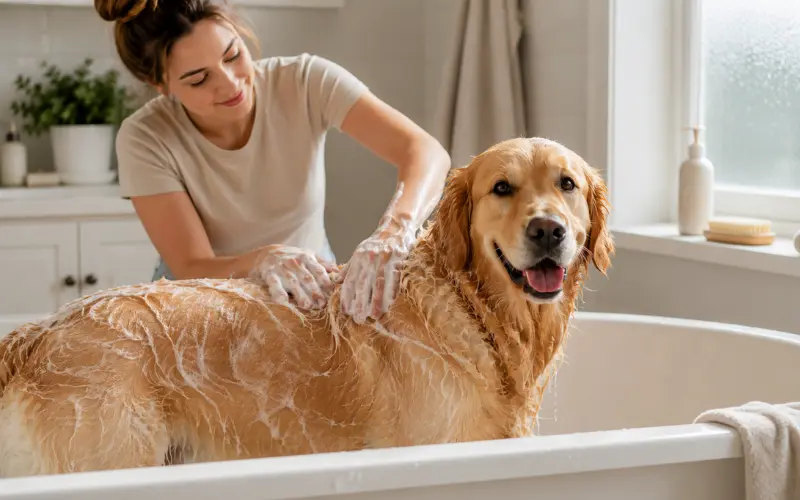
The Sensitive Skin Bathing Process
- Brush the entire coat before getting it wet. Mats trap shampoo residue against the skin — which defeats the purpose of using a gentle formula. Remove all tangles and loose hair first.
- Use lukewarm water only. Hot water feels soothing to irritated skin in the moment but strips oils and causes reactive dryness within hours. Cold water does not rinse shampoo effectively. Lukewarm is the only correct temperature.
- Wet the coat completely — soaked, not damp — before applying any shampoo. Applying shampoo to a dry or partially wet coat creates concentrated patches of product against the skin.
- Apply a small amount of shampoo and massage gently from neck to tail. Avoid the face, eyes, and ear openings entirely. For the face, use a damp washcloth only — no shampoo near the eyes even if the label says “tear-free.”
- Let the shampoo sit for 60 to 90 seconds. This is not a suggestion — it is what allows the colloidal oatmeal and aloe vera to actually work on the skin. Rinsing immediately washes away the active ingredients before they have contact time.
- Rinse until the water runs completely clear. Then rinse again. Shampoo residue left on sensitive skin is the number one cause of post-bath itching — worse than the original problem. If you think you have rinsed enough, rinse one more time.
- Follow with a moisturizing conditioner for dogs with very dry skin. Earthbath makes an oatmeal and aloe conditioner that pairs perfectly with their shampoo.
- Towel dry gently — no aggressive rubbing. Irritated skin is easily damaged by rough toweling. Pat dry rather than rub. If using a dryer, keep it on the lowest heat and keep it moving constantly.
How Often to Bathe a Sensitive Dog
Dogs with sensitive or itchy skin should be bathed no more than once every 4 to 6 weeks — bathing more frequently strips the natural oils that form the skin’s protective moisture barrier and worsens the very dryness causing the itch.
Between baths, use grooming wipes to clean paws and belly after walks — this removes environmental allergens without a full bath.
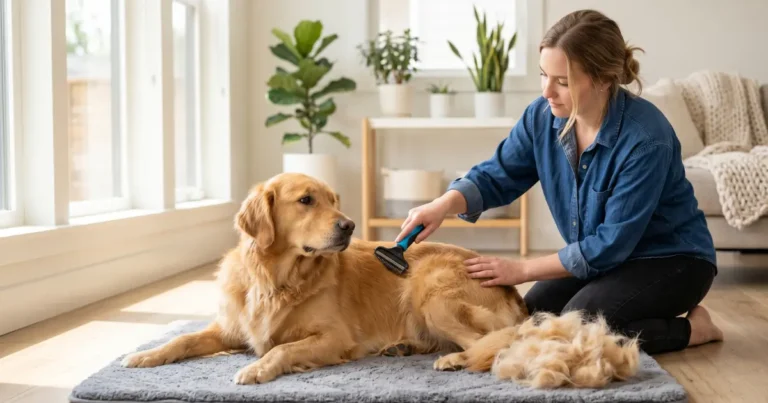
For the complete home grooming routine, read our step-by-step guide on how to groom a dog at home step by step.
Flip them gently and look at the belly and inner thighs — the two areas with the thinnest skin.
If these areas look red or irritated after the bath, your shampoo is still too harsh — switch to a fragrance-free formula.
If they look calm and normal, your shampoo is working.
This 10-second check after every bath catches reactions early before they become full-body problems.
Beyond Shampoo — What Else Helps Itchy Skin
The best dog shampoo for itchy sensitive skin handles the surface.
But lasting skin health comes from addressing what is happening underneath.
Diet Directly Affects Skin
A dog’s coat and skin are the first visible signs of nutritional quality or deficiency.
Dull coat and dry skin almost always point to insufficient omega-3 fatty acids or low-quality protein in the diet.
Adding a fish oil supplement provides omega-3 directly — reducing systemic inflammation that causes itching from the inside while the shampoo handles the outside.
For the complete guide on choosing the right food for skin health, read our complete dog nutrition guide for beginners.
Environmental Allergen Management
Wipe your dog’s paws and belly with a damp cloth or grooming wipe after every outdoor walk.
This removes pollen, grass allergens, and dust before they have time to trigger an inflammatory response.
Wash your dog’s bedding weekly in fragrance-free, dye-free laundry detergent.
The chemicals in regular detergent sit against your dog’s skin for 8 to 10 hours every night.
Consider an air purifier in the room where your dog sleeps if dust mites or indoor allergens are suspected triggers.
When to See Your Vet
Shampoo alone cannot fix everything.
See your vet if:
- Itching persists despite using a quality gentle shampoo for 4 to 6 weeks
- Hot spots, open sores, or bleeding from scratching
- Hair loss in patches
- Skin has a yeasty or foul smell — indicates infection
- Ears are red, swollen, or producing dark discharge
- Itching is accompanied by digestive issues — suggests food allergy rather than skin-only issue
According to the ASPCA, regular grooming that includes appropriate bathing with gentle products helps maintain the skin’s natural defenses and allows early detection of skin problems, parasites, and unusual changes that might indicate underlying health issues.
Common Shampoo Mistakes That Make Itching Worse
These are the mistakes that turn a manageable itch into a chronic skin problem — and most owners make at least two of them without realizing it.
- Bathing too frequently is the most damaging mistake. Every bath — even with the gentlest shampoo — removes some natural oils. Bathing weekly or biweekly on a sensitive dog creates a cycle of oil stripping, dryness, itching, and more bathing that gets progressively worse. Every 4 to 6 weeks is enough for most sensitive dogs.
- Not rinsing thoroughly enough is the most common mistake. Shampoo residue trapped against sensitive skin causes more irritation than the shampoo was designed to fix. Rinse until water runs clear — then rinse one full minute more.
- Using human shampoo is the most well-intentioned mistake. Human skin has a pH of 4.5 to 5.5. Dog skin has a pH of 6.5 to 7.5. Human shampoo — even baby shampoo — is formulated for the wrong pH and strips the protective acid mantle from dog skin, leaving it vulnerable to bacteria and chronic dryness.
- Choosing by scent instead of ingredients is the most expensive mistake. A shampoo that smells amazing to you is almost certainly loaded with artificial fragrances that are chemically irritating to your dog’s skin. The best sensitive skin shampoos smell like almost nothing — because they contain no artificial fragrance.
- Skipping the conditioner on very dry skin is an overlooked mistake. A gentle oatmeal conditioner after shampooing locks in the moisture that the shampoo helped deliver and provides an extra protective layer between the skin and environmental irritants.
Breeds Most Prone to Sensitive and Itchy Skin
Some dogs are genetically predisposed to skin sensitivity.
If your dog is one of these breeds, starting with the best dog shampoo for itchy sensitive skin from day one prevents years of chronic skin issues.
- Bulldogs — English and French Bulldogs have deep skin folds that trap moisture, bacteria, and allergens. Their flat facial structure compounds the problem. They need fragrance-free, gentle shampoo and regular fold cleaning between baths.
- Golden Retrievers develop skin allergies at a higher rate than most breeds. Their dense double coat traps environmental allergens close to the skin. Regular bathing with oatmeal shampoo combined with thorough brushing is essential.
- German Shepherds frequently develop chronic skin conditions including allergic dermatitis and hot spots. Hypoallergenic shampoo combined with omega-3 supplementation is the standard management approach.
- Labrador Retrievers have naturally oily skin that makes them prone to seborrhea — excessive oil production that causes flaking and itch. A balanced shampoo that cleans without over-stripping is critical.
- Poodles and Doodle mixes develop sensitive skin partly due to the curly coat that traps moisture against the skin surface, creating an environment where bacteria and yeast thrive.
- Boxers and Pit Bull types have short coats that provide minimal protection from environmental allergens — everything that touches their skin has direct contact with no coat buffer.
Persistent itching may indicate a condition that requires prescription treatment — medicated shampoo, oral medication, or allergy testing — that over-the-counter products cannot address.
The product recommendations in this guide are based on widely available vet-informed research and professional groomer experience.
Every dog’s skin is different — if your dog has chronic skin issues, consult your veterinarian for a specific diagnosis and treatment plan before relying on shampoo changes alone.
Frequently Asked Questions (FAQ)
How often should I bathe my dog with sensitive skin?
Every 4 to 6 weeks is appropriate for most dogs with sensitive skin.
Bathing more frequently — even with gentle shampoo — strips the natural oils that form the skin’s protective moisture barrier, causing the dryness and itching to worsen rather than improve.
Between baths, use grooming wipes to clean paws and belly after outdoor walks to remove environmental allergens without a full bath.
Can I use human shampoo on my dog?
No.
Human shampoo is formulated for human skin pH of 4.5 to 5.5, while dog skin pH is 6.5 to 7.5.
Using human shampoo — including baby shampoo — disrupts the protective acid mantle on dog skin, stripping natural oils and leaving the skin vulnerable to bacteria, infections, and chronic dryness.
Always use a shampoo specifically formulated for dogs.
What ingredients should I avoid in dog shampoo for sensitive skin?
Avoid sulfates — SLS and SLES — artificial fragrances listed as “fragrance” or “parfum,” parabens, artificial dyes, alcohol, and formaldehyde-based preservatives.
These ingredients strip natural oils, irritate sensitive skin, and can trigger allergic reactions.
Look for colloidal oatmeal, aloe vera, coconut-based cleansers, and natural preservatives like vitamin E instead.
Is oatmeal shampoo good for dogs with allergies?
Three possible reasons:
The shampoo is not being left on long enough — colloidal oatmeal needs 60 to 90 seconds of contact time to work.
Rinsing is insufficient — residue left on skin causes more irritation.
The cause of itching is internal rather than external — food allergies, hormonal issues, or systemic conditions that shampoo alone cannot address.
If itching persists beyond 4 to 6 weeks of proper use, see your veterinarian.
Can I use medicated shampoo every time I bathe my sensitive dog?
Not recommended.
Medicated shampoos containing ketoconazole, chlorhexidine, or benzoyl peroxide are effective for treating active infections but are too aggressive for regular maintenance bathing on sensitive skin.
Use a medicated formula 1 to 2 times when infection symptoms are present, then switch back to a gentle oatmeal formula for ongoing maintenance.
Your vet can advise on the appropriate medicated shampoo frequency for your dog’s specific condition.
Should I use conditioner after shampooing my sensitive dog?
Yes — especially for dogs with very dry or flaky skin.
A moisturizing conditioner formulated for dogs locks in the hydration that the shampoo helped deliver and adds an extra protective layer between the skin and environmental irritants.
Earthbath makes an oatmeal and aloe conditioner specifically designed to pair with their sensitive skin shampoo.
Apply after rinsing shampoo, leave on for 1 to 2 minutes, then rinse thoroughly.
The Right Shampoo Changes Everything — Final Thoughts
My dog’s belly was raw for three months because I was washing him with a shampoo that had a pretty label and a nice smell and absolutely nothing else going for it.
One shampoo change. That is all it took.
Earthbath Oatmeal and Aloe — fragrance-free — replaced the sulfate-loaded, artificially scented bottle I had been using.
Two baths later, the scratching dropped dramatically.
By the third bath, the skin had healed.
Finding the best dog shampoo for itchy sensitive skin is not about spending the most money or finding the fanciest brand.
It is about reading the back of the bottle instead of the front — checking for colloidal oatmeal, checking for aloe, and confirming the absence of the sulfates and artificial fragrances that cause the problem in the first place.
Three things to take with you:
- Oatmeal and aloe, fragrance-free, pH-balanced — those three qualities in any shampoo mean it is safe for sensitive skin. If the bottle has all three, it is worth trying regardless of brand.
- Bathe every 4 to 6 weeks only — more frequent washing strips the natural oils your dog’s skin desperately needs to maintain its moisture barrier. Between baths, wipe paws and belly after walks to remove allergens without bathing.
- If itching persists beyond 6 weeks of correct shampoo use, the cause is internal, not external. See your vet. Shampoo fixes surface problems. Food allergies, hormonal conditions, and systemic infections need treatment from the inside.
For the complete home grooming routine — brushing, bathing technique, nails, ears, and teeth — read our guide on how to groom a dog at home step by step.