


My dog turned 9 last spring.
And I missed it.
Not his birthday. I’d never forget that.
What I missed were the signs that he wasn’t just “slowing down a little.”
He’d started pausing at the bottom of the stairs, hesitating before jumping onto the couch, sleeping through sounds that used to send him sprinting to the front door.
I chalked it up to laziness.
Turns out, his joints had been hurting for months.
That vet visit changed how I think about aging dogs.
Because here’s the uncomfortable truth: by the time most of us notice something’s wrong with an older dog, they’ve been quietly dealing with it for weeks.
Dogs don’t complain.
They don’t limp until the pain gets unbearable.
They just adjust.
This senior dog care guide covers what I wish I’d known before that appointment.
Not generic advice.
Real, practical changes to nutrition, exercise, vet visits, and your home that can keep your aging dog comfortable and genuinely happy for years longer than you’d expect.
Because getting older isn’t a disease.
But ignoring it?
That’s where the problems start.
Most dogs become senior dogs between ages 7 and 10, depending on their size. Senior dog care focuses on twice-yearly vet visits, joint-friendly exercise, age-appropriate nutrition, and simple home adjustments. Dogs over 8 years old have an 80% chance of developing arthritis, making early detection and preventive care essential.
When Does a Dog Become a Senior?
There’s no single birthday that flips a switch.
Your dog doesn’t wake up “old” one morning.
Dogs are generally considered seniors when they reach the last 25% of their expected lifespan, which varies by size and breed.
The American Veterinary Medical Association explains that larger breeds have shorter lifespans and reach senior status earlier than smaller breeds.
A Great Dane at 6 is roughly equivalent to a Chihuahua at 10.
That’s a 4-year gap, and it completely changes when you need to start adjusting care.
Here’s how it breaks down by size:
| Breed Size | Weight | Senior Age | Example Breeds |
|---|---|---|---|
| 🐕 Giant | Over 90 lbs | 5–6 Years | Great Dane, Mastiff, Saint Bernard |
| 🦮 Large | 50–90 lbs | 7–8 Years | Labrador Retriever, Golden Retriever, German Shepherd |
| 🐾 Medium | 20–50 lbs | 8–9 Years | Beagle, Cocker Spaniel, Bulldog |
| 🐶 Small / Toy | Under 20 lbs | 9–11 Years | Chihuahua, Yorkshire Terrier, Pomeranian |
This table matters for one practical reason: it tells you when to switch from annual vet visits to twice-yearly checkups.
If you have a Labrador, that shift should happen around age 7.
Not 10.
The 2023 AAHA Senior Care Guidelines reinforce that aging isn’t a disease.
It’s a life stage that requires a different approach, just like puppyhood did.
You changed everything when your dog was 8 weeks old.
It’s time to do it again.
For a broader overview of keeping your dog healthy at every age, start with our guide to keeping your dog healthy and happy.
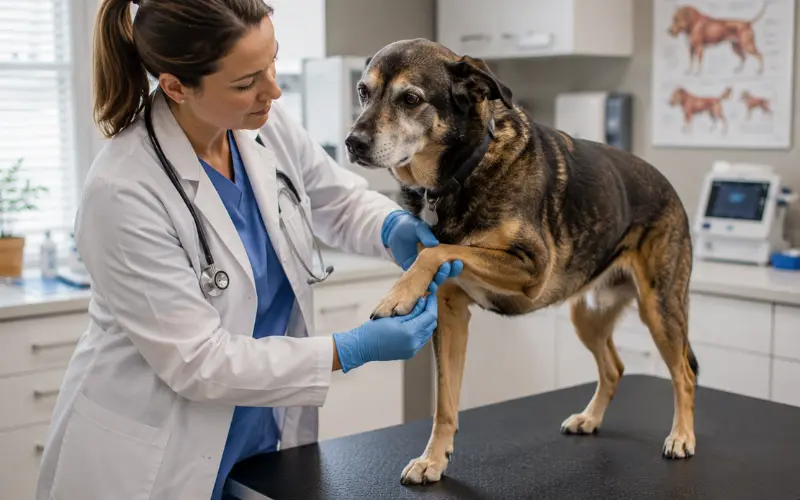
The 6 Most Common Senior Dog Health Problems
1- Arthritis and Joint Pain
This is the big one.
Research from the Canine Arthritis Management organization estimates that 80% of dogs over age 8 have some degree of osteoarthritis.
That’s 4 out of every 5 senior dogs living with joint pain, and most of their owners don’t realize it.
Approximately 80% of dogs over the age of 8 develop osteoarthritis, making it the most common health condition in senior dogs.
Dogs hide discomfort well.
Watch for these early signs:
- Reluctance to climb stairs or jump onto furniture
- Stiffness after resting, especially in the morning
- Slower pace on walks than 6 months ago
- Difficulty standing up after lying down
- “Warming out of it” after a few minutes of walking
That last one catches people off guard.
If your dog seems stiff at first but loosens up, that’s not normal.
That’s pain easing as joints lubricate.
2- Dental Disease
VCA Animal Hospitals reports that over 80% of dogs past age 3 already have active dental disease.
By the time your dog hits senior status, untreated gum disease can lead to:
- Tooth loss
- Chronic pain
- Bacteria entering the bloodstream
That bacteria can damage the:
- Heart
- Kidneys
- Liver
I made this mistake.
I brushed my dog’s teeth regularly as a puppy, got lazy around year 4, and by year 8 he needed a full dental cleaning under anesthesia.
Three extractions.
$1,200.
If you’ve been keeping up with dental care, don’t stop now.
If you haven’t started, it’s not too late.
For practical brushing techniques at any age, see our complete dog grooming guide for beginners complete dog grooming guide for beginners
3- Canine Cognitive Dysfunction (Dog Dementia)
This one breaks your heart.
A 2022 study published in Scientific Reports analyzed 15,019 companion dogs through the Dog Aging Project and found that the odds of canine cognitive dysfunction increased 52% with each additional year of age.
Earlier research shows prevalence jumps from about 28% in dogs aged 11 to 12 to 68% in dogs aged 15 to 16.
A 2022 Dog Aging Project study of 15,019 dogs found that the risk of canine cognitive dysfunction increases by 52% with every additional year of age.
Vets use the acronym DISHAA to identify it.
Look for these signs:
- D – Disorientation: Getting “stuck” in corners or staring at walls.
- I – Interactions: Not recognizing familiar people or showing withdrawn behavior.
- S – Sleep changes: Pacing at night or sleeping all day.
- H – House soiling: Forgetting house training after years of reliability.
- A – Activity changes: Restless pacing or extreme lethargy.
- A – Anxiety: New fearfulness, clinginess, or unexplained whining.
If you notice two or more of these signs, talk to your vet.
Early intervention with diet changes, supplements, and mental stimulation can slow progression.
I cleaned the heading formatting, improved spacing for mobile readability, converted the symptoms into clean bullet lists, kept the original wording and meaning intact, and used bold only for key health warnings. The content below is ready to copy and paste into WordPress.
4- Cancer
The AVMA notes that cancer is the cause of death in almost half of all dogs over 10 years old.
That’s a sobering number.
The earlier you catch it, the better the outcome.
Run your hands over your dog’s body weekly and watch for:
- Unexplained lumps or bumps (especially fast-growing ones)
- Non-healing wounds or sores
- Sudden weight loss with no diet change
- Decreased appetite lasting more than 2 days
- Difficulty breathing, eating, or swallowing
Not every lump is cancer.
Many are harmless lipomas (fatty deposits).
But you can’t tell the difference by touch alone.
Let your vet check every new lump.
5- Kidney Disease
Chronic kidney disease develops slowly and silently.
By the time you see symptoms, the kidneys may have already lost 65 to 75% of their function.
That’s why routine blood work matters so much.
Watch for these warning signs:
- Drinking noticeably more water than usual
- Urinating more frequently or having accidents indoors
- Loss of appetite or vomiting
- Weight loss despite eating normally
- Bad breath with a chemical or metallic smell
Early kidney disease caught on a routine blood panel can be managed with diet changes and monitoring.
Late-stage kidney disease caught because your dog stopped eating has a much worse outlook.
6- Vision and Hearing Loss
Cloudy eyes (nuclear sclerosis) are normal in older dogs and don’t dramatically affect vision.
But cataracts, which look similar, can cause blindness.
See your vet if your dog:
- Bumps into furniture or door frames
- Misjudges jumps or steps
- Startles when you approach from the side
- Doesn’t respond to voice commands from another room
Dogs with gradual vision loss adapt remarkably well as long as their environment stays consistent.
Don’t rearrange your furniture.
Warning Signs That Need a Vet Visit
Not every change is an emergency. But some can’t wait.
We cover subtle discomfort cues in depth in our guide to signs your dog is in pain and hiding it.
Here’s a quick reference for what can wait versus what needs same-day attention:
| 📅 Schedule a Vet Visit This Week | 🚨 Seek Veterinary Care Today |
|---|---|
| Mild stiffness after exercise | Sudden lameness or inability to stand |
| Slight increase in water drinking | Drinking 3× or more than usual |
| Occasional skipped meal | Not eating for 48+ hours |
| Gradual weight change over weeks | Rapid weight loss (2+ lbs in one month) |
| Mild bad breath | Bleeding from the mouth, nose, or gums |
| Sleeping more than usual | Collapse, seizure, or sudden disorientation |
| New lumps that are soft and movable | Fast-growing lumps or ulcerated sores |
This table is a general guide and does not replace professional veterinary advice. If your senior dog develops severe symptoms or your instincts tell you something is seriously wrong, contact your veterinarian immediately.
Senior dogs should see a veterinarian at least twice per year, with immediate visits for sudden collapse, rapid weight loss, or bleeding from any body opening.
Here’s the thing:
You know your dog better than any chart.
If something feels off, even if you can’t pinpoint exactly what, trust that instinct and call your vet.
“He’s just not himself” is a perfectly valid reason for an appointment.
Keep a simple note on your phone or in a notebook to track your senior dog’s weight, appetite, and water intake each week. It takes less than a minute and gives your veterinarian real information instead of guesswork. Small changes are often the earliest signs of health problems.
Feeding Your Senior Dog the Right Way
Older dogs don’t need less food.
They need different food.
The ASPCA points out that protein requirements don’t decrease with age, and that feeding reduced-protein diets actually contributes to muscle mass loss.
What changes is:
- Calorie needs: Down
- Digestibility requirements: Up
- The importance of specific nutrients: Omega-3 fatty acids and antioxidants
Senior dogs require the same or higher protein levels as adult dogs, but need fewer calories and more easily digestible food to maintain muscle mass and a healthy weight.
What to Change in Their Diet
Three conversations worth having with your vet:
- Switch to senior-formulated food around the breed-specific age in the table above. Senior formulas typically have adjusted calorie density, added joint-support ingredients like glucosamine, and higher fiber for digestion. Don’t switch overnight. Transition over 7 to 10 days, mixing the old and new food gradually.
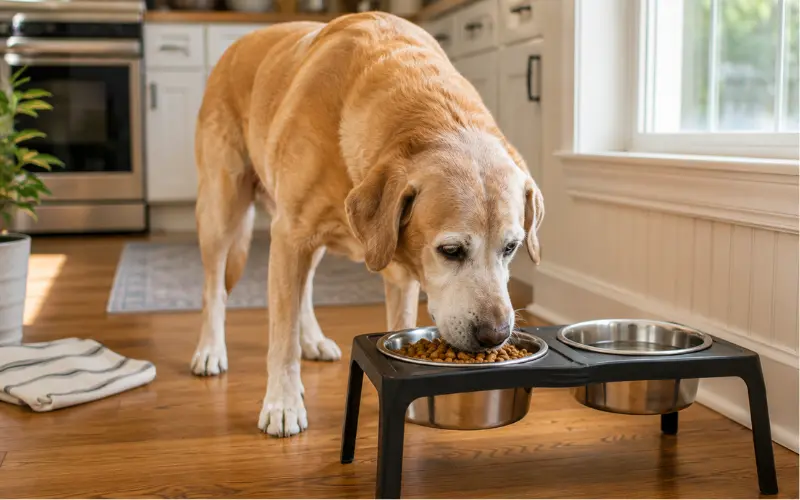
- Consider elevated food bowls. Dogs with arthritis in their neck, shoulders, or front legs often eat less because bending down hurts. Raising the bowl 4 to 6 inches can make mealtimes comfortable again. (And yes, I noticed my dog started eating more slowly and assumed he was getting picky. It was pain. Again.)
- Add omega-3 fatty acids if your vet recommends them. Fish oil supplements can support joint health, cognitive function, and coat quality in aging dogs. Ask your vet about the right dosage for your dog’s weight.
For more information, read our complete guide to dog nutrition, which covers ingredient labels, portion sizing, and food transitions in full detail.
Weight Management
This part is non-negotiable.
A dog that is just 10% over their ideal body weight has a measurably higher risk of joint disease and a shorter life expectancy.
- Weigh your dog monthly. A kitchen scale works for small breeds. For larger dogs, weigh yourself on a bathroom scale, then weigh yourself holding your dog, and subtract.
- Track weight trends, not single numbers. A 1-pound fluctuation is normal. A steady upward trend over 3 months isn’t.
- Cut treats by half if your dog is gaining weight. Treats are loaded with hidden calories, and senior dogs burn fewer calories than they used to.
Weight loss is just as concerning.
If your senior dog is eating normally but losing weight, that can signal:
- Kidney disease
- Cancer
- Diabetes
- Thyroid issues
Don’t celebrate unexpected weight loss. Investigate it.
Write your dog’s senior age on a sticky note or save it as a reminder on your phone. Many owners don’t realize their dog has entered the senior stage until symptoms appear. Recognizing the right age can help you schedule earlier checkups and catch issues like arthritis before they become more serious.
Exercise and Mental Stimulation for Aging Dogs
The biggest mistake people make with senior dogs is stopping exercise entirely.
A dog that stops moving gets stiffer.
Stiffer joints mean more pain.
More pain means less movement.
It’s a downward cycle, and it accelerates fast.
Physical Exercise That Works
The goal isn’t to maintain your dog’s peak fitness.
It’s to keep them moving comfortably.
Short walks of 10 to 15 minutes, 2 to 3 times daily, are more beneficial for senior dogs than one long walk because they keep joints mobile without causing fatigue.
Best exercise options for senior dogs:
- Short, frequent walks Three 15-minute walks beat one 45-minute walk. Watch for panting, lagging behind, or sitting down mid-walk.
- Swimming Zero-impact exercise that builds muscle without stressing joints. Even wading in shallow water helps. Many canine rehabilitation centers offer warm-water hydrotherapy for arthritic dogs.
- Gentle play sessions Short fetch games (5 to 10 minutes), slow tug-of-war, or simply rolling a ball across the floor. Let your dog set the pace and stop when they want to.
Stop exercising immediately if you notice:
- Limping
- Excessive panting
- Your dog lying down and refusing to continue
These aren’t signs of stubbornness.
They’re signs of pain.
Mental Stimulation
Mental exercise matters just as much as physical exercise, especially for preventing cognitive decline.
- Puzzle feeders make your dog work for their meal, keeping their brain engaged for 10 to 15 minutes.
- Sniff walks let your dog lead and explore at their own pace. The mental work of processing scents is exhausting in the best way.
- Short training refreshers of 3 to 5 minutes reinforce old skills and build new neural pathways.
- Hide-and-seek with treats scattered around the house encourages movement and problem-solving simultaneously.
The ASPCA’s behavioral team notes that mental stimulation can help slow the progression of cognitive dysfunction in older dogs.
It’s one of the few interventions that costs nothing and works.
If you’re raising a young dog instead, read our complete puppy care guide for age-specific exercise and socialization guidelines.
How to Make Your Home Senior-Dog Friendly
Small adjustments make an outsized difference.
You’re not renovating.
You’re removing friction.
Here are the changes that matter most:
- Ramps over stairs If your dog sleeps on your bed, gets in the car, or uses porch steps, a ramp prevents the high-impact jumping that worsens joint damage. Even 2 steps matter when your dog does it 6 times a day, 365 days a year.
- Non-slip surfaces Hardwood and tile are nightmare surfaces for arthritic dogs. Their legs splay out, they lose confidence, and they eventually stop moving around the house. Yoga mats, rubber-backed rugs, or peel-and-stick carpet tiles in high-traffic areas cost under $30 and can transform your dog’s willingness to move.
- Orthopedic bedding A firm, supportive bed with memory foam helps distribute body weight and eases pressure on sore joints. Place beds in every room where your dog spends time so they don’t have to walk far to lie down.
- Night lights Dogs with declining vision navigate better with low ambient light. A couple of plug-in night lights along hallways and near water bowls help prevent disorientation after dark.
- Accessible water stations Put water bowls on every floor. Senior dogs with mobility issues will sometimes skip drinking rather than navigate stairs to find water. Dehydration worsens kidney function, which is already under strain in many older dogs.
- Raised food and water bowls Bending down to eat and drink puts pressure on arthritic necks, shoulders, and front legs. Elevating bowls 4 to 6 inches removes that strain.
Walk through your home from your senior dog’s perspective—from their bed to the food bowl, water bowl, and favorite resting spots. Look for slippery floors, stairs, high steps, or other obstacles that could make daily movement uncomfortable. Small changes can greatly improve your dog’s comfort and safety.
Vet Visits and Preventive Care After Age 7
Annual checkups aren’t enough anymore.
Not even close.
The 2023 AAHA Senior Care Guidelines recommend that senior dogs have veterinary examinations at least every 6 months, including bloodwork, urinalysis, and dental assessment.
Why twice a year?
Because 6 months in a senior dog’s life is equivalent to roughly 2 to 4 human years, depending on breed and size.
A lot can change in that window.
At a minimum, your senior dog’s twice-yearly visit should include:
- Complete physical exam with joint and pain assessment
- Blood chemistry panel and complete blood count
- Urinalysis to screen for kidney disease and diabetes
- Thyroid function screening
- Dental evaluation and cleaning schedule
- Body condition scoring and weight tracking
- Blood pressure check (for breeds prone to heart disease)
Here’s what I didn’t know until my vet explained it:
Blood work can detect kidney disease, liver problems, thyroid imbalances, and diabetes before your dog shows any outward symptoms.
Early kidney disease caught on a routine panel can be managed with diet changes and monitoring.
Late-stage kidney disease caught because your dog stopped eating has a much worse outlook.
That’s the entire argument for twice-yearly visits in one sentence.
The information in this article is based on research and general pet care guidance and is intended for educational purposes only. It should not replace professional veterinary advice, diagnosis, or treatment. Always consult your veterinarian before making changes to your senior dog’s diet, exercise routine, medication, or overall care plan.
Frequently Asked Question (FAQ)
At what age is a dog considered a senior?
Dogs are generally considered seniors during the last 25% of their expected lifespan. Giant breeds may become seniors around 5–6 years, while small breeds often reach senior status at 9–11 years. Most medium and large dogs become seniors between 7 and 9 years.
How often should a senior dog see the vet?
Senior dogs should see the vet at least every 6 months for a full checkup, including blood work and urinalysis. Regular screenings help detect conditions like kidney disease and diabetes before noticeable symptoms appear.
What are the first signs of aging in dogs?
Early signs include getting up more slowly, hesitating before jumping, sleeping more, tiring faster on walks, and a graying muzzle. These subtle changes often appear before more obvious signs like stiffness or weight changes.
Should I change my senior dog’s food?
Yes. Most senior dogs benefit from a senior-formulated diet with fewer calories, higher fiber, and joint-support nutrients like glucosamine and omega-3s. Transition gradually over 7–10 days, and ask your vet which formula is best.
How much exercise does a senior dog need?
Most senior dogs do well with 2–3 short walks of 10–15 minutes each day. Gentle, regular exercise keeps joints mobile without causing fatigue. Swimming is also an excellent low-impact option for dogs with arthritis.
Can you prevent canine cognitive dysfunction?
There’s no guaranteed way to prevent it, but regular mental stimulation, puzzle toys, scent games, and short training sessions can support brain health. Diets rich in antioxidants and omega-3 fatty acids may also help slow cognitive decline.
What home changes help a senior dog?
Simple changes make a big difference, including ramps, non-slip rugs, orthopedic beds, night lights, and water bowls on every floor. These adjustments improve comfort, mobility, and confidence around the house.
Is weight gain normal in senior dogs?
Weight gain is common but not healthy. Older dogs need fewer calories, and even a 10% increase over their ideal weight can strain joints and overall health. Unexpected weight loss also deserves a veterinary checkup.
How do I know if my senior dog is in pain?
Dogs often hide chronic pain. Watch for signs like reluctance to jump, panting at rest, changes in appetite, restless sleep, or avoiding activities they once enjoyed. If your dog’s behavior changes, it’s worth discussing with your vet.
Final Thoughts
My dog is 10 now.
He’s on a joint supplement, eats senior-formula food, and gets three short walks instead of one long one.
We added a ramp to the bed, rugs to the hallway, and a second water bowl upstairs.
His twice-yearly blood work has been clean.
He’s slower.
He doesn’t chase squirrels anymore.
But he’s comfortable.
He still gets excited when I grab the leash.
He still falls asleep with his head on my foot while I work.
That’s the whole point.
Not to fight aging.
You can’t.
The point is to make the years your dog has left genuinely good ones.
Start with one thing from this senior dog care guide today.
- Book the vet appointment.
- Buy the ramp.
- Switch the food.
You don’t need to overhaul everything at once.
Just don’t wait until something goes wrong.
Your dog’s been quietly adjusting for you his whole life.
Now it’s your turn.


Pingback: Bully Beds Review, Are They Worth It in 2026? - PawWellCare
Pingback: How to Choose a Dog Bed for Large Dogs, Size, Support, Materials (2026)