


The first time I noticed it, I almost didn’t. A few white hairs around my dog’s muzzle, easy to miss if you’re not looking. Then I caught her hesitating before jumping onto the couch, something she used to do without thinking twice.
That’s usually how it starts. Not a dramatic change, just small ones that stack up until one day you realize your dog isn’t a “grown dog” anymore. She’s a senior, and that means her needs have quietly shifted too.
Here’s the thing nobody tells you when this happens: good senior dog care isn’t just “the same care, but gentler.” Nutrition needs shift. Vet visit schedules should change. Their bodies, and even their brains, start working differently, and a lot of the advice that worked at age 3 stops applying at age 9.
I made the mistake of assuming “she seems fine” was enough for longer than I should have. It wasn’t until a routine checkup caught an issue I hadn’t noticed at all that I realized how much I didn’t actually know about senior dog care.
This guide covers what changes, backed by veterinary guidelines rather than general “be gentle with your old dog” advice. Proper senior dog care is specific: specific ages, specific vet visit frequency, specific diet adjustments. That specificity is what actually helps.
Dogs are generally considered seniors around age 7, though this varies by size. Small breeds often don’t reach senior status until 9 to 11 years, while giant breeds may enter their senior years as early as 6.
Senior pets make up 44% of the pet population, according to the 2023 AAHA Senior Care Guidelines. Senior dog care centers on more frequent vet visits—at least twice yearly—adjusted nutrition, joint support, and watching for cognitive changes that many owners miss entirely.
Senior dog care depends primarily on your dog’s size and breed, since small dogs age more slowly than giant breeds, and it requires more frequent veterinary monitoring than a younger, healthy adult dog needs.
When Is a Dog Considered “Senior”?
There’s no single birthday when a dog crosses into “senior” territory, which is exactly why senior dog care can’t follow a one-size-fits-all timeline. Size and breed matter more than age alone, and that surprises a lot of owners.
Veterinarians at VCA Hospitals define senior status as roughly 75% of a dog’s average expected lifespan rather than a fixed number. That’s why a Great Dane can be considered senior at 5 to 6 years old, while a small breed might not reach that stage until 10 to 12.
The ASPCA breaks this down by size more specifically: small-sized dogs are generally considered seniors around 9 to 11 years, medium-sized dogs around 8 to 10 years, large-sized dogs around 8 or 9 years, and giant breeds as early as 6 years old. That’s a genuinely wide range for what people casually lump together as “old dog,” and it’s exactly why senior dog care guidance has to account for size, not just age.
Use this table as a starting point, not a hard rule. Genetics, health history, and individual variation can shift things earlier or later, which is exactly why the physical and behavioral signs below matter just as much as your dog’s age on paper.
A dog’s size is one of the strongest predictors of when they enter senior life stage, with giant breeds like Great Danes reaching senior status by age 6, roughly half the age of small breeds like Chihuahuas.

Physical Signs of Aging You Shouldn’t Ignore
Age on paper is one thing. What you can actually observe is often more useful for figuring out where your dog stands.
- Greying around the muzzle and face. Often the earliest visible sign, though it doesn’t always match up with internal aging.
- Cloudy or bluish-looking eyes. Can be a normal aging change (lenticular sclerosis) or a sign of cataracts, worth a vet check either way.
- Slower to rise, hesitant on stairs or furniture. Early sign of joint stiffness, not just “being lazy.”
- Weight changes in either direction. Slower metabolism can bring weight gain, while some senior conditions cause unexpected weight loss.
- Changes in sleep patterns. More daytime sleeping, or restlessness at night, both worth mentioning at a checkup.
None of these signs alone means something is wrong. Together, or if they show up suddenly, they’re worth paying attention to.
How Often Should Senior Dogs See the Vet?
This is one of the biggest practical changes in senior dog care, and it’s the one most owners underestimate.
The ASPCA recommends senior pets see a veterinarian at least twice a year, compared to the annual visit that’s typically enough for healthy younger adult dogs. If your senior dog is already being treated for an ongoing health issue, your vet may recommend even more frequent visits.
Senior dogs benefit from veterinary checkups at least twice yearly rather than once, since earlier detection of age-related health changes generally leads to better outcomes and more treatment options.
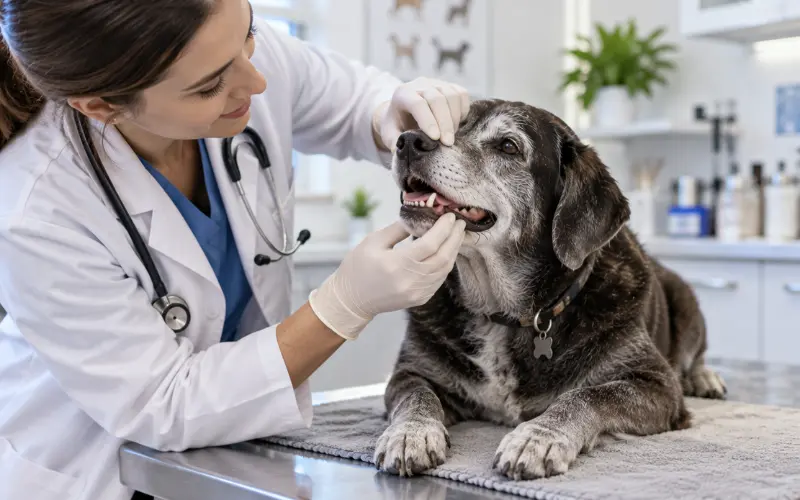
Why the change? Vets use these visits to track things that shift gradually and are easy to miss day to day: weight, dental health, joint mobility, heart sounds, and bloodwork markers for kidney and liver function. A lot of senior health issues are far more manageable when caught early, and twice-yearly visits are how that early catch actually happens.
If your dog has never had baseline senior bloodwork done, ask your vet about it at the next visit. It gives you a reference point for “normal” that makes future changes much easier to spot.
Senior Dog Nutrition – What Actually Changes
Metabolism slows down as dogs age, and that single change ripples through a lot of other decisions. Because of decreased activity and a slower metabolism, senior dogs can need up to 20% fewer total calories than a middle-aged adult dog eating the same amount, which is a big part of why unmonitored feeding leads to slow, steady weight gain in older dogs.
Weight gain is one of the most common and most preventable senior dog issues. Extra weight puts additional stress on joints that may already be dealing with early arthritis, which can turn manageable stiffness into a much bigger mobility problem.
The 2023 AAHA Senior Care Guidelines note that nutritional needs should be evaluated individually rather than applying a single “senior formula” to every dog, since factors like existing health conditions, activity level, and body condition score all affect what a specific dog actually needs. Good senior dog care means working with your vet on this, not guessing from the bag label.
Don’t switch a senior dog to a new food based on the bag alone. Ask your vet to check your dog’s current body condition score first, since “senior formula” isn’t automatically the right call for every aging dog, especially ones already at a healthy weight.
For a deeper breakdown of feeding amounts and adjusting portions safely, our complete dog nutrition guide for beginners covers the fundamentals that still apply at any life stage.
Joint Health, Mobility, and Arthritis
Stiff joints are one of the most common changes owners notice, and one of the most manageable when addressed early.
According to the American Kennel Club, keeping joints moving with regular, appropriate exercise is one of the best ways to protect against further arthritis effects, alongside maintaining a healthy weight to reduce stress on hips and joints. This is a core piece of senior dog care that’s easy to under-do, since it feels counterintuitive to keep an aging dog moving.
- Keep exercise consistent, not intense. Shorter, more frequent walks often work better than fewer long ones.
- Watch for trouble getting up, reluctance to jump, or a stiff gait, especially after rest.
- Ask your vet about joint supplements like glucosamine and chondroitin as a preventive measure.
- Trim excess hair between paw pads on slippery flooring. It genuinely helps traction, according to AKC guidance.
If your dog seems stiff first thing in the morning but loosens up after a few minutes of walking, that’s a classic early arthritis pattern. Mention it at your next vet visit even if it seems minor.
Cognitive Decline – The Sign Most Owners Miss
This is the part of senior dog care that gets the least attention, and it deserves more.
According to a study published in the Journal of the American Veterinary Medical Association (Neilson et al., 2001), 28% of dogs aged 11 to 12 show signs of cognitive impairment, a number that jumps to 68% in dogs aged 15 to 16.
That’s a significant portion of senior dogs experiencing changes that often get written off as “just old age” instead of recognized as canine cognitive dysfunction, sometimes described as the dog version of dementia.
Vets often use the acronym DISHAA to describe the pattern of changes:
- D – Disorientation: Confusion in familiar spaces.
- I – Interactions: Changes in social behavior with people or other pets.
- S – Sleep-wake cycle changes: Restlessness at night or more daytime sleep.
- H – House-training loss: Accidents from a previously house-trained dog.
- A – Activity level changes: Increased or decreased activity.
- A – Anxiety: New or worsened anxious behaviors.
Canine cognitive dysfunction affects a substantial portion of senior dogs, with prevalence rising sharply with age, yet many cases go unrecognized because the signs are mistaken for normal aging.
None of these signs on their own is a diagnosis. But if you notice several together, or a sudden shift in a previously predictable dog, it’s worth bringing up at your next vet visit specifically, not just mentioning it in passing. Recognizing pain and discomfort is its own skill in senior dog care, and our guide on signs your dog is in pain and hiding it covers the behavioral cues that often overlap with cognitive changes.
Exercise for Senior Dogs – Adjusting, Not Stopping
A common mistake in senior dog care is assuming an aging dog needs less activity altogether. What actually needs to change is the type and intensity, not whether exercise happens at all. This is one of the parts of senior dog care that owners get wrong most often, usually with good intentions.
Reduced exercise leads to reduced muscle tone, which then makes jumping, climbing, and everyday movement harder, according to VCA Animal Hospitals. That’s a cycle worth avoiding rather than accepting as inevitable.
Consistent, moderate exercise helps senior dogs maintain muscle tone and joint mobility better than either full rest or unchanged high-intensity activity.
Watch how your dog moves the day after exercise, not just during it. Soreness that shows up 24 hours later is a common early sign that the intensity needs adjusting, even if your dog seemed fine in the moment.
Grooming Changes for Senior Dogs
Grooming needs shift quietly as dogs age, and skipping the adjustment can lead to real discomfort. If you’re unsure how often an older dog actually needs a bath, our bathing frequency guide breaks down what changes with age.
- Brush more frequently. Reduced self-grooming and thinner coats make mats more likely, and mats can hide skin issues underneath.
- Check nails more often. Senior dogs are often less active, which means nails wear down naturally less and need more frequent trimming.
- Watch for skin changes during grooming. Bathing and brushing sessions are a natural time to notice new lumps, dry patches, or sensitive spots.
- Be gentler with pressure and duration. Arthritic joints and thinner skin mean a senior dog’s grooming routine may need to be shorter and more careful than it used to be.
Regular grooming does double duty for senior dogs: it maintains comfort, and it gives you a hands-on chance to catch changes early, often before they’re visible any other way.
Home Modifications for Comfort and Safety
Small changes around the house can make a real difference in a senior dog’s daily comfort.
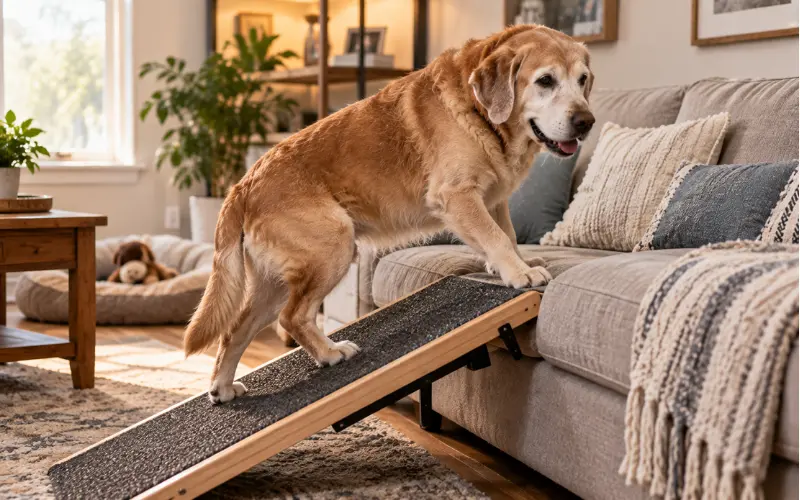
- Add a ramp or pet stairs for couches, beds, or car access, especially for dogs who used to jump without hesitation.
- Use non-slip mats or rugs on hardwood or tile floors where senior dogs are prone to slipping.
- Move food, water, and bedding to the main floor if stairs have become difficult.
- Consider an orthopedic bed that better supports aging joints than a standard cushion.
- Keep nails trimmed regularly. Overly long nails change how a senior dog’s paw grips the floor.
These adjustments are inexpensive and low-effort, but they directly address the mobility and safety issues that come up most often in senior dog care.
Common Senior Dog Health Conditions to Watch For
Being aware of what’s common in senior dogs helps you catch changes early, without jumping to conclusions about every little shift.
- Arthritis and joint disease, one of the most frequently diagnosed senior dog conditions.
- Dental disease, which affects nearly 80% of dogs by age 3 and only gets more serious with time if untreated, according to the American Veterinary Medical Association.
- Vision and hearing changes, sometimes gradual enough to go unnoticed at first.
- Kidney and liver function changes, often caught through routine bloodwork before symptoms appear.
- Weight fluctuation, in either direction, tied to metabolism and activity changes.
This list isn’t meant to diagnose anything. It’s meant to help you recognize what’s common enough that your vet will likely be watching for it too, which is a big part of what senior dog care actually looks like day to day. For a closer look at specific symptoms and when they warrant a same-week appointment, see our guide to common dog illnesses and symptoms to watch for.
A sudden change, rather than a gradual one, is generally more worth an unscheduled vet visit. Gradual slowing over months is common in aging; a dog who was fine yesterday and clearly isn’t today deserves faster attention.
When to Ask Your Veterinarian
Some situations call for a vet visit sooner than your next scheduled checkup.
- Sudden changes in appetite, thirst, or bathroom habits.
- New limping, stiffness, or reluctance to move that appears quickly.
- Signs of confusion, disorientation, or house-training accidents in a previously reliable dog.
- Noticeable weight loss or gain over a short period.
- Any new lump, bump, or growth.
I’m a dog owner sharing personal experience and research, not a veterinarian. This guide is based on published veterinary guidelines from the AAHA, ASPCA, and AKC, but it doesn’t replace professional veterinary care. Always consult your vet for decisions about your senior dog’s health.
Frequently Asked Questions (FAQ)
When is a dog considered a senior?
Dogs are generally considered seniors around age 7, though this varies significantly by size. Small breeds often don’t reach senior status until 9 to 11 years old, while giant breeds like Great Danes are considered seniors by age 6, according to ASPCA guidelines.
u003cbru003eHow often should senior dogs visit the vet?
Senior dogs should see a veterinarian at least twice a year, compared to the annual visit typical for younger healthy adults. Dogs already being treated for a health condition may need even more frequent visits, based on their vet’s specific recommendations.
What are the signs of dog dementia?
Signs of canine cognitive dysfunction include disorientation in familiar places, changes in social interactions, altered sleep-wake cycles, loss of house-training, changes in activity level, and new anxiety. Studies show 28% of dogs aged 11 to 12 show cognitive impairment signs, rising to 68% by ages 15 to 16.
Do senior dogs need a different diet?
Many senior dogs benefit from adjusted nutrition, often fewer calories to prevent weight gain, alongside quality protein and joint-supporting nutrients. The right approach depends on your individual dog’s body condition and health status, not a one-size-fits-all senior formula.
How can I help my senior dog’s joints?
Consistent, moderate exercise, maintaining a healthy weight, and asking your vet about joint supplements like glucosamine and chondroitin can all help support aging joints. Non-slip flooring and ramps also reduce joint strain from slips or jumps.
Is my senior dog in pain if they’re slowing down?
Slowing down can indicate pain, but not always. Watch for additional signs like reluctance to jump, stiffness after rest, or changes in behavior around being touched. When in doubt, a vet visit can help distinguish normal aging from a treatable source of discomfort.
What’s the difference between normal aging and a health problem?
Gradual changes over months, like slightly slower walks or more sleep, are common in normal aging. Sudden changes, such as sudden lameness, confusion, or appetite loss, are more likely to indicate a specific health issue and generally warrant a sooner vet visit.
Giving Your Senior Dog Their Best Years
My dog with the greying muzzle is still the same dog who used to bound across the yard. She just needs a little more support to keep doing the things she loves, and honestly, watching her adjust with me has been one of the more quietly rewarding parts of having her this long.
Three things worth carrying with you from this guide.
Senior status depends more on size than age alone, so don’t wait for a specific birthday to start paying closer attention. Twice-yearly vet visits catch far more than owners realize, often before visible symptoms even show up. And cognitive changes are more common than most people think, worth watching for specifically rather than dismissing as “just getting old.”
For more on keeping your dog healthy at every life stage, check out our complete guide to keeping your dog healthy and happy.



Pingback: Dog Periodontal Disease Stages: What Each Stage Looks Like
Pingback: Dog Dental Disease: Complete Guide (Why 80% of Dogs Get It by Age 3)