


You’re cutting up a fresh pineapple. Juice runs across the board, the kitchen smells like summer, and your dog is pressed against your leg, staring at every slice. Then one golden chunk slips off the counter, and it’s gone before you can bend down.
So, can dogs eat pineapple? Was that chunk a treat, or a mistake?
Look it up and almost every site says the same thing: “Yes, in moderation.” But hardly anyone tells you what moderation means for a 10-pound dog versus a 90-pound one. Some sites say canned pineapple is fine if you rinse it, and others say never. Some say pineapple will stop your dog from eating poop, and others call that a myth.
Here’s the short version. Fresh pineapple is safe for most dogs, but the details matter. The tough core and spiky skin can get stuck in a dog’s gut. And one cup of pineapple holds about 16 grams of sugar, which is a lot for a small stomach.
Here’s what you’ll find below:
- How many chunks to give, based on your dog’s size
- Which parts and forms are safe, from frozen bits to canned, juice and dried
- What to do if your dog ate the core or skin, and when to call the vet
Yes, dogs can eat fresh pineapple in small amounts.
Remove the skin, core and crown, and cut the flesh into bite-size pieces. Pineapple is about 86% water and rich in vitamin C, but one cup holds around 16 grams of sugar. Keep it to a few chunks as an occasional treat.
Is Pineapple Good for Dogs?
Yes, pineapple is good for most dogs as a small treat. It’s juicy, low in fat and full of flavor, and most dogs love it. Here’s what’s inside, based on USDA data:
One cup of fresh pineapple chunks (165 g) has about 82 calories, 16 g of natural sugar, 2.3 g of fiber and 79 mg of vitamin C, plus manganese.
Pineapple is about 86% water, according to USDA FoodData Central.
What that means for your dog:
- A juicy, hydrating snack. With so much water, a few cold chunks are a nice way to cool off on a hot day.
- Some vitamins and fiber. Pineapple adds vitamin C, manganese and a little fiber. Dogs make their own vitamin C, and a complete and balanced dog food already covers their needs. So think of it as a bonus, not a supplement.
- A natural enzyme. Pineapple contains bromelain, an enzyme that breaks down protein. You’ll see big health claims for it online, but there’s no good research showing that the bromelain in a few chunks of fruit helps dogs. Even in people, the National Center for Complementary and Integrative Health says the evidence is limited.
- Lots of natural sugar. This is the catch. Gram for gram, pineapple has about 60% more sugar than watermelon. That’s why portions stay small.
The bottom line: pineapple is a tasty, safe treat when you serve it right. It’s not a medicine, and your dog doesn’t need it to be healthy.
How Much Pineapple Can a Dog Eat?
Most dogs can have 1 to 8 small chunks, depending on their size. Use this chart as a guide. One “chunk” here means a 1-inch cube, which weighs about 15 grams and has roughly 7 to 8 calories and 1.5 grams of sugar.
Treat budget = about 10% of the daily calories for a typical neutered adult dog, divided by 7.5 calories per chunk. Your dog’s real needs depend on age, activity and body shape. This chart is a guide, not a prescription.
Why sugar sets the limit, not calories. Vets generally advise keeping all treats, human food included, to no more than 10% of a dog’s daily calories (AAHA). By calories alone, a 70-pound dog could have about 20 chunks. But 20 chunks would also mean around 30 grams of sugar in one go, plus acid and fiber. That’s a recipe for an upset stomach. So the “per serving” column sits well below the budget on purpose, which also leaves room for your dog’s other treats.
How often? A serving a few times a week is plenty for most dogs. Daily pineapple isn’t dangerous for a healthy dog if you stick to the chart and the stool stays normal, but variety is better. Mix it up with lower-sugar fruits like watermelon or blueberries.
First time? Start with one small piece, then wait 24 hours. Some dogs get loose stools from the acid and fiber. If you’re not sure how many calories your dog needs in total, this guide on how much to feed your dog by weight will help.
How to Prepare Pineapple for Your Dog
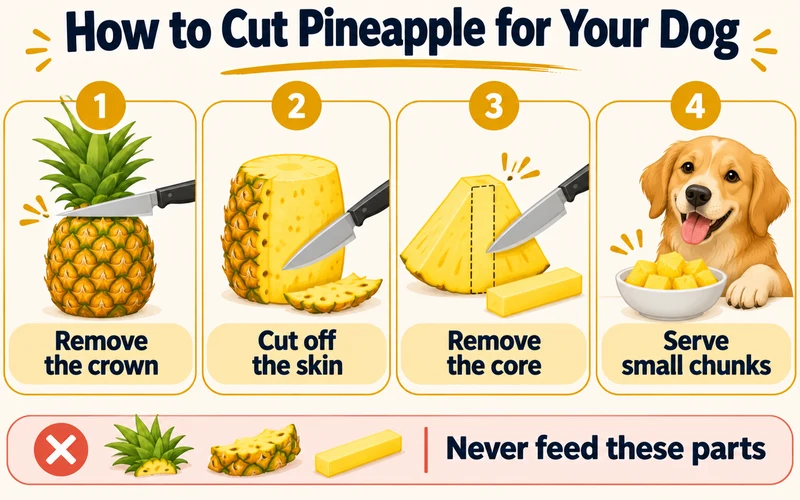
Getting pineapple ready for your dog takes about five minutes. The main job is removing everything that isn’t soft, juicy flesh.
- Pick a ripe pineapple. It should smell sweet at the base and give slightly when you press it. Skip fruit with mold, soft brown spots or a sour, fermented smell.
- Cut off the crown and the base. The spiky leaves on top go straight in the trash, where your dog can’t reach them.
- Slice away all the skin. Stand the pineapple up and cut down the sides. Trim any brown “eyes” left in the flesh.
- Remove the core. Cut the fruit into quarters lengthwise and slice off the hard center strip from each one.
- Cut it into chunks. Use 1-inch pieces for most dogs and smaller bits for toy breeds, puppies and fast eaters.
- Store the rest. Keep chunks in a sealed container in the fridge for up to about 3 days, or freeze them.
Make pineapple last longer.
Freeze small chunks for a cool snack on hot days, and let them soften for a minute for small dogs. Mash a few pieces into a lick mat or a Kong, or stir them into a spoonful of plain, unsweetened yogurt with no xylitol. You can also mix pineapple with watermelon or banana for a simple fruit cup. For more summer ideas, see how to keep your dog cool in summer.
Which Pineapple Forms Are Safe for Dogs?
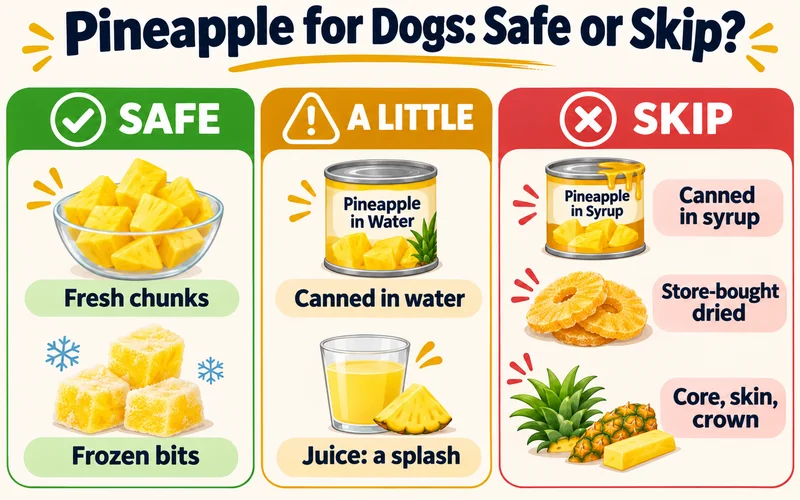
Fresh pineapple is the best choice by far. Other forms range from “fine in small amounts” to “skip it”, mostly because of sugar. Here’s a quick guide, with sugar numbers from USDA FoodData Central:
Sugar figures per 100 g, from USDA FoodData Central. For comparison, fresh pineapple has about 9.9 g of sugar per 100 g.
5 Pineapple Mistakes Dog Owners Make
- Feeding the core. It looks like a handy chew, but it’s woody and hard to digest. A big piece can get stuck.
- Leaving the skin on. The rough, spiky skin can scratch the mouth and throat, and it can also cause a blockage.
- Grabbing a can in syrup. Syrup-packed pineapple adds a lot of extra sugar your dog doesn’t need. If you use canned fruit at all, pick fruit packed in water.
- Pouring juice in the bowl. Juice has the sugar without the fiber, so it hits the stomach fast. Never share sweetened drinks, smoothies or cocktails.
- Giving too much at once. A big bowl of pineapple is the most common reason for diarrhea and vomiting after this fruit. Stick to the chart above.
Can Puppies Eat Pineapple?
Yes, puppies can have a tiny bit of fresh pineapple once they’re fully weaned and eating solid puppy food. Don’t give it to puppies who are still nursing or on milk replacer.
Puppy stomachs are sensitive, so go slowly:
- Start with one tiny, soft piece, about the size of a fingernail.
- Wait 24 hours and check that the stool stays normal before you offer more.
- Mash it for toy-breed puppies so there’s nothing to choke on.
- Keep treats small. Puppies need their complete puppy food to grow well, so all treats together should stay at or under 10% of their daily calories.
If your puppy has a sensitive stomach, or you’re still working out their feeding routine, save fruit for later. There’s no rush.
Does Pineapple Stop Dogs From Eating Poop?
Probably not. You’ll often read that a few chunks of pineapple make a dog’s poop taste bad, so they stop eating it. The idea is that bromelain changes the taste. It’s a popular tip, but no study has shown that it works.
The best research we have points the other way. In a large study led by veterinary behavior researcher Benjamin Hart at UC Davis, owners of more than 1,400 poop-eating dogs reported how well different fixes worked. Eleven products sold to stop poop eating had a success rate close to zero, and so did the training and behavior methods owners tried (Hart et al., 2018). The study also found that about 16% of dogs ate poop often, almost always fresh poop less than 2 days old.
If products made for exactly this job barely help, a few chunks of fruit are unlikely to do better. Here’s what does help:
- Pick up poop right away, in the yard and on walks. This is the most reliable fix.
- Keep your dog on a leash in the yard if they head straight for it.
- Teach “leave it” and reward your dog for coming back to you.
- Talk to your vet if poop eating starts suddenly, or if your dog also seems hungry all the time or is losing weight. Parasites, diet and other health problems can play a part.
When to Skip or Limit Pineapple
Pineapple is safe for most healthy dogs, but some dogs are better off with less, or none at all:
- Dogs with diabetes. Pineapple’s natural sugar can affect blood sugar control. Ask your vet before offering any fruit.
- Overweight dogs on a calorie plan. If you do give pineapple, count it and use it instead of other treats, not as well as them.
- Dogs with sensitive stomachs. The acid and fiber can trigger loose stools or vomiting. If your dog’s stomach is often upset, the problem may be their main food, and this guide to the best dog food for sensitive stomachs can help.
- Dogs on a prescription diet or medication. Check with your vet before adding any new food.
- Dogs who react to it. Allergies to pineapple are rare, but stop and call your vet if you see itching, swelling, hives or vomiting after a new food.
My Dog Ate Pineapple Core or Skin: What Now?
Don’t panic. Most dogs who steal a little pineapple are fine. What matters is which part they ate, how much, and how big your dog is. Use this guide:
Don’t try to make your dog vomit at home unless a vet tells you to.
Pineapple Pizza, Cake and Piña Coladas
Pineapple often comes mixed into foods that aren’t safe for dogs:
- Pineapple pizza: skip it. Pizza is salty and fatty, and the sauce and crust often contain onion or garlic, which can harm dogs, according to the ASPCA.
- Pineapple upside-down cake: skip it. It’s full of sugar and butter, and a sugar-free version could contain xylitol.
- Piña coladas and pineapple cocktails: never. Alcohol is dangerous for dogs, even in small amounts.
- Store-bought fruit cups or fruit salad: check for grapes or raisins, which can cause kidney damage. Our list of human foods that are toxic to dogs covers what to look for.
This article is for general information only and is based on independent research, not personal testing.
PawWellCare is not a veterinarian, and this content doesn’t replace professional veterinary care. If your dog has diabetes, a sensitive stomach or another health condition, ask your veterinarian before adding new foods. If your dog ate pineapple core, skin or crown, or anything that may contain xylitol, alcohol or grapes, contact your veterinarian or an animal poison control center right away.
Frequently Asked Questions (FAQ)
Can dogs eat pineapple every day?
A healthy dog can have a small serving of fresh pineapple on most days if their stool stays normal and the portion matches their size. But a few times a week is a better habit, because pineapple is high in sugar. Rotate it with lower-sugar treats.
Can dogs have pineapple juice?
Only a small splash of 100% pineapple juice with no added sugar, and only now and then. Juice has about as much sugar as the fruit but almost none of the fiber. Never give sweetened juice, smoothies or drinks mixed with alcohol.
Is canned pineapple OK for dogs?
Fresh is much better. Pineapple canned in syrup has too much added sugar, so skip it. Pineapple canned in water, drained and rinsed, is OK in a small amount if that’s all you have. Fruit canned in its own juice is sweeter, so give even less.
Can dogs eat frozen pineapple?
Yes. Small frozen chunks of fresh pineapple make a great hot-day treat. Keep the pieces small, and let them soften for a minute for small dogs and puppies so they’re easier to chew. Avoid store-bought frozen pineapple with added sugar.
Can dogs eat dried pineapple?
It’s best to skip store-bought dried pineapple. It has about 77 grams of sugar per 100 grams, nearly 8 times more than fresh, and is often sweetened. If you dry it yourself with no sugar, give only 1 or 2 tiny pieces.
Is pineapple bad for dogs with diabetes?
It can be. Pineapple is one of the sweeter fruits, and its sugar can make blood sugar harder to control. Ask your vet before giving it to a diabetic dog. Many vets prefer lower-sugar options for these dogs.
Can dogs eat other tropical fruits like mango?
So, Can Dogs Eat Pineapple? The Bottom Line
Yes, dogs can eat pineapple, and most of them will happily take every piece you offer. The secret is serving it the right way:
- Fresh flesh only. Cut away the crown, skin and core every time.
- A few chunks, sized to your dog. From one tiny piece for a toy breed to about 6 to 8 for a giant breed.
- Skip the sugary forms. No syrup-packed cans, sweetened dried fruit or juice by the bowlful.
Next time you cut up a pineapple, set a few small chunks aside, freeze them, and you’ve got a cool, juicy reward ready for a hot afternoon. Want more fruit your dog can share? Try our guides to blueberries, watermelon and cantaloupe.



Pingback: Can Dogs Eat Mango? Safe Portions + 5 Dangerous Mistakes