
You’re standing at the counter with a carton of blueberries, popping them one by one. One slips, bounces off the floor, and it’s gone before you can bend down. Now your dog is sitting perfectly still, staring at the carton like it’s the best thing in the house.
So you wonder: can dogs eat blueberries, or did you just make a mistake?
The good news is that almost every source says yes. The confusing part is everything after that. One popular guide says a big dog can have 5 or 6 blueberries a day, while another says 10 to 12. One major pet food brand says puppies should skip them, while others say small amounts are fine. And plenty of pages call blueberries a “superfood” that fights cancer, without much proof behind it.
The details matter more than you’d think. A hard, frozen berry can lodge in a toy breed’s throat. A big handful can mean diarrhea by evening. And a bite of blueberry muffin can hide xylitol, a sweetener that’s dangerous for dogs.
Here’s what you’ll find below:
- How many blueberries to give by dog size, with the simple math behind the numbers
- Which blueberry foods are safe, and which ones (muffins, jam, flavored yogurt) to keep away from your dog
- What’s normal after your dog ate a lot, including purple poop, and when to call your vet
Yes, dogs can eat blueberries.
Plain fresh or frozen blueberries are a safe, low-calorie treat, at less than 1 calorie per berry, with fiber, vitamin C and antioxidants. Give small dogs 3 to 6 a day and large dogs about 8 to 12. Halve or mash them for tiny dogs and puppies, and skip muffins, jam and anything with xylitol.
Are Blueberries Good for Dogs?
Yes, blueberries are good for most dogs as a small treat. They’re tiny, soft, low in calories, and most dogs like the taste. Here’s what’s inside, based on USDA data:
One average blueberry weighs about 1.4 g and has less than 1 calorie (about 0.8).
Ten blueberries add up to roughly 8 calories and 1.4 g of natural sugar. A full cup (148 g) has about 84 calories, 15 g of sugar, 3.6 g of fiber, 14 mg of vitamin C and 29 µg of vitamin K, plus manganese, according to USDA FoodData Central.
What that means for your dog:
- A treat that barely counts. Ten blueberries have fewer calories than many single store-bought biscuits. That makes them handy for training or for dogs watching their weight.
- Some fiber and vitamins. Blueberries add a little fiber, vitamin C, vitamin K and manganese. Dogs eating a complete and balanced food already get the vitamins they need, so think of this as a bonus, not a supplement.
- Antioxidants. The deep blue color comes from anthocyanins, plant compounds that act as antioxidants.
- Natural sugar. It’s a small amount per berry, but it adds up by the cupful. That’s the main reason portions stay small.
What the dog studies actually show
You’ll see big claims online, from sharper memory to “fighting cancer.” The research in dogs is real, but it’s small and early:
- Sled dogs (2006). Racing sled dogs fed blueberries had higher antioxidant levels in their blood right after exercise, but not a day or two later. The berries didn’t reduce muscle damage from the exercise (Dunlap et al., 2006).
- Senior Beagles (2017). Older Beagles got an extract made from blueberries and grapes, not whole blueberries. The researchers saw a possible benefit for working memory, and said it still needs to be confirmed (Fragua et al., 2017).
- Adult Beagles (2025). In a study of 12 Beagles, dogs clearly preferred a wet food with 3% whole blueberries over the same food without them. Digestion stayed mostly the same, and the berries didn’t change how the dogs’ bodies handled exercise (Maturana et al., 2025).
The honest takeaway: blueberries are a healthy, tasty treat that dogs enjoy. They aren’t a medicine, and no study shows they prevent disease in dogs.
How Many Blueberries Can a Dog Eat?
Here’s where most guides get vague. A good starting rule comes from the American Animal Hospital Association: all treats together, including human food, should make up no more than 10% of your dog’s daily calories.
With blueberries, though, calories are almost never the problem. Even a small dog’s treat allowance would cover dozens of berries. The real limit is your dog’s stomach. Fruit sugar and fiber in a big pile can cause gas, loose stool or vomiting. That’s why the sensible amount is far below the calorie budget.
Treat budget = about 10% of the daily calories for a typical neutered adult dog, divided by 0.8 calories per berry. Your dog’s real needs depend on age, activity and body shape. This chart is a guide, not a prescription.
Why do the numbers online clash? Every guide is making a judgment call, because no study has set a “correct” number of blueberries for dogs. PetMD’s chart is on the careful side (5 to 6 for a 51- to 90-pound dog). Hill’s sets a higher maximum (10 to 12 for a 50- to 90-pound dog). Our chart sits between them. It also leaves plenty of room in the calorie budget for your dog’s other treats.
A few simple rules make any amount work:
- Start with 1 or 2 berries for the first few days, and check the next stool.
- Every day is fine for most healthy dogs, as long as you stay in the range and the poop stays normal.
- Count them as treats. If your dog also gets chews or biscuits, give fewer berries that day.
Not sure how many calories your dog needs in the first place? Our guide on how much to feed your dog by weight walks you through it.
How to Serve Blueberries to Your Dog
Blueberries are about the easiest fruit you can share. There’s no peeling, no pit and no core. A few small steps still make them safer:
- Wash them first. Rinse berries under running water to remove dirt and pesticide residue, the same way you would for yourself.
- Pick firm, fresh berries. Toss any that are moldy, mushy or leaking juice.
- Size them to your dog. For toy breeds, young puppies and dogs that gulp, cut each berry in half or mash it. A whole berry is small enough to slip down the throat without being chewed.
- Be careful with frozen berries. Frozen blueberries are hard, cold and slippery, so they’re a bigger choking risk for small dogs. Let them thaw for a few minutes, or halve them. Most large dogs can crunch them whole.
- Use them as training treats. One berry is a perfect bite-size reward. Just count every berry toward the day’s total.

Turn a few berries into a long-lasting treat.
Smear a spoonful of mashed blueberries on a lick mat, or press a few into a Kong with your dog’s usual food and freeze it. For a summer “pupsicle,” blend blueberries with a little banana and plain, unsweetened, xylitol-free yogurt, then freeze in an ice cube tray. Our guide to bananas for dogs covers the banana side, and there are more hot-day ideas in how to keep your dog cool in summer.
Can Puppies Eat Blueberries?
This is where you’ll find the most conflicting advice. Hill’s says puppies should avoid blueberries. The AKC, PetMD and Pumpkin all say small amounts are fine if you introduce them slowly.
There’s a sensible middle path. Blueberries aren’t toxic to puppies. The real concerns are a young puppy’s sensitive stomach and the choking risk of a whole berry. So:
- Wait until your puppy is fully eating solid puppy food. Their complete diet comes first.
- Start with 1 or 2 berries, mashed or halved, never whole for small breeds.
- Try one new food at a time, and check the next couple of stools.
- Keep it a tiny extra, not a regular part of the bowl. Growing puppies need the balanced nutrition in their food.
If your puppy has had any tummy trouble, or you’re unsure, ask your vet at the next visit before adding fruit.
Blueberry Foods: Which Are Safe?
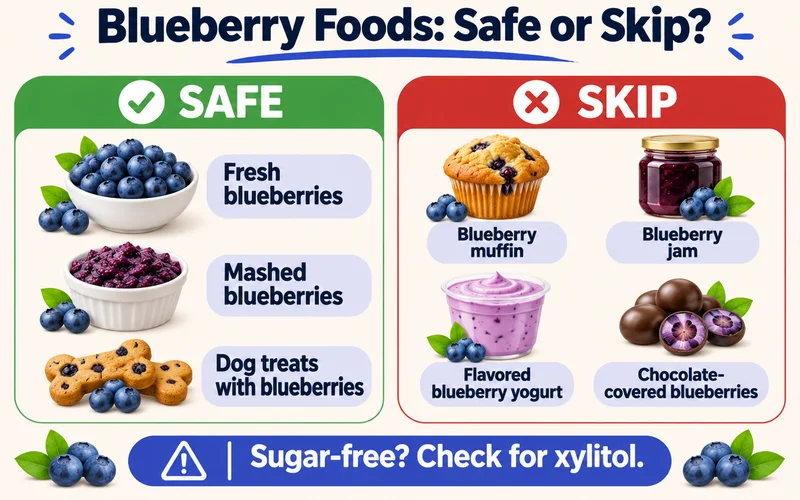
Plain berries are one thing. Most blueberry foods made for people are another. They’re often loaded with sugar and fat, and some contain chocolate or xylitol. Here’s a quick guide:
The xylitol check
Xylitol is a sugar substitute that’s safe for people but dangerous for dogs. The ASPCA lists it in gum, candy, baked goods and toothpaste, and warns it can cause low blood sugar and possible liver damage. The FDA also warns dog owners to keep xylitol products out of reach.
The safest habit: if a blueberry product says “sugar-free,” “low sugar” or “keto,” read the label before your dog gets anywhere near it. If your dog has already eaten one that contains xylitol, call your vet right away. Don’t wait for symptoms.
Can Dogs Eat Strawberries and Blueberries?
Yes, dogs can eat strawberries and blueberries together, as long as the total stays small. Count both fruits toward the same daily treat amount, rather than giving a full serving of each.
Strawberries actually have about half the sugar of blueberries by weight, according to USDA FoodData Central. The bigger issue is size. One medium strawberry weighs about as much as 8 or 9 blueberries, so cut strawberries into small pieces and remove the green tops.
A few other berries, at a glance:
- Raspberries and blackberries: fine in small amounts. Cut large blackberries in half for small dogs.
- Cranberries: plain fresh cranberries in small amounts only. Skip cranberry sauce, juice and sweetened dried cranberries.
- Wild berries you can’t identify: don’t share them. Many wild berries aren’t blueberries at all, and some can be toxic.
Grapes and raisins are not a safe swap.
They look like a similar small fruit, but the ASPCA warns they can lead to kidney damage in dogs, so keep them out of any fruit mix. See our full list of human foods that are toxic to dogs.
When to Go Easy on Blueberries
Blueberries suit most dogs, but a few need a smaller amount or a quick check with the vet first:
- Dogs with diabetes. Blueberries contain natural sugar, and even a few berries need to fit your dog’s insulin and meal plan. Ask your vet before adding any fruit.
- Overweight dogs on a calorie plan. Blueberries can actually help here. Swap a high-calorie biscuit for a few berries, and count them toward the day’s treats.
- Sensitive stomachs or special diets. Dogs with frequent stomach upset, inflammatory bowel disease or a prescription diet should only get new foods with their vet’s OK.
- Fast eaters. If your dog swallows treats without chewing, halve or mash every berry, whatever the dog’s size.
- Possible allergies. These are rare, but stop and call your vet if you see itching, facial swelling, hives or vomiting after a new food.
My Dog Ate a Lot of Blueberries: What Now?
Maybe the carton fell off the counter, or your dog found the bush in the backyard. First, take a breath. Blueberries aren’t toxic, so most of these situations end with nothing worse than a messy stool. Here’s how to judge it:
Purple or dark poop after blueberries
This one surprises a lot of owners. The blue pigment in blueberries can tint your dog’s stool purple, dark blue or almost black, and you may spot whole berries in it too. That’s normal and usually clears within a day or two.
Call your vet if the stool is black and tarry or sticky, has blood in it, or your dog is vomiting, tired or off their food. Those signs need a check, whatever your dog ate.
What about the blueberry bush?
If you grow blueberries, expect your dog to help with the harvest. Ripe berries from the bush are fine in the usual small amounts. The leaves and stems aren’t food, though. A nibble is likely to cause, at most, a mild stomach upset, so it’s best to fence off the plants or supervise garden time.
Wild berries are a different story. If you’re not sure the plant was a blueberry, call your vet or the ASPCA Animal Poison Control Center at (888) 426-4435 (a consultation fee may apply).

This article is for general information only and is based on independent research, not personal testing.
PawWellCare is not a veterinarian, and this content doesn’t replace professional veterinary care. Serving amounts are general estimates for healthy adult dogs. If your dog has diabetes, a sensitive stomach or another health condition, talk to your veterinarian before sharing blueberries. If you think your dog ate xylitol or chocolate, call a vet right away.
Frequently Asked Questions (FAQ)
Can dogs eat blueberries every day?
Yes, most healthy adult dogs can have a few plain blueberries every day, as long as you stay within the amount for their size and their stool stays normal. Count them as part of the day’s treats.
Are frozen blueberries safe for dogs?
Yes. Frozen blueberries make a refreshing treat, especially in summer. Because they’re hard and slippery, thaw or halve them for toy breeds, puppies and fast eaters.
Are blueberries toxic to dogs?
No. Blueberries are not toxic to dogs. The real risks are eating too many, choking on whole or frozen berries in small dogs, and blueberry foods that contain sugar, chocolate or xylitol.
Can dogs eat dried blueberries?
Only a few, and only if they have no added sugar or oil. Drying packs the same sugar into a much smaller berry, so it’s easy to overdo. Fresh or frozen berries are the better choice.
Can dogs eat blueberry yogurt?
Flavored blueberry yogurt isn’t a good choice. It has added sugar, and “light” versions may use xylitol. A spoonful of plain, unsweetened, xylitol-free yogurt with a few fresh berries is a safer option for dogs that handle dairy well.
Do blueberries help dogs’ eyes or teeth?
There’s no good proof. Blueberries contain antioxidants, but no study shows they improve eyesight in dogs, and they don’t clean teeth. For dental care, see our guide on how to clean your dog’s teeth without brushing.
So, Can Dogs Eat Blueberries? The Bottom Line
So, can dogs eat blueberries? Yes, and they’re one of the simplest, healthiest little treats you can share. Keep three things in mind:
- Plain berries only. Fresh or frozen blueberries are great. Muffins, jam, flavored yogurt and anything chocolate-covered are not.
- Size matters. A few berries for small dogs, around 8 to 12 for large dogs, and halve or mash them for toy breeds and puppies.
- Don’t panic over purple poop. It’s usually just pigment. Call your vet for tarry stool, choking, or anything with xylitol or chocolate.
Your next step: rinse a handful of blueberries, try one or two as a training reward this week, and see how your dog likes them. Looking for more snack ideas? See whether dogs can eat apples, watermelon and cantaloupe, or start with our complete dog nutrition guide for beginners.
A tiny berry, a happy tail wag, and a treat you can feel good about. That’s an easy win.