


Your dog stops at the bottom of the stairs. A year ago they’d have flown up two at a time. Now there’s a pause, a little shift of weight, and then one careful step after another. Getting up from the rug takes a beat longer too.
So you start reading about joint supplements, and one name keeps popping up: green lipped mussel for dogs. The trouble is that almost every page you land on is selling its own jar. One well-known site even says it works as well as pain medicine. Is that true, or is it just good marketing?
It’s a fair question, because joint pain is common. The American Kennel Club says arthritis affects about 1 in 5 dogs over the age of one, and about 4 in 5 dogs over the age of eight.
We read the actual dog studies so you don’t have to dig through journals. In this guide you’ll find:
- What 6 dog studies found, in one plain table, including the ones where it didn’t help
- How much to give by weight, and why powder and oil doses aren’t the same thing
- Which dogs should skip it, and which signs mean a vet visit comes first
Green lipped mussel for dogs is a New Zealand shellfish supplement that may ease arthritis pain.
In several small trials, more dogs improved on it than on a placebo, usually after 6 to 8 weeks. It works more gently than prescription pain medicine, so think of it as an add-on, not a replacement.
What Is Green-Lipped Mussel?
Green-lipped mussel (Perna canaliculus) is a shellfish farmed in the clean coastal waters of New Zealand. It gets its name from the bright green rim around the edge of its shell. For dogs, it’s dried and sold as a joint supplement.
The mussel is naturally rich in omega-3 fats, including a less common one called ETA, along with other compounds that researchers think calm inflammation. Here’s an honest twist, though: scientists still haven’t pinned down exactly which ingredient does the work. A 2018 review of the veterinary trials called this out as a key question for future research.
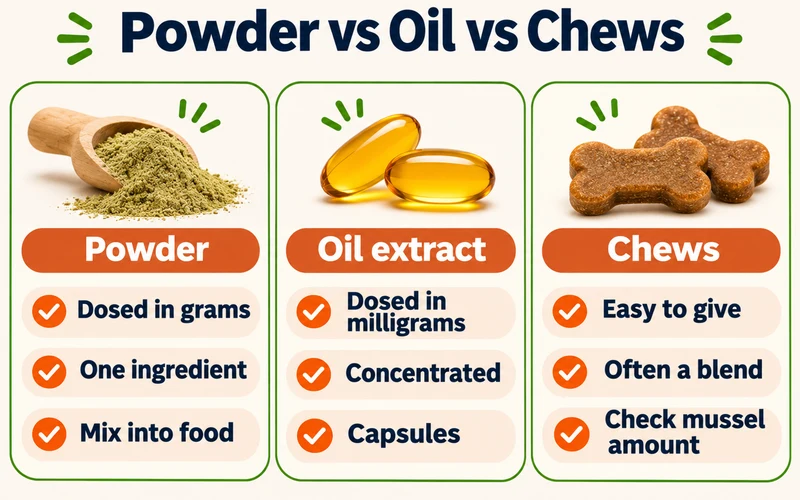
You’ll find green-lipped mussel for dogs in three main forms:
- Whole mussel powder. The dried, ground mussel. You measure it in grams and sprinkle it on food.
- Oil extracts. A concentrated fat taken from the mussel, sold in capsules and measured in milligrams.
- Chews and foods. Mussel mixed into a treat, a joint chew or a dog food, often with other ingredients such as glucosamine.
Powder and oil extracts are dosed very differently.
A powder is given in grams, while an extract may be given in milligrams, so you can’t use one product’s label to dose another.
Green Lipped Mussel for Dogs: What the Studies Show
Most of the research on green-lipped mussel was done in dogs that already had arthritis or joint disease. Here are six of the dog trials, side by side. All of them were small by medical standards, so read them as promising hints, not final proof.
A few results stand out. In the 2006 New Zealand trial, both groups improved at first, and the mussel group only pulled ahead at day 56. When the placebo dogs then switched to the mussel extract, the share of them that improved rose from 41% to 91%. The authors noted that long-term use may be needed before you see a change.
The 2009 Finnish trial is the most useful for owners, because it compared green-lipped mussel with both a placebo and carprofen, a common prescription pain reliever. The mussel group did better than placebo, but not as well as carprofen. We’ll come back to what that means in the next section.
Not every trial was a win. A 2022 study of a combination chew with green-lipped mussel, curcumin and blackcurrant leaf found it did no better than a placebo in dogs.

What the Big Reviews Say
Single trials can mislead, so researchers also pool them together. A 2022 meta-analysis of 72 trials in dogs and cats found the clearest pain-relief evidence for omega-3 products, the group green-lipped mussel belongs to. The same review found glucosamine and chondroitin had essentially no effect on pain. An earlier 2012 systematic review rated the evidence for most joint supplements as low, again with omega-3 diets the exception. To see how green-lipped mussel compares with fish oil, glucosamine and other options, see our ranking of the best joint supplements for dogs.
The Honest Limits
- The trials were small, mostly 23 to 101 dogs, and they lasted 6 to 16 weeks.
- Several were run by pet food or supplement researchers. The 2001 trial, for example, came from Waltham, a pet food research center.
- The dogs already had arthritis. No study shows that green-lipped mussel prevents arthritis in a young, healthy dog.
- Products differ. Powders, extracts and blends aren’t the same, so a result for one doesn’t automatically apply to another.
Put together, green-lipped mussel is one of the better-studied joint supplements for dogs, but “better studied” still means a modest, slow benefit for some dogs, not a cure. Thinking of trying it with your vet’s okay? Jump to our single-ingredient pick.
Can It Replace Your Dog’s Pain Medicine?
No, and this is where a lot of online advice goes wrong. Some pages say green-lipped mussel works as well as prescription anti-inflammatory drugs (NSAIDs). The best head-to-head evidence doesn’t back that up.
In the 2009 trial that compared all three, green-lipped mussel helped more than a placebo but less than carprofen. A 2024 trial found that a mussel and krill oil extract and the NSAID meloxicam both beat a placebo on weight bearing, but that was one specific extract, not every mussel product on the shelf.
So where does it fit? Think of it as a possible add-on to the plan your vet builds, alongside weight control, gentle exercise and, when needed, pain medicine. The 2009 researchers also suggested it may be worth considering for dogs that can’t take NSAIDs.
Never stop or cut back a pain medicine your vet prescribed and swap in a supplement instead.
A dog in pain moves less, gains weight and loses muscle, which can make arthritis worse.
Is It Worth Trying for Your Dog?
Green-lipped mussel isn’t right for every dog. Find the line that sounds most like yours:
If you’re not sure whether your older dog is hurting, our guide to signs your dog is in pain and hiding it walks you through the quiet clues, like licking one joint or hanging back on walks. For the bigger picture of caring for an aging dog, see our senior dog care guide.
Powder, Oil or Chews: How to Choose a Green Lipped Mussel Supplement for Dogs
Walk down the supplement aisle and you’ll see green-lipped mussel in powders, capsules, chews and even dog food. They aren’t interchangeable. Here’s how the main forms compare:
One thing to watch: many joint chews contain only a little green-lipped mussel mixed with glucosamine, turmeric or other extras. That’s not the same as what most of the trials tested, and it makes it hard to know how much mussel your dog is actually getting.
5 Things to Check on the Label
- The amount of green-lipped mussel per serving. If a blend doesn’t say how much mussel is in it, you can’t compare it with the studies.
- What else is inside. “100% Perna canaliculus” means one ingredient. A blend should list every active ingredient and amount.
- Where it’s from and how it’s processed. Look for New Zealand mussel and a note on how it’s dried. Many makers use low-heat processing to protect the natural fats.
- A shellfish allergy warning. It’s a shellfish, so the label should say so.
- A dosing chart by weight. Clear directions in pounds or kilograms make it much easier to give the right amount.
Our Pick for a Single-Ingredient Powder: Dogevera
If you and your vet decide to try a whole powder, the Dogevera 100% New Zealand Green-Lipped Mussel Powder ticks the boxes above. It contains one ingredient, whole New Zealand green-lipped mussel, with nothing blended in. It’s dosed in grams with an included 1-gram scoop, much like the powder used in several of the studies, and the label has a clear chart by your dog’s weight. The shellfish warning is printed right on the label, and the company offers a 100-day money-back guarantee on your first order.
To be upfront: we haven’t tested this powder on our own dogs, and Dogevera is an affiliate partner, which means we may earn a commission if you buy. We picked it because it matches what we’d look for on a label. Dogevera also publishes a detailed, study-by-study green-lipped mussel evidence review if you’d like to dig deeper.
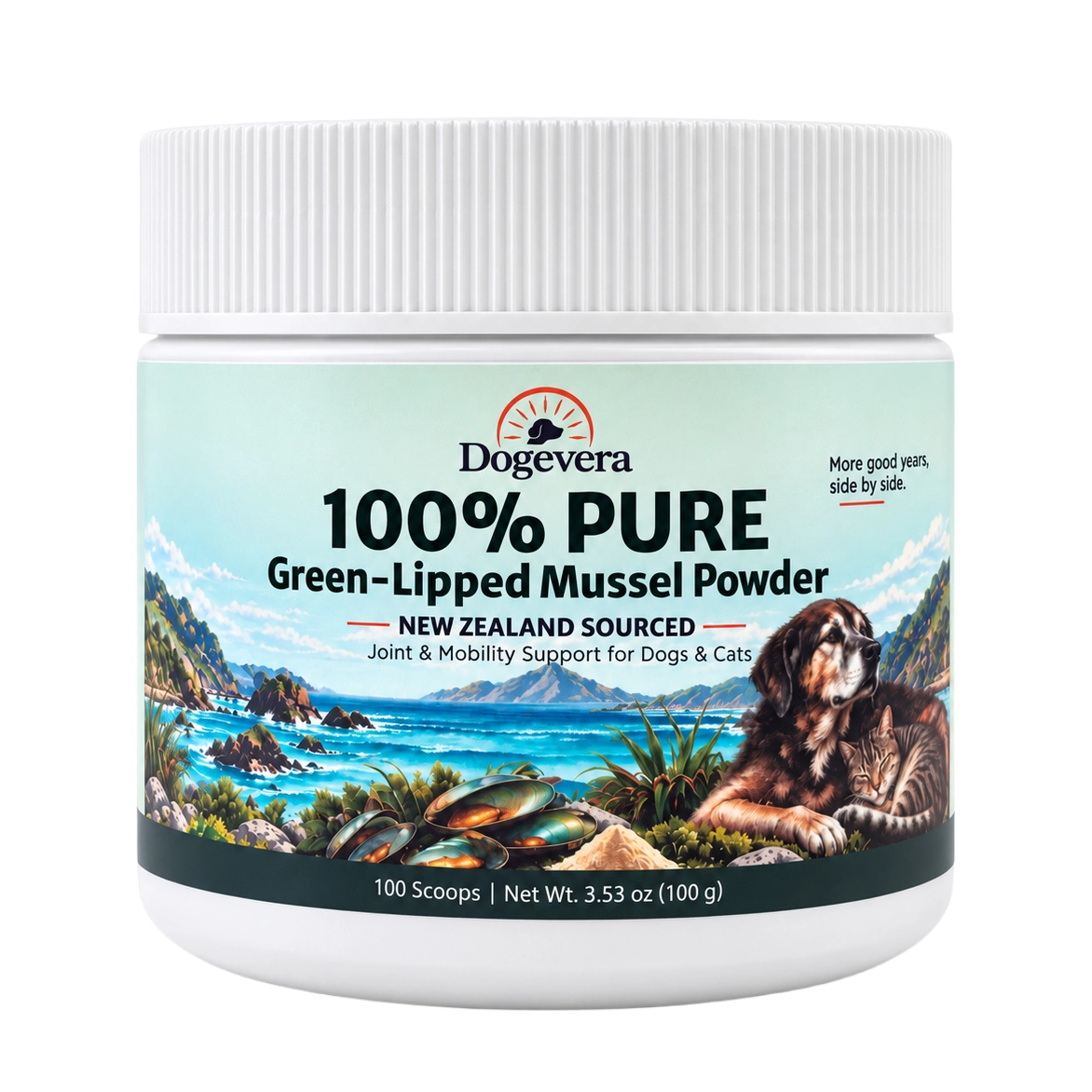
One ingredient: whole New Zealand green-lipped mussel powder with a 1 g scoop and a dosing chart by weight. 100-day money-back guarantee on your first order. Contains shellfish.
How Much Green Lipped Mussel for Dogs?
There’s no single official dose, because powders, extracts and blends are so different. The safest rule is simple: follow the label of the exact product you buy, and check it with your vet.
For a whole mussel powder, doses are based on your dog’s weight. As an example, here’s the feeding chart printed on the Dogevera powder label (1 scoop = 1 gram):
A few tips make the start easier:
- Start with half the amount for the first week, then build up. This gives your dog’s stomach time to adjust.
- Mix it into food. Most dogs eat it happily on their regular meal. You can split the daily amount between breakfast and dinner.
- Don’t use a powder chart for an oil extract. Extracts are measured in milligrams, so follow that product’s own directions.
- Ask before stacking omega-3s. If your dog already gets fish oil or a joint food rich in omega-3, check with your vet before adding more.
Not sure what your dog weighs, or whether they’re carrying a few extra pounds? Our guide on how much to feed your dog by weight helps you check, and losing extra weight is one of the best things you can do for sore joints.
How Long Does It Take to Work?
Plan on about 6 to 8 weeks before you decide. In the 2006 trial, the mussel group didn’t pull ahead of the placebo group until day 56. In a 2024 extract trial, the difference showed by week 6. A slow start is normal.
Changes in an older dog are easy to miss, so write things down. Use this simple tracker, scoring each line before you start, at week 4 and at week 8:
Take your notes to your next vet visit. If nothing has changed after 8 weeks, it may simply not be the right fit for your dog, and that’s useful to know too.
Side Effects and Who Should Skip It
In the trials, green-lipped mussel was well tolerated. The 2006 trial found no signs of toxicity, and the 2009 trial reported no side effects. That said, any new supplement can upset a sensitive stomach, which is another reason to start with a smaller amount.
Skip it if your dog:
- Is allergic to shellfish. Green-lipped mussel is a shellfish. If your dog has reacted to shrimp or other seafood before, don’t use it. Our guides to shrimp for dogs and dog allergy symptoms explain what a reaction can look like.
- Is pregnant, nursing or used for breeding. The AKC notes that safe use hasn’t been established in these dogs.
Ask your vet first if your dog:
- Has liver, kidney or heart disease
- Takes daily medicines or other supplements
- Is on a special diet for a health condition
A sudden limp, crying when a leg or back is touched, or refusing to put weight on a leg needs a vet visit soon, not a supplement.
These can be signs of an injury or another problem that needs treatment.

This article is for general information only.
PawWellCare is not a veterinarian, and this content doesn’t replace professional veterinary advice. Supplements don’t replace diagnosis or treatment for arthritis or other joint problems. We haven’t tested the product mentioned on our own dogs; our pick is based on its label and the published research. Talk to your veterinarian before starting any supplement, especially if your dog has a health condition, takes medicine, or is pregnant or nursing.
Frequently Asked Questions (FAQ)
Is green lipped mussel good for dogs?
For many dogs with arthritis, green-lipped mussel may help a little. In several small trials, more dogs improved on it than on a placebo. It’s not a cure, and it’s weaker than prescription pain medicine, so it works best as an add-on to your vet’s plan.
How much green lipped mussel should I give my dog per day?
Follow the label of your product, since powders and extracts are dosed differently. For whole powder, a common label chart is 0.5 to 1 gram for dogs up to 25 pounds, rising to 4 grams for dogs over 75 pounds. Start with half for the first week.
How long does green lipped mussel take to work in dogs?
Give it about 6 to 8 weeks. In one major trial, the difference from placebo only showed up at day 56. Track how your dog gets up, walks and handles stairs so you can judge the change with your vet.
Can green lipped mussel cause diarrhea in dogs?
Trials reported few or no side effects, but any new supplement can cause loose stool in some dogs. Starting with half the dose and mixing it into food helps. If diarrhea lasts more than a day or two, stop and call your vet.
Is green lipped mussel better than glucosamine for dogs?
The research leans that way for pain. A 2022 review of 72 trials found the clearest pain relief from omega-3 products, the group green-lipped mussel belongs to, while glucosamine and chondroitin showed essentially no effect on pain.
Can my dog take green lipped mussel with carprofen (Rimadyl)?
Many dogs take joint supplements alongside pain medicine, but only your vet can say what’s right for your dog. Never lower or stop a prescribed medicine on your own because you’ve started a supplement.
Can young dogs take green lipped mussel to prevent arthritis?
There’s no good evidence that it prevents arthritis. The trials studied dogs that already had joint problems. For a young dog, keeping a lean weight and getting regular exercise does more to protect the joints.
Is Green Lipped Mussel for Dogs Worth It?
Green lipped mussel for dogs is one of the better-studied joint supplements, and for some dogs with arthritis it can make a real, if modest, difference. Here’s what to remember:
- It’s an add-on, not a replacement. It helped more than a placebo but less than prescription pain medicine.
- Patience matters. Give it 6 to 8 weeks and keep notes.
- The form matters. Powders, extracts and chews are dosed differently, so read the label closely.
Your next step: talk to your vet, start low, and track how your dog moves for two months. A comfortable place to rest helps too, so see our picks for the best dog beds for senior dogs, and our senior dog care guide for the bigger picture. For everyday diet basics, our complete dog nutrition guide is a great place to start.




Pingback: Best Joint Supplements for Dogs: 8 Picks Ranked by Evidence (2026)