


It’s the first hot Saturday of summer. You’ve got a cold slab of watermelon in both hands, juice running down to your elbows, and a dog parked under the table like a furry vacuum cleaner. Every dropped seed and drip gets inspected. Every bite you take gets a stare.
So you go to share a piece, and then you pause. Is this okay? Search “can dogs eat watermelon” and you’ll see “yes” everywhere. Then come the warnings: the rind can block a dog’s gut, the seeds are toxic, the sugar is too much. And almost nobody answers the question you actually have: how much is okay for a dog the size of mine?
It’s worth getting right. A big chunk of rind can get stuck in a small dog. A whole plate of watermelon on a hot day can mean a very unpleasant night for your carpet. And if your dog has already grabbed a piece of rind off the table, you need a clear plan, not a list of scary maybes.
The short version: can dogs eat watermelon? Yes, and it’s one of the easiest summer treats to share when you follow a few simple rules. In this guide you’ll find:
- A serving chart for 7 dog sizes, built on USDA numbers
- The honest facts on rind and seeds, including what to do if your dog already ate some
- Which watermelon treats to skip, and a few myths that don’t hold up
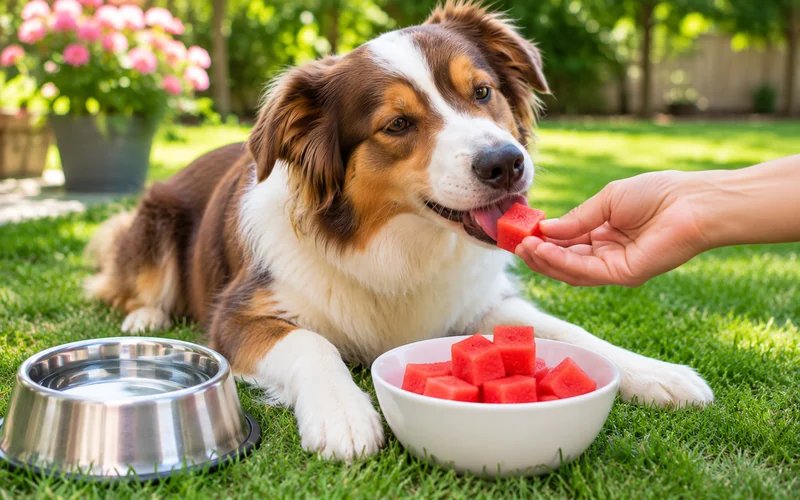
Yes, dogs can eat watermelon.
Plain, ripe flesh with the rind and seeds removed is a safe, hydrating treat with about 46 calories per cup and over 91% water. Give small dogs a few small pieces and large dogs up to about a cup, and keep all treats under 10% of daily calories. Skip the rind, seeds, juice and watermelon candy.
Is Watermelon Good for Dogs?
Yes, watermelon is good for dogs as a light, occasional treat. It’s mostly water, nearly fat-free and sweet enough that most dogs think they’ve won a prize. Here’s what’s actually in it, based on USDA data:
One cup of diced watermelon (152 g) has about 46 calories, 139 g of water, 9.4 g of natural sugar, 0.6 g of fiber, 170 mg of potassium and 12 mg of vitamin C.
That makes it over 91% water, according to USDA FoodData Central.
What that means for your dog:
- A light treat. A few cubes cost very few calories, which makes watermelon a nice swap for a rich biscuit.
- Extra water. On a warm day, cold cubes are a refreshing way to add a little fluid.
- A little potassium and vitamin C. Nice, but not something a dog on a complete diet needs from fruit. Dogs make their own vitamin C.
- Not a fiber food. You’ll read that watermelon is “high in fiber.” USDA shows just 0.4 g per 100 g, so it’s actually low.
- Real sugar. At 9.4 g per cup, it isn’t free of sugar. That’s why portions still matter.
One thing it doesn’t replace is water. On hot days your dog still needs fresh water and shade, which is exactly what the American Veterinary Medical Association recommends. Think of watermelon as a bonus, not a drink. For more ideas, see our guide on how to keep your dog cool in summer.
Which Parts of a Watermelon Can Dogs Eat?
Only the soft, ripe flesh. Here’s a part-by-part look:
Simple version: soft flesh yes, everything else no. We’ll come back to rind and seeds in detail, because that’s where the scary advice comes from.

How Much Watermelon Can Dogs Eat?
Here’s a surprise: with watermelon, calories usually aren’t the limit. Your dog’s stomach is.
The American Animal Hospital Association says total treats should stay at or under 10% of daily calories. By that rule alone, a 60-pound dog could eat about 3 cups of watermelon. But that’s a lot of water and sugar at once, and for many dogs it means loose stool. So we give you two numbers: the calorie ceiling, and a sensible everyday amount that’s easier on the stomach. One melon ball is about 12 g, roughly 4 calories.
These are estimates for healthy, neutered adult dogs, and the everyday column is our practical guide, not a vet prescription. The first time, give about a quarter of that amount and check the next day’s poop before you give more. Less active, senior or overweight dogs should get less. For the bigger picture on portions, see how much to feed your dog by weight.
5 Easy Safety Rules Before You Share Watermelon
- Ripe flesh only. Choose soft, ripe watermelon with no mushy spots, sour smell or mold. Wash the outside first, since the knife carries anything on the skin into the flesh.
- Rind off. Cut away the green skin and the white part underneath.
- Seeds out. Pick a seedless melon, or remove the black seeds by hand.
- Cut it to size. Pea-size bits for toy breeds and puppies, small cubes for medium dogs, bigger bites for large dogs. Gulpers need smaller pieces than their size suggests.
- Plain, with water nearby. No salt, sugar, chili powder or dips, and keep the water bowl full.

Freeze seedless cubes for a slow summer treat.
Frozen watermelon takes longer to eat and cools your dog’s mouth. Spread mashed watermelon on a lick mat and freeze it for an even slower treat. Keep frozen pieces small for little dogs, since they’re easy to gulp.
Can Dogs Eat Watermelon Rind?
No. Watermelon rind is the part to keep away from your dog, and it’s the one owners ask about most.
The rind is tough, dense and fibrous. Dogs don’t chew it well, and big pieces don’t break down easily. The American Kennel Club warns that eating large pieces of rind can cause stomach upset, vomiting, diarrhea or even an intestinal blockage. Small dogs and dogs who gulp are at the highest risk.
Is watermelon rind toxic? Not that we could find. None of the vet and pet-safety pages we read calls the rind poisonous, though we can’t rule out every source. The danger is mechanical: choking and blockage. That doesn’t make it safe, it just means the problem is the shape and toughness, not a toxin.
A few rind questions, answered:
- The white part inside? It’s softer than the green skin but still tougher than the flesh. A tiny nibble isn’t an emergency, but trim it off.
- The green skin? Always discard it.
- Cooked or pickled rind? Skip it. Cooking doesn’t make it a dog snack, and pickled rind comes with salt, sugar and vinegar.
My Dog Ate Watermelon Rind: What to Do
Don’t panic. Many dogs who steal a bit of rind never show a problem. What matters is how much was eaten, how big your dog is, and how they act over the next few days. Use this as a guide:
What to do while you watch:
- Take the rest away. Check the floor, the trash and the compost for more rind.
- Don’t make your dog vomit at home. A rough piece coming back up can cause choking or injury. Only do this if a vet tells you to.
- Don’t give home remedies like bread or oil. They can make things worse.
- Check for two to three days. Keep an eye on appetite, energy and poop. Offer normal meals and fresh water unless your vet says otherwise.
Signs of a blockage need a vet fast.
VCA Animal Hospitals lists vomiting, diarrhea, belly pain or tenderness, loss of appetite, straining or passing only small amounts of poop, low energy, and growling or snapping when picked up. They stress that time is critical with an obstruction.
If you’re worried after hours, call an emergency clinic. For poison questions, the ASPCA Animal Poison Control Center is (888) 426-4435 and Pet Poison Helpline is (855) 764-7661 (fees may apply).
Are Watermelon Seeds Bad for Dogs?
We didn’t find evidence that watermelon seeds are poisonous to dogs, but they aren’t a snack either. The real concern is that a lot of seeds can clump together and add to a blockage, especially in small dogs, which is why the American Kennel Club advises removing them.
You may read that the seeds contain cyanide. In the vet and pet-safety pages we read, we couldn’t find a source that backs that up. At the same time, we won’t tell you seeds are fine in bulk, because they’re hard to digest.
Here’s the practical answer:
- One or two black seeds: usually pass on their own. No need to panic.
- A handful of seeds, or a small dog: watch for a couple of days, and call your vet if you see vomiting, a sore belly or no poop.
- Seedless watermelon: the best choice. The tiny soft white seeds in it usually aren’t a worry.
- Roasted or salted seeds: skip them. They add salt and fat your dog doesn’t need.
Watermelon Treats: Safe or Skip?
Plain, fresh watermelon is easy. It’s the products around it that cause trouble:
Keep an eye on that word “xylitol.” The U.S. Food and Drug Administration says it can be poisonous to dogs and can cause weakness, staggering, collapse or seizures. It may also appear on labels as “birch sugar.” If a sugar-free watermelon product lists it, keep it far from your dog. For more foods that don’t belong in the bowl, see our list of human foods that are toxic to dogs.
Can Puppies Eat Watermelon?
Yes, once they’re fully on solid puppy food, usually from around 8 weeks old. Keep it simple:
- Go tiny. One or two pea-size, seedless bites are plenty at first.
- Watch the poop. Puppies’ stomachs are still learning. Loose stool means stop and try again later, or not at all.
- Puppy food comes first. Growing puppies need a complete diet, so treats of any kind should stay small.
- Never let a puppy chew rind. A rind chunk is a real choking and blockage risk at that size.
When Watermelon Isn’t a Good Idea
Watermelon is fine for most dogs, but a few should skip it or ask a vet first:
- Diabetic dogs. A cup has about 9.4 g of sugar. Some diabetic dogs may be able to have a small piece, but the amount and timing should fit their plan, so ask your vet.
- Dogs with a sensitive stomach or active diarrhea. The extra water and sugar can make loose stool worse. Don’t use watermelon as a remedy.
- Dogs with kidney or heart disease. One cup has about 170 mg of potassium, and dogs on special diets may need limits. Check with your vet.
- Dogs with pancreatitis. Watermelon is almost fat-free, but the Merck Veterinary Manual lists large amounts of table scraps as a believed risk factor, so clear any extra food with your vet.
- Moldy or fermented melon. Throw out watermelon that’s slimy, sour or left in the sun. The ASPCA warns that moldy food can cause vomiting, tremors and seizures in dogs.
- Dogs with food allergies. Any dog can react to a new food. Itching, hives, swelling or vomiting after watermelon is a reason to stop and call your vet.
Watermelon Myths, Checked
- “Watermelon is high in fiber.” Not really. USDA lists only 0.4 g per 100 g. Compare that with apple, which has about 2.4 g.
- “It cleans dogs’ teeth.” There’s no good evidence for that. Soft, watery fruit doesn’t replace brushing. See our tips on cleaning your dog’s teeth without brushing.
- “It prevents heat stroke.” It can’t. It adds a little fluid, but water, shade and rest are what protect your dog.
- “It never affects blood sugar.” Watermelon contains natural sugar, so it’s not safe to assume that, especially for diabetic dogs.
This article is for general information only.
PawWellCare is not a veterinarian, and this content doesn’t replace professional veterinary care. Serving amounts and the rind guide are general estimates for healthy dogs. If your dog has a health condition such as diabetes, kidney or heart disease, or pancreatitis, talk to your veterinarian before sharing watermelon. If you think your dog has a blockage, call a vet right away.
Frequently Asked Questions (FAQ)
Can dogs eat watermelon every day?
Most healthy adult dogs can have a small amount of plain watermelon daily in season, as long as it stays inside their 10% treat limit. Variety is better, though, so a few times a week is plenty. Stop for a couple of days if you notice loose stool.
Can dogs eat watermelon rind?
No. The rind is tough and hard to digest, and big pieces can cause choking or a blockage, especially in small dogs. If your dog ate some, check the amount, watch for vomiting, belly pain or no poop for 2 to 3 days, and call your vet if you’re unsure.
How many watermelon seeds are dangerous for dogs?
There’s no set number. One or two black seeds usually pass without trouble. A handful, or any amount in a very small dog, is worth watching for two to three days, because seeds may add to a blockage. Seedless watermelon is the easiest choice.
Can dogs eat yellow watermelon?
Yes. Yellow watermelon is simply a different variety. Serve the same plain, seedless, rind-free flesh, in the same small amounts.
Does watermelon give dogs diarrhea?
It can if your dog eats too much at once. Watermelon is mostly water with some sugar, and a big serving may cause loose stool or gas. Start with a quarter of the amount in our chart, and cut back if stools turn soft.
Can dogs drink watermelon juice?
It’s better to skip it. Juice has most of the sugar without the pulp, and bottled versions may include sweeteners or other ingredients. Give plain chunks or a spoonful of homemade puree instead.
Is watermelon safe for dogs with diabetes?
Ask your vet first. A cup has about 9.4 g of sugar, and even a small amount should fit your dog’s insulin and meal plan. Don’t assume that natural sugar doesn’t count.
Can dogs eat watermelon flavored popsicles or candy?
Skip store-bought ones. They usually contain sugar, and sugar-free versions may contain xylitol, which can be dangerous for dogs. A homemade popsicle made from plain blended watermelon is a better choice.
So, Can Dogs Eat Watermelon? The Bottom Line
So, can dogs eat watermelon? Yes, if you keep it simple. Here’s what to remember:
- Soft, ripe flesh only. Rind and seeds go in the trash, far from curious noses.
- Your dog’s stomach sets the limit, not calories. A few pieces for small dogs, up to about a cup for large ones.
- If your dog ate the rind, check how much, watch for blockage signs, and call your vet early rather than late.
Your next step: cut tomorrow’s watermelon into seedless cubes, freeze a handful, and share a few on the next hot day. Looking for other healthy snacks? See whether dogs can eat apples, bananas, cantaloupe and celery, browse our vet-informed homemade dog food recipes, or start with our complete dog nutrition guide.
One cold cube, a happy crunch, and a clean kitchen floor. That’s summer with a dog.



Pingback: Can Dogs Eat Cantaloupe? Yes, With 5 Safe Serving Tips