My dog ate a grape.
One grape. Just one. It rolled off the counter during dinner prep, and he snatched it before I could react.
I did not think anything of it until I Googled “can dogs eat grapes” twenty minutes later — and felt my blood run cold.
Grapes can cause acute kidney failure in dogs. Sometimes a single grape is enough.
I called the emergency vet immediately. They had me induce vomiting at home. My dog was fine — but that 30-minute window between eating the grape and getting the call answered was genuinely terrifying.
Most dog owners do not know what human foods are toxic to dogs until an emergency happens. And by then, the window for intervention is already closing.
This guide gives you the complete list — every dangerous food, every safe food, and exactly what to do if your dog eats something they should not have.
Bookmark this page. Keep it on your phone. Share it with everyone in your household. This is the kind of information that matters most when you need it fastest.
Let’s go through everyone.
Even small amounts of certain toxic foods can cause serious health problems depending on the dog’s size, age, and overall health.
If you suspect your dog has eaten a toxic food, contact your veterinarian or an animal poison helpline immediately rather than waiting for symptoms to appear.
Fast action often improves treatment options and can help prevent more serious complications.
The Most Dangerous Foods for Dogs — Never Feed These
These foods pose the highest risk to your dog’s health and life. Some can be fatal in very small amounts.
This is the most important section of what human foods are toxic to dogs — memorize this list.
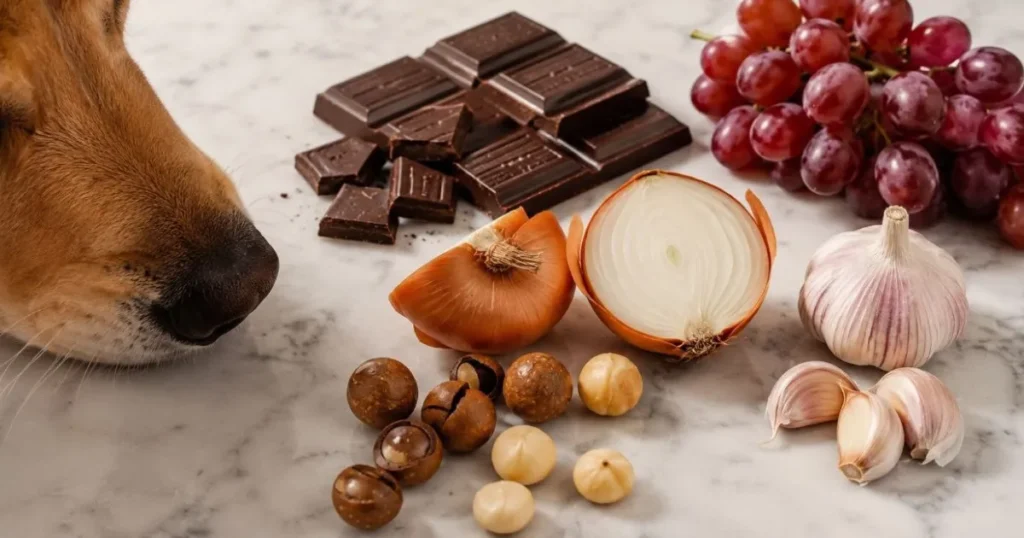
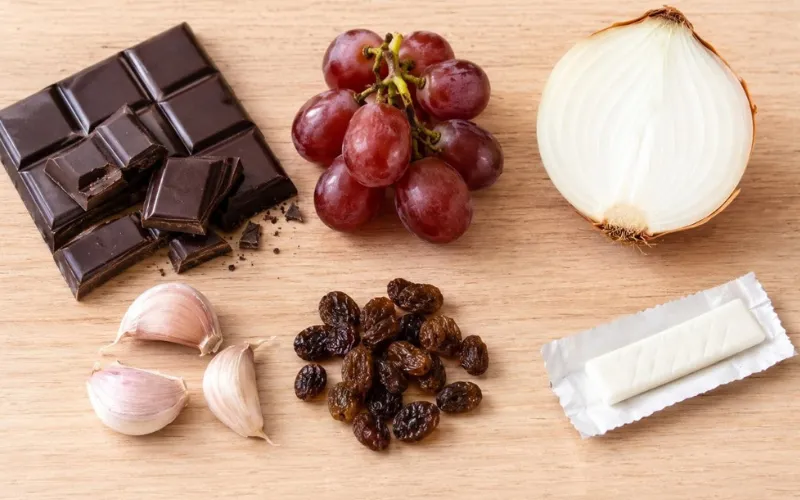
Chocolate, grapes, raisins, onions, garlic, and xylitol are the six most commonly encountered toxic foods for dogs in the United States, responsible for thousands of emergency vet visits every year.
Highest Danger — Potentially Fatal
Chocolate — The Most Common Toxin
Chocolate toxicity depends on two things: the type of chocolate and your dog’s weight.
Dark chocolate and baking chocolate are the most dangerous — they contain the highest concentration of theobromine.
Milk chocolate is less concentrated but still toxic in quantity. White chocolate has almost no theobromine, but the fat content can still cause pancreatitis.
Signs of chocolate toxicity:
- Vomiting and diarrhea within 2 to 4 hours
- Rapid breathing and elevated heart rate
- Muscle tremors and restlessness
- Seizures in severe cases
- Symptoms can take 6 to 12 hours to appear fully
Grapes and Raisins — Unpredictable and Deadly
Grapes are uniquely dangerous because the toxic mechanism is still not fully understood by science.
Some dogs eat a handful with no obvious effect. Others suffer kidney failure from a single grape. There is no way to predict which dogs are susceptible.
The safe amount is zero.
No grapes. No raisins. No grape juice. No trail mix containing raisins. No baked goods with raisins or currants.
Xylitol — The Hidden Danger
Xylitol is an artificial sweetener found in:
- Sugar-free chewing gum
- Some peanut butter brands — always check the label
- Sugar-free candy and mints
- Some toothpaste and mouthwash
- Certain baked goods and diet foods
Even a small amount triggers a massive insulin release in dogs, causing blood sugar to crash within 30 minutes.
This can lead to liver failure and death within hours.
According to the ASPCA Animal Poison Control Center, xylitol toxicity cases have increased dramatically in recent years as the sweetener has become more common in human food products — making label reading essential for all dog owners.
Moderately Dangerous Foods — Use Extreme Caution
These foods are not immediately fatal for most dogs in small amounts, but they can cause serious health problems and should never be fed intentionally.
Moderate Danger Foods
Cooked Bones — A Common Mistake
Raw bones are generally acceptable under supervision.
Cooked bones are genuinely dangerous — cooking makes bones brittle and prone to splintering into sharp fragments that can puncture the stomach or intestines.
This includes:
- Chicken bones are most dangerous when cooked
- Turkey bones
- Pork chop bones
- Steak bones
- Any bone that has been heated
If you give your dog bones, they must be raw, size-appropriate, and always supervised.
The Peanut Butter Warning — Check Every Jar
Most peanut butter is safe for dogs and makes an excellent training tool and Kong stuffing. But some brands contain xylitol, which is deadly.
Before giving your dog any peanut butter:
- Read the ingredient list completely
- Look for “xylitol,” “birch sugar,” or “wood sugar”
- If any of these appear, do not use that brand
- Safe brands include: Jif, Skippy, most store brands without “sugar-free” labeling
Complete Toxic Foods List — Quick Reference
Knowing what human foods are toxic to dogs means having this complete list accessible when you need it.
Bookmark this section.
A to Z Toxic Foods Reference
In an emergency, having quick access to reliable information can help you respond faster and communicate more effectively with your veterinarian.
Consider sharing the list with family members, pet sitters, dog walkers, and anyone else who regularly spends time with your dog.
Many accidental poisonings happen because well-meaning people simply do not realize that certain everyday foods can be harmful to dogs.
Safe Human Foods Your Dog Can Enjoy
Not everything on your plate is dangerous.
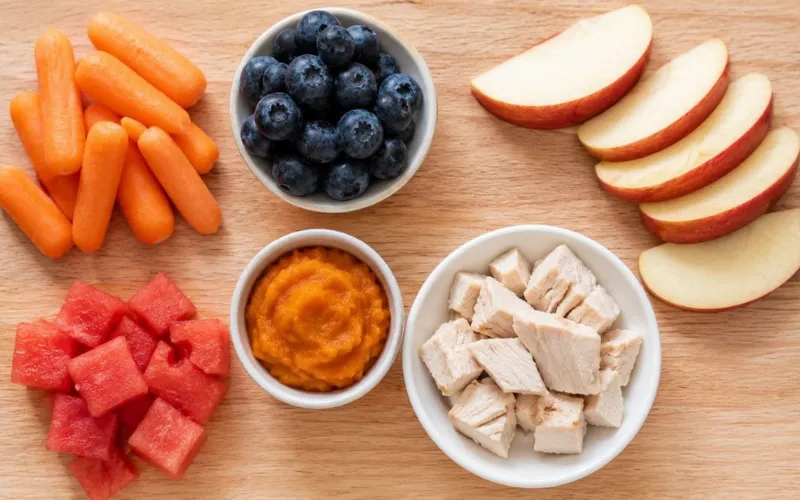
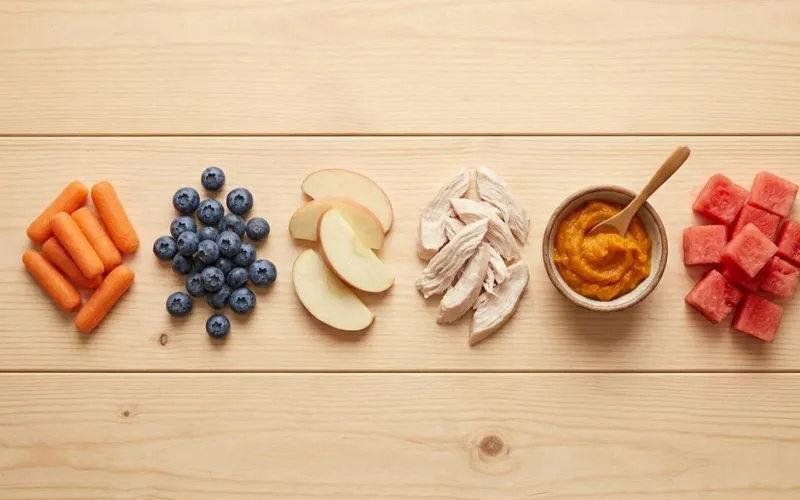
These human foods are completely safe for dogs in moderate amounts and make excellent healthy treats and training rewards.
Safe Foods — Complete List
The 10% Rule for Human Food
Even safe human foods should never make up more than 10% of your dog’s daily caloric intake.
The other 90% should come from their complete and balanced dog food.
A 50-pound dog eating approximately 900 calories per day has a 90-calorie budget for safe human food treats.
That is roughly:
- 3 to 4 baby carrots
- A small handful of blueberries
- A few small pieces of cooked chicken
More than this, and you risk nutritional imbalance or weight gain over time.
For exact daily amounts by weight and age, read our guide on how much should I feed my dog by weight.
What to Do If Your Dog Eats Something Toxic
Speed matters. The faster you respond, the better the outcome.
Here is the exact emergency response for every situation.
If your dog eats any known toxic food, call your veterinarian or the ASPCA Animal Poison Control Center at (888) 426-4435 immediately — even if no symptoms are visible yet.
With most toxins, waiting for symptoms to appear means the treatment window has already narrowed.
Emergency Steps — Follow This Exact Order
- Step 1 — Identify what they ate
Figure out exactly what the food was, approximately how much, and how long ago they ate it. This information is critical for the vet. - Step 2 — Call immediately
Call your regular veterinarian during business hours. After hours, call the nearest emergency veterinary clinic or the ASPCA Animal Poison Control Center at (888) 426-4435. There is a consultation fee of approximately $75 for the ASPCA hotline. - Step 3 — Follow their instructions exactly
The vet may tell you to induce vomiting at home, bring the dog in immediately, or monitor at home. Follow their specific instructions — do not guess. - Step 4 — Do NOT induce vomiting without vet guidance
Some toxins cause more damage coming back up. Inducing vomiting is only appropriate for certain foods and only within a specific time window. Never induce vomiting without being told to by a vet.
When Symptoms Typically Appear
The critical lesson: do not wait for symptoms.
Call the vet immediately after ingestion, even if your dog looks completely fine.
By the time symptoms appear with some toxins, significant organ damage may have already occurred.
According to the American Kennel Club, the single most important factor in surviving food toxicity in dogs is the speed of treatment — dogs that receive intervention within the first hour of ingestion have significantly better outcomes than those treated after symptoms develop.
How to Dog-Proof Your Kitchen and Home
Prevention is always better than emergency treatment.
These practical steps eliminate most accidental exposure risks.
Kitchen Safety Rules
- Store chocolate in closed cabinets — not on counters
- Keep grapes and raisins in sealed containers in the fridge — never in open bowls
- Check all peanut butter labels for xylitol before buying
- Use a trash can with a secure lid — dogs dig through trash for food scraps
- Keep onions and garlic stored out of reach
- Clean up cooking spills immediately — onion pieces and chocolate chips fall on floors
- Store sugar-free gum and mints in a closed drawer or purse pocket your dog cannot reach
Visitor and Guest Awareness
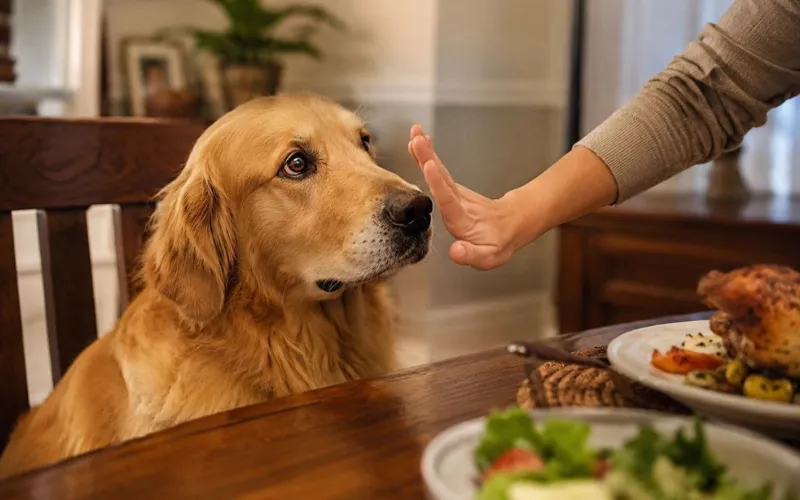
This is where most accidental poisonings happen — well-meaning guests giving your dog food without knowing it is dangerous.
Steps to prevent this:
- Tell all guests explicitly: “Please do not feed our dog any human food”
- Post a simple list of dangerous foods on the fridge where guests can see it
- Watch children especially — kids share food with dogs instinctively
- During holidays and parties, keep your dog in a safe area away from the food table
Holiday-Specific Dangers
Certain holidays have higher poisoning rates:
- Halloween — chocolate everywhere, candy with xylitol
- Thanksgiving — cooked turkey bones, onion-heavy dishes
- Christmas — chocolate gifts, raisin-containing baked goods, alcohol left in glasses
- Easter — chocolate eggs, candy baskets within reach
- Fourth of July — grapes and fruit salads at cookouts
According to the American Veterinary Medical Association, veterinary emergency visits for food toxicity spike significantly during major holidays — with chocolate poisoning being the most common emergency during Halloween and Christmas.
In a potential poisoning situation, having important contact information readily available can help you respond more quickly and avoid unnecessary delays.
Consider sharing these emergency contacts with family members, pet sitters, dog walkers, and anyone else responsible for your dog’s care.
Preparation takes only a few minutes, but it can be invaluable during a stressful emergency when quick access to professional guidance matters most.
In serious poisoning situations, rapid professional treatment is often more important than waiting to see whether symptoms improve on their own.
If possible, bring information about the suspected food or substance, including packaging, ingredient labels, or an estimate of the amount consumed, to help the veterinary team assess the situation.
Follow the instructions provided by veterinary professionals and avoid attempting home treatments unless specifically directed to do so.
The information in this guide is intended for educational purposes and is based on widely recognized veterinary resources, animal poison prevention guidance, and general pet safety recommendations.
Toxicity can vary depending on the food involved, the amount consumed, the dog’s size, age, health status, and individual sensitivity.
If you believe your dog has eaten a potentially toxic food or substance, contact your veterinarian, an emergency veterinary clinic, or a qualified animal poison helpline as soon as possible rather than relying solely on online information.
In any suspected poisoning emergency, professional veterinary advice should always take priority over general educational content.
Frequently Asked Questions (FAQ)
Can one grape really kill a dog?
Potentially, yes. Grape and raisin toxicity is unpredictable — some dogs eat grapes without visible effect while others develop acute kidney failure from a single grape.
There is currently no way to predict which dogs are susceptible or what the minimum toxic dose is. Because of this unpredictability, the only safe amount of grapes for any dog is zero.
If your dog eats even one grape, call your vet immediately.
My dog ate a small amount of chocolate — should I be worried?
It depends on the type of chocolate and your dog’s size.
Dark chocolate and baking chocolate are most dangerous — even small amounts can be toxic. Milk chocolate requires a larger quantity to cause problems.
As a general rule, if your dog ate any amount of dark chocolate or baking chocolate, call your vet immediately.
For milk chocolate, contact your vet if your dog ate more than 1 ounce per pound of body weight. When in doubt, always call.
Is peanut butter safe for dogs?
Most peanut butter is completely safe and makes an excellent treat and training tool.
The danger is xylitol — an artificial sweetener found in some sugar-free peanut butter brands.
Always read the ingredient list before giving peanut butter to your dog. If xylitol, birch sugar, or wood sugar appears on the label, do not use that brand.
Standard peanut butter like Jif or Skippy with no artificial sweeteners is safe.
Can dogs eat cooked onions in small amounts?
No — all forms of onion are toxic to dogs regardless of how they are prepared.
Raw, cooked, powdered, dehydrated, and onion-containing sauces all damage red blood cells and can cause hemolytic anemia.
The effect is cumulative, meaning small amounts over time can be just as dangerous as one large exposure.
Keep all onion and garlic products away from your dog.
What should I do if my dog eats something toxic and my vet is closed?
Call the ASPCA Animal Poison Control Center at (888) 426-4435 — they operate 24 hours a day, 7 days a week, 365 days a year. There is a consultation fee of approximately $75.
Alternatively, call the Pet Poison Helpline at (855) 764-7661.
If your dog is showing severe symptoms — seizures, difficulty breathing, collapse — drive directly to the nearest 24-hour emergency veterinary clinic without calling first.
Are all nuts dangerous for dogs?
No — only macadamia nuts are specifically toxic.
Almonds, cashews, and peanuts are not toxic but can cause digestive upset in large quantities and are choking hazards. Walnuts can harbor mold that produces toxins.
The safest approach is to avoid giving dogs nuts in general — the risk-to-benefit ratio is not worth it when so many better treat options exist.
Can dogs eat raw meat safely?
This is debated.
Raw meat carries risk of bacterial contamination including Salmonella and E. coli, which can make both dogs and the humans handling the food sick.
Some owners and veterinary professionals advocate for raw diets with proper handling precautions.
Most veterinary organizations including the AVMA advise against raw feeding due to the documented bacterial risks.
If you choose to feed raw, work with a veterinary nutritionist to ensure safety and nutritional balance.
My dog got into the trash and ate table scraps — when should I worry?
It depends entirely on what was in the trash.
If the scraps included onions, garlic, chocolate, grapes, or cooked bones — call your vet immediately.
If the scraps were plain cooked chicken, rice, or vegetables — your dog is almost certainly fine but may have mild digestive upset for a day.
The biggest concern with trash raiding is that you often do not know exactly what they ate — so when in doubt, call your vet and describe what was likely in the trash.
The List That Could Save Your Dog — Final Thoughts
That single grape on my kitchen floor could have cost me my dog. It did not — because I caught it in time and made the call.
But the 20 minutes between him eating it and me learning that grapes are toxic were some of the most stressful minutes of my life.
You now have something I did not that day — the complete list, the emergency numbers, and the knowledge to act immediately.
Now that you know what human foods are toxic to dogs — here are your three key takeaways:
- Save the emergency numbers now — ASPCA Poison Control at (888) 426-4435 and your nearest 24-hour emergency vet. Do not wait for an emergency to look these up.
- Screenshot the toxic foods table — save it on your phone and share it with everyone who interacts with your dog. The person most likely to accidentally poison your dog does not know this list exists.
- Speed is everything — with most toxins, the first hour after ingestion is the critical window. Do not wait for symptoms. Call immediately.
For the complete nutrition foundation — what to feed, how much, and how to choose the right food — read our complete dog nutrition guide for beginners.
And if you are switching your dog to a safer, better quality food, read our guide on how to switch dog food without an upset stomach for the safe transition method.