


You’re standing at the counter, crunching on a celery stick, and you can feel it before you see it: two eyes locked on you and a little puddle of drool forming on the kitchen floor. Every crunch makes your dog lean in a little closer.
It seems like an easy treat to share. It’s a vegetable, it’s mostly water, and it’s on every “healthy snack” list. But when you look it up, the advice is all over the place. One site says a whole stick is a great chew. Another says to chop it tiny. Some say celery cleans teeth, others say it doesn’t. Even the calorie and water numbers don’t match from page to page.
The details matter here. Celery’s long, stringy fibers can be a choking risk, especially for small dogs who gulp. And the way many of us like celery best, with a swipe of peanut butter, can be dangerous if that jar contains xylitol.
So, can dogs eat celery? Yes, and it’s one of the best low-calorie treats you can share, as long as you serve it the right way. In this guide you’ll find:
- How much celery is safe for your dog’s size
- How to cut celery so the strings aren’t a problem
- Which celery foods to skip, plus the celery myths that don’t hold up
Yes, dogs can eat celery.
It’s about 95% water and has only around 6 calories per medium stalk, which makes it a great low-calorie treat. Wash it and cut it into small pieces across the stringy fibers. Give a few pieces to small dogs and up to about one stalk to large dogs. Skip celery salt, dips and any peanut butter with xylitol.
Is Celery Good for Dogs?
Yes, celery is good for dogs as an occasional treat. The American Kennel Club calls celery generally safe for dogs and a low-calorie snack, which is why it’s a favorite for dogs who need to watch their weight.
Here’s what’s actually in it, based on USDA data:
One medium celery stalk (about 7.5 to 8 inches, 40 g) has roughly 6 calories and is about 95% water.
It also has a little fiber, potassium and vitamin K, and about 32 mg of sodium, according to USDA FoodData Central.
What that means for your dog:
- Very low in calories. Your dog gets a satisfying crunch for almost no calories, which makes celery a smart swap for a store-bought biscuit if your dog is on a diet.
- Hydrating. At about 95% water, a few chilled pieces are a refreshing snack on a hot day.
- A little fiber. Helpful in small amounts, but too much at once can mean gas or loose stool.
- Some natural sodium. It’s higher in sodium than many vegetables. That’s not a problem in a few pieces for a healthy dog, but it matters for dogs on a low-sodium diet.
Celery isn’t a superfood your dog needs. A complete and balanced dog food already covers your dog’s nutrition. Think of celery as a healthy extra.
One more tip from the AKC: its chief veterinarian, Dr. Jerry Klein, advises introducing any new food slowly. Start with a piece or two and see how your dog’s stomach handles it.
How Much Celery Can Dogs Eat?
Not as much as you might think, but it’s not because of calories. Calories barely matter with celery. The real limits are fiber, gas and the choking risk from the strings.
For perspective, the American Animal Hospital Association (AAHA) recommends keeping all treats at or below 10% of your dog’s daily calories. For a 10-lb dog, that’s roughly 35 calories a day, and a whole medium stalk of celery has only about 6. So instead of counting calories, use this guide based on how much fiber a dog’s stomach usually handles well:
These are upper limits for healthy adult dogs, not targets. Less is always fine, and the first time, start with just one or two pieces. If your dog gets gassy or the stool turns soft, cut back.
How to Cut Celery for Your Dog (5 Easy Steps)
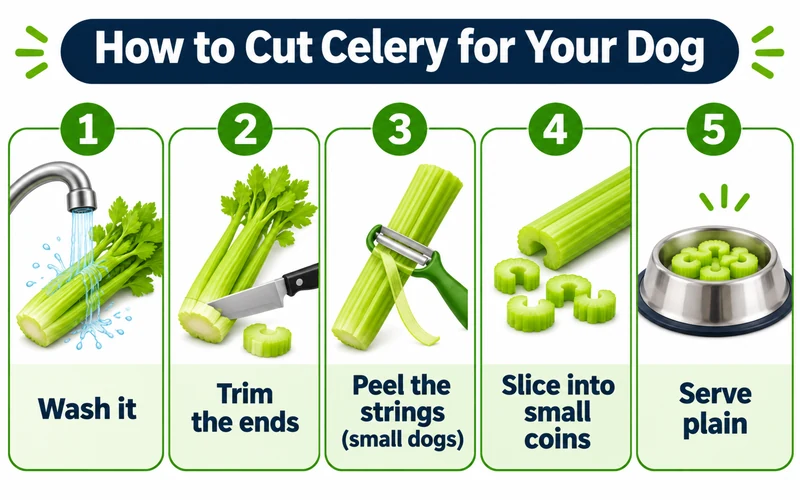
How you cut celery matters more than how much you give. Celery’s long strings are tough to chew and digest, and a long piece can be a choking hazard, especially for small dogs or fast eaters. These five steps take care of it:
- Wash it well. Rinse the stalks under running water, including the leafy tops if you plan to use them.
- Trim the ends. Cut off the dry base. The leaves are optional (more on them below).
- Peel the strings for small dogs. Run a vegetable peeler down the curved back of the stalk to pull off the toughest strings. Big dogs usually don’t need this step.
- Slice across the stalk. Cut it into small coins, from 1/4 inch for tiny dogs up to about 1 inch for big dogs. Cutting across the stalk keeps any remaining strings short.
- Serve it plain. No salt, butter, oil, dips or seasoning.
Skip the whole stick, even for big dogs.
A whole celery stick can seem like a natural chew, but a dog who gulps can swallow a long piece with its strings intact. Chopped coins give the same crunch with much less risk.
Can Dogs Eat Celery Raw, Cooked or Frozen?
Can dogs eat celery in any form? Mostly, yes. Here’s how each one compares.
Raw Celery
Raw celery is the most common way to share it and gives your dog the most crunch. Just wash it, cut it small and serve it plain. The AKC confirms dogs can safely eat raw celery when it’s washed and cut into bite-size pieces.
Cooked Celery
Plain cooked celery is fine too, and some dogs do better with it. Steaming or boiling softens the strings, which makes it easier to chew for seniors, small dogs and dogs with sensitive stomachs. The key word is plain. Celery fished out of soup, stew or stuffing usually comes with salt, onion and garlic, so skip it.
Frozen Celery
Frozen celery coins make a cool, crunchy treat on a hot day. Slice, freeze on a tray and hand out a few at a time. Keep the pieces small, because frozen chunks are harder and easier to swallow whole.
Celery Leaves
The leafy tops are safe for dogs in small amounts. They have a stronger flavor that some dogs aren’t keen on, and they can hold more dirt and residue than the stalk, so wash them well and chop them finely. If your dog is new to celery, start with the stalk.
Can Puppies Eat Celery?
Yes, puppies can have a little celery once they’re fully eating solid food. Some sites say “never,” but the AKC notes that puppies can eat small amounts if the pieces are cut to a safe size and you supervise them.
For puppies, keep it extra small and simple:
- Cut tiny, soft pieces, or lightly steam them so they’re easier to chew.
- Give one or two pieces at first and watch for loose stool or gas.
- Keep it a rare extra. Puppies need almost all their calories from a complete puppy food to grow properly.
Not sure when your puppy is ready for solid food? Our guide on when puppies start eating solid food covers it.
Celery With Peanut Butter (and “Ants on a Log”)
Celery and peanut butter is a classic combo, and many dogs love it. It can be safe, with two big warnings.
First, check the peanut butter for xylitol. Some peanut butters and “sugar-free” spreads contain xylitol (sometimes listed as birch sugar), which can be deadly to dogs. The FDA warns that it can cause a dangerous drop in blood sugar quickly after a dog eats it. Use a plain, xylitol-free peanut butter, and only a thin smear, since peanut butter is high in calories.
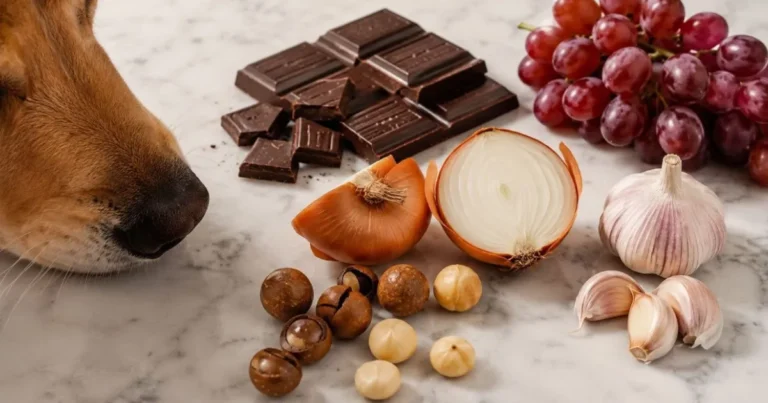
Second, never share “ants on a log.” This snack tops celery and peanut butter with raisins, and raisins and grapes can cause sudden kidney failure in dogs. The toxic amount isn’t known, so experts advise giving none at all. According to Cornell University’s Riney Canine Health Center, if your dog eats grapes or raisins, call your vet or a pet poison control center right away.
Read the peanut butter label every time.
Brands change recipes. If the label lists xylitol or birch sugar, keep that jar away from your dog completely.
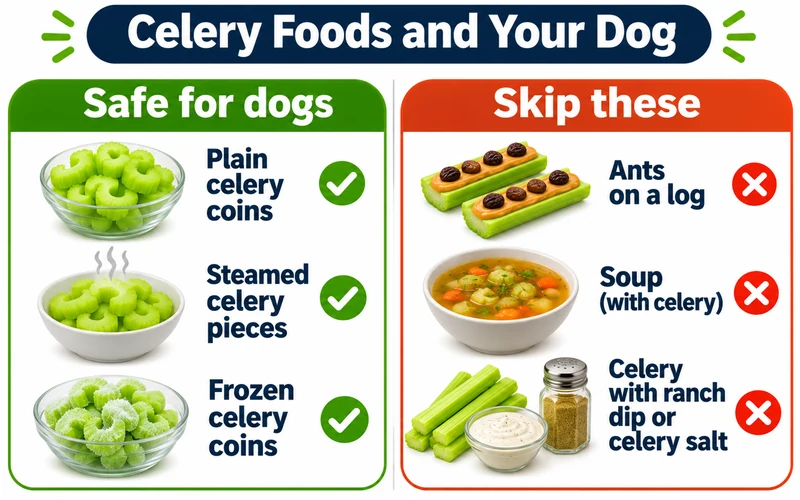
Celery Foods to Skip
Plain celery is safe. Many celery dishes and snacks aren’t. Here’s what to keep off your dog’s plate:
Onion and garlic are the big hidden risks in cooked dishes. Both damage dogs’ red blood cells, according to the Merck Veterinary Manual, and powdered forms in seasoning are especially concentrated. For the full list, see our guide to human foods that are toxic to dogs.
Celery Myths, Checked
Celery comes with a lot of health claims. Here’s what holds up for dogs and what doesn’t:
If fresh breath is your goal, daily brushing works best. Our guide on how to clean your dog’s teeth without brushing covers the backup options that actually help.
Celery vs. Other Low-Calorie Treats
Celery isn’t the only crunchy, low-calorie veggie dogs can enjoy. Here’s how it stacks up against a few other popular picks, per 100 grams (about 3.5 ounces), based on USDA FoodData Central:
The takeaway: celery and cucumber are the lowest in calories, and cucumber is the better pick for dogs on a low-sodium diet. Rotating a few of these keeps treat time interesting. Looking for a sweeter option? See whether dogs can eat bananas or apples.
When Celery Isn’t a Good Idea
Celery is safe for most healthy dogs, but it isn’t the right treat for everyone. Go easy on it, or ask your vet first, if your dog:
- Has a sensitive stomach. The fiber can cause gas or loose stool. Try a piece or two of lightly steamed celery, or pick a gentler treat.
- Is on a low-sodium or prescription diet, such as for heart or kidney disease. Celery has more sodium than most vegetables, and these diets are carefully balanced. Cucumber may be a better choice, but check with your vet.
- Gulps food without chewing. Stick to very small or lightly steamed pieces, or skip celery altogether.
- Has food allergies. Celery allergies are uncommon in dogs, but any new food can cause a reaction. Stop and call your vet if you notice itching, hives, vomiting or diarrhea after trying it.
If your dog’s stomach is often upset, our guide to food for dogs with sensitive stomachs may help.
Signs of a Problem After Eating Celery
Most dogs crunch on a few pieces of celery with no trouble at all. Here’s what to watch for, and how quickly to act:
- Usually fine to watch at home: a little gas, or one soft stool after a bigger helping. Skip celery for a few days.
- Call your vet soon: vomiting more than once, diarrhea that lasts more than a day, or itchy, red skin after eating celery.
- Call your vet right away: gagging, coughing or pawing at the mouth that doesn’t stop, repeated retching, a painful or swollen belly, straining to poop, or not eating after swallowing a large piece.
If you see a celery string hanging from your dog’s mouth or rear end, don’t pull it.
Pulling a long strand can injure the throat or intestines if the other end is caught. Call your vet and follow their advice instead.
This article is for general information only.
PawWellCare is not a veterinarian, and this content doesn’t replace professional veterinary care. Serving amounts are a general guide for healthy adult dogs. If your dog has a health condition, a food allergy or is on a special diet, talk to your veterinarian before sharing celery.
Frequently Asked Questions (FAQ)
Can dogs eat celery every day?
Yes, a few small pieces of plain celery a day is fine for most healthy adult dogs. Stay within the amounts for your dog’s size, keep it part of their treat allowance, and skip a day or two if you notice gas or soft stool.
Why does my dog love celery?
Many dogs simply enjoy the crunch and the juicy, watery texture, especially when it’s cold. Others aren’t fans of the strings or the slightly bitter taste. Both are perfectly normal.
Can celery upset a dog’s stomach?
It can if your dog eats too much at once or isn’t used to it. Celery’s fiber may cause gas, loose stool or, less often, vomiting. Start with one or two small pieces and increase slowly.
Can dogs eat celery sticks?
It’s best to cut them up. A whole celery stick can be a choking hazard, and its long strings are hard to chew and digest. Small coins cut across the stalk are much safer, even for big dogs.
Does celery help dogs lose weight?
It can help as part of a plan. Swapping higher-calorie treats for a few pieces of celery cuts calories while keeping treat time fun. Real weight loss still comes from measured meals and exercise, so work with your vet on a plan.
Can dogs eat carrots and celery together?
Yes. Plain carrots and celery are both safe for dogs, and mixing them makes a crunchy, low-calorie snack. Cut both into small pieces and keep the total within your dog’s treat allowance.
So, Can Dogs Eat Celery? The Bottom Line
So, can dogs eat celery? Yes. Plain celery is one of the best low-calorie treats you can share, as long as you prepare it with care. Here’s what to remember:
- Cut it small, across the stalk, and peel the strings for tiny dogs
- Keep it plain: no celery salt, dips, soup celery or xylitol peanut butter
- Start slow, and stay within the amount for your dog’s size
Your next step: the next time you’re prepping celery, set aside a stalk, slice a few small coins and see if your dog is a fan. Want more healthy snack ideas? See our guides on whether dogs can eat shrimp and human foods that are safe or toxic for dogs, and our complete dog nutrition guide for the bigger picture.
A little crunch, a lot of tail wags, and almost no calories. That’s a treat worth sharing.


Pingback: Can Dogs Eat Apples? Yes, Here’s How Much and Which Parts to Skip – PawWellCare