
You’re slicing a ripe mango over the sink. Sticky juice runs down your wrist, the whole kitchen smells like summer, and your dog is sitting perfectly still behind you, eyes fixed on your hands. Then one slippery piece shoots off the knife, and it’s gone before you can even look down.
So, can dogs eat mango? Was that a sweet little treat, or something to worry about?
Look it up and the answers don’t line up. One site says a couple of small cubes. Another says a big dog can have up to a cup a day. Some say the skin is fine, while others warn it’s related to poison ivy.
Here’s the short version. Fresh mango flesh is safe for most dogs, but the details matter. The big, slippery pit can cause choking or a blockage in the gut. And one cup of mango holds about 22 grams of sugar, which is a lot for a dog.
Here’s what you’ll find below:
- How many chunks to give, based on your dog’s size
- Which parts and forms are safe, from frozen bits to dried mango and juice
- What to do if your dog swallowed the pit, and when to call the vet
Yes, dogs can eat mango in small amounts.
Peel it, remove the pit, and cut the flesh into bite-size pieces. Mango is about 83% water and rich in vitamins A and C, but one cup holds about 22 grams of sugar. Keep it to a few small chunks as an occasional treat.
Is Mango Good for Dogs?
Yes, mango is a good treat for most dogs in small amounts. It’s soft, juicy, low in fat, and most dogs love the sweet taste. Here’s what’s inside, based on USDA data:
One cup of mango pieces (165 g) has about 99 calories, 22.5 g of natural sugar, 2.6 g of fiber and 60 mg of vitamin C, plus vitamin A, vitamin E, vitamin B6, folate and potassium.
Mango is about 83% water, according to USDA FoodData Central.
What that means for your dog:
- A juicy, hydrating snack. With so much water, a few cool pieces are a nice treat on a warm day.
- Vitamins and fiber. Mango adds vitamin A, vitamin C, vitamin E and a little fiber. Dogs make their own vitamin C, and a complete and balanced dog food already covers their needs, so think of it as a bonus.
- Lots of natural sugar. This is the catch. Gram for gram, mango has about 40% more sugar than pineapple, and one whole mango holds around 46 grams.
The bottom line: mango is a tasty, safe treat when you serve it right. Your dog doesn’t need it to be healthy, so keep it small and occasional.
How Much Mango Can a Dog Eat?
Most dogs can have 1 to 6 small chunks, depending on their size. Use this chart as a guide. One “chunk” here means a 1-inch cube, which weighs about 15 grams and has roughly 9 calories and 2 grams of sugar.
Based on USDA data for raw mango. Your dog’s real needs depend on age, activity and body shape. This chart is a guide, not a prescription.
Why we suggest less than “a cup a day.” Some sites say a large dog can have up to a cup of mango daily. By calories alone, that can fit, since vets advise keeping all treats to no more than 10% of a dog’s daily calories (AAHA). But a cup also means about 22 grams of sugar in one sitting, which can easily upset a dog’s stomach. Our largest serving is about a third of a cup, which leaves room for other treats.
How often? A serving a few times a week is plenty. Mix it up with lower-sugar fruits like watermelon or blueberries.
First time? Start with one small piece, then wait 24 hours to make sure your dog’s stool stays normal. Not sure how many calories your dog needs in a day? This guide on how much to feed your dog by weight will help.
How to Cut a Mango for Your Dog
A mango takes about five minutes to prepare. The goal is simple: soft flesh only, and the pit and skin straight in the trash.
- Pick a ripe mango. It should smell sweet and give a little when you press it. Skip fruit with mold or a sour smell.
- Wash it. This clears dirt and sap from the skin before your knife goes through it.
- Slice off the two “cheeks.” Stand the mango on its end and cut down each side of the flat pit in the middle.
- Score the flesh into cubes. Cut a grid into each cheek without cutting through the skin, then scoop the cubes off with a spoon.
- Throw away the pit and skin right away. Use a covered trash can, because a dog will happily dig a sweet mango pit out of an open one.
- Size the pieces. Use about ½-inch bits for small dogs and puppies, and 1-inch pieces for bigger dogs. Keep leftovers in the fridge for up to about 3 days, or freeze them.
Make mango go further.
Freeze small cubes for a cool snack on hot days, and let them soften for a minute for small dogs. Mash a few pieces onto a lick mat or into a Kong, or mix them with a little banana or pineapple. For more summer ideas, see how to keep your dog cool in summer.

Which Mango Forms Are Safe for Dogs?
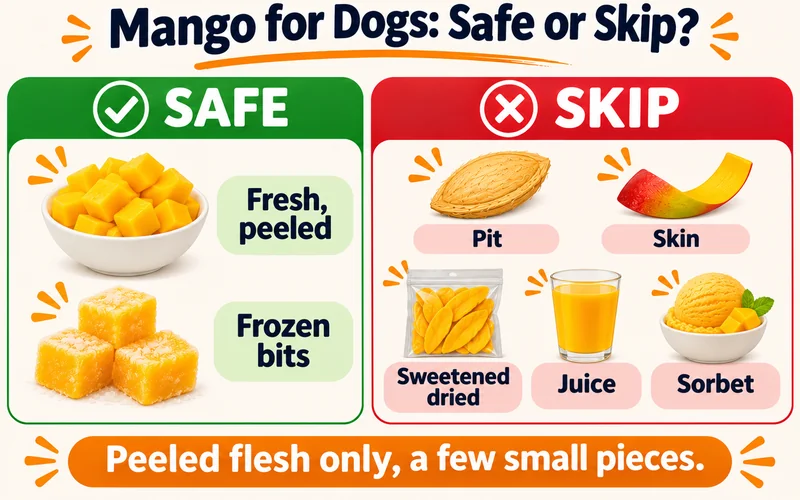
Fresh mango is the best choice by far. Other forms range from “a little is fine” to “skip it,” mostly because of sugar or added ingredients:
Sugar figures per 100 g, from USDA FoodData Central. For comparison, fresh mango has about 13.7 g of sugar per 100 g.
5 Mango Mistakes Dog Owners Make
- Feeding the skin. It’s tough to digest and can upset your dog’s stomach. Always peel it.
- Letting your dog chew the pit. It looks like a fun chew toy, but it’s a choking and blockage risk.
- Cutting pieces too big. Soft, slippery mango can still lodge in a small dog’s throat. Go smaller for small dogs.
- Treating dried mango as a healthy chew. Store-bought dried mango has almost 5 times the sugar of fresh.
- Giving too much at once. A whole mango holds about 46 grams of sugar. Stick to the chart above.
Can Dogs Eat Mango Skin or the Pit?
Mango skin: no. The skin is tough and hard for dogs to digest, so it can cause an upset stomach. Mango skin and sap also contain natural compounds closely related to urushiol, the irritant in poison ivy, and people sensitive to poison ivy can react to them (Oka et al., 2004). There’s little research on how dogs react, but it’s one more good reason to peel.
Mango pit: never. The pit (or seed) is large, hard and slippery. A dog can choke on it, or it can get stuck in the stomach or intestines and cause a blockage that may need surgery. Small and medium dogs are at the highest risk, but a big dog can get into trouble too.
What about cyanide? You’ll read that mango pits contain cyanide. Some fruit seeds contain compounds that can release cyanide, but the danger you can count on with a mango pit is the blockage. That alone is reason enough to keep every pit out of reach.
My Dog Ate a Mango Pit: What Now?
Stay calm and act quickly. What to do depends on what your dog ate and how they’re acting:
Don’t try to make your dog vomit at home unless a vet tells you to. A pit can get stuck on the way back up.
Can Puppies Eat Mango?
Yes, puppies can have a tiny piece of fresh mango once they’re weaned and eating solid puppy food. But because mango is so sugary, it isn’t the best puppy treat, so keep it to an occasional taste.
- Start with one fingernail-size piece, mashed for toy-breed puppies.
- Watch the stool for 24 hours before you offer more.
- Keep all treats at or under 10% of their daily calories, so complete puppy food does the real work. See our puppy feeding schedule by age for the basics.
When to Skip or Limit Mango
Mango is safe for most healthy dogs, but some dogs are better off with less, or none:
- Dogs with diabetes. The natural sugar can make blood sugar harder to control. Ask your vet first.
- Overweight dogs. If you give mango, use it instead of other treats, not on top of them.
- Dogs with sensitive stomachs. Sugar and fiber can trigger loose stools. If tummy trouble is common, the main food may be the issue, and our guide to the best dog food for sensitive stomachs can help.
- Dogs with dental problems. Sticky, sugary treats aren’t great for teeth. Our guide to dog dental disease explains why daily dental care matters.
- Dogs who react to it. Mango allergies are rare, but stop and call your vet if you see itching, swelling, hives or vomiting.

This article is for general information only and is based on independent research, not personal testing.
PawWellCare is not a veterinarian, and this content doesn’t replace professional veterinary care. If your dog has diabetes, a sensitive stomach or another health condition, ask your veterinarian before adding new foods. If your dog swallowed a mango pit, or ate anything that may contain xylitol, grapes or onion, contact your veterinarian or an animal poison control center right away.
Frequently Asked Questions (FAQ)
Can dogs eat mango every day?
It’s better not to. Mango is one of the sweeter fruits, so a few small pieces a few times a week is a healthier habit. Rotate it with lower-sugar treats like blueberries or watermelon.
Can dogs eat dried mango?
It’s best to skip store-bought dried mango. It’s usually sweetened and has about 66 grams of sugar per 100 grams, almost 5 times more than fresh. If you dry mango yourself with no sugar, give only 1 or 2 tiny pieces.
Can dogs eat frozen mango?
Yes. Small frozen cubes of fresh mango make a great hot-day treat. Keep the pieces small, and let them soften for a minute for small dogs and puppies. Skip frozen mango mixes with added sugar.
Can dogs have mango juice?
No. Mango juice and nectar have the sugar of the fruit with almost none of the fiber, and many contain added sugar. Fresh mango pieces are a much better choice.
Can dogs eat mango sorbet or ice cream?
It’s best not to. Sorbet and ice cream are high in sugar, and sugar-free versions may contain xylitol, which is toxic to dogs. If your dog licked a little regular sorbet, watch for an upset stomach. Call your vet if it was sugar-free.
Can dogs be allergic to mango?
Yes, but it’s rare. Signs include itching, redness, swelling, hives, vomiting or diarrhea after eating mango. Stop feeding it and talk to your vet. Get emergency help for facial swelling or trouble breathing.
So, Can Dogs Eat Mango? The Bottom Line
Yes, dogs can eat mango, and most dogs think it’s one of the best treats around. Just follow three simple rules:
- Peeled flesh only. Cut away the skin and keep the pit far from your dog.
- A few chunks, sized to your dog. From one tiny piece for a toy breed to about 5 or 6 for a giant dog.
- Skip the sugary forms. No sweetened dried mango, juice, sorbet or chutney.
Next time you cut a mango, set a few small cubes aside and freeze them for an easy summer reward. Want more fruit your dog can share? Try our guides to blueberries, watermelon and cantaloupe.