

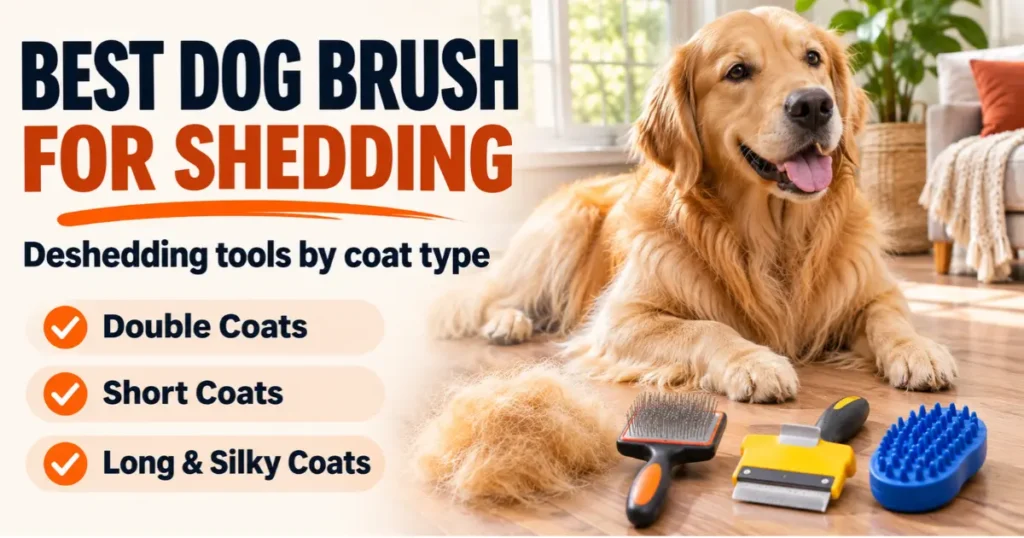
You brushed your dog for twenty minutes. The brush is packed, there’s a little drift of fur on the floor, and somehow your dog still looks like they could shed a whole second dog by Friday.
That usually isn’t a “brush more” problem. It’s a wrong-tool problem.
Dog brushes aren’t one-size-fits-all. A blade tool that pulls clumps of undercoat out of a Husky can scrape a Yorkie’s skin, because a Yorkie has no undercoat to pull. A soft rubber brush that’s perfect for a Beagle barely reaches the dense layer under a German Shepherd’s coat. So the best dog brush for shedding isn’t the one with the most stars. It’s the one built for the coat your dog actually has.
That’s why this guide starts with the coat, not the brand. Here’s what you’ll get:
The overbrushing signs most guides leave out, plus when shedding is a vet question and not a brush question
A simple coat-type chart, so you know which kind of brush to buy before you look at brands
8 picks, each with a clear “best for” and an honest “skip it if”
The best dog brush for shedding depends on coat type. Double-coated dogs (Huskies, Goldens, German Shepherds) do best with a slicker brush plus a deshedding tool or undercoat rake, used about once a week and more during seasonal shedding.
Short, smooth coats need a rubber curry brush, not a blade. Long, silky coats need a slicker and a steel comb. Skip blade tools on single-coated dogs and on wet fur.
Quick Picks: The Best Dog Brush for Shedding by Coat Type
- Best for heavy double coats: FURminator Undercoat deShedding Tool
- Best everyday brush: Hertzko Self-Cleaning Slicker Brush
- Best for a coat that’s “blowing”: Maxpower Planet Undercoat Rake
- Best for short coats: KONG ZoomGroom
- Best daily finishing brush: Wahl Double-Head Pin & Bristle Brush
- Best budget deshedder: Andis Deshedding Tool
- Best for long coats and mat checks: Andis Steel Pet Comb
- Best for dogs that hate brushes: HandsOn Grooming Gloves
No single deshedding brush fits every dog. Most heavy shedders need two of these.
Which Dog Shedding Brush Fits Your Dog’s Coat?
A double-coated dog has two layers. There’s a soft, dense undercoat that sheds in big seasonal waves, and longer guard hairs on top that protect the skin. Deshedding tools are designed to reach through the top layer and pull out the loose undercoat.
A single-coated dog, like a Poodle or a Yorkie, has no undercoat. A blade tool there only pulls out hair you want to keep. So start with the coat, then pick the tool.
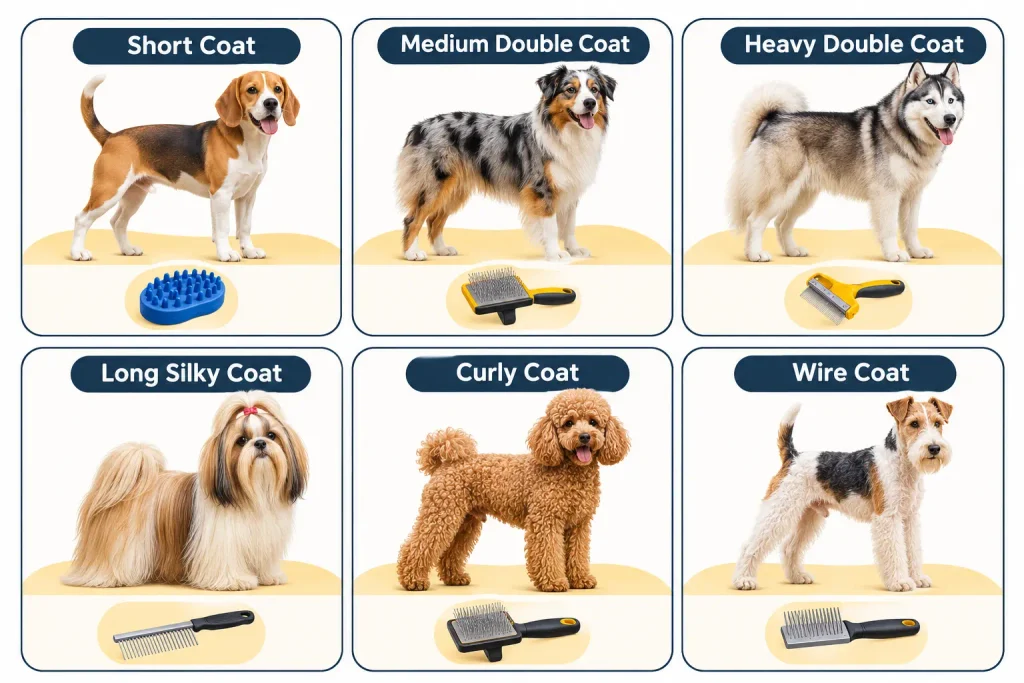
Not sure what your dog has? Part the fur down to the skin on the back or the thigh. If you see a soft, woolly, usually lighter layer close to the skin under longer hair, that’s an undercoat.
Best Brush for Double Coated Dogs
Two tools: a slicker for the top coat and tangles, then a deshedding tool (medium coats like a Golden’s) or an undercoat rake (very thick coats like a Husky’s) for the loose undercoat. Have a Golden? See our golden retriever grooming guide. Own a German Shepherd? Our guide to German Shepherd shedding covers when it peaks and a weekly routine.
How We Chose These Brushes
We didn’t run a lab or brush 40 dogs. This is a research-based comparison. To find the best dog brush for shedding for each coat, every pick had to clear these checks:
- Coat fit. Matched to the coat it’s designed for, using maker guidance and grooming references.
- Safety design. Rounded or coated pin tips, edge guards on blade tools, and handles you can hold without squeezing hard.
- Size options for small and large dogs.
- Owner feedback patterns. Repeated praise and complaints in verified reviews, not star ratings alone.
- Price spread. Cheaper options that still do the job.
If you’re putting together a full grooming setup from scratch, our list of essential dog products every owner needs covers the rest of the basics.
The Best Dog Brush for Shedding: 8 Picks by Coat
Each pick says who it’s for, where it falls short, and who should skip it.
Best for Heavy Double Coats: FURminator Undercoat deShedding Tool
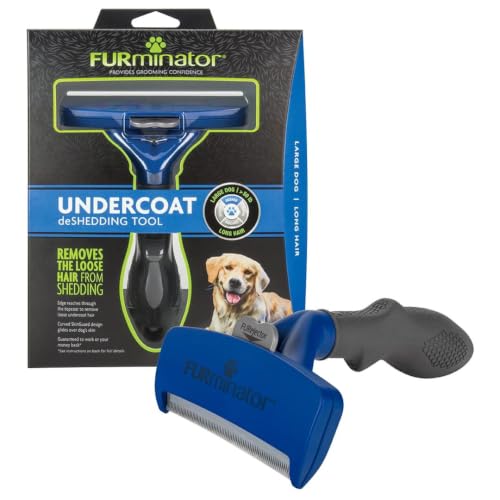
FURminator Large Dog Undercoat deShedding Tool for Long Hair | Reduces Loose Hair From Shedding, Easy Clean-Up, For Dogs Over 50 lbs, Use Weekly, Ergonomic Handle For Comfort
- FOR LARGE DOGS WITH LONG HAIR: Designed especially for dogs that weigh more than 50 pounds.
- REMOVES LOOSE HAIR: Reaches through the topcoat to remove loose undercoat hair without cutting skin or damaging the topcoat (when used as directed).
- FUREJECTOR BUTTON: Just push the button to release hair with ease.
If your dog leaves a second dog’s worth of hair on the rug every spring, this is the tool most people end up buying. The stainless steel edge reaches under the topcoat and pulls out undercoat a regular brush slides over.
It comes in XS, S, M and L, each in a short-hair and long-hair version. Pick the right one, or it’s slow and awkward.
The maker suggests 1–2 sessions a week of 10–20 minutes on a fully dry coat, more during heavy shedding season. FURminator markets the tool as cutting shedding by up to 90%. That’s the company’s claim, not an independent result, though Husky, Shepherd and Golden owners consistently say it beats a slicker alone.
Pros
- Gets out loose undercoat that other brushes miss
- Button pushes collected hair off the edge
- Sizes and two coat versions for most double-coated dogs
Cons
- Easy to overdo. Too much pressure or too many strokes in one spot can irritate skin
- Costs more than most brushes on this list
⚠️ NOT FOR
Single-coated or non-shedding dogs (Poodles, Maltese, Yorkies, Shih Tzus), dogs with sensitive or irritated skin, matted coats (brush the mats out first), or wet fur.
Alternative: On a tighter budget, the Andis Deshedding Tool does a similar job for less money.
Best Everyday Brush: Hertzko Self-Cleaning Slicker Brush

Hertzko Self Cleaning Slicker Brush for Dogs and Cats - Pet Hair Brush for Shedding Long and Short Hair - Easy Clean Retractable Bristles - Cat and Dog Grooming Tool - Purple
- Efficient Grooming: Self cleaning dog and cat brushes removes loose hair, tangles, and debris effortlessly; fine bristles are suitable for grooming both long and short-haired pets for shedding control
- Convenient Cleanup: The dog brush for long haired dogs feature a push-button retraction mechanism; easily retract the bristles for a quick, easy fur removal after each grooming session
- Pet Brush for Shedding: Angled bristles efficiently detangle and remove shedding fur while massaging your pet’s skin; ideal dog grooming brush for shedding, promotes healthier coat with regular use
Almost every dog with more than a very short coat should own a slicker. This one is popular for a simple reason: press a button, the pins pull back, and the hair wipes off in one swipe.
The bent wire pins work through tangles and loose surface hair. On double coats it’s the “before and after” brush around your deshedding tool. On its own, it won’t pull much dense undercoat.
Pros
- Self-cleaning button saves real time
- Works on most medium and long coats
- Good value
Cons
- Wire pins can scratch if you press down. Use light, short strokes
- Not much use on very short, smooth coats
⚠️ NOT FOR
Dogs with very short coats (a rubber brush works better) and anyone hoping one brush will handle a heavy undercoat. There’s also a softer sensitive-skin version if your dog dislikes wire pins.
Alternative: For a short-coated dog, the KONG ZoomGroom does the “everyday brush” job better.
Best for a Coat That’s “Blowing”: Maxpower Planet Undercoat Rake

Maxpower Planet Dog Grooming Rake, Deshedding Undercoat Brush, Dogs & Cats | Blue Deshedding & Dematting, Extra-Wide Double-Sided Comb, Long-Haired Coats, Reduces Shedding, Original Design
- DUAL-SIDED DESIGN: Our Undercoat Rake Dog brush is perfect for deshedding your pet's coat. Designed with a dual-sided design, start with a 9-teeth side to tackle stubborn mats and tangles, and finish with a 17-teeth side to thin out and deshed after.
- HEALTHY COAT AND REDUCED SHEDDING: Our deshedding brush for dogs is designed with sharpened but finely rounded teeth that allow you to easily and safely remove mats, tangles, knots, and loose hair without irritation or scratching.
- EFFECTIVE DESHEDDING TOOL: This dematting and deshedding brush gently removes loose hair and eliminates tangles, knots, dander, and trapped dirt. The perfect cat grooming tool solution for pets with thick fur or dense double coats.
Twice a year, many double-coated dogs “blow” their coat, and undercoat comes loose in clumps. That’s when a rake earns its place.
This one is double-sided. The side with 9 wider teeth works through mats and thick spots, and the 17-tooth side thins out loose undercoat. The steel teeth have rounded edges, and the wide head covers a big dog fast. Use it as the first pass on very thick coats (Husky, Malamute, Shepherd). The listing claims up to 95% less shedding. That’s marketing copy.
Pros
- Handles thick undercoat and small mats
- Two sides, two jobs
- Usually costs less than blade tools
Cons
- Too much tool for short or thin coats
- The dematting side can tug if you rush it
⚠️ NOT FOR
Short-coated dogs, single-coated breeds, or “sawing” through big tight mats. Large mats close to the skin are a job for a groomer or your vet, not a rake.
Alternative: For medium double coats that don’t get this thick, the FURminator is usually enough on its own.
Best for Short Coats: KONG ZoomGroom
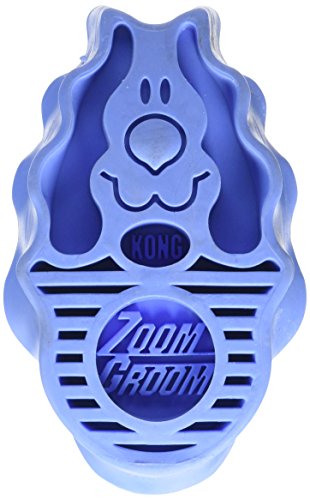
Kong Zoom Groom Dog Grooming Brush, Boysenberry
- Keeps your pet engaged and ready to play
- Soft mouth feel for satisfying chew, even with its ultra durability
- Kong toys are the best in quality, originality, safety and value
Honestly, a Lab, Beagle or Pit Bull doesn’t need a blade tool for everyday shedding. A rubber curry brush like this one pulls up a surprising amount of loose hair, and most dogs treat it like a massage.
Rub in circles and the rubber fingers grab short loose hair. It also works wet, to work shampoo down to the skin in the bath. It’s cheap, hard to hurt a dog with, and the brush most likely to get used regularly. That counts for more than people think.
Pros
- Gentle, and most dogs actually like it
- Works wet or dry, in or out of the bath
- Low price, and it lasts
Cons
- Doesn’t do much on long or double coats
- Not a dematting tool
⚠️ NOT FOR
Long-coated or heavily double-coated dogs as their only brush, or any dog with mats.
Alternative: For dogs that won’t even tolerate a brush, try the HandsOn Grooming Gloves.
Best Daily Finishing Brush for Short and Medium Coats: Wahl Double-Head Pin & Bristle Brush

Wahl Premium Pet Double Sided Medium Pin Bristle Brush, Ergonomic Brush with Ergonomic Rubber Grips for Comfortable Brushing and Finishing Coats of Dogs and Cats – Model 858413
- Double Sided Design – Soft bristles are used to smooth and shine the coat while the stainless-steel pins are used to remove deep lower level fur that normal bristles miss
- Detangles Fur and Hair - Stainless Steel pins are designed to remove light tangles and loose hairs while stimulating the skin and hair follicles
- For Healthy Hair - Bristles smooth the coat and moves natural oils from the skin and down the hair shaft to promote growth and healthy hair
Simple, cheap and easy to keep by the door. One side has stainless steel pins for loose hair and light tangles. The other has soft nylon bristles that smooth the coat and spread its natural oils.
To be clear, this is not a deshedding tool. It shines as the quick daily pass on short and medium coats, or the finish after deshedding a Golden or Aussie.
Prices on this one bounce around between stores, so it’s worth a quick check on Capital One Shopping before you buy.
Pros
- Two tools in one: pins to loosen, bristles to smooth
- Light and easy for quick daily brushing
- Very affordable
Cons
- Won’t handle a heavy undercoat
- Pins are less useful on very long or curly coats
⚠️ NOT FOR
Heavy double coats as the main tool, or matted, curly or very long coats.
Alternative: For a short coat that sheds a lot, pair it with (or swap it for) the KONG ZoomGroom.
Best Budget Deshedder: Andis Deshedding Tool

Andis Premium Fine-Tooth Deshedding Rake - Black
- Safely removes undercoat and loose hair with ease
- Reduces shedding up to 90% while maintaining a damage-free topcoat
- Ergonomic handle for all-day salon use
Andis is a long-standing name in professional clippers, and its deshedding tool is a solid, lower-cost alternative to the FURminator. There’s a full-size version and a compact one for toy, small and medium breeds.
Same job, same rules: dry coat, light pressure, short sessions. Andis also advertises up to 90% less shedding, which is the maker’s claim.
Pros
- Lower price than the best-known blade tool
- Full-size and compact versions
- Comfortable, no-slip grip
Cons
- No hair-release button like the FURminator’s
- Same irritation risk if used too hard or too often
⚠️ NOT FOR
Single-coated breeds, puppies with soft coats, sensitive or broken skin, or wet fur.
Alternative: If you’d rather pay more for the hair-release button and coat-specific versions, go with the FURminator.
Best for Long Coats and Mat Checks: Andis Steel Pet Comb

Andis 65730 Stainless-Steel Comb for Knots, Mats & Loose Hair Removal - Effective Dematting Tool, Comfortable, Lightweight, Portable & Safe for Dogs, Cats & Pets – Silver, 7-1/2-Inch
- HIGH-QUALITY STAINLESS STEEL: Made of sturdy and corrosion-resistant stainless steel, this comb can reduce static electricity and will not fade over time. Built to last through multiple grooming sessions.
- EFFECTIVE DEMATTING TOOL: This pet comb can easily remove knots, mats, and loose hair from your pet's coat. It also promotes blood circulation and massages the skin for better pet health.
- SLEEK AND SHINY COAT: The comb's coarse and fine teeth work together to remove thick or dead fur and leave your pet's coat soft, sleek, and shining.
The cheapest tool here, and it may teach you the most. After slicker-brushing a long coat, run the comb down to the skin. Wherever it catches, a mat is starting that the brush missed. That’s how you catch mats behind the ears and under the legs while they’re small.
Pros
- Finds hidden tangles a brush skips
- Lasts for years
- Very low cost
Cons
- Doesn’t remove much loose hair on its own
- Slow on a big, thick coat
⚠️ NOT FOR
Short, smooth coats (there’s nothing to comb), or anyone expecting it to replace a slicker brush.
Alternative: Pair it with the Hertzko slicker. The two together are the basic kit for long coats.
Best for Dogs That Hate Brushes: HandsOn Grooming Gloves

H HANDSON Pet Grooming Gloves - Patented #1 Ranked, Award Winning Shedding, Bathing, & Hair Remover Gloves - Gentle Brush for Cats, Dogs, and Horses (Black, Large)
- Works on Dogs, Cats, Horses, and More - Whether you're dealing with hair removal, bathing, or massaging these gloves are flexible enough for all your pet care needs. Gentle bristles allow for an effective grooming experience without causing uncomfortable friction. No hair type is a challenge for these grooming gloves, easily handling short, medium, long, and coarse fur with equal efficiency
- The Original Patented Pet Grooming Glove - Groom your pet in comfort with our lightweight gloves, designed with rubber nodules for soothing massages mimicking the gentle touch of flexible bristles. Built to suit all pet personalities & tough enough to withstand baths, playful nibbles, and lots of love!
- More than Just a Hair Remover - The scrubbing nodules work to stimulate circulation and distribute natural oils, promoting a healthy skin and coat for your pet! The dual purpose of the gloves allows you to keep your hands dry, clean, and protected while providing your pet with a professional grooming experience
Some dogs see a brush and leave the room. With gloves you’re basically petting your dog while rubber nodules grab loose hair. They work wet or dry and are a gentle start for puppies and nervous rescues. Sizes differ by seller, so check the chart against your hand.
Pros
- Feels like petting, so anxious dogs relax
- Works wet or dry
- Machine washable
Cons
- Won’t get deep into a thick undercoat
- Costs more than a basic rubber brush
⚠️ NOT FOR
Heavy double coats as the only tool, or dogs with mats. Gloves just slide over the top of those problems.
Alternative: On a budget, the KONG ZoomGroom does a similar gentle job for less.
There’s no magic brush for a heavy shedder.
Most double coats need a slicker plus a deshedding tool or rake. Short coats usually need just one rubber brush. Buy for the coat, not the longest review list.
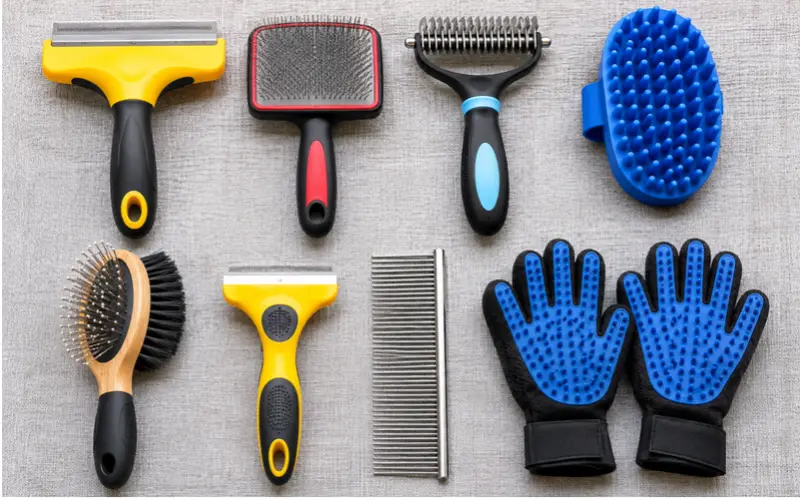
Dog Deshedding Tool vs. Undercoat Rake vs. Slicker Brush
These three get lumped together in store aisles, but they do different jobs. Buying the wrong one is the most common reason people say “this brush doesn’t work.”
Simple rule: a slicker handles the outside of the coat, and a rake or deshedding tool handles what’s underneath. If the coat is short and flat, a rubber brush is enough.
How to Pick a De-Shedding Dog Grooming Brush
Brand matters less than these four things.
Coat type comes first
Go back to the coat chart. If your dog is single-coated, cross every blade tool off your list right away. That one step prevents most bad purchases.
Match the tool size to your dog
A wide head saves time on a big dog. A narrow one reaches a small dog’s armpits and ears without poking.
Safety features worth paying for
Rounded pin tips, a guarded blade edge, and a handle you can hold loosely. Grip hard and you’ll press hard, which is how skin gets irritated.
Budget
The best dog brush for shedding isn’t always the priciest. You don’t need a $40 tool for a Beagle. A $10 rubber brush can be the right answer. Spend more where the coat really demands it, like a blade tool or rake for a heavy double coat.
If you’d rather buy a full set than individual tools, our guide to the best dog grooming kits for home use compares complete kits.
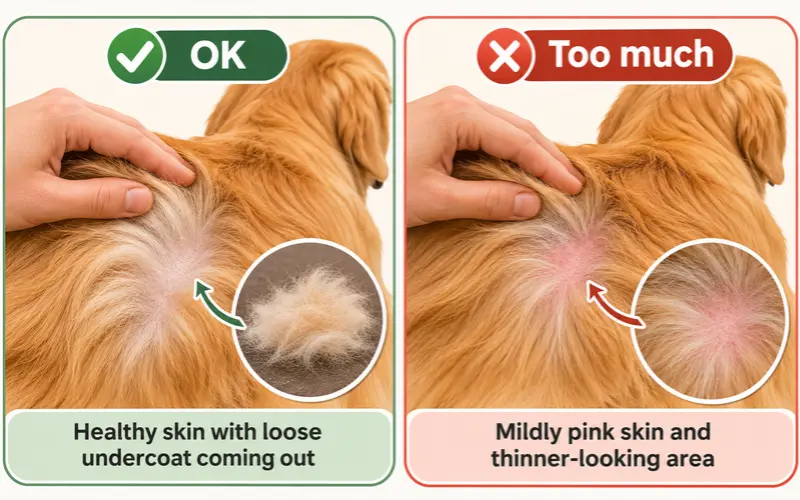
Signs You’re Overbrushing
More brushing isn’t always better. Deshedding tools in particular are easy to overdo, because the pile of fur keeps growing and it feels like progress.
Stop and give the skin a break if you notice:
- Pink or red skin where you’ve been brushing
- Thin scratch lines or a rash-like patch (“brush burn”)
- Thin or bald-looking spots in the coat
- Short, broken hairs on the brush instead of soft, fluffy undercoat
- Your dog flinching, turning to look at the brush, or walking away
Use light pressure, keep sessions short, and don’t keep going over the same spot.
Don’t use blade tools or fine combs on a wet coat. Wet hair snags and pulls.
Also skip them on irritated, scraped or broken skin, and on single-coated breeds such as Poodles, Maltese, Yorkies and Shih Tzus.
When Shedding Isn’t Normal: Talk to Your Vet
Seasonal shedding, even a lot of it, is normal for many dogs. But some hair loss is a health sign, not a grooming problem, and no brush will fix it.
According to the American Kennel Club, heavy shedding can be a concern when it comes with skin injury or results from things like a poor diet, stress, parasites, hormonal problems or skin disease.
Routine: mention it at the next checkup
- Shedding seems heavier than last year, but the coat and skin look healthy
- The coat looks a little dull, and you’ve recently changed foods
Soon: book a vet visit within a few days
- Bald patches or areas of thinning hair
- Constant scratching, licking or chewing at the skin
- Red, flaky, greasy or bumpy skin, or a bad smell from the coat
- Hair loss along with weight gain, low energy or a dog who suddenly can’t handle the cold. Hormone conditions such as hypothyroidism can cause this mix, and a vet can check with blood work (AKC; Hill’s)
Right away: call your vet today
- Open sores, bleeding or swelling on the skin
- A hot, painful, oozing patch that’s spreading quickly
- Hair loss along with not eating, vomiting or obvious illness
Only a vet can tell what’s behind abnormal hair loss. Finding the cause usually takes an exam and sometimes tests (PetMD).
Brushing Is Only Half of It
A good brush helps a lot, but a few habits make it work better:
- Brush a fully dry coat. On deshedding days, bathe first, dry completely, then brush. Loosened undercoat comes out much more easily after a bath. Not sure how often baths should happen? See how often you should bathe your dog.
- Feed a complete, balanced diet. A poor diet can show up in the coat. Ask your vet before adding supplements.
- Don’t shave a double coat to stop shedding. It still sheds, just shorter hair. The coat can grow back patchy, and the skin loses its protection from sun and heat (Dogster).
For the full routine, from bath to final pass, follow our step-by-step guide on how to deshed a dog at home.
This article is for general information only. PawWellCare is not a veterinarian, and this content doesn’t replace professional veterinary care.
If your dog has hair loss, skin changes, itching or any other health concern, please talk to your veterinarian.
Frequently Asked Questions (FAQ)
Does brushing a dog actually help with shedding?
Yes. It doesn’t stop shedding, which is natural, but it catches loose hair on the brush instead of your floor. It also spreads skin oils and prevents mats.
What is the best deshedding tool for dogs?
For most double-coated dogs, a blade-style deshedding tool such as the FURminator or the Andis Deshedding Tool removes the most loose undercoat. Very thick coats often start better with an undercoat rake. Short coats don’t need one at all.
How often should I brush a dog that sheds a lot?
There’s no one vet-set schedule. It depends on the coat. Many double-coated dogs do well with a slicker brushing a few times a week and a deshedding session about once a week, more often during spring and fall coat blow-outs. Short coats are usually fine once or twice a week. If the skin gets red, back off.
Is the FURminator bad for my dog’s coat?
Used correctly on a double coat, it’s generally safe. Problems come from misuse: pressing hard, going over one spot again and again, using it on a wet coat, or using it on single-coated breeds. Use light pressure, keep sessions short, and stop if you see redness.
Can I use a deshedding tool on a puppy?
Better to wait. Start with a soft bristle brush, rubber brush or gloves so brushing feels pleasant. Bring in a deshedding tool once the adult coat comes in, if the breed has an undercoat.
Should I shave my double-coated dog in summer?
No. Shaving doesn’t stop shedding, removes the layer that protects skin from sun and heat, and the coat can grow back patchy. Regular deshedding is the better summer plan.
The Bottom Line: Match the Brush to the Coat
Once you know what’s growing on your dog, picking the best dog brush for shedding gets a lot simpler.
- Double coat: a slicker plus a deshedding tool or rake. Two tools, used gently, usually beat one expensive one.
- Short coat: a rubber brush. Save your money on blade tools.
- Long or silky coat: a slicker plus a steel comb, and no blades.
Next step: part your dog’s fur to check for an undercoat, find their row in the coat chart, and pick one or two tools. Keep the first sessions short and easy.
Brushing is one piece of a bigger routine. For nails, ears, baths and the rest, our complete dog grooming guide for beginners walks you through it.

Pingback: Pomeranian Grooming: A Safe Home Routine for That Fluffy Double Coat
Pingback: Golden Retriever Grooming: How to Groom a Golden at Home
Pingback: Do Golden Retrievers Shed? How Much, When & What Helps