


Maybe you’re thinking about bringing home a Golden Retriever and wondering what you’re signing up for. Or maybe you already have one, and there’s a soft golden layer on your couch, your car and your black jeans that never seems to go away.
Either way, you want a straight answer to one question: do golden retrievers shed, and how much?
They do. Quite a lot. But the good news is that Golden shedding is predictable, and once you understand it, it’s very manageable. In this guide you’ll find:
- How much Goldens really shed, and when it gets heavier
- Whether they’re hypoallergenic (and what research says about allergy-friendly dogs)
- How they compare to Labs, and the simple habits that keep the fur under control
Yes, golden retrievers shed a lot.
They shed a steady amount all year and shed their undercoat heavily about twice a year, usually in spring and fall. Goldens are not hypoallergenic. Brushing 2 to 3 times a week (daily in shedding season), drying the coat well after baths and keeping up with grooming makes a big difference.
Do Golden Retrievers Shed a Lot?
Yes. Golden Retrievers are one of the heavier-shedding family breeds, and it comes down to their coat.
A Golden has a double coat:
- The undercoat is soft and thick, close to the skin. It keeps them warm and dry, and it’s the layer that sheds the most.
- The outer coat is longer and water-resistant. It sheds too, but more slowly.
That combination is perfect for a dog bred to retrieve birds from cold water. In a living room, it means loose hair every day.
What “a lot” looks like in real life:
- Most days: golden hairs on floors, furniture and clothes, even if you brush regularly
- During a coat blow: clumps of fluffy undercoat coming out in your hand, and a brush that fills up in minutes
- Around the house: fur collecting in corners, under furniture and on dark fabrics
Golden Retrievers shed year-round because of their dense double coat, and they shed much more heavily for a few weeks about twice a year.
Heavy shedding is normal for the breed and isn’t a sign that something is wrong.
When Do Golden Retrievers Shed the Most?
Goldens shed all year, with two big peaks. During these peaks, often called “blowing the coat,” a lot of loose undercoat comes out over a few weeks.
The main trigger is changing daylight. Longer days in spring push out the thick winter undercoat. Shorter days in fall make room for a new, thicker one.
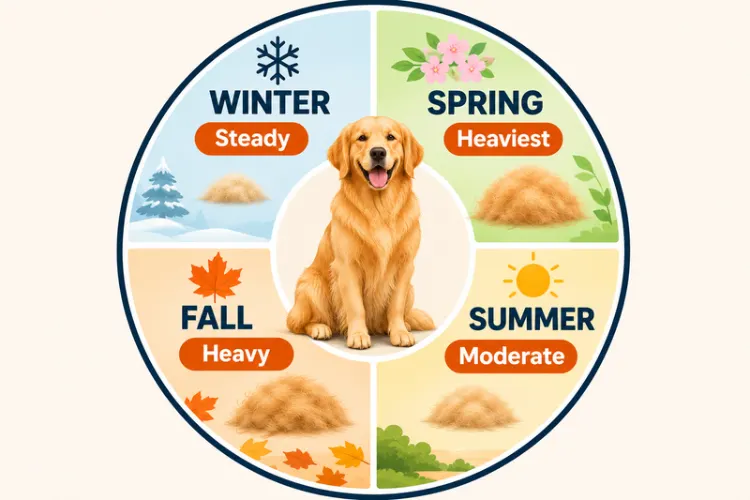
Every Golden is a little different. Timing depends on where you live, the individual dog and how much time they spend indoors. Dogs that live mostly inside, under steady light and temperature, often shed more evenly all year instead of in two sharp waves.
Are Golden Retrievers Hypoallergenic?
No. And honestly, no dog breed is fully hypoallergenic.
Many people think dog allergies come from hair. In fact, the main allergens come from a dog’s dander (skin flakes), saliva and urine. Hair spreads those allergens around the house, which is why a heavy shedder like a Golden isn’t a good match for most people with dog allergies.
Research backs this up. A 2012 study from Utrecht University measured the main dog allergen, Can f 1, in the hair and homes of so-called “hypoallergenic” breeds and other breeds. It found no evidence to describe any breed as hypoallergenic (Vredegoor et al., 2012). The American Kennel Club also explains that no dog is 100% hypoallergenic, though some low-shedding breeds may bother some people less (AKC). Thinking about a Golden-Poodle mix instead? Our guide on whether Goldendoodles shed explains why no doodle is truly hypoallergenic either.
Golden Retrievers are not hypoallergenic.
Dog allergens come mainly from dander, saliva and urine, and research has found no evidence that any dog breed is truly allergy-free.
If you have mild dog allergies and love Goldens:
- Spend real time with Goldens before you commit, ideally over several visits
- Talk to your doctor or an allergist first
- Keep the dog out of your bedroom
- Use a HEPA air purifier and vacuum often
- Brush your dog outdoors, and wash dog beds and blankets every week
These steps can help, but they won’t make a Golden allergy-free.
Golden Retriever vs. Labrador: Which Sheds More?
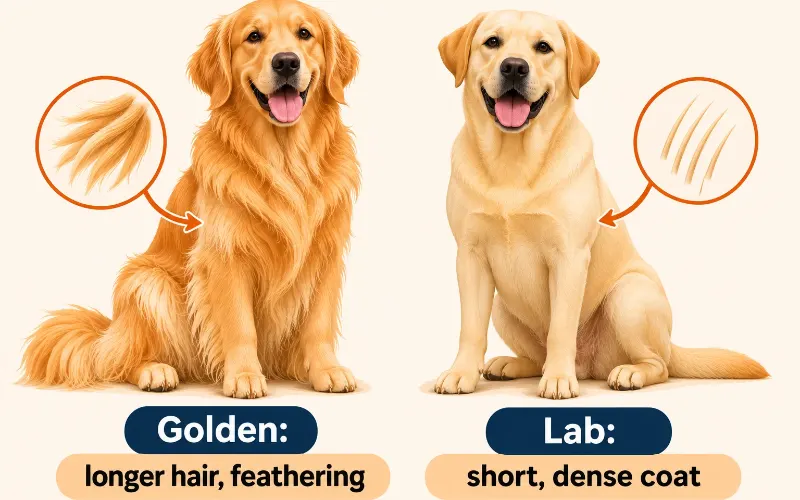
This is one of the most common questions from people choosing between the two. The honest answer: both are heavy shedders. The difference is mostly in how the hair looks and where it ends up.
So if you’re choosing a breed to avoid shedding, neither one is the answer. If you’d rather spend less time brushing, a Lab is a little easier. If you don’t mind brushing, a Golden’s coat is very manageable.
What Affects How Much Your Golden Sheds?
Two Goldens can shed quite differently. A few things make a difference:
- Season and daylight. Shedding peaks in spring and fall.
- Indoor life. Dogs that live mostly inside often shed steadily all year.
- Coat type. Some Goldens have a denser, plusher coat that drops more undercoat.
- Age. Puppies start losing their fluffy puppy coat as the adult coat grows in, often from around 6 months, and the full adult coat can take a year or more to come in. Exact timing varies.
- Health and diet. A complete, balanced diet and healthy skin support a healthy coat. Allergies, parasites or illness can show up as extra shedding.
- Stress. Some dogs shed more after a stressful event, like a move or a vet visit.
- Hormones. Some owners notice coat changes after spaying or neutering, or after a litter. These changes vary a lot between dogs.
If your Golden suddenly sheds much more than usual, and it isn’t spring or fall, it’s worth paying attention. More on that below.
How to Reduce Golden Retriever Shedding
You can’t stop a Golden from shedding. Shedding is how the coat renews itself. But you can catch the loose hair on a brush instead of your floor. These habits make the biggest difference:
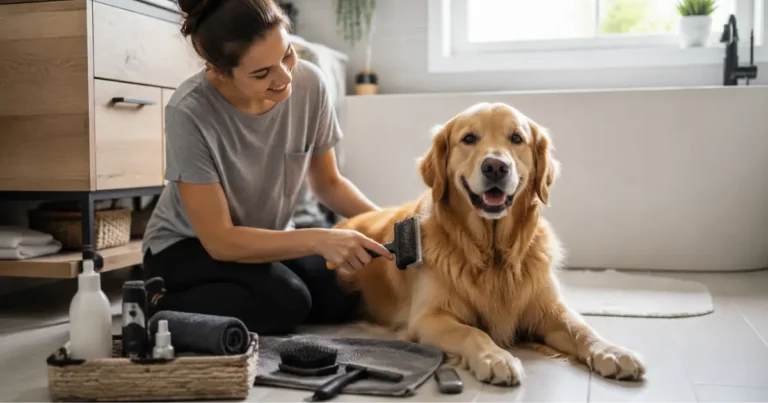
- Brush 2 to 3 times a week, and daily in shedding season. Use a pin or slicker brush and finish with a metal comb. The AKC recommends daily brushing with a pin brush during heavy shedding (AKC).
- Add an undercoat rake during coat blows. A few gentle passes loosen dead undercoat before it falls out on its own.
- Bathe, then dry completely. A bath helps loosen dead undercoat, and drying all the way to the skin helps prevent skin problems like hot spots.
- Feed a complete, balanced diet. Ask your vet before adding supplements or changing food. Our guide to the best dog food for golden retrievers can help you choose.
- Don’t shave. Shaving a Golden doesn’t stop shedding, and it can damage how the double coat grows back.
For the full step-by-step routine, including tools, trimming and drying, see our guide to golden retriever grooming. If you need help picking a brush, our guide to the best dog brush for shedding compares options for double coats.
Brush outside whenever you can.
During a spring coat blow, one good brushing session can produce a pile of fur big enough to fill a grocery bag. That fur is much easier to deal with in the yard than in your living room.
Living With the Fur: Simple Home Tips
Brushing handles the dog. These habits handle the house:
- Vacuum on a schedule. A couple of times a week, and more often during coat blows. A vacuum made for pet hair really helps.
- Use washable covers on the couch, the bed and your dog’s favorite spots.
- Keep a lint roller or rubber glove handy. A slightly damp rubber glove pulls hair off fabric fast.
- Protect the car. A seat cover or hammock saves a lot of cleanup.
- Change your HVAC filter more often during shedding season.
- Wash dog beds and blankets weekly. It cuts down on loose hair and dander.
None of this stops shedding, but it keeps the fur where you can deal with it, not woven into every fabric in your home.
When Shedding Isn’t Normal
Heavy shedding is normal for a Golden. Patchy hair loss or skin changes are not. The difference is in the coat and the skin, not just the amount of fur on your floor.
The AKC notes that excessive shedding can be a concern when it comes with skin injury or is linked to a poor diet, stress, parasites, hormone problems or skin disease (AKC). Goldens can also be prone to hot spots and allergies, so it pays to look at the skin while you brush.
Routine: mention it at the next checkup
- Shedding feels heavier than last year, but the coat is full and the skin looks healthy
Soon: book a vet visit within a few days
- Bald patches or thin areas where you can see skin
- Constant scratching, licking or chewing
- Red, flaky, greasy or smelly skin
- Shedding along with weight gain, low energy or a dull, brittle coat (signs that can point to a thyroid problem)
Right away: call your vet today
- A red, moist, painful patch that’s spreading quickly (a possible hot spot)
- Open sores, bleeding or swelling
- Skin problems along with fever, not eating or obvious illness
Don’t try to fix unusual hair loss with supplements or medicated shampoos on your own.
Only a vet can find the cause, and the right treatment depends on what it is.

This article is for general information only.
PawWellCare is not a veterinarian, and this content doesn’t replace professional veterinary or medical care. If your Golden has hair loss, skin changes or other health concerns, talk to your veterinarian. If you have allergies, talk to your doctor before bringing a dog home.
Frequently Asked Questions (FAQ)
Do golden retriever puppies shed?
Yes, but usually less at first. The bigger change comes as the fluffy puppy coat is replaced by the adult double coat, often starting around 6 months. That stage can look like a sudden jump in shedding.
How bad is golden retriever shedding?
It’s heavy, especially in spring and fall, when Goldens blow their undercoat for a few weeks. Expect hair on floors, furniture and clothes most days. Regular brushing keeps it manageable.
Do golden retrievers shed more than Labs?
Both are heavy shedders. Golden hair is longer and more visible and can tangle, while Lab hair is short and tends to weave into fabric. Neither is a low-shedding breed.
When do golden retrievers shed the most?
Usually in spring, when they lose their thick winter undercoat, and again in fall. Dogs that live mostly indoors may shed more evenly through the year.
Does shaving a golden retriever stop shedding?
No. A shaved Golden still sheds, just shorter hairs. Shaving can also make the double coat grow back patchy and removes its protection from sun and heat.
Can someone with allergies own a golden retriever?
It’s difficult. Goldens aren’t hypoallergenic, and no breed is truly allergy-free. If you have mild allergies, talk to your doctor and spend time around Goldens before deciding.
So, Is a Shedding Golden Worth It?
For most Golden owners, the answer is an easy yes. The fur is the price of one of the friendliest, most loyal family dogs you’ll ever meet, and it’s very manageable once you know what to expect.
Here’s what to remember:
- Goldens shed year-round, with heavy coat blows in spring and fall
- They’re not hypoallergenic, so people with allergies should be careful
- Brushing a few times a week (daily during coat blows) keeps the fur off your floors
Your next step: pick up a pin or slicker brush and a metal comb, and set two or three short brushing sessions on your calendar this week. Then follow our step-by-step guide to golden retriever grooming for the full routine.
Bringing home a Golden puppy? Our Golden Retriever puppy training guide covers the first months. And if you’re deciding between breeds, our guide to German Shepherd shedding shows how another popular double-coated dog compares.
A little brushing goes a long way. Your couch, and your Golden, will thank you.



Pingback: Do Goldendoodles Shed? How Much & Are They Hypoallergenic?
Pingback: Best Dog Food for Golden Retrievers: 8 Trusted Picks (2026)