

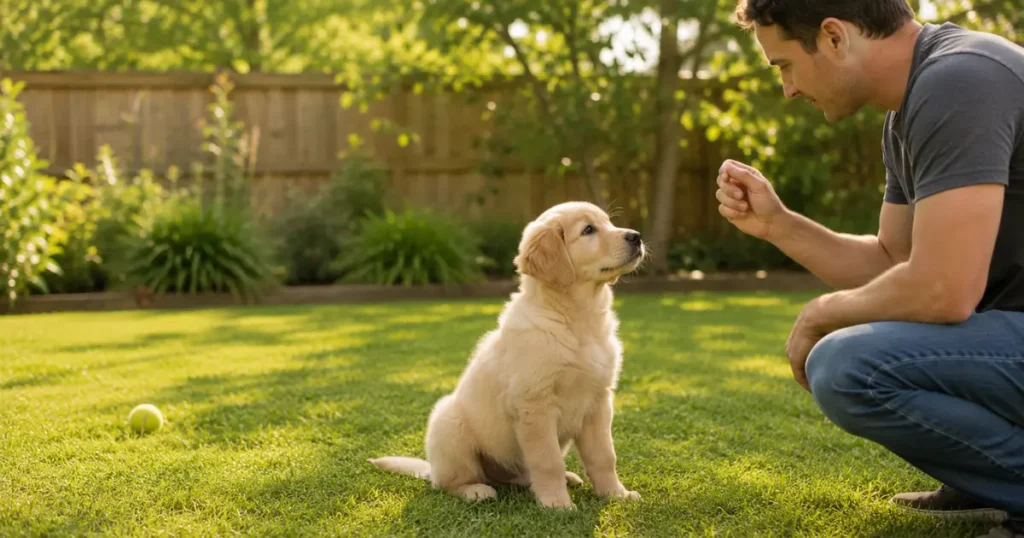
My Golden Retriever puppy figured out the treat pouch had a zipper before he figured out “sit.”
That’s not a knock on his intelligence.
It’s the honest starting point for golden retriever puppy training: this is a breed bred to work with food and objects in its mouth, which makes training genuinely easy in some ways and genuinely tricky in others.
The same food drive that makes treats work so well is the reason Goldens are prone to packing on weight.
The same soft mouth that makes them gentle with kids is the reason mouthing looks different in this breed than in others.
Most generic puppy guides treat Goldens like a slightly bigger, friendlier version of any other breed, and that approach misses what actually matters.
This dog was bred for a specific job, carrying birds gently across water for hours, and that working heritage shapes everything from how eagerly they learn to how easily they overeat.
This guide is built around what actually makes Golden Retriever puppies different:
- The retrieving instinct that shapes how they learn
- Breed-specific mouthing behavior
- A genuine food-motivation strategy that doesn’t lead to an overweight adult dog
- The long adolescent phase that catches most first-time Golden owners off guard.
Early Foundations, Food & Retrieving Drives & Commands Timeline
Training should start at 8 weeks with name recognition and basic house rules, then build toward commands using the breed’s natural retrieving and food drives as training tools rather than distractions. Most Golden puppies learn 6 to 8 basic commands by 16 weeks with short, consistent sessions. Because Goldens are food-motivated, treat-based training works exceptionally well, but that same drive makes this breed genuinely prone to weight gain, so portion control matters as much as the training itself. Adolescence in Goldens runs longer than in many breeds, often from 5 to 18 months.
A Golden Retriever training routine should begin at 8 weeks with name recognition and house rules, using the breed’s natural food and retrieving drives as training tools, with most puppies learning 6 to 8 commands reliably by 16 weeks through short, consistent daily sessions.
High food motivation accelerates reward-based command learning, but treat portions must be subtracted from daily meal allowances to prevent obesity.
Goldens mature slower mentally than physically, requiring steady reinforcement and patience through their 5 to 18 month adolescent phase.
Why Golden Retriever Puppy Training Is Different
Bred to Retrieve, Bred to Please
Golden Retrievers were developed as gun dogs bred specifically for a soft mouth, the ability to carry game without damaging it, combined with a strong willingness to learn and obey, according to the American Kennel Club.
That combination is exactly why golden retriever puppy training tends to go faster than training many other breeds, and also why generic advice sometimes misses the point.
A Golden puppy isn’t just food-motivated and eager.
It’s specifically wired to carry things in its mouth and work in partnership with a person, which means training that ignores those 2 instincts fights the breed instead of working with it.
The Food-Drive Double-Edge, Great for Training, Risky for Weight
Here’s the part most training guides skip.
A 2024 study led by Texas A&M University and the Dog Aging Project found that sporting-group breeds, including retrievers, spaniels, and setters, are approximately 10% more food-motivated than other dogs.
That same food drive that makes clicker training and treat rewards work so well is directly tied to this breed’s well-documented tendency toward overeating and weight gain.
Training your Golden well means using that food motivation deliberately, not just generously.
Golden Retriever Puppy Training Timeline, 8 Weeks to 18 Months
8 to 10 Weeks, Foundation and Bonding
The first weeks home are about building a relationship, not drilling obedience.
- Teach your puppy their name with eye contact and immediate reward, the same foundation used across all breeds.
- Establish house rules from day one. A Golden’s size at 8 weeks is not its size at 8 months.
- Keep sessions to 3 to 5 minutes. Golden puppies at this age have short attention spans regardless of how eager they seem.
For a ready-made foundation covering potty training, crate training, and early manners in one package, read our DIYK9 Puppy Essentials review.
10 to 16 Weeks, Socialization Window
This window matters for every breed, but Goldens’ naturally social temperament means missed socialization tends to show up as under-confidence rather than aggression, still worth taking seriously.
- Expose your puppy to at least 7 new people per week, varying in age, appearance, and clothing.
- Introduce new surfaces, sounds, and environments gradually, never forcing an interaction if your puppy shows hesitation.
- Begin gentle mouth-handling exercises now, since this lays the groundwork for the mouthing section below.
5 to 18 Months, the Long Golden Adolescence
Golden Retriever adolescence runs longer than in many breeds, often extending to 18 months before full behavioral maturity.
This section is covered in depth further down this guide.
Mouthing and Soft-Mouth Training, the Retriever-Specific Approach
Why Goldens Mouth More Than Other Breeds
Golden Retrievers carry things in their mouths more than most breeds, sticks, toys, shoes, your hand, because retrieving breeds are specifically bred with a soft mouth and a strong instinct to carry objects, according to the AKC.
This is distinct from aggressive biting.
A Golden puppy mouthing your hand is closer to instinctive carrying behavior than defiance, though it still needs to be shaped into appropriate targets.
The Withdrawal Method, Step by Step
According to the AKC’s Chief Veterinarian Dr. Jerry Klein, play biting doesn’t mean a puppy is vicious, but if the behavior hasn’t moderated by 6 months old, it’s worth consulting a professional trainer.
- Step 1: Stop the interaction the instant teeth touch skin. Withdraw your hand calmly rather than pulling away sharply.
- Step 2: Pause briefly, then resume. The pause, not a loud yelp, is what teaches the lesson for most Golden puppies.
- Step 3: Redirect immediately to an appropriate object. A soft toy or retrieving dummy gives the mouth something acceptable to hold.
- Step 4: Reward calm, gentle mouth contact. This reinforces the soft-mouth trait the breed is already inclined toward.
Channeling the Retrieving Drive Into Training
Turning Fetch Into a Training Tool
Most golden retriever puppy training guides treat fetch as exercise, not training.
That’s a missed opportunity with this specific breed.
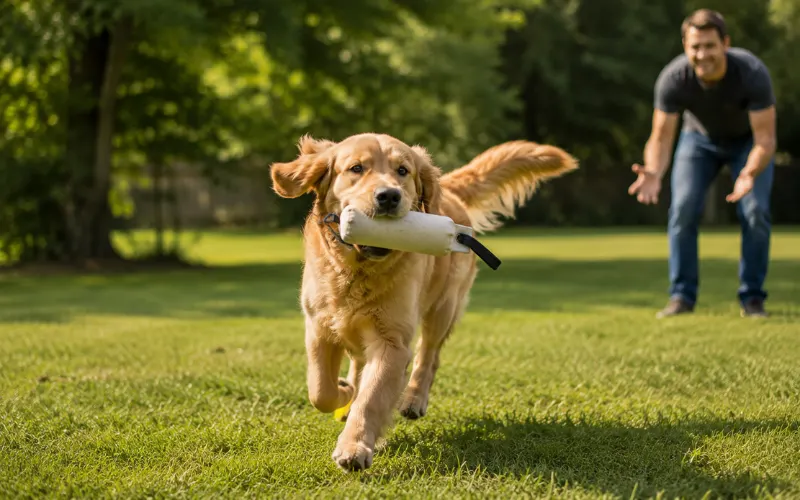
- Use a structured fetch-and-return as a recall-building exercise, rewarding the return, not just the chase.
- Add a “drop it” command at the handoff point, turning an instinctive behavior into a taught command.
- Incorporate short retrieving sessions into daily training time rather than treating them as separate play.
A dedicated training dummy, rather than a standard ball or stick, is worth the switch specifically for retrieving breeds, since it’s designed to teach a soft-mouth carry rather than a hard bite-and-shake grip.

For a structured program that channels this exact instinct into formal trick and skill training, read our SpiritDog course comparison, which covers their dedicated Dog Tricks course.
Water Introduction and Safety Basics
Goldens’ retrieving heritage includes water work, and many puppies show natural interest in water early.
Introduce it gradually:
- Start in shallow, calm water first.
- Never force entry if your puppy is hesitant.
- Always supervise your puppy around water.
- Remember that enthusiasm doesn’t equal water safety competence at a young age.

Channeling a Golden Retriever’s natural retrieving drive into structured fetch-and-return exercises, complete with a taught “drop it” command at handoff, turns an instinctive behavior into a genuine training tool rather than treating fetch as separate from training time.
Essential Commands by Age (Reference Chart)
A Golden Retriever puppy typically learns name recognition within 2 to 3 days at 8 weeks, progressing to 6 to 8 reliable commands by 16 weeks, with formal heel and distance recall introduced after 6 to 8 months as impulse control develops.
Food Motivation Without Overfeeding
Why Goldens Are Prone to Weight Gain
This is the section most golden retriever puppy training guides genuinely skip, despite it being one of the most consistently documented health concerns for this breed.
- High food motivation, confirmed by research, makes treats an unusually effective training tool for Goldens specifically.
- That same motivation drives overeating if treat quantity isn’t tracked as part of daily caloric intake, not treated as separate from meals.
- Excess weight in dogs is linked to joint problems, diabetes, and reduced lifespan, according to veterinary research, making this a genuine health issue, not just a cosmetic one.
Treat Math, How to Train Without Adding Pounds
- Use pea-sized treats for training, not full-sized biscuits, since volume matters less than frequency for effective reinforcement.
- Subtract training treats from your dog’s daily food allowance rather than adding them on top of regular meals.
- Rotate in praise, play, and life rewards (a walk, a toy) as reinforcement alongside food, not purely food, so your dog doesn’t need calories to stay motivated in every session.
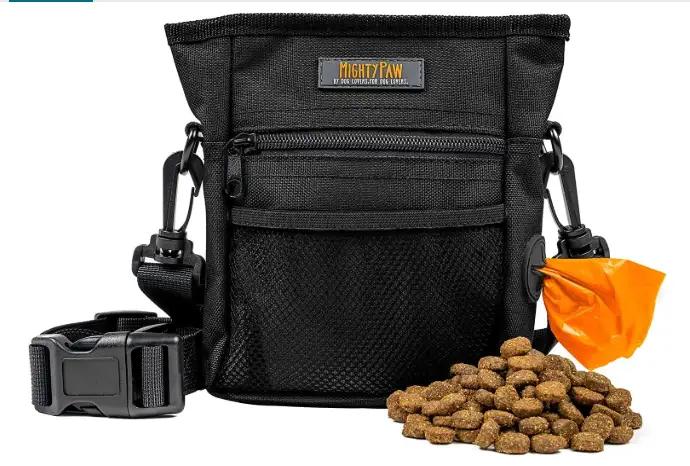
A treat pouch with portion-visible pockets makes it easier to actually track how many treats you’re dispensing per session, rather than guessing after the fact.
For dogs that need mental stimulation as an outlet that isn’t purely food-based, our Brain Training for Dogs review covers a structured brain-game approach that reduces boredom-driven overeating and destructive behavior alike.
When in Doubt, Check With Your Vet
If you’re concerned about your Golden’s weight or body condition at any age, a veterinary check is the right next step. The feeding habits discussed here are general training guidance and aren’t a substitute for a personalized, vet-guided nutrition plan.
Surviving the Long Golden Adolescence (5 to 18 Months)
Why “Easy Breed” Doesn’t Mean “Easy Adolescence”
Goldens have a reputation as an easy, biddable breed, which makes their adolescent phase catch a lot of first-time owners off guard.
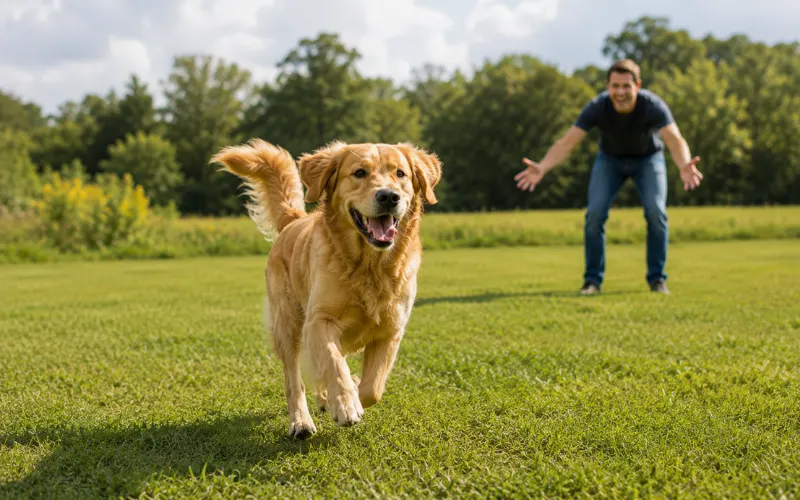
Around 5 to 8 months, the recall that worked reliably at 4 months can suddenly become unreliable, especially around scents, other dogs, or open space, all things this breed is instinctively drawn toward.
3 Things That Actually Help During This Phase
- Practice recall in increasingly distracting environments, gradually. A Golden that reliably comes in your backyard may genuinely ignore you at a dog park until this is proofed in stages.
- Increase structured exercise, not just free play. A physically tired adolescent Golden focuses better during training than an under-exercised one.
- Keep training sessions short and positive through this phase. Frustration-based corrections tend to erode motivation in this breed rather than speeding up compliance.
For adolescent Goldens specifically losing reliable recall around distractions, our SpiritDog course comparison covers a program built around this exact problem.
Leash Training a Golden Retriever Puppy
Why This Breed Pulls Harder Than It Looks
Goldens are a solidly built, athletic breed, and their enthusiasm for exploring, especially anything that smells interesting, translates directly into leash pulling if it isn’t addressed early.
A properly fitted no-pull harness reduces strain on the neck during the pulling phase most Golden puppies go through as they grow.
A front-clip harness like the Ruffwear Front Range is frequently recommended specifically for Golden Retrievers by veterinary sources, since its wide, padded straps distribute pressure across the chest rather than concentrating it on the neck.

For our detailed method on this exact problem, read our guide on leash training a puppy that pulls on walks, or explore our SpiritDog course comparison, which includes a dedicated Loose Leash Walking course.
Crate Training a Golden Retriever Puppy
For our complete crate-training method, read our guide on how to crate train a dog that hates the crate.
Common Mistakes in Golden Retriever Puppy Training
- Assuming “friendly” means “already trained.” A Golden’s good nature doesn’t replace the need for consistent structure.
- Overfeeding treats without adjusting meals. The most breed-specific mistake on this list, given this breed’s documented food motivation.
- Skipping mouth-handling exercises early. Waiting until mouthing becomes a problem makes it harder to correct than addressing it from week 10 onward.
- Under-exercising before training sessions. A restless Golden puppy has less capacity to focus than one that’s had physical outlet first.
- Giving up on recall training after adolescence hits. The 5-to-18-month dip is temporary, not permanent regression.
The most breed-specific golden retriever puppy training mistake is overfeeding treats without adjusting regular meals accordingly, since this breed’s documented high food motivation makes portion tracking more important than in less food-driven breeds.
When to Get Professional Help
Golden-Specific Red Flags That Need a Trainer
- Resource guarding around food or toys that doesn’t improve with basic management, worth professional assessment given how atypical this is for the breed’s temperament.
- Persistent hard biting past 6 months despite consistent bite-inhibition work, per the AKC’s own guidance on when to seek help.
- Extreme fear responses that don’t improve with continued, gentle socialization efforts.
- Aggression toward other dogs or people beyond normal puppy play, since this is genuinely uncommon in well-bred, well-socialized Goldens and warrants a closer look.
When It’s Time to Get Professional Help
These red flags don’t automatically mean something is wrong with your dog. They simply indicate that a behavior falls outside what’s typical for the breed and may benefit from assessment by a qualified professional rather than continued self-guided troubleshooting.
A Note About This Guide
I’m a dog owner sharing personal research and experience, not a certified professional trainer or veterinary behaviorist. The timelines and methods discussed here reflect published AKC guidance and established positive-reinforcement principles. This post contains affiliate links; if you purchase through our links, we may earn a commission at no extra cost to you.
Online Training Programs Worth Comparing for Golden Retrievers
These programs complement everything covered in this golden retriever puppy training guide, each targeting one of the specific challenges discussed above.
| Program | Price | Best For Golden Retrievers | Action |
|---|---|---|---|
⭐ EARLY PUPPY FOUNDATION
🐕 DIYK9 Puppy Essentials
|
$297 | Potty, crate, and early foundation | Explore Course → |
🎾 SpiritDog Dog Tricks
|
$35 | Channeling retrieving drive into skills | Explore Course → |
⭐ SMART BREED MENTAL STIMULATION
🧠 Brain Training for Dogs
|
$67 | Mental stimulation to offset food-driven boredom | Explore Course → |
🎯 SpiritDog Coming When Called
|
$99 | Rebuilding recall during adolescence | Explore Course → |
Each of these has been individually reviewed on this site.
For our complete comparison of all reviewed training programs, read our guide on the best online dog training courses.
Frequently Asked Questions (FAQ)
When should I start training my Golden Retriever puppy?
Start the day you bring your puppy home, typically at 8 weeks.u003cbru003eBegin with name recognition, house rules, and short 3- to 5-minute sessions.u003cbru003eGolden puppies are food-motivated and generally eager learners from the start.
How long does it take to train a Golden Retriever puppy?
Most Golden puppies learn 6 to 8 basic commands reliably by 16 weeks with consistent daily sessions.u003cbru003eFull manners, including leash walking, crate training, and reliable recall, typically develop over 8 to 18 months, given this breed’s longer adolescent phase.
Why does my Golden Retriever puppy mouth so much?
Golden Retrievers are bred with a soft mouth and a strong instinct to carry objects, a trait passed down from their gun-dog retrieving heritage.u003cbru003eThis differs from aggressive biting and typically responds well to a calm withdrawal-and-redirect method.
Are Golden Retrievers prone to obesity?
Yes.u003cbru003eResearch from Texas Au0026amp;M and the Dog Aging Project found sporting-group breeds like Golden Retrievers are about 10% more food-motivated than other dogs, which, combined with their eager eating habits, makes portion control and treat-tracking genuinely important during training.
What is the hardest age to train a Golden Retriever?
The 5-to-8-month range is typically hardest, when previously reliable recall can become unreliable due to scent and social distractions.u003cbru003eThis adolescent phase can extend to around 18 months before full behavioral maturity.
Are Golden Retrievers easy to train?
Generally, yes, due to their intelligence, food motivation, and eagerness to please.u003cbru003eHowever, their strong retrieving and food drives require training that channels those instincts specifically, rather than fighting or ignoring them.
The Zipper Puzzle, Final Thoughts
My Golden figured out that treat pouch zipper years ago, and he’s never really stopped looking for the next thing to solve.
That’s the whole point of this breed, really.
Golden Retriever puppy training works best when you stop treating that intelligence as a nuisance and start building it into the plan itself.
Three things to take with you.
- Work with the drives, not against them. Food motivation and retrieving instinct aren’t obstacles to manage around, they’re the tools this breed responds to best.
- Portion control matters as much as command training. A well-trained Golden that’s overweight isn’t a training success story, the two goals need to be pursued together.
- The long adolescence is temporary, not a regression. A Golden that suddenly seems to forget everything at 6 months hasn’t actually forgotten. Consistency through that phase matters more than any single correction.
For a complete comparison of every training program mentioned in this guide, including pricing and what each one actually covers, read our guide on the best online dog training courses. If you’re comparing breeds or have a German Shepherd puppy instead, the training principles shift in a few key ways worth knowing.



Pingback: German Shepherd Puppy Training, Complete Timeline & Commands (2026)