Nobody told me about the socialization window until it was almost closed.
My puppy was 13 weeks old when a trainer friend of mine asked how socialization was going. I said — fine, he plays with us, and he loves cuddles. She looked at me with that patient expression that said everything.
“That’s not socialization,” she said. “The window closes at 14 to 16 weeks. You have maybe three weeks left.”
I felt my stomach drop.
If you’re reading this in those early weeks with your puppy, you’re in exactly the right place at exactly the right time. This puppy socialization checklist by age is the guide I desperately needed and didn’t have. It covers exactly what to expose your puppy to, when to do it, and how to do it safely — even before their vaccines are complete.
The work you do in these early weeks shapes who your dog is for the rest of their life. That’s not an exaggeration. It’s the most important thing you’ll read in this guide — and it’s the reason starting right now matters more than anything else.
Let’s make every day count.
Missing this window is the leading cause of fear and reactivity in adult dogs. Start immediately — every day counts.
What Is the Puppy Socialization Window — and Why It Matters
Before we get into the checklist itself, I want to make sure you understand exactly what the socialization window is — because once you do, you will never look at your puppy’s early weeks the same way again.
The puppy socialization window is the period between 3 and 16 weeks of age when a puppy’s brain is most receptive to forming permanent associations with the world.
The Critical Period — 3 to 16 Weeks
Between 3 and approximately 16 weeks old, your puppy’s brain is in what researchers call the critical socialization period. During this window, your puppy’s brain is actively forming the filters it will use to interpret the world for the rest of its life.
Everything they encounter during this window that feels safe and positive gets filed under “normal.” Everything they don’t encounter — or encounter frighteningly — gets filed under “potentially dangerous.”
A puppy that meets children during this window grows up comfortable around children. A puppy that never meets children during this window may grow up reactive or fearful around them — even if they encounter hundreds of children later in life.
According to the American Kennel Club, the socialization window is the single most important developmental period in a dog’s life — and what happens during it has more lasting impact than almost any training done afterward.
What Happens If You Miss the Window
Missing the socialization window doesn’t mean your dog is doomed — I want to be clear about that. Dogs can still be socialized after 16 weeks. But it requires significantly more work, more patience, and more time. And some fears formed during the critical period are very difficult to resolve later fully.
Under-socialized dogs are one of the leading reasons for dog surrenders to shelters in the United States, according to the ASPCA.
This is not meant to scare you. It’s meant to motivate you — because you have a real, time-limited opportunity right now to give your puppy the best possible start.
What Socialization Actually Means
Here’s the mistake I made — and that most new owners make. Socialization is not just “let your puppy meet other dogs.”
True socialization means positive exposure to:
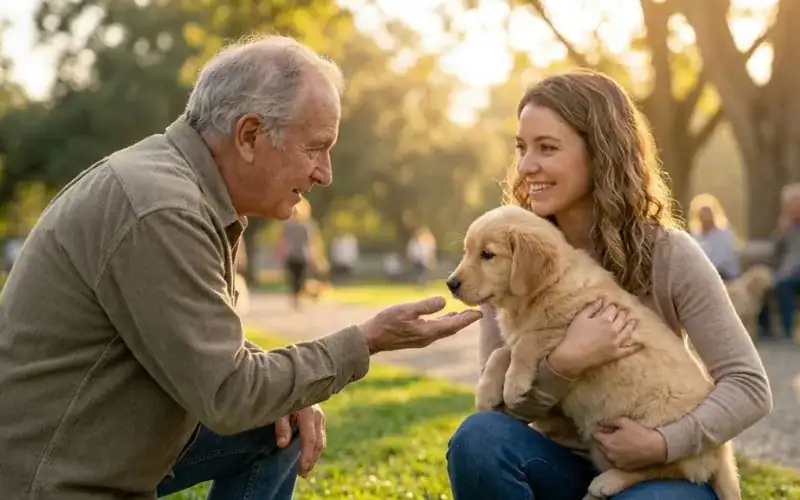
People — men, women, children, older adults, people in uniforms, people wearing hats or glasses, people with beards, people using walking aids
Sounds — traffic, thunderstorms, vacuum cleaners, doorbells, babies crying, loud music, fireworks, construction noise
Surfaces — grass, gravel, tile, hardwood, carpet, mud, wet pavement, metal grates, sand
Environments — parks, pet stores, parking lots, elevators, stairs, busy streets, quiet neighborhoods
Animals — other dogs, cats, birds, livestock
Situations — car rides, vet visits, grooming, being picked up, nail trims, ear cleaning
Puppy Socialization Checklist by Age — Week by Week
This is the complete puppy socialization checklist by age — broken down into stages so you know exactly what to focus on and when.
6 to 8 Weeks — Foundation Stage
At this age, your puppy is still ideally with their breeder or in foster care — but if they’ve come home early, this is the most critical foundation stage.
PEOPLE TO INTRODUCE:
● Men and women of different ages, sizes, and appearances
● Children, with supervised and calm interactions only
● People wearing hats, glasses, jackets, uniforms, and different clothing styles
● Multiple family members, guests, and household visitors in a controlled setting
SOUNDS TO INTRODUCE:
● Household appliances, such as the vacuum, washing machine, and TV
● Doorbells and knocking sounds
● Gentle traffic sounds from a safe distance
● Music played at different volume levels
SURFACES TO INTRODUCE:
● Carpet and hardwood floors
● Tile and linoleum surfaces
● Grass, both dry and slightly wet
● Different textures underfoot
HANDLING TO PRACTICE:
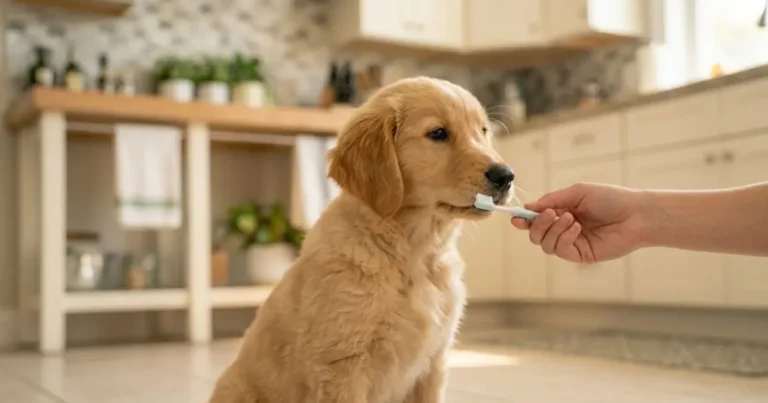
● Touching paws, ears, and mouth daily with treats
● Brief, gentle restraint to build tolerance for vet handling
● Being picked up and held calmly by different trusted people
Before socialization starts, puppies must first complete weaning — read when do puppies start eating solid food.
8 to 10 Weeks — Expansion Stage
Most puppies come home during this window. The brain is still wide open and highly receptive. Every positive experience you create now has an outsized impact.
PEOPLE TO INTRODUCE:
● Neighbors, using calm and treat-based introductions
● People in uniforms, such as delivery drivers and postal workers
● People in wheelchairs or using walking aids
● Children running and playing, introduced from a safe distance first
SOUNDS TO INTRODUCE:
● Traffic sounds, starting from a distance and gradually moving closer
● Construction sounds, introduced slowly and calmly
● Loud, sudden sounds, such as dropping a book or clapping hands
● Thunder recordings played quietly at home before increasing the volume slowly
ENVIRONMENTS TO INTRODUCE:
● Car rides, starting with very short and positive trips
● Pet-friendly stores, carrying your puppy before vaccines are complete
● Friends’ homes with different smells, people, and surroundings
● Quiet parks, using a clean blanket on the grass or carrying your puppy
Carrying your puppy through these environments works best with a hands-free carrier — your arms get tired fast, and a sling lets you keep both hands available for treats and doors.
👉 PetAmi Dog Sling Carrier for Small Dogs Under 10 lbs — hands-free crossbody design, breathable mesh, removable Sherpa bed, built-in poop bag dispenser. Fits puppies up to 10 lbs, which covers most breeds through the 8-16 week window.
Not ideal for: puppies already over 10 lbs at 8 weeks, such as large-breed puppies like Labs and Shepherds, who grow out of it fast — for those, skip the sling and stick to short carried trips in your arms or a front-carry backpack instead.
SURFACES TO INTRODUCE:
● Gravel and uneven ground
● Metal surfaces, such as maintenance hole covers and grates
● Stairs, both going up and down with support
ANIMALS TO INTRODUCE:
● Calm, vaccinated, and friendly adult dogs you trust
● Cats, with a controlled introduction and a positive experience
10 to 12 Weeks — Confidence Building Stage
By 10 weeks, your puppy is more physically coordinated and more mentally ready to handle broader experiences. This is the stage to push socialization as far as you safely can.
PEOPLE TO INTRODUCE:
● Strangers on walks, asking them to offer a treat calmly
● Groups of people, such as outdoor cafes and quiet markets
● Children playing loudly, with exposure from a safe distance and no forced interaction
ENVIRONMENTS TO INTRODUCE:
● Outdoor markets and shopping areas
● Busy sidewalks and city blocks
● Different neighborhoods with new sounds, smells, and surroundings
● Vet office visits just for treats, with no procedures
HANDLING TO PRACTICE:
● Nail file introduction, by simply touching the paw to the tool with treats and no actual trimming yet
● Gentle ear cleaning practice
● Bath introduction with warm water, keeping it very brief and positive
12 to 16 Weeks — Final Window Stage
This is the last stretch of the critical window. After 16 weeks, the window doesn’t slam shut — it gradually closes. But these last few weeks are precious.
PRIORITY EXPERIENCES:
● Puppy socialization class, which should be the number one priority at this stage
● Outdoor markets, festivals, and busier environments with calm, controlled exposure
● Multiple dog interactions with vaccinated, friendly dogs
● All handling types, including grooming, vet examination, car travel, and crowds
Complete Socialization Checklist — Quick Reference

How to Socialize Your Puppy the Right Way
Having the checklist is one thing. Knowing how to use it effectively is another. Here’s the approach that actually works — and why most people get it wrong.
The Golden Rule — Every Experience Must Be Positive
Forced or frightening socialization experiences can create permanent negative associations that are harder to undo than no socialization at all.
Exposure alone is not socialization. True socialization means positive exposure. Your puppy should be curious, engaged, and comfortable — not frozen, trembling, or trying to escape.
The moment your puppy shows signs of fear, you have gone too far too fast. Back off, create distance, and rebuild the positive association gradually.
For better results during socialization, first build the habit of reward-based handling with our positive reinforcement dog training for beginners guide.
The 3-Step Introduction Formula
Use this for every new person, sound, animal, or environment:
Step 1 — Create Distance
Start far enough away that your puppy notices the new thing but isn’t worried by it. You’re looking for curious and alert — not scared or frantic.
Step 2 — Pair With Something Positive
Every new experience gets paired with something your puppy loves — a high-value treat, enthusiastic praise, or their favorite toy. You’re teaching their brain: new things equal good things.
High-value here matters more than “a treat.”
Kibble doesn’t compete with a barking stranger or a vacuum cleaner — you need something your puppy would work harder for than usual.
👉 Zuke’s Mini Naturals Training Treats, Chicken, 16oz — soft, pea-sized, under 3 calories each, so you can reward every single positive exposure all day without overfeeding.
Not ideal for: puppies with poultry allergies — Zuke’s also makes a salmon version if chicken is a problem for your dog.
Step 3 — Let Your Puppy Set the Pace
Never force your puppy toward something they’re uncertain about. Let them approach on their own terms. A puppy that chooses to approach builds confidence. A puppy that’s pushed toward something scary builds
permanent fear.
Reading Your Puppy’s Body Language
CURIOUS AND CONFIDENT — keep going:
● Tail up or wagging, with ears slightly forward
● Leaning toward the new thing
● Sniffing actively and approaching voluntarily
● Relaxed mouth and soft eyes
UNCERTAIN BUT OKAY — go slower:
● Tail lower, but not tucked
● Watching carefully, but not moving forward
● Taking treats, but eating slowly
SCARED — stop and create distance immediately:
● Tail tucked under the body
● Ears flat back
● Crouching, freezing, or hiding behind you
● Refusing treats entirely
● Excessive panting or yawning
Quality Over Quantity Every Single Time
It’s far better to have five deeply positive socialization experiences per week than twenty mediocre or stressful ones.
According to Dr. Ian Dunbar, a pioneer of positive puppy training who developed the first puppy socialization classes in the United States, the quality of early experiences matters far more than the quantity. One genuinely positive experience at a busy market is worth ten rushed, overwhelming trips where your puppy was stressed the whole time.
The ASPCA recommends that puppies have socialization experiences that are always voluntary, always positive, and always below the puppy’s stress threshold.
Plan shorter, positive outings rather than long, exhausting ones. A 15-minute trip that ends happily for your puppy is perfect. An hour-long outing that leaves them overwhelmed does more harm than good.
A well-rested puppy also learns faster during socialization sessions. Read our complete puppy sleep schedule for the first week at home to ensure overtiredness doesn’t undermine your socialization efforts.
Socializing Before Vaccines Are Complete — How to Do It Safely
This is the question every new puppy owner asks — and the one that causes the most unnecessary delay.
The tension is real: vets say don’t take your puppy to public places until it’s 16 weeks old. Trainers say the socialization window closes at 16 weeks. What do you do?
What the Evidence Says
The American Veterinary Medical Association states that the risk of under-socialization is greater than the risk of carefully managed early exposure to clean, safe environments.
Safe Ways to Socialize Before Full Vaccination
CARRY YOUR PUPPY
You can take them anywhere you can carry them. They experience sounds, smells, and sights without the risk of ground contact. Pet-friendly stores, markets, and busy streets are all available to you this way.
INVITE PEOPLE TO YOUR HOME
Every new person who visits your home is a socialization opportunity that requires no public exposure risk.
KNOWN VACCINATED DOGS ONLY
Introduce your puppy to vaccinated, healthy dogs you personally know. Your friends’ or family’s dogs are perfect. Never go to dog parks until fully vaccinated.
PUPPY CLASSES WITH VACCINE REQUIREMENTS
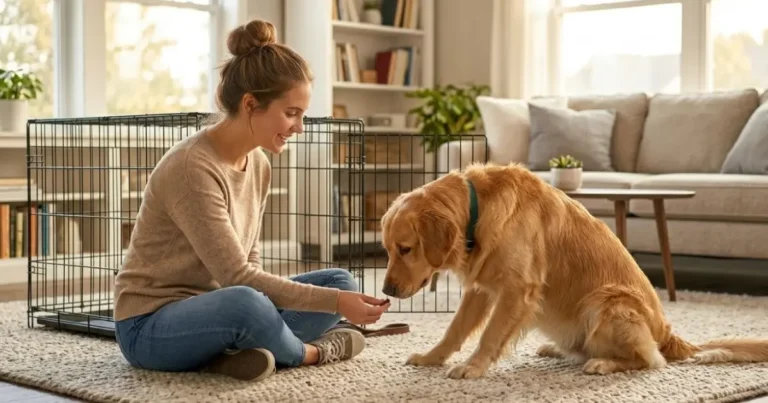
Most reputable puppy classes require at least one vaccine round before attending. These are the best single investments you can make for socialization.
VET OFFICE SOCIAL VISITS
Call your vet and ask if your puppy can come in just to meet the staff and get treats with no procedures. Most vets are delighted to help. This turns vet visits from scary to exciting before your puppy ever has a negative experience there.
Before planning public outings, check our dog vaccination schedule for puppies USA so you can balance early socialization with vaccine safety.
Your vet knows your local disease environment best. Never skip vaccines to socialize faster — the right answer is to socialize smartly, not recklessly.
Common Socialization Mistakes That Create Fearful Dogs
These mistakes are incredibly common — and completely avoidable once you know what to look for.
I made most of these in my first few weeks. Consider this the section I desperately needed before day one.
Flooding — Too Much Too Fast
Flooding means exposing your puppy to something overwhelming all at once — like taking an 8-week-old puppy to a crowded, noisy festival on day two at home.
The theory is that they’ll “get used to it.” In reality, flooding often creates exactly the opposite — a puppy that shuts down and now has a negative association with busy environments baked in during their most formative
weeks.
Always start small. Always start at a distance. Always build gradually.
Forcing Interaction
“He’ll be fine once he meets them” — the words every dog trainer dreads hearing.
Forcing your puppy to be held by a stranger when they’re clearly uncomfortable, pushing them toward another dog when they’re hesitant, or not allowing them to retreat when scared — all of these undermine socialization rather than advancing it.
Your puppy needs to feel they have choice and agency. A puppy that chooses to approach something uncertain builds genuine confidence. A puppy that’s pushed into things they’re scared of builds a worldview in which new things are to be feared.
Only Socializing at Home
Home socialization is important, but it is completely insufficient on its own. The world outside your home is what your puppy needs to learn to navigate.
If all socialization happens inside your four walls, your puppy will be comfortable at home and potentially reactive everywhere else.
Skipping People Who Look Different
Most new owners introduce their puppy to people who look like them. They forget about men with beards, people in wheelchairs, people wearing hats, delivery drivers in uniforms, and children who move erratically.
Go through the people checklist deliberately. Think about every type of person your dog might encounter, and make sure those experiences go well during the window.

Signs Your Puppy Is Well Socialized
After all this work, how do you know it’s taking effect? Here are the clear signs of a well-socialized puppy.
Positive Signs — Your Socialization Is Working
A well-socialized puppy approaches new people with curiosity, recovers quickly from startling sounds within seconds, and will accept treats in any new environment.
● Approaches new people with curiosity rather than fear
● Recovers quickly from startling sounds, meaning they may feel surprised but move on within seconds
● Walks confidently on different surfaces without hesitating or refusing
● Interacts appropriately with other dogs
● Tolerates handling, including nail trims, ear cleaning, and being examined
● Eats treats in new environments, because a puppy eating treats is usually still below their stress threshold
Warning Signs — More Work Needed
● Hides behind you or freezes when meeting new people
● Barks or growls at everyday things
● Refuses all treats in any new environment
● Panics at normal sounds, such as a car door or a raised voice
● Shuts down completely in new environments
If you’re seeing these signs consistently, seek help. A positive-reinforcement trainer or a certified behaviorist can assess where the gaps lie. The earlier you address it, the better the outcome.
This keeps you intentional and consistent, and gives you real data to share with your vet or trainer if concerns come up.
Five minutes a day, enormous long-term value.
If your puppy shows signs of fear, anxiety, or reactivity, please consult a certified professional dog trainer or your vet.
Frequently Asked Questions (FAQ)
What is the puppy socialization window?
The puppy socialization window is the critical period between 3 and 16 weeks of age when a puppy’s brain is most receptive to forming lasting associations with the world.
During this window, positive exposure to people, sounds, surfaces, animals, and environments shapes how your dog responds to those things for the rest of their life.
The window gradually narrows after 12 weeks and becomes significantly less receptive after 16 weeks.
Is it too late to socialize my puppy?
If your puppy is under 16 weeks old, it is absolutely not too late.
Focus everything on the checklist right now.
If your puppy is between 16 weeks and 6 months, socialization may take more patience, but it can still be very effective.
The process requires more repetition, calm exposure, and positive reinforcement, but significant progress is possible.
If your puppy is over 6 months old and showing behavioral issues due to under-socialization, work with a certified positive reinforcement trainer as soon as possible for the best outcome.
How many socialization experiences does my puppy need?
Aim for 3 to 5 intentional, positive socialization experiences per week during the critical window.
Each experience should end before your puppy becomes tired, stressed, or overwhelmed.
Dr. Ian Dunbar, who founded the first puppy socialization classes in the United States, recommends that puppies meet at least 100 different people before they are 16 weeks old.
Quality and positivity matter more than quantity, so never push your puppy beyond their comfort threshold.
My puppy seems scared of everything — what should I do?
First, assess whether your puppy is showing genuine fear or normal uncertainty.
A puppy who is cautious but still takes treats and recovers quickly is usually doing okay.
A puppy who shuts down, refuses all food, hides, freezes, or takes a long time to recover may have a fearful temperament that needs extra careful support.
For cautious puppies, slow down, increase distance from scary things, and let your puppy set the pace.
For genuinely fearful puppies, work with a certified positive reinforcement trainer sooner rather than later.
Should I socialize my puppy with children?
Yes, children should be part of your puppy socialization checklist because they move, sound, and interact differently from adults.
A puppy with no child exposure before 16 weeks may be more likely to develop fear or reactivity toward children later.
Always supervise puppy-child interactions closely, teach children how to interact calmly, and never leave puppies and children unsupervised.
Toddlers and young children should always have an adult present during any interaction with the puppy.
Can I take my puppy to the dog park before vaccines?
No, dog parks carry real disease risks for unvaccinated puppies, including parvovirus, which can be fatal in young puppies.
Instead, carry your puppy to safely experience new environments, arrange playdates with vaccinated dogs you know, and enroll in a puppy class that requires proof of vaccination.
After full vaccination at around 16 weeks, dog parks may become an option, but choose quieter times and observe the dogs before entering.
What if I missed the socialization window?
Missing part of the socialization window is not a disaster.
It means your dog may need more time, patience, and structured support, but there is still hope.
Dogs can continue to learn and adapt throughout their lives.
After 16 weeks, continue socialization with gradual exposure, positive reinforcement, and careful management.
If your dog is already showing fear, anxiety, or reactivity toward specific triggers, consult a certified professional trainer or veterinary behaviorist for a tailored desensitization plan.
Always monitor your puppy closely when trying anything new. If you notice any unusual symptoms or behaviors, consult your veterinarian immediately.
Every Day Counts — Final Thoughts
I often think about that conversation with my trainer friend. The stomach-drop moment when I realized how much time I had already let pass.
But here’s what I also know: we used every one of those three remaining weeks. We carried him to markets, introduced him to every visitor, took car trips, met children, heard traffic, and visited the vet just for treats.
We made those three weeks count.
And the dog he became — calm, confident, genuinely
unflappable in almost any environment — that is the
direct result of those weeks of intentional effort.
Now that you have the complete puppy socialization
checklist by age — here are your three big takeaways:
- The window is real and time-limited — start today,
not next week. Every positive experience right now
has an outsized and permanent impact on who your
dog becomes. - Positive exposure only — forced or frightening Experiences do more damage than no exposure at all. Let your puppy set the pace, always.
- Socialization doesn’t stop at 16 weeks — it just becomes different. Keep going, keep introducing, keep building the confident dog you’re raising.
You have a real opportunity right now to shape who your puppy becomes. Not many things in life give you that kind of clear window and that kind of clear impact. Use it— every single day.
For the complete foundation of puppy care during these critical early weeks, read our complete guide on how to take care of a puppy for the first time — everything you need from day one all in one place.
And if your puppy is still struggling with biting during socialization sessions — our guide on how to handle puppy biting and nipping has everything you need to manage it the right way.