


It’s Sunday morning. You crack a few eggs into a hot pan, the butter starts to sizzle, and your dog plants themselves right at your feet, eyes locked on the stove. Then a little piece of scrambled egg slips off the spatula, and it’s gone before it even hits the floor.
So, can dogs eat eggs? Was that bite a healthy snack, or something you should worry about?
Search for an answer and things get confusing fast. One site says an egg a day is fine. Another says once a week, tops. Some people swear raw eggs are the “natural” way to feed a dog, while vets warn against them. And almost nobody tells you how many calories an egg adds to your dog’s day.
Here’s the short version. Cooked, plain eggs are safe and nutritious for most dogs. But how you cook them matters. Raw eggs can carry Salmonella, which can make your dog sick and spread to your family. And eggs fried in butter or oil can be too rich for a sensitive stomach.
Here’s what you’ll find below:
- How much egg to give, based on your dog’s size, and how often
- Which cooking styles are safe, and which ones to skip
- What to do if your dog ate a raw egg or the shell, and when to call the vet
Yes, dogs can eat eggs as long as they’re fully cooked and served plain.
Hard-boiled, scrambled or poached eggs with no butter, oil or salt are the best choices. A large egg has about 78 calories and 6 grams of protein, so most dogs should get ¼ to 2 eggs, a few times a week. Skip raw eggs.
Are Eggs Good for Dogs?
Yes, eggs are one of the healthiest people foods you can share with your dog. They’re packed with protein, easy to digest, and most dogs think they’re amazing. Here’s what’s inside, based on USDA data:
One large hard-boiled egg (50 g) has about 78 calories, 6.3 g of protein, 5.3 g of fat and 147 mg of choline, plus vitamin A, vitamin B12, riboflavin and selenium, according to USDA FoodData Central.
What that means for your dog:
- High-quality protein. Egg protein is complete, which means it has all the essential amino acids, and dogs digest it easily. Protein helps build and repair muscle.
- Vitamins and minerals. Eggs add vitamin A for the eyes and immune system, B vitamins for energy, selenium, and choline, which supports the liver and brain.
- Fats for skin and coat. The fatty acids in the yolk help keep skin healthy and the coat glossy.
- A treat dogs go crazy for. Because most dogs love eggs, a few pieces make a great high-value reward for training.
Egg Yolk vs. Egg White
The yolk and the white are very different. Here’s how one large egg splits, based on USDA data for raw eggs:
For most dogs, the whole egg is the best choice, because the yolk holds most of the vitamins. If your dog needs a low-fat diet, your vet may suggest the white only.
What about cholesterol? You don’t need to worry about it the way you might for yourself. A Purina senior nutritionist explains that cholesterol doesn’t affect dogs the way it affects people. For dogs, the real issue is calories and fat.
The bottom line: eggs are a healthy, protein-rich treat. But they’re an extra, not a replacement for your dog’s complete and balanced food.
How Many Eggs Can a Dog Eat?
Most dogs can have between a quarter of an egg and 2 eggs per serving, depending on their size, a few times a week. Use this chart as a guide. It’s based on a large hard-boiled egg with about 78 calories.
Daily treat budget = about 10% of the daily calories for a typical neutered adult dog. Your dog’s real needs depend on age, activity and body shape. This chart is a guide, not a prescription.
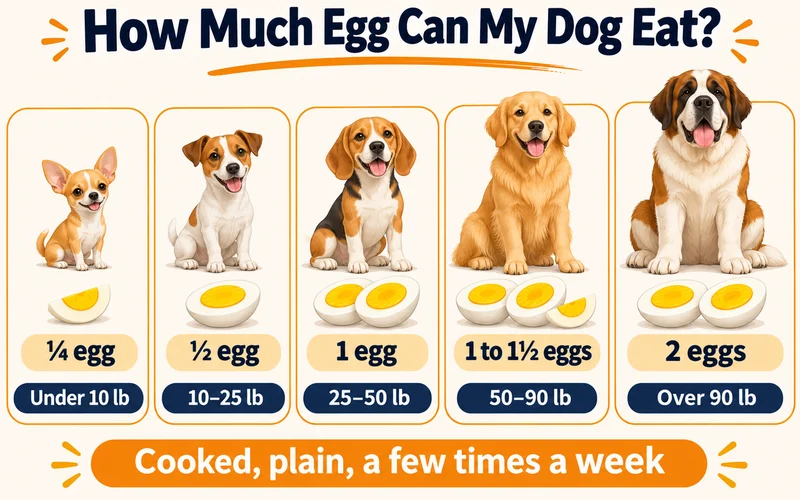
Why a few times a week? Vets generally advise keeping all treats, human food included, to no more than 10% of a dog’s daily calories (AAHA). As the chart shows, one egg serving uses about 50 to 80% of that budget. So on an egg day, the egg pretty much is the treat. That’s why most vet sources land on “a few times a week” rather than every day.
Can dogs eat eggs every day? A healthy dog can have a small daily piece of egg, as long as you cut back on other treats so the total stays within budget. A full serving every day, on top of normal treats, adds up to weight gain over time.
First time? Start with a small piece, then wait 24 hours to check for gas, loose stool or itching. If you’re not sure how many calories your dog needs in a day, this guide on how much to feed your dog by weight will help.
The Best Way to Cook Eggs for Your Dog
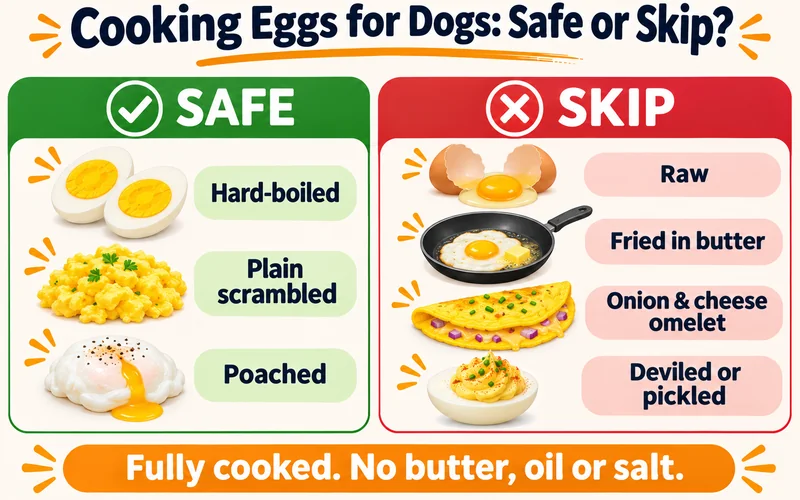
The rule is simple: cook the egg all the way through, and keep it plain. The FDA advises cooking eggs until both the yolk and the white are firm, and that’s the right standard for your dog too.
- Hard-boiled: boil for about 10 to 12 minutes, until the yolk is solid. Cool, peel and chop into bite-size pieces.
- Scrambled: use a nonstick pan with no butter, oil, milk or salt. Stir until no wet egg is left.
- Poached: cook until the yolk is firm, not runny.
Here’s how the common options compare:
5 Egg Mistakes Dog Owners Make
- Serving raw or runny eggs. A soft yolk can still carry Salmonella. Cook until firm.
- Cooking in butter or oil. It adds fat your dog doesn’t need. A fried egg has about 40% more fat than a boiled one, according to USDA data.
- Sharing your seasoned eggs. Salt, cheese, onion, garlic and chives don’t belong in your dog’s bowl. Onion and garlic can damage a dog’s red blood cells, says the ASPCA. Our list of human foods that are toxic to dogs covers the rest.
- Giving a whole egg to a tiny dog. For a toy breed, a whole egg is more than double the day’s treat budget.
- Tossing in bits of shell. Sharp pieces can scratch the throat. More on shells below.
Make eggs go further.
Crumble a little chopped egg over your dog’s kibble as a topper, spread plain scrambled egg on a lick mat, or stuff it into a Kong. Thin slices of hard-boiled egg also make great training rewards. Boil a few at once and keep them in the fridge, then use them within 3 to 4 days, as the FDA advises for cooked egg dishes.
Can Dogs Eat Raw Eggs?
No, vets don’t recommend feeding raw eggs to dogs. Some raw-feeding fans call them natural, but the risks outweigh any benefit. Cooking doesn’t destroy the protein in eggs, and it actually makes them easier to digest. Here’s why raw is a bad idea:
- Salmonella. Raw eggs can carry Salmonella, even when the shell looks clean. Dogs can get sick with vomiting, diarrhea, fever and tiredness. You can pick it up too, from handling raw eggs or cleaning up after your dog. That matters most in homes with young kids, older adults or anyone with a weak immune system.
- Biotin problems. Raw egg white contains avidin, a protein that blocks biotin, a B vitamin that supports skin, coat and metabolism. Feeding raw whites often can lead to a deficiency over time. Cooking stops avidin from working.
- Spoiled eggs. As eggs age, they can grow other harmful bacteria.
My Dog Ate a Raw Egg: What Now?
Don’t panic. Most dogs who steal a raw egg are fine. Use this guide:
Afterward, wash your hands and clean any bowls, floors or counters the egg touched.
Can Dogs Eat Eggshells?
A few pieces your dog swallows by accident are usually harmless. But don’t feed eggshells as food unless your vet tells you to.
Here’s why:
- They’re almost pure calcium. Eggshells are about 95% calcium carbonate, so even a small amount packs a lot of calcium. Complete dog food already has the right amount. Extra calcium can harm bone growth in large-breed puppies, and it’s risky for dogs with kidney disease or a history of bladder stones.
- Sharp edges. Bigger pieces can scratch the mouth, throat or gut.
- Germs. Raw shells can carry Salmonella on the outside.
Ground eggshell powder does have a place in homemade dog food, but only in a recipe planned by a vet or a board-certified veterinary nutritionist. If you cook for your dog, see our guide to homemade dog food recipes.
What about the thin membrane inside the shell? A small study of 51 dogs found that an eggshell-membrane supplement eased joint pain somewhat over 6 weeks (Ruff et al., 2016). The study was linked to the company that makes the product, and it tested a processed supplement, not plain shells. If your dog has stiff joints, talk to your vet, or read our guide to joint supplements for dogs.
Dog Ate a Whole Egg, Shell and All?
Most dogs pass the shell without trouble. For the next 2 to 3 days, watch for vomiting, gagging, a painful belly, straining or blood in the stool. If you see any of these, call your vet. If the egg was raw, use the raw-egg guide above too.
Can Puppies Eat Eggs?
Yes, puppies can have a little cooked egg once they’re weaned and eating solid puppy food. Keep it small and simple:
- Start with a fingernail-size piece of plain hard-boiled or scrambled egg, then check their stool for the next 24 hours.
- Keep all treats at or under 10% of their daily calories. Complete puppy food has the balance of nutrients they need to grow.
- Never give puppies raw eggs or eggshells. Their immune systems are still developing, and extra calcium can affect growing bones.
For meal timing and amounts, see our puppy feeding schedule by age.
When to Skip or Limit Eggs
Eggs are safe for most healthy dogs, but some dogs need more care:
- Dogs with a history of pancreatitis, or on a low-fat diet. The yolk holds almost all the fat. The Merck Veterinary Manual notes that eating unusual or rich food is a common risk factor for pancreatitis in dogs. Ask your vet before giving any egg. They may allow the white only.
- Overweight dogs. Count the egg as that day’s treat, not an extra.
- Dogs with food allergies. Egg allergy is possible but not common. In a review of 297 dogs with food allergies, egg was involved in 4% of cases, compared with 15% for chicken and 34% for beef (Mueller et al., 2016). Watch for itching, ear infections, hives or an upset stomach, and learn more in our guide to dog allergy symptoms.
- Dogs with kidney disease, on a prescription diet, or taking medication. Check with your vet before adding any new food.
Are Eggs Good for an Upset Stomach?
Sometimes. Some vets suggest a little plain scrambled egg, often with plain white rice, as a bland meal for a mild tummy upset. But call your vet instead if your dog keeps vomiting, has diarrhea for more than 24 hours, has blood in their stool, or is a puppy. If upsets happen often, the problem may be their main food. Our guide to the best dog food for sensitive stomachs can help.
This article is for general information only and is based on independent research, not personal testing.
PawWellCare is not a veterinarian, and this content doesn’t replace professional veterinary care. If your dog has pancreatitis, food allergies, kidney disease or another health condition, ask your veterinarian before adding eggs. If your dog shows vomiting, diarrhea, fever or weakness after eating raw eggs, or any sign of a severe allergic reaction, contact your veterinarian right away.
Frequently Asked Questions (FAQ)
Can dogs eat eggs every day?
A healthy dog can have a small piece of cooked egg each day if you cut back other treats so the total stays within 10% of their daily calories. A full serving every day, on top of normal treats, can lead to weight gain.
Can dogs eat just egg whites?
Yes, cooked egg whites are safe, high in protein and almost fat-free. Vets sometimes suggest them for dogs on low-fat diets. But the yolk holds most of the vitamins, so the whole egg is better for most dogs. Never feed raw whites.
Can dogs eat cooked egg yolk?
Yes. A cooked yolk is rich in vitamins A and D, choline and healthy fats. It’s also where nearly all the fat and calories are, so keep portions small, and ask your vet first if your dog has had pancreatitis.
How many eggs can a dog eat in a week?
It depends on size. A few servings a week is a good habit: about ¼ egg per serving for toy dogs, ½ for small dogs, 1 for medium dogs, and 1 to 2 for large and giant dogs.
Can dogs eat quail or duck eggs?
Yes, if they’re cooked and plain. A quail egg weighs about 9 grams and has around 14 calories, so about 5 quail eggs equal one chicken egg. A duck egg has about 130 calories, so give less than you would a chicken egg.
Can dogs eat eggs with cheese or in an omelet?
It’s better not to. Cheese, butter and salt add fat and sodium, and many omelets include onion, garlic or chives, which can harm dogs. If you want to share, set aside a plain portion before you add anything.
Do eggs make a dog’s coat shiny?
Eggs contain protein, fatty acids, biotin and vitamin A, which all support healthy skin and coat. But eggs aren’t a quick fix. A dull coat can point to a diet or health problem, so talk to your vet if it doesn’t improve.
So, Can Dogs Eat Eggs? The Bottom Line
Yes, dogs can eat eggs, and most dogs think they’re one of the best treats around. Just follow three simple rules:
- Cooked and plain only. Hard-boiled, scrambled or poached, with no butter, oil, salt or onion.
- A portion sized to your dog. From ¼ egg for a toy breed to about 2 for a giant dog, a few times a week.
- No raw eggs and no shell pieces. They bring germs, sharp edges and too much calcium.
Next time you boil eggs for yourself, cook one extra, chop it up, and keep it in the fridge for a few days of easy, healthy rewards. Looking for more foods your dog can share? Try our guides to pineapple, blueberries and bananas, or start with our complete dog nutrition guide for beginners.



Pingback: Can Dogs Eat Rice? White vs Brown + 5 Dangerous Mistakes