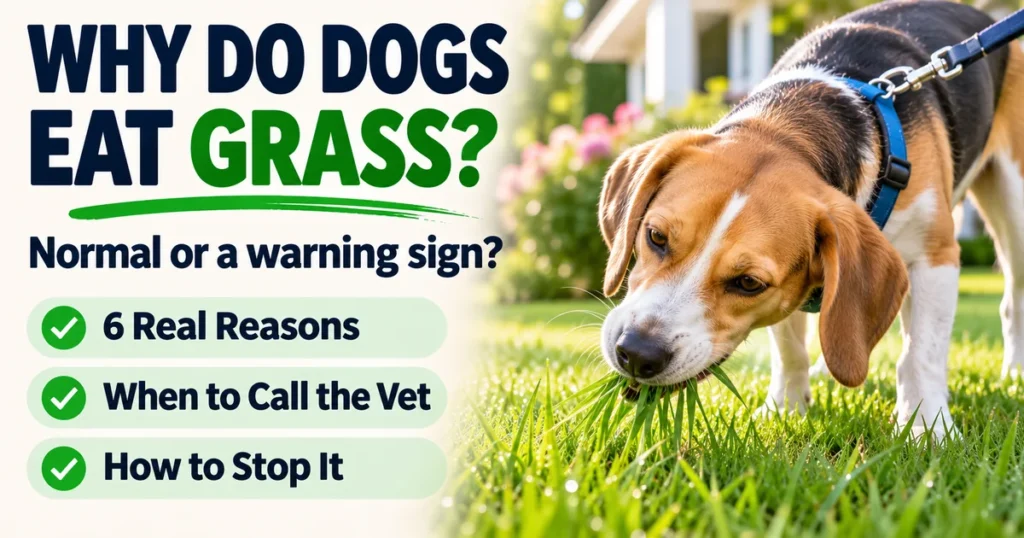
You’re halfway through the morning walk when your dog suddenly stops, drops their head and starts tearing at the lawn like they haven’t eaten in a week. You tug the leash. They dig in and grab one more mouthful. Ten minutes after you get home, there’s a little pile of grass and foam on the kitchen floor.
So, why do dogs eat grass? Is your dog sick, hungry, or just being a dog?
Search for an answer and you’ll get three different stories. One site says grass eating means an upset stomach. Another says your dog is missing fiber or a nutrient. Another says dogs do it on purpose to make themselves throw up.
The real answer is calmer than most of those, but the details still matter. Grass itself is rarely the problem. What’s on it can be: weed killer, slug bait, other dogs’ poop, or barbed foxtail seeds that can work their way into a nose or paw. And sometimes, frantic grazing really is a sign that something is off.
Here’s what you’ll find below:
- The 6 real reasons dogs eat grass, backed by a survey of more than 1,500 dogs
- How to tell normal grazing from a vet visit, with a simple checklist
- How to stop it safely, if your dog’s habit worries you
Most dogs eat grass because it’s normal dog behavior, driven by instinct, taste or boredom.
In the largest owner survey, fewer than 1 in 10 dogs looked sick before eating grass, and only about 1 in 5 regularly threw up afterwards. Grass itself is rarely harmful. Chemicals, parasites and foxtails on it can be. See a vet if grazing is sudden or frantic, or comes with vomiting, diarrhea or a poor appetite.
Why Do Dogs Eat Grass? 6 Reasons
There usually isn’t one single reason. Most dogs graze for a mix of the reasons below, and the mix can change with the season, their age and their mood. The quick “What you’ll notice” line under each one helps you match the reason to your own dog.
1. It’s an instinct
Dogs come from scavenging ancestors that ate whatever they found, including plants. Researchers have found plant material in anywhere from 2% to 74% of scat and stomach samples from wild wolves and cougars, depending on the study (Hart, dvm360). In other words, eating a bit of greenery is an old, normal habit, not a modern quirk.
What you’ll notice: calm, casual nibbling on walks, and a dog that’s otherwise healthy, playful and eating well.
2. They like the taste and texture
Some dogs simply enjoy grass. Many owners notice more grazing in spring, when new grass is soft, wet and sweet-smelling. Some dogs are picky about it too, sniffing around for one particular type of grass and ignoring the rest. Younger dogs tend to graze more than older ones, which fits with curiosity and exploring the world through their mouths.
What you’ll notice: your dog chooses certain patches, chews slowly and seems to enjoy it.
3. Boredom or a need for attention
A dog with energy to burn and nothing to do will find a job, and pulling up the lawn is an easy one. Grass eating can also become an attention game. If every mouthful gets a “No! Drop it!” and a chase, your dog learns that grass is a great way to get you involved.
What you’ll notice: grazing in the yard when your dog is alone or under-exercised, or a dog that looks right at you before grabbing a mouthful. More play and a few interactive toys that prevent boredom often help.
4. Anxiety or a comfort habit
Chewing is soothing for dogs. Some anxious dogs lick, chew paws or chew objects to calm themselves, and grass can become part of that routine. This is more likely in dogs that also show stress in other ways, like pacing, whining or problems when left alone.
What you’ll notice: grass eating that rises with stress, such as visitors, loud noises or being left home. If your dog struggles when you leave, this guide on how to stop separation anxiety is a good next step.
5. An upset stomach
This is the reason most people assume, and it’s true for some dogs. A nauseous dog may gulp grass quickly, and the grass may tickle the throat or stomach and bring up whatever was bothering them. Vets also note that dogs who often seem uncomfortable around grass eating may have an underlying problem, such as reflux or another stomach issue (VCA Animal Hospitals).
Here’s the catch: it’s hard to tell cause from effect. Did the upset stomach lead to the grass, or did a pile of grass upset the stomach? Either way, the pattern matters more than one episode.
What you’ll notice: urgent, frantic gulping (not chewing), often with lip licking, swallowing or drooling, and sometimes vomiting soon after.
6. An old worm-purging habit (a theory)
Dr. Benjamin Hart, a veterinary behaviorist at UC Davis, has suggested that plant eating may have helped wild ancestors keep intestinal worms in check. Undigested plant material moves through the gut, speeds things along and may wrap around worms on the way out. Hart calls this one possible explanation and says more studies are needed (Hart, dvm360). So treat it as an interesting idea, not a proven fact. Your dog still needs regular parasite prevention.
What you’ll notice: nothing in particular. If the theory is right, this would be a deep, built-in habit that shows up even in healthy, well-fed dogs.
What the Biggest Study Found (and 2 Myths It Busts)
Most articles about dogs eating grass repeat the same numbers without saying where they come from. They come from research at the University of California, Davis, led by Dr. Hart and published in Applied Animal Behaviour Science (Sueda, Hart & Cliff, 2008).
Key facts from the UC Davis survey:
Owners of 1,571 dogs answered questions about plant eating. About 68% said their dogs ate plants daily or weekly, and grass was the plant eaten most often. Fewer than 1 in 10 dogs regularly looked sick before eating plants, and about 22% regularly vomited afterwards. Younger dogs ate plants more often than older dogs, and were less likely to look sick or vomit.
The researchers concluded that plant eating is normal behavior in dogs, and that vomiting seems to be a side effect rather than the reason for it. Those findings bust two very common myths.
Myth 1: “Dogs eat grass to make themselves throw up.” If that were the goal, most grass-eating dogs would vomit. In the survey, roughly 4 out of 5 didn’t do so regularly. Most dogs eat grass, keep it down and carry on with their day. The dogs that did look unwell beforehand were more likely to vomit afterwards, which is why sudden, frantic grazing deserves a closer look.
Myth 2: “Grass eating means a fiber or nutrient deficiency.” The survey found no sign that diet drove grass eating. Dogs fed mostly raw food or table scraps didn’t graze more than dogs on a commercial balanced diet, and dogs getting less fiber didn’t eat more plants (Hart, dvm360). That said, individual dogs are different. PetMD describes a dog whose years of grass eating and vomiting stopped after a switch to a higher-fiber diet.
So don’t rush to change your dog’s food just because they graze. If you and your vet suspect a stomach or fiber issue, a diet made for sensitive stomachs and digestion may be worth discussing. Make the change slowly, using this guide on how to switch dog food without an upset stomach.
Is It Bad for Dogs to Eat Grass? Normal vs. Call the Vet
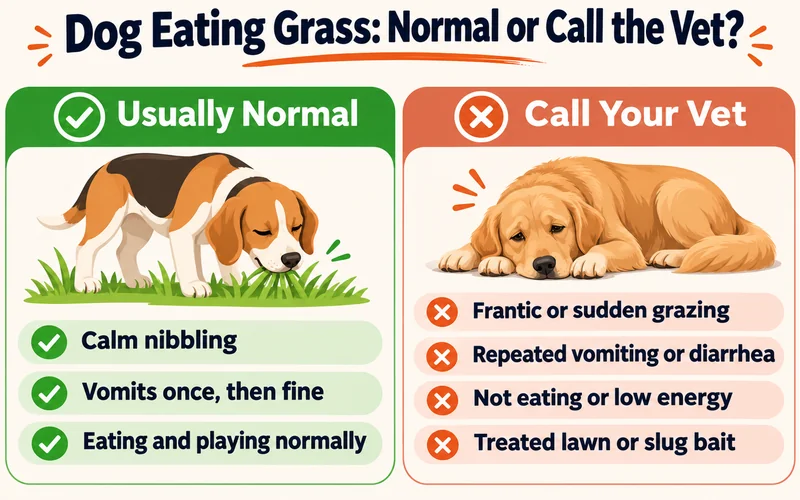
For most dogs, no. Eating a little clean, untreated grass isn’t bad for them. What matters is the pattern: how your dog eats it, how often, and what happens afterwards. Use this checklist to decide what to do.
This checklist is a general guide, not a diagnosis. If your dog seems unwell and you’re unsure, calling your vet is always the right move.
One more clue: a dog that is still eating its meals, drinking, playing and pooping normally is very unlikely to be seriously ill, even if it grazes every day. A dog that grazes and skips meals is a different story. Our guide on why your dog may not be eating explains what to check, and this list of common dog illnesses and symptoms covers the bigger warning signs.
The Real Dangers: It’s What’s on the Grass
Grass itself is just plant fiber. The risks come from what’s sprayed on it, growing next to it, hiding in it or left on it by other animals.
Lawn chemicals and slug bait
Weed killers, insect sprays and fertilizers can upset a dog’s stomach, and some are more dangerous than that. Always read the product label and keep your dog off a treated lawn for as long as it says. If you don’t know what a neighbor or a park has used, steer your dog to another spot.
Slug and snail bait is the most dangerous lawn product for dogs. Many baits contain metaldehyde, and they’re often made with bran or molasses that dogs find tasty. Pet Poison Helpline says poisoning acts fast, often within minutes to a few hours, causing drooling, vomiting, restlessness, tremors and seizures, plus a dangerously high body temperature. There’s no antidote, so treatment needs to start quickly. It also advises treating areas where the bait was used as contaminated for at least 2 weeks.
Toxic plants in the yard
A dog that likes to graze may not stop at grass. Some very common garden plants are toxic to dogs, according to the ASPCA’s plant list, including:
- Sago palm: can cause vomiting, bleeding in the gut and liver failure
- Azalea and rhododendron: can affect the nervous system and heart rhythm
- Oleander: can cause stomach irritation and dangerous heart problems
- Foxglove: can affect the heart
If you’re not sure what your dog chewed, take a photo or a piece of the plant to your vet. You can also check any plant by name on the ASPCA’s toxic and non-toxic plant list.
Foxtails and grass awns
This is the danger most articles skip. Foxtails are the dry, spiky seed heads of certain wild grasses. Their barbs point one way, so once a seed gets into a nose, ear, eye, paw or the skin, it keeps moving forward instead of falling out. Vets at UC Davis see foxtail cases mostly from spring through fall, and severe cases have needed surgery. Foxtails are much easier to remove when they’re found early.
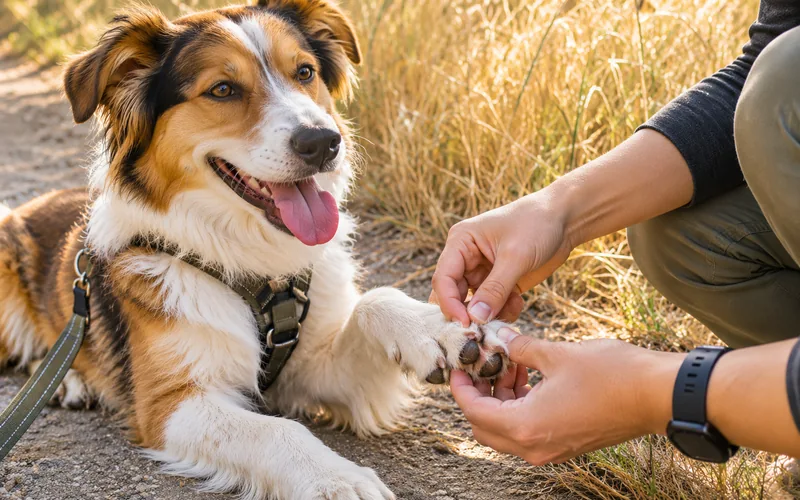
Watch for sudden sneezing fits, head shaking or pawing at an ear, a swollen paw or limping, or a red, watery eye after time in long grass. Any of those is worth a vet visit soon. After walks in dry, weedy areas, run your hands over your dog’s paws, ears and coat.
Parasites and other dogs’ poop
Grass in busy parks and along sidewalks can carry eggs of intestinal worms, such as roundworms and hookworms, from other animals’ feces. Unvaccinated puppies also face a risk of parvovirus, which spreads through infected poop. Regular parasite prevention and routine stool tests at vet checkups help keep worms in check. If you’re choosing a prevention product, this guide on oral vs. topical flea and tick prevention explains the options, and your vet can tell you which products also cover intestinal worms.
Mowed clippings and big mouthfuls
Fresh-cut grass clippings clump together and can ferment, so don’t let your dog eat from a pile of them. And while a normal amount of grass passes through without trouble, a dog that swallows a huge amount at once can, in rare cases, end up with a blockage in the gut.
These signs mean an emergency vet, right now.
Tremors or seizures, collapse, trouble breathing, a swollen, hard belly, repeated retching with nothing coming up, or vomiting blood. Don’t wait to see if it passes, and don’t try to make your dog vomit at home unless a vet or poison line tells you to.
My Dog Ate Grass and Threw Up: What Now?
This is one of the most common things owners search for, and in most cases it’s not an emergency. Here’s a simple plan:
- Look at what came up. Grass, foam and a little yellow liquid are common. Blood, objects, a coffee-ground look, or a large amount of undigested food mean you should call your vet.
- Give the stomach a short rest. Keep fresh water available, but skip food for a few hours. Then offer a small portion of your dog’s usual meal.
- Watch for the next 24 hours. A dog that keeps the meal down, poops normally and goes back to normal energy is usually fine.
- Call your vet if it doesn’t settle. That means vomiting more than once or twice, diarrhea, not eating, low energy, or any vomiting in a young puppy or senior dog.
- Call right away if the lawn was treated. If your dog may have eaten weed killer, fertilizer or slug bait, call your vet or the ASPCA Animal Poison Control Center at (888) 426-4435. Have the product name ready.
Take two quick photos before you clean up.
Snap one of the vomit and one of any lawn or garden product label. If you do need to call your vet, those two photos answer the first questions they’ll ask, and they save time.
How to Stop a Dog From Eating Grass (If You Need To)
First, ask whether you need to stop it at all. If your dog nibbles clean, untreated grass now and then and stays healthy, it’s fine to let them be. It’s worth stepping in when the grass may be treated, the grazing is frantic or constant, foxtails grow nearby, or your vet suggests it.
If you do want less grazing, these steps work best together:
- Use a shorter leash in grassy spots. It’s the simplest fix on walks. Keep your dog close past lawns you don’t know, and let them sniff in places you trust.
- Teach “leave it.” Reward your dog with a tasty treat the moment they turn away from the grass. Calm, quick redirection works better than scolding, which can turn grass into an attention game.
- Walk after a meal, not before. Some research suggests dogs graze more when they’re hungry (PetMD). A walk after breakfast may mean less grazing.
- Burn off energy and boredom. Longer walks, fetch, sniff games and puzzle feeders give a bored dog a better job. Our pick of interactive dog toys is a good place to start.
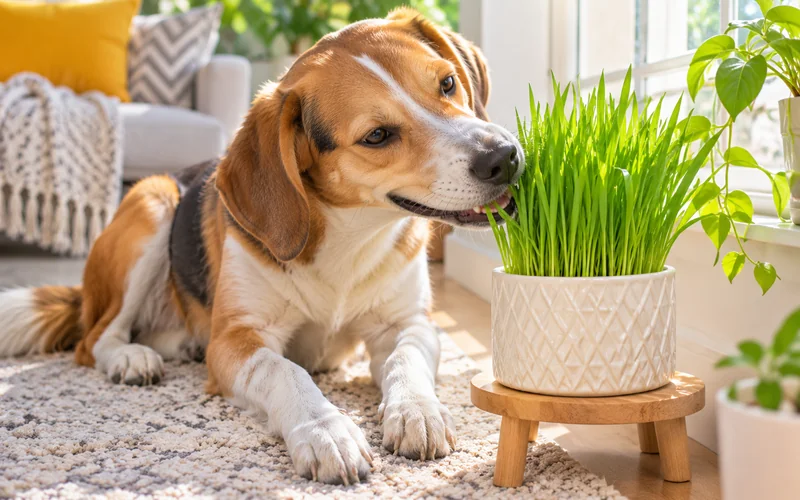
- Give them a safe patch. A pot of wheatgrass or oat grass, often sold as “pet grass,” gives a grass-loving dog a clean, chemical-free option at home. Offer it in small, supervised amounts.
- Talk to your vet before changing food. If you suspect an upset stomach or a fiber issue, your vet can rule out illness first and suggest the right diet, instead of you guessing.
Puppies, Grass and Dirt
Why puppies eat more grass
In the UC Davis survey, younger dogs ate plants more often than older dogs. That fits what most owners see. Puppies explore the world with their mouths, and teething makes chewing feel good.
Grazing is usually harmless for puppies too, but they’re more at risk from what’s on the grass. Keep a young puppy away from dog parks, busy sidewalks and other dogs’ poop until their vaccines are complete, because of parvovirus and worms. Our guide on how to take care of a puppy for the first time covers the vaccine timeline and puppy-proofing basics.
Why do dogs eat grass and dirt?
A mouthful of dirt now and then, often while digging or sniffing, is usually curiosity. Regular dirt eating is different. Eating non-food things like dirt, stones or fabric is called pica, and it can come from boredom or stress, or from a medical problem such as anemia or a digestive issue. If your dog keeps eating dirt, or eats rocks or other objects, book a vet check. Swallowed stones and objects can also cause a blockage.
This article is for general information only and is based on independent research, not personal testing.
PawWellCare is not a veterinarian, and this content doesn’t replace professional veterinary care. If your dog is vomiting repeatedly, seems unwell, or may have eaten a lawn chemical, slug bait or a toxic plant, contact your veterinarian or an animal poison control center right away.
Frequently Asked Questions (FAQ)
Why does my dog eat grass frantically?
Fast, frantic gulping is most often linked to nausea or an upset stomach. If it happens once and your dog then acts normal, watch them. If it keeps happening, lasts more than a day, or comes with vomiting, diarrhea or a poor appetite, call your vet.
Is it OK to let my dog eat grass every day?
Usually, yes, if the grass is clean and untreated and your dog stays healthy. Many healthy dogs graze daily. Keep them off treated lawns, check for foxtails, and mention the habit at your next vet checkup.
Why do dogs eat grass when they’re sick?
Some sick dogs do eat grass, often when they feel nauseous. But most grass-eating dogs aren’t sick. In the UC Davis survey, fewer than 1 in 10 regularly looked unwell before eating plants.
Can eating grass hurt my dog?
Grass itself rarely does. The risks are what’s on or around it: weed killers, fertilizer, slug bait, toxic plants, foxtails, parasites in other dogs’ poop and fermented grass clippings. Swallowing a very large amount at once can rarely cause a blockage.
Should I add fiber if my dog eats grass?
Not without asking your vet. The largest survey found no link between fiber in the diet and grass eating, although some individual dogs do better on a higher-fiber food. Your vet can check for stomach problems first.
Why does my dog eat grass in the morning?
Morning grazing often happens on an empty stomach, and some research suggests dogs graze more when they’re hungry. Fresh, dewy grass may also simply taste and smell more appealing then. Try a walk after breakfast instead of before.
Do cats eat grass for the same reasons?
Cats eat grass too, though Dr. Hart’s research found plant eating is less common in cats than in dogs. Like dogs, most cats that eat grass are healthy.
So, Why Do Dogs Eat Grass? The Bottom Line
So, why do dogs eat grass? In most cases, simply because they’re dogs. It’s an old instinct, many dogs like the taste, and boredom or stress can make it more frequent. Keep three things in mind:
- It’s usually normal. Most grass-eating dogs aren’t sick, and most don’t throw up afterwards.
- Watch what’s on the grass. Weed killers, slug bait, toxic plants, foxtails and other dogs’ poop are the real risks.
- Know the red flags. Frantic or sudden grazing, repeated vomiting, diarrhea, low energy or a poor appetite mean it’s time to call your vet.
Your next step: on your next walk, notice how your dog grazes. Calm nibbling on clean grass? Relax and let them enjoy it. Frantic gulping, or grazing that comes with other changes? Use the checklist above and give your vet a call. While you’re at it, check which human foods are toxic to dogs so the kitchen is as safe as the yard.
A little grass on a sunny morning is usually just your dog being a dog. Knowing when it isn’t is what keeps them safe.