

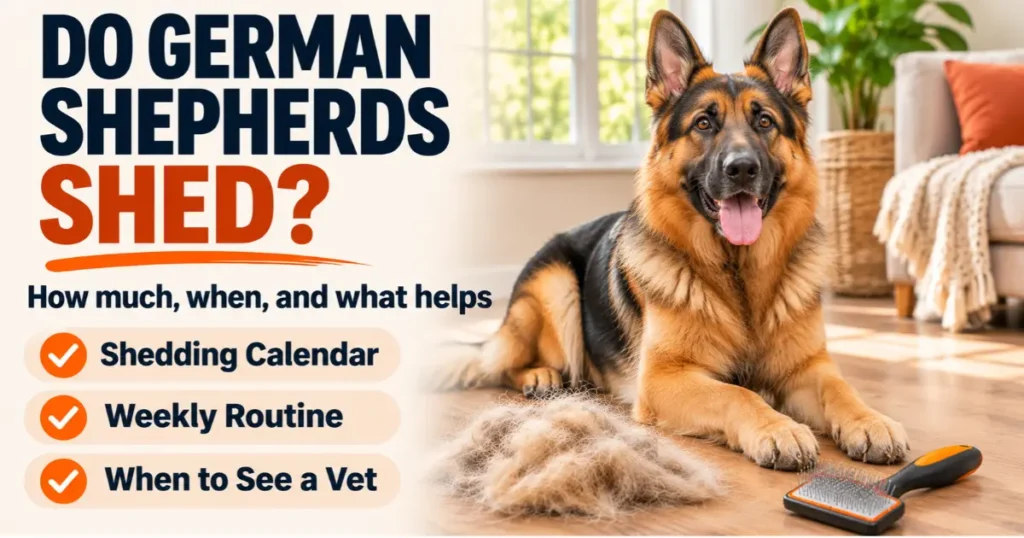
You bought the dark couch before you got the dog. Now there’s a soft layer of tan fur on it every evening, tufts drifting across the kitchen floor like tumbleweeds, and dog hair on the shirt you just took out of the dryer.
If you’re wondering “do German Shepherds shed, or is it just my dog?”, it’s not just your dog. There’s a reason owners call this breed the “German Shedder.”
The good news is that heavy shedding is normal for a German Shepherd, and it’s manageable once you know when it happens and what actually helps. In this guide you’ll get:
- A simple shedding calendar, so you know which months to brace for
- A weekly grooming routine for normal weeks and heavy shedding weeks
- The signs that point to a skin problem, not just a shedding season
Yes, German Shepherds shed a lot.
They shed a steady amount all year and “blow” their undercoat heavily about twice a year, usually in spring and fall. Brushing every other day, and daily during those heavy weeks, keeps it under control. Don’t shave a German Shepherd. Bald patches, red skin or constant scratching are a reason to see your vet.
Do German Shepherds Shed a Lot? Yes, and Here’s Why
German Shepherds have a double coat. The American Kennel Club’s breed standard describes a medium-length double coat with an outer coat that’s dense, harsh and “lying close to the body” (AKC breed standard).
Those two layers do different jobs:
- The undercoat is soft and thick, close to the skin. It insulates against cold and heat. This is the layer that sheds the most.
- The guard hairs on top are longer and coarser. They shed too, but more slowly, and they help protect the skin from sun, dirt and moisture.
So when people ask whether German Shepherds shed loose or tight fur, the answer is a bit of both. The outer coat lies tight against the body, and the soft undercoat underneath is what comes loose in clumps.
Two more things owners often ask:
- Are German Shepherds hypoallergenic? No. They shed heavily, so they’re usually a poor fit for people with dog allergies.
- Do long-coat German Shepherds shed less? Long-coat GSDs still shed, and their longer hair can tangle more easily, so they often need just as much brushing, sometimes more.
German Shepherds have a double coat: a soft, dense undercoat that sheds heavily, under a harsh outer coat that lies close to the body.
Shedding is a normal part of how this coat works, not a sign that something is wrong.
When Do German Shepherds Shed? A Year-Round Calendar
German Shepherds shed all year, with two big peaks. During those peaks, often called “blowing the coat,” large amounts of undercoat come loose over a few weeks.
The main trigger is daylight. As days get longer in spring, the thick winter undercoat sheds out. As days get shorter in fall, the lighter summer coat makes way for a thicker winter one. Temperature plays a part too.
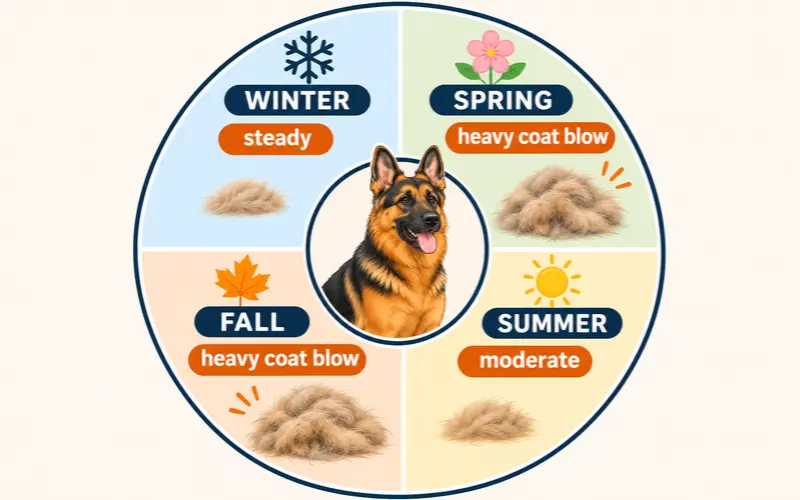
Exact timing varies from dog to dog and by where you live. A Shepherd in Minnesota and one in Arizona won’t follow the same calendar. Many indoor dogs, living under steady indoor light and temperature, shed more evenly through the year instead of in two sharp waves.
How Much Does a German Shepherd Shed?
More than most breeds. German Shepherds sit in the same heavy-shedding group as other thick double-coated dogs like Huskies and Malamutes. They shed far more than low-shedding breeds such as Poodles.
What “normal” looks like for most German Shepherds:
- Day to day: loose hair on floors, furniture and clothes, even with regular brushing
- During a coat blow: clumps you can pull out with your fingers, and a brush that fills up within minutes
- The coat itself: full and even, with healthy skin underneath
Some German Shepherds also shed noticeably more than others. A few things make the difference:
- Coat type. Dense, plush coats tend to drop more undercoat than tighter, harsher coats.
- Indoor or outdoor life. Dogs that spend most of their time indoors often shed more evenly through the year, while outdoor dogs tend to have sharper seasonal blows.
- Brushing habits. Regular brushing doesn’t change how much hair a dog grows, but it catches loose hair on the brush instead of your floor.
- Overall health. A complete diet and healthy skin support a healthy coat (see our guide to the best dog food for German Shepherds). Stress, allergies or illness can show up as extra shedding.
So if your Shepherd seems to shed more than a friend’s, that’s usually normal variation, as long as the coat stays full and the skin looks healthy.
What isn’t normal is bald spots, thin patches you can see skin through, or skin that’s red, flaky or smelly. That’s not a heavy shedding season. That’s a reason to call your vet, and we cover it in detail further down.
A Weekly German Shepherd Grooming Routine
You can’t stop a German Shepherd from shedding. What you can do is catch the loose hair on a brush before it lands on your floor. Breeders quoted by the AKC brush their Shepherds about every other day and use a deshedding tool weekly, moving to daily sessions during heavy shedding (AKC).
Here’s that advice turned into a simple plan:
A few minutes on a regular schedule works better than one long session when the house is already covered. It’s also easier on your dog’s skin.
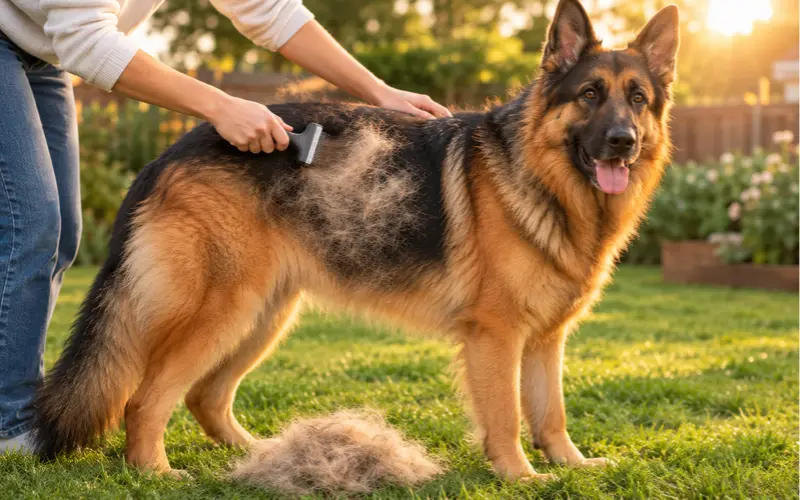
Brush outside whenever you can.
A deshedding session on a German Shepherd during coat blow can fill a grocery bag, and that fur is a lot easier to deal with in the yard than in your living room.
The Tools That Actually Help
For German Shepherd grooming at home, three tools do most of the work:
- Undercoat rake. Longer teeth that reach through the outer coat and loosen dense undercoat. Very useful during coat blow.
- Deshedding tool. A fine-toothed edge that pulls out loose undercoat. AKC breeders like it because it can “reach the undercoat and remove loose hair easily and safely.”
- Slicker or pin brush. For the outer coat, tangles in the “pants” and tail, and a finishing pass.
That same AKC article adds a warning: used incorrectly, a deshedding tool can damage the coat. If you want help picking specific tools, our guide to the best dog brush for shedding compares options for heavy double coats like a Shepherd’s.
Use deshedding tools only on a fully dry coat, with light pressure, and don’t go over the same spot again and again.
Stop if you see red or irritated skin. More pressure doesn’t remove more undercoat. It just scrapes the skin.
For the full step-by-step method, see our guide on how to deshed a dog at home.
How Often Should You Bathe a German Shepherd?
This is where advice really splits, so here’s the honest version.
German Shepherd breeders quoted by the AKC bathe their dogs only once or twice a year, mostly before shows or when the dog truly needs it. One noted that the more people bathe these dogs, the more skin issues they see. Many groomers, on the other hand, suggest a bath every 4 to 8 weeks.
Both can be right, depending on the dog. A Shepherd who lives indoors and stays fairly clean doesn’t need frequent baths. One who rolls in mud or swims in a lake will need more. Most German Shepherds do fine with a bath only when they’re dirty or smelly, plus one during coat blow to help loosen dead undercoat.
Whenever you bathe, use a dog shampoo, rinse thoroughly, and dry the coat all the way down to the skin. A thick undercoat can stay damp long after the outer coat feels dry. For more on timing, see how often you should bathe your dog.
Should You Shave a German Shepherd?
No. It’s one of the most common summer mistakes, and the AKC advises against it.
A German Shepherd’s double coat works as insulation in both directions. It keeps out cold in winter and helps shield the skin from heat and sun in summer. Shaving it doesn’t stop shedding either. The dog just sheds shorter hairs.
There’s also the regrowth problem. One German Shepherd breeder in the AKC’s grooming article put it simply: once shaved, it’s hard to get the coat to grow back properly. The AKC’s guidance on shaving dogs notes that shaving can disrupt the coat’s insulating layer and lead to patchy regrowth (AKC).
Shaving a German Shepherd doesn’t reduce shedding and can leave the coat growing back patchy.
Regular brushing to remove loose undercoat is the better way to help a Shepherd stay comfortable in hot weather.
In summer, help your Shepherd keep cool with shade, fresh water, walks in the early morning or evening, and regular brushing to clear out the loose undercoat that traps heat.
Living With a “German Shedder”: Home Hair Control
Brushing handles the dog. These habits handle the house:
- Vacuum on a schedule, not just when you notice the fur. A couple of passes a week (daily during coat blow) keeps it from building up in corners and under furniture.
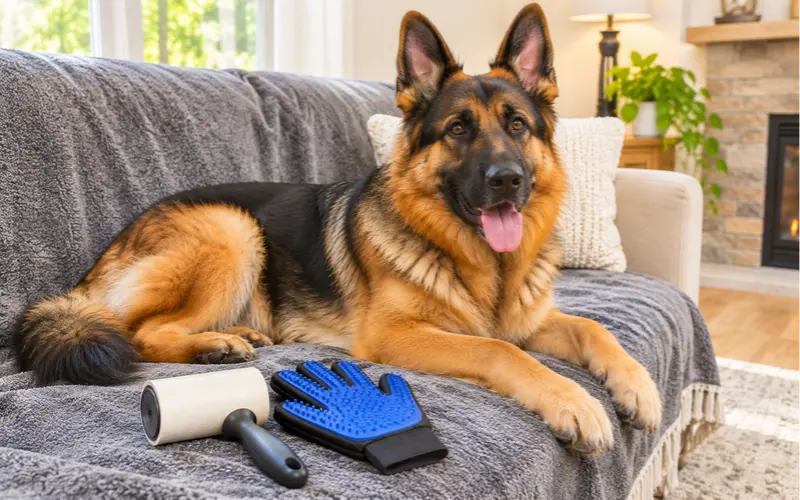
- Use washable covers on the couch, the bed and your dog’s favorite spots. Throwing a cover in the wash is easier than de-furring upholstery.
- Keep a rubber glove or lint roller handy. A damp rubber glove pulls hair off fabric surprisingly well.
- Cover the car seat. A seat cover or hammock saves your car interior during road trips.
- Change your HVAC filter more often during shedding season. Pet hair clogs filters fast.
- Brush outside, then come in. Loose undercoat left in the coat ends up on the floor within hours.
None of this makes a German Shepherd shed less. It just keeps the fur where you can deal with it.
Normal Shedding or a Skin Problem?
Heavy shedding by itself is normal for this breed. Trouble usually shows up as changes in the skin or patchy hair loss, not just more fur on the floor.
German Shepherds can be prone to a few skin problems. Allergies (to food, fleas or things in the environment) are common in the breed. Veterinary dermatologists at Tufts also note that German Shepherds may be predisposed to a deep, painful, recurring type of skin infection called pyoderma (Tufts Cummings School of Veterinary Medicine). Hormone problems, parasites and poor nutrition can also cause hair loss in any dog (AKC).
You can’t tell these apart at home, but you can spot the signs that it’s time to call.
Routine: mention it at the next checkup
- Shedding seems heavier than last year, but the coat is full and the skin looks healthy
Soon: book a vet visit within a few days
- Bald patches or thin areas you can see skin through
- Constant scratching, licking or chewing, especially at the paws, belly or rear
- Red, flaky, greasy or smelly skin
- Shedding plus weight change, low energy or a dull, brittle coat
Right away: call your vet today
- Open sores, draining bumps or painful, swollen skin
- Skin problems along with fever, not eating or obvious illness
Skip home remedies, supplements or medicated shampoos until your vet knows what’s going on.
Skin infections and allergies need the right diagnosis first, and the wrong product can make things harder to sort out.
This article is for general information only.
PawWellCare is not a veterinarian, and this content doesn’t replace professional veterinary care. If your German Shepherd has hair loss, skin changes, itching or any other health concern, please talk to your veterinarian.
Frequently Asked Questions (FAQ)
Do Alsatians shed?
Yes. “Alsatian” is another name for the German Shepherd, used mostly in the UK. It’s the same breed with the same double coat, so Alsatians shed just as heavily.
Do German Shepherds shed loose or tight fur?
Both, in a way. The outer coat lies tight and close to the body, while the soft undercoat underneath is what loosens and comes out in clumps, especially during spring and fall coat blows.
How often do German Shepherds shed?
All year, with two heavier periods, usually in spring and fall. Each heavy coat blow often lasts a few weeks, though timing varies by dog, climate and how much time the dog spends indoors.
When does a German Shepherd puppy start shedding?
Puppies shed a little from the start. The bigger change comes as the fluffy puppy coat is replaced by the adult double coat during the first year, and that can look like a sudden increase in shedding.
Do long-coat German Shepherds shed less?
Not really. Long-coat German Shepherds still shed, and their longer hair can tangle, so they usually need at least as much brushing as standard-coat Shepherds.
Does diet affect German Shepherd shedding?
A complete, balanced diet supports a healthy coat, and poor nutrition can show up as a dull coat or extra hair loss. If your Shepherd seems to shed constantly, ask your vet before changing food or adding supplements.
Living Happily With All That Fur
German Shepherds shed. That’s part of the deal with this loyal, smart, hard-working breed, and it doesn’t have to take over your house.
- Brush every other day, and daily during the spring and fall coat blows
- Never shave the double coat. Brush out the loose undercoat instead
- Watch the skin, not just the fur. Bald patches, redness or constant itching mean a vet visit
This week, try one short brushing session outside and see how much undercoat comes out. Raising a young Shepherd? Our German Shepherd puppy training guide covers the early months, and the complete dog grooming guide for beginners covers nails, ears and the rest of the routine.



Pingback: Best Dog Brush for Shedding (2026): Deshedding Tools by Coat Type
Pingback: Best Dog Nail Clippers (2026): Picks by Size & Nail Type