My dog treats a toothbrush like a personal threat. I’ve tried the finger-brush, the flavored toothpaste, the slow-introduction method every trainer recommends. None of it stuck, and after months of trying, I stopped forcing it and started looking for a genuine alternative instead. So I did what most owners eventually do: I went looking for how to clean dog teeth without brushing, and found a mess of blog posts recommending everything from VOHC-verified chews to rubbing clove oil on gums, all presented with the exact same confident tone.
That’s the actual problem with most guides on this topic. They list real, evidence-backed methods right alongside folk remedies with genuine safety concerns, and never tell you which is which, leaving owners to guess at what’s actually safe for their dog.
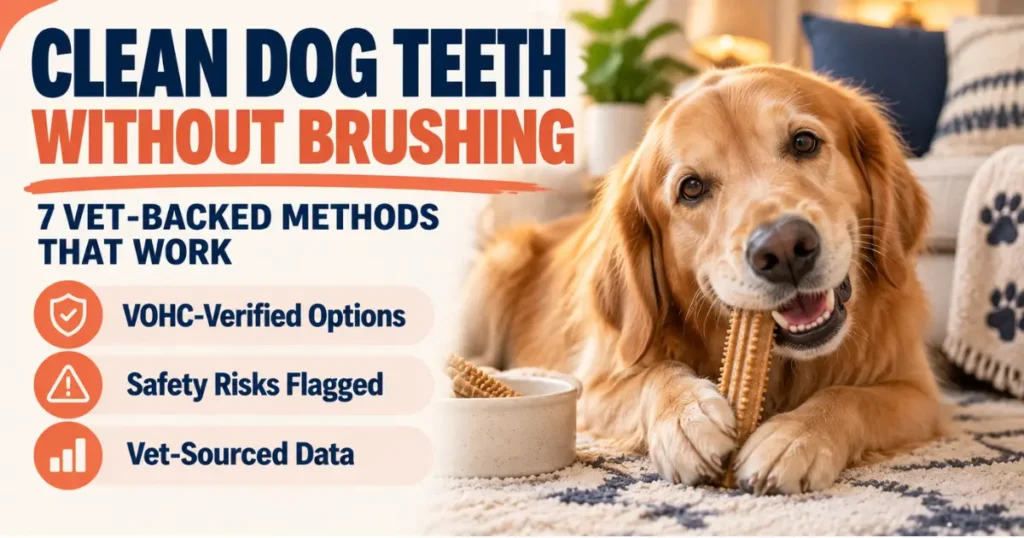
This guide sorts that out. Seven methods that are genuinely vet-backed, what the evidence for each actually looks like, and a separate section on the popular suggestions that aren’t backed by anything beyond anecdote, some of which carry real, documented risk that rarely gets mentioned.
The most vet-backed ways to clean dog teeth without brushing are VOHC-verified dental chews, dental wipes, water additives, dissolving dental strips, dental-specific kibble, and oral hygiene gels, each reducing plaque and tartar to varying degrees. None fully replace brushing or professional cleanings.
Folk remedies like clove oil and tea tree oil lack real evidence and carry documented safety risks, despite showing up in many “natural” teeth-cleaning lists.
Cleaning a dog’s teeth without brushing works best as a genuine routine using verified methods, not a single product swapped in once and forgotten.
Why This Actually Matters
Plaque, the soft bacterial film on a dog’s teeth, hardens into tartar within 24 to 48 hours if it isn’t disrupted, which is exactly the window that makes how to clean dog teeth without brushing such a practical question rather than a purely cosmetic one. Once it’s tartar, brushing or any of the methods below can’t remove it anymore, only a professional cleaning can.
That short window is exactly why “without brushing” methods matter so much for dogs that won’t tolerate a toothbrush. Skipping dental care entirely isn’t a neutral choice; it’s a choice that lets plaque win by default. According to VCA Hospitals, brushing remains the gold standard, but when it genuinely isn’t possible, the alternatives below are worth building into a real routine rather than skipping care altogether.
Method 1: VOHC-Verified Dental Chews
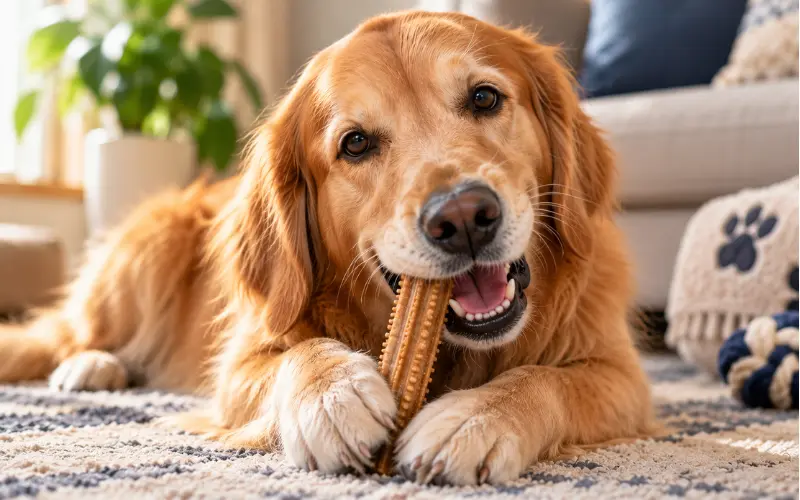
Dental chews work through mechanical action: the chewing motion scrapes plaque off the tooth surface, and the increased saliva production helps wash away bacteria before it has a chance to settle.
The critical detail most lists skip: not all dental chews are equal, and this matters a lot when you’re trying to genuinely clean dog teeth without brushing rather than just going through the motions. The Veterinary Oral Health Council (VOHC) only awards its seal to products that have passed controlled trials proving they reduce plaque or tartar. A chew without that seal might still help somewhat through mechanical scraping, but it hasn’t been independently verified to do anything beyond that, which is a meaningfully different claim than “clinically proven.”
For a full breakdown of which chews actually carry the VOHC seal, our guide on VOHC-verified dental chews covers the verified picks in depth.
⚠️ NOT FOR
Dogs that swallow chews whole without chewing, since the mechanical scraping action is the entire point of using this method to clean dog teeth without brushing, and a swallowed chew also carries a choking or obstruction risk that outweighs any dental benefit.
Method 2: Dental Wipes
Dental wipes are textured, pre-moistened wipes that wrap around your finger and rub directly along the teeth and gumline, giving you a simple mechanical cleaning option without using a toothbrush.
Good fit for: toy breeds, sensitive dogs, or dogs being gradually reintroduced to mouth handling after a bad brushing experience
Best for: dogs that tolerate finger contact but resist an actual toothbrush
Why they help: the textured surface physically wipes plaque from the teeth and gumline
Start wipe sessions with just a few seconds of contact on the front teeth before working toward the back molars. Dogs that resist a full session upfront often tolerate it fine once it’s broken into shorter, more frequent touches.

Vet's Best Finger Dental Wipes for Dogs & Cats, Fresh Breath, 50 Count
- CLEANS TEETH & GUMS: Keep your pet's teeth and gums clean and healthy with these cat and dog dental wipes; perfect for keeping your pet's mouth clean and fresh, these wipes promote good oral hygiene and help prevent tartar and plaque buildup
- FRESHENS BREATH: Say goodbye to bad breath with these cat and dog teeth wipes; infused with thyme oil and green tea extract, these finger cleaning wipes for dogs and cats freshen your pet's breath while fighting off odor-causing bacteria
- NATURAL INGREDIENTS: Treat your furry friend to a safe teeth cleaning experience with these dog and cat teeth cleaning wipes; made with all-natural ingredients, the gentle formula ensures that your pet's mouth is not exposed to any harmful substances
Method 3: Water Additives
Water additives work like a drinkable mouth rinse. Added to a dog’s water bowl each day, they help reduce oral bacteria over time without requiring any direct handling of the mouth.
Main limitation: results build gradually and depend on your dog drinking normally, so you won’t usually see the same immediate effect as with a chew or wipe
Best for: dogs that resist brushing, wipes, or anything placed directly in the mouth
Main advantage: extremely low effort, since you simply add the product to drinking water
Introduce a new water additive gradually by mixing it into your dog’s existing water rather than switching all at once. Some dogs are sensitive to a sudden taste or smell change in their water and will simply drink less, which defeats the purpose entirely.
⚠️ NOTE
Some water additives use xylitol as a sweetener in human products, but xylitol is toxic to dogs. Check the ingredient label specifically before choosing one, and never repurpose a human mouth-rinse product for pet use, even as a quick way to clean dog teeth without brushing in a pinch.

TropiClean Fresh Breath Dental Water Additive, Dog Breath Freshener, 33.8oz
- Ease of Use: Forget the struggle of dog toothpaste and brushes. Try this stress-free alternative.
- Freshens Breath: Combat bad dog breath with tasteless dog mouthwash that lasts up to 12 hours.
- Cleans Beyond Teeth: Actively contributes to a clean mouth by reducing plaque and tartar build-up in 14 days or less.
Method 4: Dissolving Dental Strips
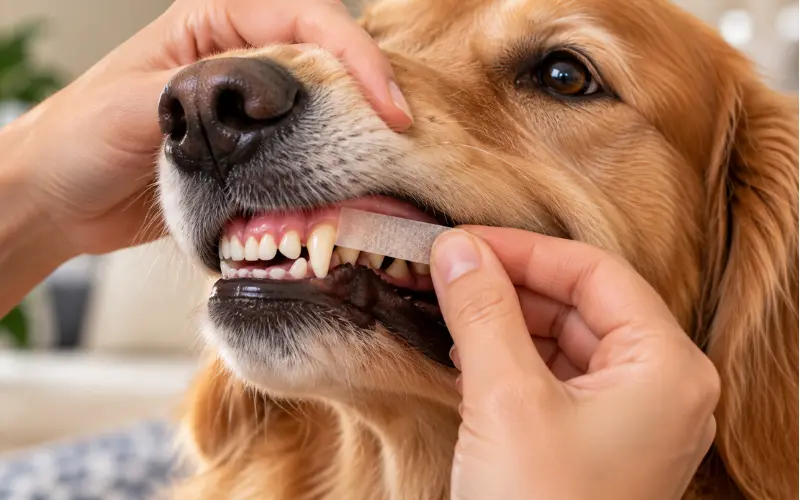
Dissolving dental strips are one of the newer ways to clean dog teeth without brushing. The strip sits along the gumline, becomes sticky with saliva, and slowly dissolves over several hours, spreading active ingredients across the teeth and gums instead of disappearing in one quick chew.
Important limitation: no dissolving dental strip currently carries VOHC certification, since the format doesn’t yet have its own VOHC category
How they work: slow dissolution keeps the ingredients in contact with the gumline and teeth for longer
Current example: Prodogi uses this format and was formulated by a board-certified veterinary surgeon
⚠️ NOT FOR
Owners expecting VOHC-equivalent, independently verified proof of results. Treat strips as a promising newer format to clean dog teeth without brushing rather than a proven one on the level of VOHC-accepted chews.
Method 5: Dental-Specific Diet or Kibble
Some kibble is specifically designed to help clean teeth during normal chewing, using a texture and size that creates more mechanical contact with the tooth surface than softer food or ordinary kibble. VCA notes that therapeutic dental diets are formulated to provide this cleaning action while still serving as a complete, balanced meal.
Best approach: ask your vet about prescription dental diets rather than assuming any dry kibble provides the same plaque-control benefit
How they help: the kibble texture is designed to create more scraping action against the teeth during chewing
Important distinction: therapeutic dental diets are not the same as simply feeding regular dry food instead of wet food
Method 6: Oral Hygiene Gels and Rinses
These work similarly to human mouthwash. Applied directly to the gums or added to water, they use antibacterial ingredients to help reduce plaque and tartar buildup over time without any scrubbing or chewing action.
How to use them: as a supplement alongside a chew, wipe, or brushing routine rather than as a stand-alone dental solution
Best for: adding extra coverage between full cleanings
Main limitation: results are usually more modest than mechanical methods like chews or wipes because there’s no physical scraping action
Method 7: Professional Cleaning, the Honest Fallback
None of the six methods above can fully replace what a professional dental cleaning does. A veterinary cleaning performed under anesthesia includes dental X-rays and scaling below the gumline, where periodontal disease often develops and where at-home methods simply can’t reach.
Why anesthesia matters: it keeps the dog completely still so X-rays and subgingival cleaning can be done accurately and safely without sudden movement
Below-gumline cleaning: removes plaque and tartar from areas chews, wipes, rinses, and brushing can’t fully access
Dental X-rays: reveal bone and tooth-root problems that aren’t visible during a normal mouth check
Our complete guide to dog dental disease covers how to recognize when home care isn’t enough anymore, and our breakdown of periodontal disease stages explains exactly what’s happening below the gumline that these seven methods can’t fully address on their own. Most vets recommend an annual dental check even for dogs doing well with home care, specifically because early-stage changes are easy to miss without professional equipment.
📝 NOTE
These seven methods reduce risk and slow progression. They don’t replace the diagnostic value of X-rays or the deep cleaning a vet can do under anesthesia. Treat them as genuine harm-reduction, not a full substitute.
What’s NOT Vet-Backed (Read This Before Trying These)
This is the section most “natural” teeth-cleaning guides skip entirely, and it’s arguably the most important one here for anyone trying to clean dog teeth without brushing safely, since the internet’s advice on this exact topic is genuinely mixed between solid science and repeated folklore.
- Clove oil. Multiple natural-remedy lists recommend rubbing clove oil on a dog’s gums. Research on clove oil applied topically found nearly 30% of dogs showed allergic reactions within 15 minutes, even at diluted concentrations, and its active compound has been linked to liver effects in animal studies.
- Tea tree oil. Commonly listed as an antibacterial option, tea tree oil is one of the essential oils veterinary sources specifically flag as toxic to dogs, with symptoms ranging from drooling to muscle tremors in more severe cases.
- Raw bones as a teeth-cleaning tool. Several natural-care guides call raw bones “nature’s toothbrush.” VCA explicitly puts bones and rawhides on its no-go list, since they’re hard enough to cause tooth fractures, a genuinely worse outcome than the plaque they’re meant to address.
- Activated charcoal and diatomaceous earth. Both show up in natural-remedy lists as plaque-removing powders. Neither has meaningful veterinary evidence behind it for this specific use, and both carry inhalation risk if used loosely around a dog’s face.
- Coconut oil as a standalone cleaner. It’s frequently suggested for its antimicrobial properties, but the evidence is limited to lab-level antibacterial activity, not demonstrated plaque or tartar reduction in actual dogs, and it’s calorie-dense enough that regular use can contribute to weight gain.
None of this means every natural approach is dangerous. It means “natural” and “vet-backed” aren’t the same claim, and the gap between them is exactly where a dog can get hurt by well-meaning advice found in an otherwise helpful-sounding article.
Myth-Check Table: Common Home Remedies, Rated
Here’s the same information from above, laid out so you can check a specific remedy before you try it, rather than re-reading the section.
The pattern across the “avoid” row isn’t that these ideas are absurd on their face. Clove has real antibacterial properties in a lab, bones really do scrape at plaque, and charcoal really does absorb things. The problem is that “has a property that sounds relevant” and “safe and effective in a dog’s mouth” are two different claims, and most lists that recommend these skip straight from the first to the second.
Comparison at a Glance
How to Actually Get Your Dog to Accept These
Picking the right method matters less than whether your dog will actually tolerate it consistently, and this is the part most guides skip entirely when explaining how to clean dog teeth without brushing in any real, sustainable way.
- Start with the least invasive option first. Water additives require zero handling, making them the easiest entry point for a dog that resists any mouth contact at all.
- Pair new products with something your dog already enjoys. Offering a dental chew right after a walk, when your dog is already relaxed and food-motivated, builds a positive association faster than introducing it cold.
- Give it two full weeks before judging effectiveness. Plaque reduction isn’t visible overnight, and switching methods too quickly means you never find out if the first one was actually working.
- Watch for signs of resistance, not just refusal. A dog that tolerates a wipe but tenses up every time isn’t fully comfortable, even if they don’t outright fight it, and that tension tends to escalate over time if ignored.
None of the seven methods above work if they sit unused in a drawer. The method that actually gets used consistently beats the “best” method on paper every time.
Choosing by Your Dog’s Size and Age
The seven methods above aren’t equally suited to every dog. A chew sized for a Labrador isn’t just wasted on a Chihuahua, it’s a genuine choking risk if swallowed rather than chewed, and a senior dog with existing dental disease needs a gentler starting point than a healthy adult.
NOT FOR
Puppies under six months with baby teeth still present, since anything abrasive enough to matter for plaque can interfere with normal tooth development. Check with your vet on timing before starting any of these methods that early.
Size and age narrow the list, but they don’t replace judgment. A senior dog who has handled the same VOHC-verified chew for years without issue doesn’t necessarily need to stop, and a large-breed puppy with early, vet-approved teeth may tolerate more than the general rule suggests. When your dog’s situation doesn’t fit neatly into one row, that’s worth a specific question at your next vet visit rather than a guess.
Frequently Asked Questions
What is the best way to clean dog teeth without brushing?
When people ask how to clean dog teeth without brushing most reliably, VOHC-verified dental chews and dental wipes tend to offer the most consistent results among non-brushing methods, since both provide direct mechanical removal of plaque, unlike water additives or gels, which work more gradually and passively over time.
Is it safe to use essential oils to clean a dog’s teeth?
No, not generally. Several commonly recommended oils, including clove and tea tree, carry documented toxicity risks in dogs, and veterinary sources advise against using them for dental care despite their frequent appearance in natural-remedy lists online.
Can raw bones clean a dog’s teeth safely?
Veterinary sources including VCA specifically advise against bones and rawhides for dental care, since they’re hard enough to cause tooth fractures, a more serious and costly problem than the plaque they’re meant to remove.
How often should these methods be used?
Most of these methods work best used daily, similar to how brushing would be done daily if tolerated. Water additives and dental diets work continuously with normal eating and drinking, while chews, wipes, and strips are typically a once-daily addition to the routine.
Do dental wipes actually work as well as brushing?
Dental wipes are less thorough than brushing since they don’t reach between teeth or below the gumline as effectively, but they’re genuinely useful for dogs that won’t tolerate a toothbrush in any form at all.
Can I combine multiple methods from this list?
Yes, and combining a mechanical method like chews or wipes with a passive method like a water additive generally covers more ground than relying on any single method alone, without adding much extra effort.
When should I stop relying on home methods and see a vet?
If you notice persistent bad breath, visible tartar, red or bleeding gums, or your dog showing discomfort while eating, these are signs home methods aren’t keeping pace and a professional exam is genuinely worth scheduling soon.
Building a Real Routine, Not Just Picking One Product
That first clove-oil recipe I almost tried is exactly the kind of advice that sounds reasonable until you actually check what’s behind it. Nothing happened to my dog because I looked it up first before applying anything. Not every owner does that extra step, and that gap is exactly where good intentions turn into an avoidable vet visit.
Three things worth taking from this guide on how to clean dog teeth without brushing. VOHC-verified chews and dental wipes are the two most reliably useful starting points if your dog won’t tolerate brushing in any form. Several popular “natural” suggestions, especially clove oil, tea tree oil, and raw bones, carry real documented risks that rarely make it into the blog posts recommending them so confidently. And none of these seven methods, even used together consistently, fully replace what a professional cleaning catches below the gumline, so they work best as genuine harm-reduction alongside regular vet checkups, not a permanent substitute for them.