

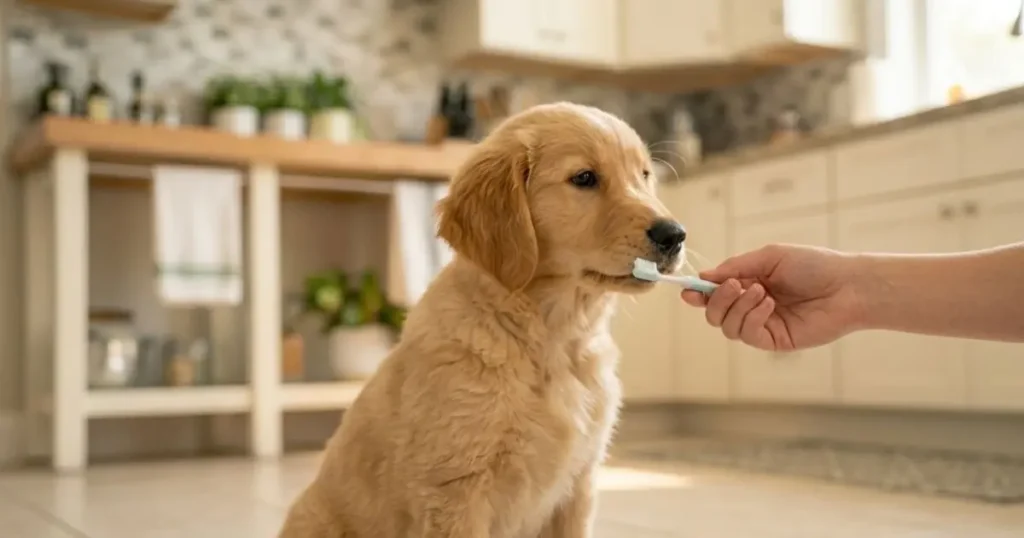
I noticed the smell first.
My puppy was about 12 weeks old, sitting on my lap after a play session.
I leaned down to kiss the top of his head and got hit with — let’s just say — puppy breath that wasn’t the cute kind anymore.
It was bad. Really bad.
I panicked.
Was he sick?
Was there something wrong with his stomach?
Was I about to spend $400 at the emergency vet on a Friday night?
Turns out — completely normal.
His baby teeth were starting to loosen, and adult teeth were pushing through.
The breath was from inflamed gums and food particles trapped around shifting teeth.
The fix was something I had absolutely never thought about until that moment.
I started cleaning his teeth from that night on.
If you’re wondering how to clean puppy teeth at home — and whether it’s even something puppies need — this guide gives you the complete answer.
From the right age to start, the exact products to use, and the step-by-step method that actually works without your puppy hating you for it.
Dental care isn’t optional.
And starting young is everything.
Aim for 2 to 3 times per week minimum, ideally daily. Most puppies accept brushing within 1 to 2 weeks of gradual, positive introduction.
Starting young prevents 80% of dental disease seen in adult dogs.
When Should You Start Cleaning Puppy Teeth
This is the question that surprises most new puppy owners — and the answer that changes everything about your dog’s lifelong dental health.
Puppy dental care should begin between 8 and 12 weeks of age — earlier than most owners realize and at the perfect time to build lifelong acceptance of teeth brushing.
Why Starting Young Matters So Much
According to the American Veterinary Dental College, over 80% of dogs show signs of dental disease by age 3. Most of that disease is preventable — but only if home dental care starts when the puppy is young enough to accept it as a normal part of life.
A puppy that learns from 8 weeks that having their mouth touched is fine, even pleasant, becomes an adult dog that tolerates dental care for life. A dog introduced to brushing for the first time at 2 years old? That’s a fight you usually lose.
According to the American Veterinary Medical Association, periodontal disease is the most common clinical condition in adult dogs, and home dental care started in puppyhood is the single most effective prevention method available.
The Ideal Starting Age — 8 to 12 Weeks
The sweet spot for starting puppy dental care is 8 to 12 weeks old. Here’s why this window matters:
Your puppy’s brain is still in the critical socialization period — new experiences feel normal, not scary.
Baby teeth are fully in, but the adult teeth haven’t started erupting yet — gums are healthy and not sore.
Your puppy is already learning daily routines — adding dental care to the routine is easy.
Bonding handling tolerance is at its peak — paws, ears, and mouth handling all become normal.
The 8 to 12 week window also aligns with the puppy socialization checklist by age, making Dental care part of broader handling tolerance
If Your Puppy Is Older
If your puppy is already past 12 weeks — don’t worry. You can still start. It just takes a little more patience and a slower introduction. The principles are exactly the same.
For older puppies and adult dogs, plan on 2 to 3 weeks of gradual introduction instead of just a few days. Take it slow, use lots of treats, and never force.
How to Clean Puppy Teeth at Home — Step by Step
Here’s the exact method that worked for me — and that most positive reinforcement vets and trainers recommend. The whole process from start to finish takes about 5 minutes once your puppy is used to it.
Step 1 — Build Positive Mouth Handling First
Before you ever touch a toothbrush, your puppy needs to be comfortable with you touching their mouth.
For 3 to 5 days, do this:
- Touch your puppy’s lips and around their mouth gently for a few seconds, then immediately give a treat
- Lift their lip briefly to expose the teeth, and treat immediately
- Touch the front teeth with your finger, treat immediately
The goal: make mouth handling predict treats. Your puppy should start to look forward to having their mouth touched because it always equals food.
Step 2 — Let Your Puppy Taste the Toothpaste
Puppy toothpaste is flavored — chicken, peanut butter, or beef are common. Most puppies treat it like a treat.
How to introduce it:
- Put a small dab on your finger
- Let your puppy lick it off
- Repeat once a day for 2 to 3 days
- Once they’re excited to see the toothpaste, you’re ready for the next step
Never use human toothpaste — it contains fluoride and xylitol, both toxic to dogs.
Step 3 — Start With a Finger Brush
A finger brush is a small rubber cap with soft bristles that slides over your index finger. It’s much less intimidating than a regular toothbrush for
puppies.
How to use it:
- Put a pea-sized amount of toothpaste on the finger brush
- Lift your puppy’s lip gently to expose the front teeth
- Rub the brush over the front teeth for 5 to 10 seconds only — don’t go for a full clean yet
- Praise enthusiastically, give a treat
- Stop on a positive note
Repeat daily, gradually increasing the brushing time by a few seconds each session.
Step 4 — Work Up to Full Brushing
After about a week of finger brush sessions, your puppy should tolerate a longer brushing routine.
The proper technique:
- Hold the brush at a 45-degree angle to the teeth
- Use gentle circular motions
- Focus on the outer surfaces where plaque builds — the inner surfaces are mostly cleaned by the tongue
- Spend 10 to 15 seconds per section
- Cover all 4 quadrants — upper left, upper right, lower left, lower right
The total cleaning should take 2 to 3 minutes.
Step 5 — Build the Daily Routine
Once your puppy is comfortable with brushing, lock in the routine.
Best time: after the evening meal, when food particles need to be cleaned away anyway
Frequency target: daily is ideal, 3 times per week is the absolute minimum
Duration: 2 to 3 minutes is enough
Reward: always end with a treat or short play session — keep the positive association

Best Tools for Puppy Dental Care at Home
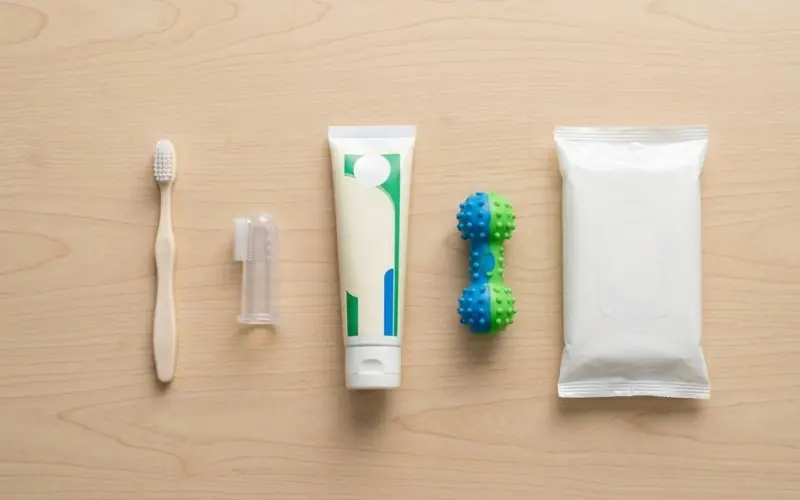
The right tools make how to clean puppy teeth at home significantly easier. Here’s exactly what you need and what to skip.
Must-Have — Enzymatic Puppy Toothpaste
This is non-negotiable. Enzymatic toothpaste contains enzymes that break down plaque and bacteria chemically — not just by mechanical brushing. Look for these key features:
Made specifically for dogs or puppies
Contains enzymes — listed on ingredient label
Flavored — chicken, peanut butter, or beef. No xylitol, fluoride, or human ingredients
Recommended brands: Virbac C.E.T., Petrodex, Vet’s Best
Petrodex Toothpaste for Dogs and Puppies — poultry flavor, 6.2 oz — enzymatic dog toothpaste made to clean teeth, fight bad breath, and reduce plaque and tartar formation, which fits perfectly where the article recommends enzymatic puppy toothpaste.
Not For : Not ideal for puppies that refuse poultry flavor or need a vet-prescribed dental product for existing gum pain, bleeding, or dental disease.
Must-Have — Finger Brush or Soft Puppy Brush
Start with a finger brush for the first 2 to 4 weeks. After your puppy is comfortable, you can transition to a small soft-bristle puppy toothbrush.
What to look for:
- Very soft bristles — adult brushes are too stiff
- Small head sized for puppy mouths
- Long handle for easy reach
- Rubber finger brushes work for puppies under 16 weeks
Jasper Dog Toothbrush — 360-degree finger brush, 2-pack, toothpaste not included — gives new puppy owners a soft finger-brush option for those first 2 to 4 weeks before moving to a regular puppy toothbrush.
Not For : Not ideal if your puppy is a hard biter during mouth handling — start slower with finger-touch training before putting any brush on your finger.
Nice to Have — Dental Wipes
Dental wipes are textured pads that you rub on teeth to remove plaque. They’re not as effective as brushing, but they are useful for:
- Days you can’t do a full brushing
- Travel situations
- Puppies who really resist brushing initially
- Quick post-meal cleanups
Vet’s Best Finger Dental Wipes — 50-count finger pads for teeth cleaning, fresh breath, tartar control, and plaque removal — work as a simple backup for travel days, quick post-meal cleanups, or puppies still resisting full brushing.
Not For : Not a replacement for regular brushing with enzymatic toothpaste, especially if the puppy already has visible tartar, gum redness, or bad breath that keeps coming back.
Nice to Have — Dental Chews
The Veterinary Oral Health Council (VOHC) approves specific dental chews that have been clinically proven to reduce plaque and tartar. Look for the VOHC seal on the package.
According to the ASPCA, dental chews can supplement brushing but should never replace it — chews alone cannot adequately clean the gum line where most dental disease starts.
For puppies, choose chews specifically labeled “puppy” — adult dental chews are often too hard for puppy teeth and can cause damage.
If you are building a full at-home care routine beyond brushing teeth, follow our step-by-step guide on how to groom a dog at home step by step.
Tools to AVOID
Human toothpaste — contains xylitol and fluoride, both toxic to dogs.
Adult dog toothbrushes — bristles too stiff for puppy gums.
Hard antlers or bones for teething puppies — can crack adult teeth coming in.
Baking soda — too harsh for puppy mouths
Any “natural” remedy not vet-approved can be dangerous.
Used toothbrushes harbor bacteria and become less effective over time. This one $5 habit makes the difference between effective and useless brushing.
Puppy Teething Timeline — What to Expect
Understanding teething helps you support your puppy’s dental health through every stage. Here’s what’s happening in their mouth from birth to 7 months.
Puppies have 28 baby teeth that come in between 3 and 6 weeks of age, and 42 adult teeth that replace them between 3 and 7 months.
3 to 6 Weeks — Baby Teeth Come In
Puppies are born without teeth. Their 28 baby teeth (also called milk teeth or deciduous teeth) come in between 3 and 6 weeks of age. This is when weaning naturally begins.
8 to 12 Weeks — All Baby Teeth Present
By 8 weeks, all 28 baby teeth should be visible. This is the ideal window to start home dental care — healthy gums, no teething pain, peak learning age.
3 to 4 Months — Front Teeth Start Falling Out
Around 12 to 16 weeks, the small front teeth called incisors begin to fall out, and adult teeth start coming in. You may find tiny teeth on the floor or
in your puppy’s bed. Some puppies swallow them — completely normal.
4 to 6 Months — Peak Teething Stage
This is when chewing intensifies dramatically. Adult canines, premolars, and molars are all erupting. Your puppy will want to chew on everything — including your hands and furniture.
How to help during peak teething:
- Frozen wet washcloths to chew
- Frozen carrots as a natural cold chew
- Puppy-specific teething toys (not adult chews)
- Soft rubber Kong toys filled with frozen yogurt
- Wet rope toys frozen overnight
6 to 7 Months — All Adult Teeth In
By 7 months, all 42 adult teeth should be in place. Teething is complete. From this point forward, dental care is about prevention and maintenance for the rest of their life.
Teething Timeline — Quick Reference Table

Retained baby teeth cause crowding, misalignment, and chronic dental problems. Your vet may need to extract them during the spay or neuter procedure.
Common Puppy Dental Care Mistakes to Avoid
I made some of these in the first few weeks before I figured out the right way. Learn from my experience.
Using Human Toothpaste
Human toothpaste contains fluoride and often xylitol — both toxic to dogs even in small amounts. Xylitol in particular can cause rapid liver failure. Always use enzymatic puppy or dog toothpaste only.
Trying to Do Too Much Too Fast
Going from zero brushing to a full 3-minute brush in one session is how puppies learn to hate brushing. Build duration gradually — 5 seconds, then 10, then 20, then 30. Patience now equals years of cooperation
later.
Skipping Days Because “It’s Just One Day”
Plaque hardens into tartar within 24 to 48 hours. Skipping brushing means tartar starts building — and once it’s hard tartar, only professional veterinary cleaning can remove it. Daily brushing prevents the hardening process.
Brushing During Peak Teething
Between 4 and 6 months, when adult teeth are erupting, gums are sore and inflamed. Brushing aggressively during this time causes pain and creates a negative association. Use dental wipes or soft finger brushing only during peak teething weeks.
Ignoring Bad Breath
A little puppy breath is normal. Truly bad breath — strong, sour, or foul-smelling — is not. It often indicates gum disease, infection, or, in older dogs, even kidney problems. Don’t dismiss it as “just dog breath.”
Not Lifting the Lip Properly
The plaque accumulates most heavily at the gumline — where the tooth meets the gum. If you don’t lift the lip and brush at the gumline, you’re missing the most important area. Always lift the lip.
Signs of Puppy Dental Problems
Catching problems early prevents bigger issues later. Here’s what to watch for in your puppy’s mouth.
Normal Signs During Teething
Some symptoms are completely normal during the 3 to 7-month teething period:
- Mild bad breath occasionally
- Slightly bloody chew toys
- Increased chewing on everything
- Drooling more than usual
- Slight gum redness
- Eating slightly less for a few days
Warning Signs — See the Vet
These signs are not normal and need veterinary attention:
- Strong, persistent bad breath after teething is done
- Visible tartar buildup — yellow or brown deposits
- Excessive drooling with blood or pus
- Refusing to eat for more than 24 hours
- Pawing at the mouth or face
- Visible swelling on the cheek or jaw
- Loose adult teeth
- Broken or chipped adult teeth
- Lumps or growths in the mouth
Any persistent bad breath in a puppy older than 7 months indicates a dental problem and requires veterinary examination — bad breath is not normal in dogs with healthy mouths.
If your puppy pulls away, stops chewing normally, or seems uncomfortable around the mouth, learn the common signs your dog is in pain before ignoring the change.
When to Schedule the First Dental Check
The American Animal Hospital Association recommends a complete oral exam during every routine vet visit in the first year. After teething is complete, around 7 months, your vet should examine the bite alignment and check for retained baby teeth.
According to the American Kennel Club, the first professional dental cleaning is typically recommended between 1 and 3 years of age, depending on breed — small breeds often need cleanings earlier than large breeds due to crowded dental arrangements.
Three photos side-by-side make subtle changes obvious that you’d otherwise miss.
If your puppy shows any signs of dental problems, please consult your veterinarian.
Frequently Asked Questions (FAQ)
When should I start brushing my puppy’s teeth?
Start between 8 and 12 weeks of age.
This is the ideal window because your puppy is still in the socialization period when new experiences feel normal, baby teeth are stable, and gums are healthy.
Starting this early builds lifelong tolerance for dental care.
If your puppy is already older, you can still start — just plan for a slower introduction over 2 to 3 weeks.
How often should I brush my puppy’s teeth?
Daily is ideal — plaque hardens into tartar within 24 to 48 hours, so consistent daily brushing prevents the hardening process entirely.
The minimum acceptable frequency is 3 times per week.
Anything less than that allows tartar to build up and significantly increases the risk of gum disease.
Make it part of your evening routine after the last meal.
Can I use human toothpaste on my puppy?
No — never use human toothpaste on dogs.
Human toothpaste contains fluoride and often xylitol, both of which are toxic to dogs.
Xylitol in particular can cause rapid liver failure and is potentially fatal even in small amounts.
Always use enzymatic toothpaste made specifically for dogs — Virbac C.E.T., Petrodex, and Vet’s Best are widely available and trusted brands.
What if my puppy hates having their teeth brushed?
Slow down the introduction process.
Most puppy resistance comes from going too fast, too soon.
Go back to step 1 — just touching the mouth with treats — for several days.
Then reintroduce toothpaste to your finger.
Then the finger brush.
Only progress to the next step when your puppy is completely relaxed with the current step.
Patience over weeks works better than force in any session.
At what age do puppies lose their baby teeth?
Puppies start losing their 28 baby teeth between 12 and 16 weeks of age, starting with the small front teeth called incisors.
The canines and premolars follow between 4 and 6 months.
By 7 months, all 28 baby teeth should be replaced by 42 adult teeth.
If any baby teeth remain after 8 months, contact your vet — retained baby teeth need extraction to prevent permanent dental problems.
Are dental chews enough to clean my puppy’s teeth?
No — dental chews alone are not enough to clean puppy teeth properly.
Chews can supplement brushing by reducing some plaque, but they cannot clean the gumline where most dental disease starts.
Look for chews with the Veterinary Oral Health Council (VOHC) seal for proven plaque reduction, but use them in addition to brushing — not as a replacement.
Why does my puppy have bad breath?
Mild puppy breath is normal — it often comes from food residue, drinking water, or natural mouth bacteria.
Mildly bad breath during teething from 4 to 7 months is also normal due to inflamed gums.
Persistent or strong bad breath outside of teething, however, indicates a problem — usually gum inflammation, food trapped between teeth, or, in older dogs, more serious conditions.
If bad breath persists for more than a week, see your vet.
How much does professional puppy teeth cleaning cost?
Professional dental cleaning for dogs in the United States typically costs between $300 and $700, depending on location and whether extractions are needed.
Anesthesia adds significantly to the cost.
Most puppies don’t need professional cleaning in the first year if home brushing has been consistent.
Insurance plans like Healthy Paws and Trupanion may cover routine dental as part of preventive care.
Always monitor your puppy closely when trying anything new. If you notice any unusual symptoms or behaviors, consult your veterinarian immediately.
Your Puppy’s Lifelong Health Starts Here — Final Thoughts
I look back at that moment of panic when I first smelled my puppy’s bad breath — and I’m honestly grateful for it.
Without that one moment, I wouldn’t have started dental care until years later. By then, it would have been a battle. Instead, my dog, at 3 years old, still sits patiently every evening while I brush his teeth. He sees the toothbrush come out and wags his tail — because he’s been doing this since he was 12 weeks old and his brain decided long ago that this is just.
What happens before bed?
Now that you know exactly how to clean puppy teeth at home, here are your three key takeaways:
- Start between 8 and 12 weeks — this window is when your puppy’s brain is most open to accepting new routines as normal forever.
- Use only enzymatic puppy toothpaste and a soft finger brush — never human toothpaste, never adult brushes, never hard chews during teething.
- Build the routine gradually over 1 to 2 weeks and then keep it daily — consistency is what prevents 80% of the dental disease adult dogs develop.
The 5 minutes you spend on your puppy’s teeth tonight could save thousands of dollars and years of dental problems down the road. There aren’t many trade-offs that are good in dog ownership.
Start tonight.
For everything else your puppy needs during these critical early weeks, read our complete guide on how to take care of a puppy for the first time — feeding, sleep, potty training, biting, socialization, and more, all in one place. And if your puppy is in the peak teething stage and biting everything in sight — our guide on how to handle puppy biting and nipping covers everything you need to manage it.




Pingback: Dog Dental Disease: Complete Guide (Why 80% of Dogs Get It by Age 3)
Pingback: Prodogi Dental Strips Review 2026: Honest, Fact-Checked Verdict