
It’s a lazy Sunday morning. You’re cutting up a cantaloupe for the fruit salad, and the sweet smell has already reached the living room. Now there’s a chin resting on your knee and two eyes locked on every orange cube that hits the bowl.
You hold one out, then hesitate. Is this okay? Search “can dogs eat cantaloupe” and almost every site says “yes, in moderation.” Then the advice falls apart. Nobody says how much moderation is. Half of them call it “high in fiber,” which it isn’t. And if your dog grabs some rind, one site says to call your vet right away while another says to just watch.
That matters. A chunk of rind can get stuck in a small dog. A big bowl of melon can mean an upset stomach by evening. And there’s a step almost no dog article mentions: cantaloupe’s bumpy rind can carry germs into the fruit when you cut it.
The short version: can dogs eat cantaloupe? Yes, and it’s an easy, low-calorie treat once you know the basics. In this guide you’ll find:
- A serving chart for 7 dog sizes, built on USDA numbers
- The washing step most guides skip, plus 4 more simple serving tips
- What to do if your dog ate the rind or seeds, without the panic
Yes, dogs can eat cantaloupe.
Plain, ripe flesh with the rind and seeds removed is a safe, hydrating treat with about 54 calories per cup. Give 1 to 2 small pieces to toy breeds and up to about ¾ cup to large dogs. Scrub the rind before cutting, and ask your vet first if your dog is diabetic.
Is Cantaloupe Good for Dogs?
Yes, cantaloupe is good for most dogs as a small, occasional treat. It’s soft, juicy and low in calories. Here’s what’s in it, based on USDA data:
One cup of cantaloupe cubes (160 g) has about 54 calories, 144 g of water, 12.6 g of natural sugar, 1.4 g of fiber, 427 mg of potassium, 59 mg of vitamin C and 270 µg of vitamin A, mostly from beta-carotene.
That makes it about 90% water, according to USDA FoodData Central.
What that means for your dog:
- A light treat. A few cubes cost very few calories, a nice swap for a rich biscuit.
- Extra water. Cold cubes are a refreshing way to add a little fluid on a warm day. They don’t replace the water bowl.
- Plenty of beta-carotene. That’s the orange color, and it gives cantaloupe about six times the vitamin A of watermelon. Dogs on a complete food already get what they need, so it’s a bonus, not a supplement.
- Not a fiber food. You’ll often read that cantaloupe is “high in fiber.” USDA lists 0.9 g per 100 g. Apples have about 2.4 g, so cantaloupe is actually on the low side.
- Real sugar. At 12.6 g per cup, it’s sweeter than watermelon. That’s why portion size matters more than people think.
How Much Cantaloupe Can Dogs Eat?
Here’s the part most guides leave vague. The American Animal Hospital Association says all treats together should stay at or under 10% of your dog’s daily calories.
By calories alone, a 60-pound dog could eat about 2½ cups of cantaloupe. But that much sugar and water at once often ends in loose stool. So we give you two numbers: the calorie ceiling, and a sensible everyday amount that’s easier on the stomach. A cup holds roughly 20 bite-size cubes.
These are estimates for healthy, neutered adult dogs, not a vet prescription. The first time, give about a quarter of that amount and check the next day’s poop before you give more. Senior, less active or overweight dogs should get less. For the bigger picture on portions, see how much to feed your dog by weight.
How to Serve Cantaloupe Safely: 5 Tips
1. Scrub the rind before you cut
This is the step almost every dog article skips. Cantaloupe has a rough, netted rind, and Health Canada says that netting can trap bacteria and make them harder to remove. When you slice through it, the knife carries whatever is on the outside into the fruit.
It isn’t a far-fetched worry. In 2023, a Salmonella outbreak linked to cantaloupes made 407 people sick across 44 states, according to the FDA. Salmonella illness is uncommon in dogs, but the FDA notes that dogs can carry the bacteria and shed it in their stool and saliva, which puts the whole household at risk.
So scrub the whole melon under cool running water with a clean produce brush, dry it, then cut.
2. Cut off the rind
Slice away the tough skin and the pale layer underneath. Only the soft orange flesh goes to your dog.
3. Scoop out the seeds
Run a spoon through the middle and toss the seeds and stringy pulp.
4. Cut it small and keep the amount right
Pea-size bits for toy breeds and puppies, small cubes for medium dogs, bigger bites for large dogs. Gulpers need smaller pieces. Then follow the chart above.
5. Serve it plain and keep it cold
No sugar, yogurt dips, salt or chili powder. Store cut cantaloupe in the fridge for up to four days, and throw out any that sat at room temperature for more than two hours. Those are Health Canada’s limits for people, and they work for dogs too.

Turn cantaloupe into a slow summer treat.
Mash a few spoonfuls, spread them on a lick mat and freeze it, or freeze small cubes in a single layer. Frozen melon takes longer to eat, which keeps your dog busy and cool. Keep frozen pieces small for little dogs, since they’re easy to gulp.
Can Dogs Eat Cantaloupe Rind?
No. The rind is the one part of the cantaloupe your dog should never get.
It’s tough and fibrous. The American Kennel Club warns that cantaloupe rinds can upset the stomach, get stuck in the digestive tract and cause choking. Small dogs and fast eaters are at the highest risk.
As far as we could find, the rind isn’t poisonous. The danger is its size and toughness. And as you saw above, it’s also the dirtiest part of the melon, so it belongs in a closed trash can where a curious nose can’t reach it.
My Dog Ate Cantaloupe Rind: What to Do
Stay calm. Plenty of dogs swipe a bit of rind with no problem. Advice online is mixed: PetMD says to call your vet right away, while other sites say to just watch. Both can be right. It depends on how much was eaten and how big your dog is.
While you watch:
- Clear the area. Check the counter, floor and trash for more rind.
- Don’t try to make your dog throw up unless a vet tells you to. A tough piece coming back up can cause choking.
- Watch for two to three days. Keep track of appetite, energy and poop.
Call your vet if you notice signs of a blockage. VCA Animal Hospitals lists vomiting, diarrhea, belly pain, low appetite, straining to poop or passing very little, tiredness, and growling or biting when the belly is touched.
Repeated vomiting, a swollen or painful belly, or no poop for more than a day after eating rind is not a “wait and see” situation.
Call your vet or an emergency clinic right away.
Can Dogs Eat Cantaloupe Seeds?
Cantaloupe seeds aren’t toxic to dogs. Both the AKC and PetMD agree on that, so a few licked out of the bowl are nothing to worry about.
They’re still not a snack. The seeds are slippery, a big mouthful can upset the stomach, and a clump can be a choking risk for small dogs. The easy fix is to scoop them out before serving.
- A few seeds swallowed: they usually pass on their own.
- A large pile, especially in a small dog: watch for vomiting or a sore belly for a day or two, and call your vet if anything seems off.
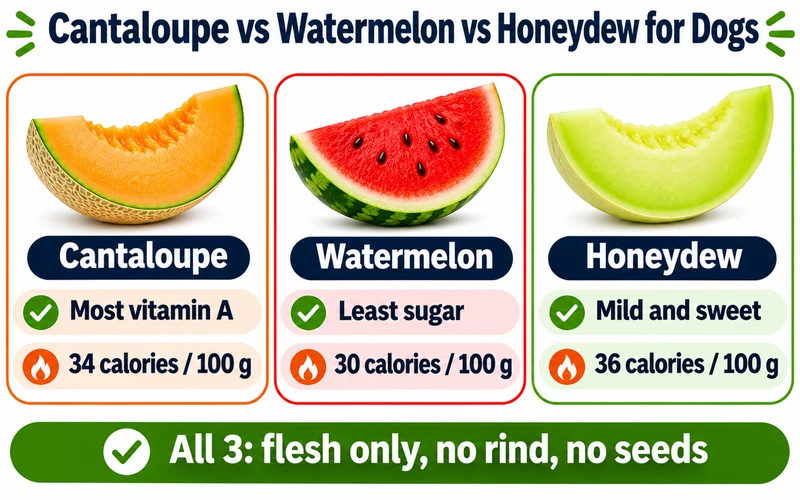
Cantaloupe vs Watermelon vs Honeydew for Dogs
Can dogs eat melon in general? Yes. Plain cantaloupe, honeydew and watermelon are all fine in small amounts, with the rind and seeds removed. They’re not identical, though. Here’s how they compare, using USDA data for cantaloupe, honeydew and watermelon:
What stands out:
- Cantaloupe wins on vitamin A, with far more than the other two.
- Watermelon is the least sweet, even though many people assume the opposite.
- Cantaloupe and honeydew are close on calories and sugar, so the same serving chart works for both.
- None of them is a fiber food.
Already sharing watermelon? Our guide on whether dogs can eat watermelon covers its rind and seeds in detail.
Cantaloupe Treats: Safe or Skip?
Fresh cantaloupe is simple. Store-bought melon products are the tricky part:
The ingredient to watch is xylitol. The U.S. Food and Drug Administration warns it can be poisonous to dogs, causing weakness, staggering, collapse or seizures. It can also be listed as “birch sugar.” For other foods to keep out of reach, see our list of human foods that are toxic to dogs.
Can Puppies Eat Cantaloupe?
Yes, once they’re fully on solid puppy food, usually from around 8 weeks old. Keep it simple:
- Start tiny. One or two pea-size bites, rind and seeds removed.
- Check the next day’s poop. If stool turns loose, stop and try again later, or skip it.
- Puppy food comes first. Treats of any kind should stay small.
- No rind, ever. A swallowed piece is a real risk at that size.
When Cantaloupe Isn’t a Good Idea
Most dogs do fine, but these should skip it or get a vet’s OK first:
- Diabetic dogs. A cup has about 12.6 g of sugar, more than watermelon. Some diabetic dogs may manage a bite or two, but it needs to fit their insulin and meal plan, so ask your vet.
- Dogs with kidney or heart disease. One cup has about 427 mg of potassium, more than double what the same amount of watermelon has. Dogs on special diets may need limits.
- Dogs with pancreatitis. Cantaloupe is nearly fat-free, but the Merck Veterinary Manual lists table scraps as a believed risk factor, so check any extras with your vet.
- Soft, moldy or recalled melon. Toss mushy, sour or moldy melon. The ASPCA warns that moldy food can cause vomiting, tremors and seizures in dogs. Never share recalled melon.
- Food allergies. Rare, but itching, swelling or vomiting after any new food means stop and call your vet.
This article is for general information only.
PawWellCare is not a veterinarian, and this content doesn’t replace professional veterinary care. Serving amounts and the rind guide are general estimates for healthy dogs. If your dog has a health condition such as diabetes, kidney or heart disease, or pancreatitis, talk to your veterinarian before sharing cantaloupe. If you think your dog has a blockage, call a vet right away.
Frequently Asked Questions (FAQ)
Can dogs eat cantaloupe every day?
Most healthy adult dogs can have a little plain cantaloupe daily within their 10% treat limit. Because it’s fairly sweet, a few times a week is a better habit.
Is cantaloupe good for dogs with diarrhea?
No. Cantaloupe is mostly water and natural sugar, and it’s low in fiber, so it can make loose stool worse. Wait until your dog’s stool is back to normal, and call your vet if diarrhea lasts more than a day or comes with vomiting.
Can dogs eat cantaloupe skin?
No. The skin, or rind, is tough and can cause choking or a blockage. Cut it off, and use our guide above if your dog already ate some.
How much cantaloupe is too much for a dog?
Anything well beyond the everyday amount in our chart. Signs your dog overdid it include diarrhea, gas, vomiting and a bloated belly.
Can dogs eat frozen cantaloupe?
Yes. Frozen cubes take longer to eat, which makes them a great hot-weather treat. Cut them small for little dogs. For more ways to beat the heat, see our tips on how to keep your dog cool in summer.
Can dogs eat cantaloupe and honeydew together?
Yes, with the rind and seeds removed. Just count them together so the total stays within your dog’s serving size.
Is cantaloupe safe for diabetic dogs?
Ask your vet first. One cup has about 12.6 g of sugar, and even a small amount needs to fit your dog’s insulin and meal plan.
Can dogs eat dried cantaloupe?
Only plain, homemade dried cantaloupe, in tiny pieces. Drying concentrates the sugar. Skip store-bought dried or candied melon.
So, Can Dogs Eat Cantaloupe? The Bottom Line
So, can dogs eat cantaloupe? Yes, and it’s one of the easiest fruits to share once you follow a few simple habits:
- Scrub first, then cut. Wash the netted rind before slicing, then serve only the soft orange flesh.
- Keep it small. A cube or two for tiny dogs, up to about ¾ cup for large ones. Start with a quarter of that.
- Rind or seeds eaten? A little is usually fine. Watch for blockage signs, and call your vet early if a small dog swallowed a chunk.
Your next step: scrub your next cantaloupe, then freeze a few seedless cubes for a hot afternoon. Want more snack ideas? See whether dogs can eat apples, bananas and celery, try our vet-informed homemade dog food recipes, or start with our complete dog nutrition guide.
A clean melon, a few cold cubes, and one very happy dog. That’s an easy win.