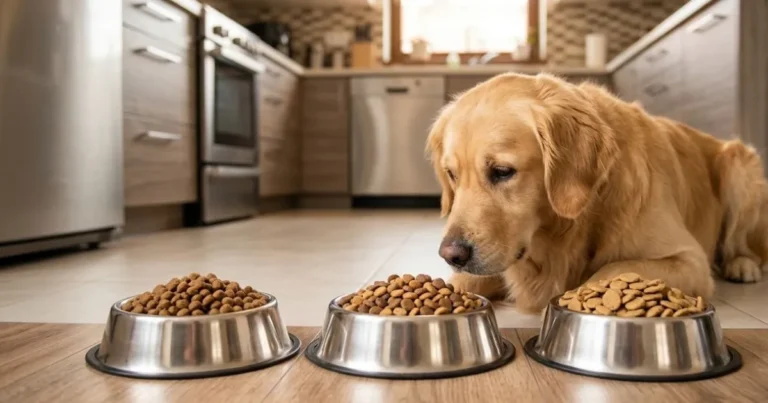
You’re peeling a banana in the kitchen, and suddenly there’s a pair of eyes locked on your hands. Your dog is sitting perfectly, tail sweeping the floor, clearly hoping for a share.
So, can dogs eat bananas? Yes. Plain, ripe banana is safe for most dogs in small amounts. The real questions are how much, how often, and which banana foods to keep away from your dog. Here’s what you’ll find below:
- A serving-size chart by dog weight, built from real calorie numbers
- What to do about peels, banana chips and banana bread
- When to skip bananas and check with your vet first
Yes, dogs can eat bananas.
Plain, ripe banana in small pieces is a safe treat for most dogs. Keep it treat-sized: a slice or two for small dogs and up to about half a banana for large dogs. Never give the peel or banana bread. If your dog has diabetes, kidney disease or is on a weight-loss diet, ask your vet first.
Are Bananas Good for Dogs?
Bananas are a good treat for dogs, but they aren’t a superfood. Think of them as a healthier swap for a store-bought biscuit, not something your dog needs.
The ASPCA’s plant list lists banana as non-toxic to dogs. Here’s what’s inside one, based on USDA data:
One medium banana (about 7 inches, 118 g) has roughly 105 calories, 14 g of natural sugar, 3 g of fiber and 420 mg of potassium, according to USDA FoodData Central.
It’s also very low in fat and sodium.
What that means for your dog:
- The good: bananas are low in fat and salt, and they offer some potassium and fiber.
- The catch: they’re high in sugar for their size. That’s fine in a few slices, but it adds up fast if your dog gets a big chunk every day.
Your dog’s complete food already covers their nutrient needs, so banana is just a fun extra.
How Much Banana Can a Dog Eat?
Less than most people think. Dogs can eat bananas safely only as a treat, and treats have a limit.
The American Animal Hospital Association (AAHA) recommends keeping all treats, including human food, at or below 10% of your dog’s daily calories. We used that rule to build the chart below, assuming a thin slice (about 1/4 inch) has roughly 4 calories and banana uses no more than half of the treat allowance.
How we worked it out: we estimated each dog’s daily calories with the standard veterinary formula (resting energy = 70 × body weight in kg to the 0.75 power, then adjusted for a typical adult pet), using the Pet Nutrition Alliance method. Then we took half of the 10% treat allowance and converted it into banana slices. For example, a 20 lb dog needs roughly 585 calories a day. That gives about 59 calories for all treats, and about 7 thin slices as the banana maximum.
These are starting points, not prescriptions, and less is always fine. If you’re not sure how much your dog should eat overall, our guide on how much to feed your dog by weight walks you through it.

Start with one slice and wait a day.
Any new food can upset a dog’s stomach, so begin small and watch for loose stool or gas. If your dog gets banana often, trim a little from their regular meal so the extra calories don’t add up.
Can Puppies Eat Bananas?
Yes, puppies can eat bananas once they’re fully on solid food. Keep it tiny, though. Puppies need almost all of their calories from a complete puppy food to grow properly.
- Start with a piece smaller than your fingernail, mashed or cut thin, so there’s no choking risk.
- Try one new food at a time. If your puppy’s stool turns loose, stop and give their stomach a few days to settle.
- Use it as a training reward, not a snack on top of everything else. A few tiny banana bits can replace a few regular treats.
Not sure when your puppy is ready for solids? See our guide on when puppies start eating solid food.
Can Dogs Eat Banana Peels?
No. Always peel the banana first.
Banana peels aren’t poisonous, but they’re tough and fibrous, and dogs don’t digest them well. A peel can cause vomiting or an upset stomach. In some dogs, especially small ones, a big piece can get stuck and cause an intestinal blockage, which is an emergency.
If your dog ate a banana peel: don’t try to make them vomit unless your vet tells you to. Keep an eye on them for the next day or two, and call your vet right away if you notice:
- Repeated vomiting or retching
- Not eating, or unusual tiredness
- Straining to poop, or no poop at all
- A tender, bloated belly
Banana Chips, Banana Bread and Other Banana Foods
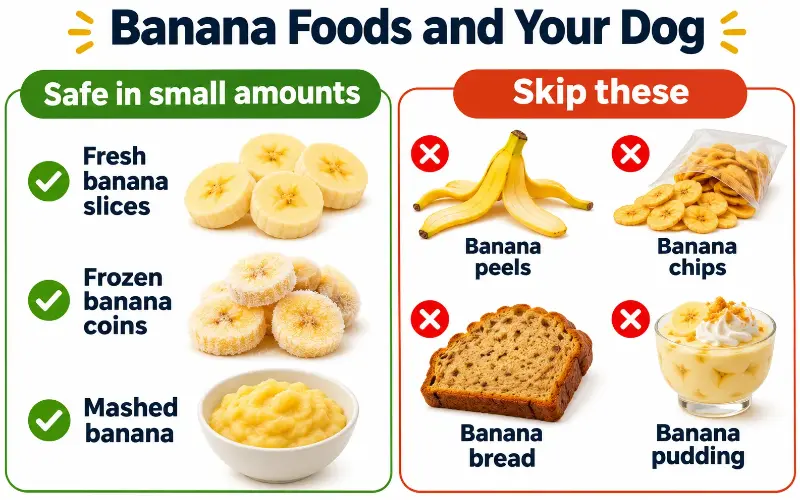
Plain fresh banana is one thing. Banana foods are another, and many of them aren’t safe for dogs. Here’s a quick guide:
Banana Chips and Dried Bananas
Drying packs a banana’s sugar and calories into a much smaller piece. Store-bought chips are usually worse, since many are fried and coated with sugar or honey. If you share dried banana, choose plain, unsweetened pieces, break them small and keep it rare. Fresh or frozen banana is the easier choice.
Banana Bread and Muffins
Skip these completely. Besides the sugar and fat, baked goods can hide ingredients that are toxic to dogs. The FDA warns that xylitol, a sugar substitute that can be deadly to dogs, is sometimes used in baked goods like cakes and muffins. Banana bread can also contain raisins, chocolate or nuts.
For the full list of what to keep off your dog’s plate, see our guide to human foods that are toxic to dogs.
Easy Ways to Give Your Dog Bananas
Once you know your dog’s portion, there are plenty of fun ways to serve it:
- Frozen banana coins. Slice a banana, freeze the coins on a tray and hand out one or two on a hot day. Keep them small enough that your dog can’t swallow one whole.
- Stuffed in a puzzle toy. Mash a little banana into a KONG or lick mat. If you add peanut butter, check the label first and only use one without xylitol.
- On top of dinner. Mash a slice or two over your dog’s regular food as a topper.
- Two-ingredient frozen bites. Mix mashed banana with a spoonful of plain, unsweetened yogurt, drop small dollops on a tray and freeze. Skip this one if dairy upsets your dog’s stomach.
Whatever you choose, it still counts toward your dog’s treat allowance for the day.
When to Skip Bananas or Ask Your Vet First
Bananas are safe for most healthy dogs, but some dogs are better off without them, or need a vet’s OK first:
- Dogs with diabetes. The natural sugar can affect blood sugar control.
- Overweight dogs or dogs on a weight-loss plan. Every treat calorie counts, and lower-sugar options like green beans may work better.
- Dogs with kidney disease or on a prescription diet. These diets are carefully balanced, including potassium, so don’t add extras without asking your vet.
- Dogs with a sensitive stomach or food allergies. Introduce any new food slowly, if at all. If your dog’s stomach is often upset, our guide to food for dogs with sensitive stomachs may help.
What about bananas for diarrhea? You may have heard that a little banana can firm up loose stool. Bananas do have some fiber, but they aren’t a treatment for diarrhea, and a new food can sometimes make an upset stomach worse. Call your vet if diarrhea lasts more than a day, or comes with vomiting, blood, low energy or not eating, especially in puppies and senior dogs.
Signs Your Dog Ate Too Much Banana
Eating too much banana usually causes mild tummy trouble. Here’s how to tell what needs attention:
- Usually fine to watch at home: a little gas or one soft stool after a big helping. Skip banana for a few days.
- Call your vet soon: loose stool that lasts more than a day, or repeated vomiting.
- Call your vet right away: your dog ate a peel or a whole banana and is vomiting, straining, not eating or has a painful belly, or got into banana bread, muffins or anything that might contain xylitol.

This article is for general information only.
PawWellCare is not a veterinarian, and this content doesn’t replace professional veterinary care. Serving amounts are estimates for healthy adult dogs. If your dog has a health condition, is on a special diet or you’re unsure what’s right for them, talk to your veterinarian.
Frequently Asked Questions (FAQ)
Can dogs eat plantains?
Yes, in small amounts, if they’re cooked plain. The ASPCA lists plantain with banana as non-toxic to dogs. Raw plantain is starchy and hard to digest, and fried plantains or chips add oil and salt, so skip those.
Are bananas good for dogs with diarrhea?
Not as a treatment. Bananas have some fiber, but they won’t fix the cause of diarrhea, and a new food can make it worse. Call your vet if it lasts more than a day or your dog seems unwell.
Can dogs eat frozen bananas?
Yes. Frozen banana coins make a great hot-weather treat. Cut them small so your dog can’t swallow a large piece, and never give a whole frozen banana.
Are bananas bad for dogs?
No, not in small amounts. Problems come from eating too much (upset stomach, extra sugar), eating the peel, or eating banana foods like bread and chips.
Can dogs eat bananas every day?
Yes. A few small slices on most days is fine for a healthy adult dog, as long as all treats stay under 10% of daily calories. Many owners keep banana as an occasional treat, which works too.
So, Can Dogs Eat Bananas? The Bottom Line
So, can dogs eat bananas? Yes, and they make an easy, healthy treat. Just keep the portions small:
- Small pieces only: a slice or two for small dogs, up to about a quarter to half a banana for big dogs
- No peels, chips or banana bread
- Ask your vet first if your dog has diabetes, kidney disease or is on a diet
Your next step: next time you peel a banana, cut one thin slice for your dog and see how they do. For more ideas on what’s safe to share, see our list of foods that are toxic to dogs (and the safe ones), and our complete dog nutrition guide for the bigger picture. Thinking about sharing seafood too? Here’s whether dogs can eat shrimp. Want a crunchy, low-calorie option? See whether dogs can eat celery. Prefer a sweet, crunchy fruit? Here’s whether dogs can eat apples.