

I tried an essential oil spray on my dog two summers ago. A recipe I found online, mostly lemongrass and something else I don’t fully remember now. Within twenty minutes she was pawing at her mouth and drooling more than usual.
Nothing serious happened. A quick wipe-down and she was fine an hour later. But it scared me enough to actually look into what I’d sprayed on her, and what I found changed how I think about natural flea and tick prevention for dogs entirely.
Here’s the thing nobody tells you: “natural” and “safe” are not the same word. Some of the most commonly recommended natural flea and tick prevention for dogs methods carry real, documented risks. Others genuinely help with almost no downside. The problem is most articles on this topic don’t tell you which is which.
This guide does. Not a list of remedies to try. A breakdown of what the actual research says, including the parts other sites skip.
The safest evidence-based natural flea and tick prevention for dogs includes diatomaceous earth, which has a limited but real effect, along with consistent grooming and regular yard maintenance.
Essential oils, despite being widely recommended online, are discouraged by veterinarians. PetMD states that dog owners should never use them for fleas or ticks, and several commonly suggested oils, including clove, cinnamon, and tea tree, are documented as toxic to dogs.
Natural flea and tick prevention for dogs works best as a supplement to, not a replacement for, methods your vet has confirmed are safe for your specific dog.
What Counts as “Natural” Flea and Tick Prevention?
Natural flea and tick prevention for dogs generally means avoiding synthetic pesticides like fipronil, imidacloprid, or permethrin in favor of plant-derived ingredients, minerals, or lifestyle changes.
That’s a wide net. It covers everything from diatomaceous earth to essential oil sprays to just vacuuming more often. The word “natural” gets used for all of it, which is exactly why it’s confusing.
Not everything natural is automatically gentle. Plants produce chemicals too, some of them potent enough to kill insects on contact. That potency doesn’t disappear just because the ingredient came from a plant instead of a lab. A tick doesn’t know the difference, and neither does your dog’s liver.
Natural flea and tick prevention for dogs sits on a spectrum. On one end: genuinely low-risk habits like regular grooming. On the other: concentrated plant compounds that carry real toxicity data. Treating everything on that spectrum as equally safe is where most guides go wrong.
The natural flea and tick prevention for dogs methods with the strongest safety profiles tend to be the least glamorous ones: vacuuming, washing bedding, and yard upkeep.
The Essential Oil Problem – What Vets Actually Say
This is the part most articles about natural flea and tick prevention for dogs leave out entirely.
According to PetMD , veterinarian Dr. Sandra Mitchell is direct about it: never use essential oils for fleas or ticks on your dog. The potential toxicity carries high risk, and most veterinarians discourage their use for exactly that reason.
The core issue isn’t that essential oils don’t work. Some show real insecticidal activity in lab settings. The issue is regulation and consistency. Essential oils aren’t regulated as pharmaceutical medications, so concentration and purity vary wildly between brands, even between bottles of the same product.
PetMD lists ten essential oils considered particularly risky for dogs, including clove, tea tree, pennyroyal, and wintergreen, several of which appear regularly in DIY natural flea and tick prevention recipes online.
- Citronella oil
- Citrus oil
- Clove oil
- Eucalyptus oil
- Hyssop oil
- Pennyroyal oil
- Peppermint oil
- Pine oil
- Tea tree (melaleuca) oil
- Wintergreen oil
That list includes several oils that show up constantly in DIY natural flea and tick prevention for dogs recipes online, including some marketed as gentle or beginner-friendly.
Essential oil toxicity in dogs can affect the GI tract, liver, kidneys, heart, and nervous system, with symptoms ranging from vomiting and drooling to muscle tremors and, in severe cases, seizures.
The ASPCA adds an important nuance here: concentration matters enormously. In their concentrated form, essential oils can absolutely be dangerous, but a properly diluted, short-duration diffuser use in a space your dog can leave freely is a different risk level than applying oil directly to skin or fur.
That distinction gets lost in most natural flea and tick prevention for dogs content. A recipe that says “a few drops diluted in water” sounds harmless. Whether it actually is depends on which oil, how diluted, and how sensitive that specific dog happens to be. Nobody selling a DIY recipe online can control for that.
If your household includes cats, essential oil caution matters even more. Cats lack certain liver enzymes dogs have, making them significantly more sensitive to oils that a dog might tolerate in small amounts.
Clove Oil: Why “Natural” Isn’t Automatically Safe
Clove oil deserves its own section because it shows up so often in natural flea and tick prevention for dogs recipes, and because the research on it is genuinely revealing.
A study testing five essential oils, including clove, at 16% concentration on dog skin found the treatment killed fleas effectively, in some cases eliminating 100% of fleas within an hour. That sounds like a win for natural flea and tick prevention for dogs. The rest of the story matters more.
Even at a controlled 16% concentration, nearly 30% of dogs in the same study showed allergic reactions within 15 minutes of application, including scratching, itching, and rubbing against furniture.
That’s not a fringe reaction rate. That’s roughly one in three dogs having a visible adverse response to a “natural” treatment applied under controlled, diluted conditions. Full-strength clove oil, the kind sold in a small bottle at a health store, is far more concentrated than the 16% tested here.
The active compound in clove oil is eugenol, and it isn’t a mild irritant. Eugenol has been shown to cause liver cell damage in animal studies, and a separate retrospective review covering plant-derived flea products from 2006 to 2008 found that essential oil blends containing clove oil at 1.7% to 5% concentrations caused adverse effects in dogs, most commonly lethargy and vomiting.
Here’s what makes clove oil a useful case study for natural flea and tick prevention for dogs overall: it genuinely works against fleas. The lab data on efficacy is real. But efficacy and safety are two separate questions, and clove oil answers them very differently.
A product being marketed as “natural” tells you nothing about its safety margin. Only the actual toxicology data does, and for clove oil specifically, that data points toward caution rather than confidence.
Diatomaceous Earth – What It Can and Can’t Do
Diatomaceous earth is one of the few natural flea and tick prevention for dogs methods that holds up reasonably well under scrutiny, with real caveats.
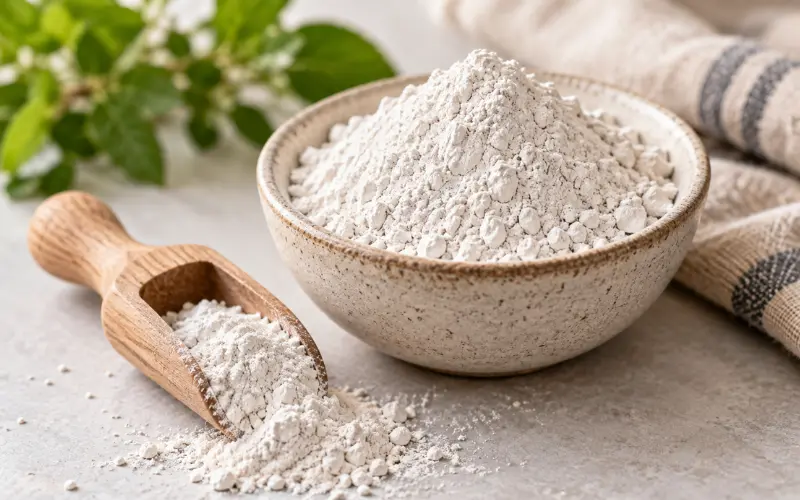
According to the American Kennel Club , diatomaceous earth is made from the fossilized remains of diatoms, tiny aquatic organisms with silica-based skeletons. It kills fleas mechanically: the sharp microscopic edges damage an insect’s exoskeleton, causing it to dry out and die.
Veterinarian Dr. Linda Simon offers a useful reality check in the same AKC piece: “Diatomaceous earth is certainly not a parasite prevention method they advise using in veterinary school. I’ve never recommended a client use it and don’t plan on doing so in the future.”
That’s not an endorsement, but it’s not a warning either. It’s an honest “it has limits” take that most natural flea and tick prevention for dogs content skips entirely.
Dr. Simon’s data point matters here: up to 95% of a flea infestation exists off your dog entirely, in carpets, bedding, and cracks in flooring. So treating only your dog with diatomaceous earth or anything else addresses a small slice of the actual problem.
Safety-wise, food-grade diatomaceous earth is genuinely low-risk compared to essential oils. The real hazards are inhalation, since it can irritate the respiratory tract, and direct skin application, which can dry out and irritate a dog’s coat. It should go on carpets, bedding, and yard areas, not rubbed directly onto your dog in large amounts.
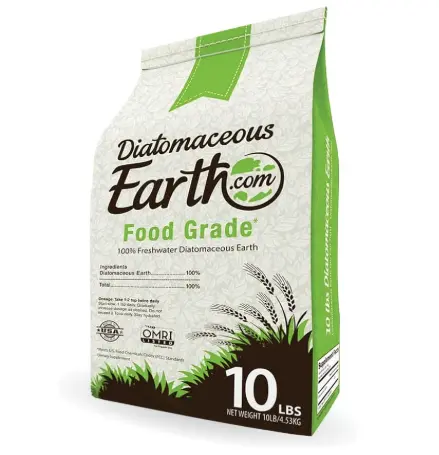
Food-Grade Diatomaceous Earth Powder
A pure, food-grade formula suitable for sprinkling on carpets, bedding, and pet-frequented areas as part of an environmental flea control routine. Not intended for direct heavy application to a dog’s skin.
View on Amazon →Homes with respiratory-sensitive pets or people, since airborne dust can irritate lungs. Not a substitute for treating an active, established flea infestation.
Non-Oil Approaches With Better Safety Profiles
The least exciting section of any natural flea and tick prevention for dogs guide is usually the most reliable one.
- Vacuum frequently, especially carpets, rugs, and upholstered furniture where flea eggs and larvae collect. Empty the canister outside immediately.
- Wash pet bedding weekly in hot water. Heat kills fleas at every life stage, with no additives required.
- Keep the yard mowed short. Ticks quest from tall grass, waiting for a host to brush past. Shorter grass means less quest habitat.
- Do daily tick checks after outdoor time, focusing on ears, armpits, groin, and between toes, the spots ticks prefer most.
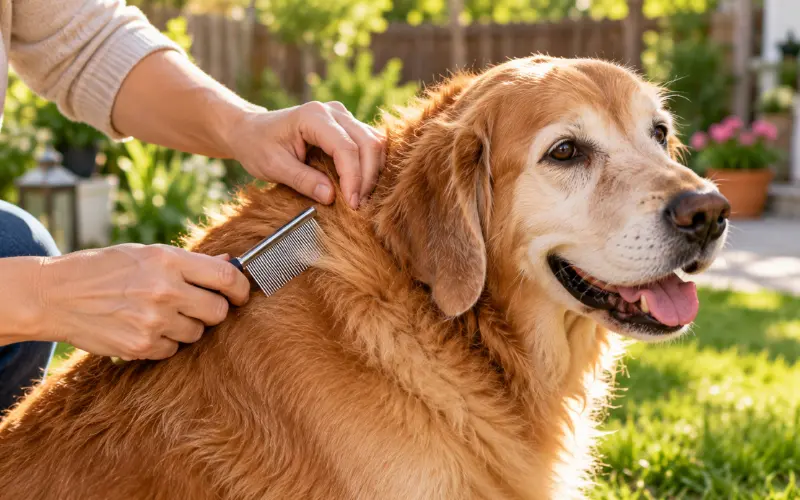
- Groom regularly with a flea comb, which physically removes adult fleas without any chemical exposure at all.
None of these carry the toxicity questions that essential oils do. They’re slower and less dramatic than a spray bottle, but the safety margin is enormous by comparison.
For dogs prone to skin sensitivity on top of parasite exposure, regular grooming does double duty. Our guide on how to groom a dog at home step by step covers the brushing and bathing routine that makes flea combing easier to keep up with.
Yard and Home Environment Matter More Than Most Owners Realize
Ticks don’t fall from trees. They wait on tall grass, brush, and leaf litter, then transfer to a host that brushes past. That means yard management is genuinely part of natural flea and tick prevention for dogs, not a side note.
Beyond mowing, a few habits reduce exposure meaningfully:
- Clear leaf litter and brush piles where ticks and their rodent hosts hide.
- Create a barrier of wood chips or gravel between lawn and wooded edges.
- Keep woodpiles and debris away from areas your dog frequents.
- Discourage wildlife visits, since deer and rodents carry ticks into yards.
Indoors, the same 95%-off-the-pet math from the diatomaceous earth section applies to prevention, not just treatment. A home that’s regularly vacuumed and has bedding washed weekly gives fleas far fewer places to complete their life cycle in the first place.
Before trying any natural flea and tick prevention for dogs product, even a diluted one, run it by your vet first. A five-minute question during a routine visit can save you from finding out about a sensitivity the hard way, like I did.
Understanding What You’re Actually Protecting Against
It’s worth pausing on why any of this matters beyond an itchy dog. Fleas cause more than scratching. They can trigger flea allergy dermatitis, transmit tapeworms, and in severe infestations, cause anemia in puppies or small dogs.
Ticks carry a longer list of concerns: Lyme disease, ehrlichiosis, anaplasmosis, and Rocky Mountain spotted fever among them. Not every tick bite transmits disease, and transmission risk generally rises the longer a tick stays attached. That’s part of why daily tick checks matter as much as any product you use.
This context matters for natural flea and tick prevention for dogs specifically because the stakes shape how much risk is reasonable to take on the prevention side. A mild, low-risk method that’s only partially effective might be a fine trade-off in a low-tick area. In a high Lyme-disease region, leaning more heavily on veterinary-grade prevention alongside natural habits makes more sense.
For a deeper look at the health conditions parasites can trigger, our guide to common dog illnesses and symptoms to watch for covers what those secondary symptoms can look like.
Diet and Natural Supplements – Do Garlic and ACV Work?
Garlic and apple cider vinegar show up constantly in natural flea and tick prevention for dogs advice, usually with the claim that they make a dog’s blood or skin less appealing to parasites.
The honest answer: the evidence for this is thin. It’s a long-standing folk claim, not something backed by controlled studies showing measurable flea or tick reduction. That doesn’t automatically make it dangerous, but it does mean the “it works” claim is doing more work than the research supports.
In large or frequent amounts, garlic can damage a dog’s red blood cells and contribute to anemia, which is why occasional small amounts carry more established risk than proven flea-prevention benefit.
Apple cider vinegar diluted in water or food is lower-risk than garlic, but again, the flea-repelling claim rests mostly on anecdote rather than measured outcomes.
Neither supplement is the emergency-level concern that concentrated essential oils are. But “low risk” and “proven effective” are different claims, and most natural flea and tick prevention for dogs content blurs the two together.
If you’re weighing dietary changes for your dog generally, our complete dog nutrition guide for beginners covers what’s actually beneficial to add, and what’s better left out.
When Natural Isn’t Enough
Natural flea and tick prevention for dogs works best for prevention and light maintenance, not for solving an active, established infestation or protecting against tick-borne disease in high-risk areas.
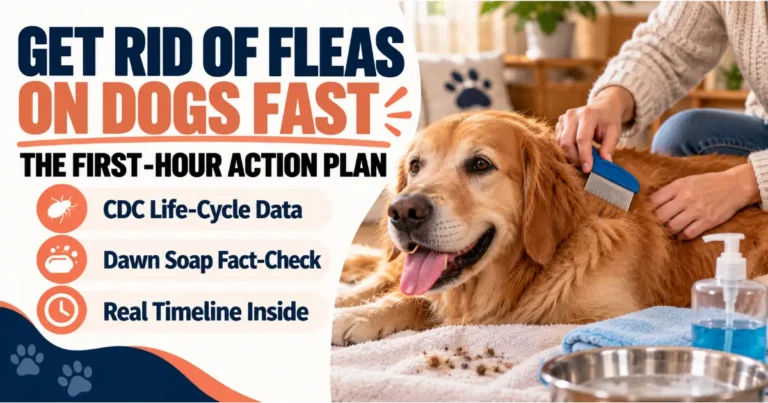
If you’re finding multiple fleas on your dog, seeing flea dirt in their coat, or living in a region with high Lyme disease or other tick-borne illness rates, this is the point to involve your veterinarian rather than relying solely on natural methods. If fleas have already taken hold, our guide on how to get rid of fleas on dogs fast covers the first-hour steps that matter most.
Signs it’s time to talk to your vet about additional options:
- Visible fleas or flea dirt despite consistent natural methods.
- A tick that’s been attached for more than a few hours.
- Any skin irritation, hot spots, or hair loss developing.
- Living in or traveling through a high tick-density region.
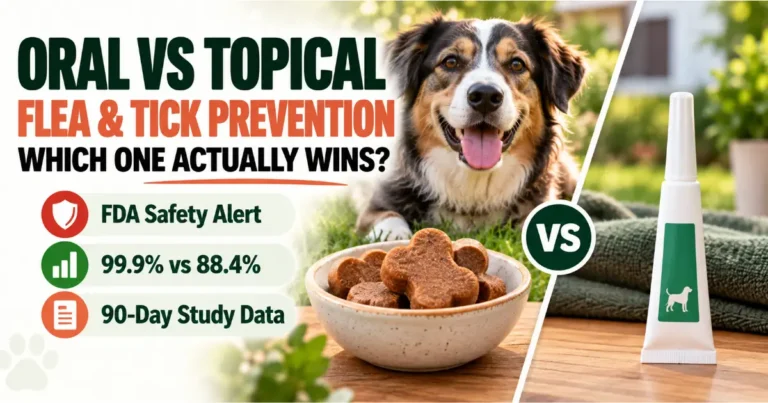
Veterinary flea and tick preventatives go through rigorous safety and efficacy testing that most natural products simply haven’t. That’s not a knock against wanting a gentler option. It’s a reason to have the conversation with your vet about what “gentler” can safely mean for your specific dog, whether that means comparing oral and topical options or looking at a slow-release flea and tick collar instead.
Keep a simple log of what you’ve tried and when, especially if you’re testing natural flea and tick prevention for dogs methods one at a time. If a reaction shows up days later, that record makes it much easier for your vet to pinpoint the cause.
I’m a dog owner sharing personal experience and research, not a veterinarian. This guide draws on published sources including PetMD, the ASPCA, and the AKC, but it doesn’t replace professional veterinary care. Always consult your vet before trying any new flea or tick prevention method, natural or otherwise.
Frequently Asked Questions (FAQ)
Is clove oil safe for dogs?
No, clove oil carries meaningful risk for dogs even at diluted concentrations. Research found nearly 30% of dogs showed allergic reactions to a 16% clove oil solution within 15 minutes, and the active compound eugenol has been linked to liver damage in animal studies.
Are essential oils safe for natural flea and tick prevention for dogs?
Most veterinarians discourage using essential oils for flea and tick prevention in dogs. PetMD explicitly advises against it, citing inconsistent concentrations between products and documented toxicity in oils like clove, tea tree, and pennyroyal.
Does diatomaceous earth actually kill fleas?
Yes, food-grade diatomaceous earth can kill adult fleas on contact by damaging their exoskeleton, typically within a few hours. It’s less effective against flea eggs and shouldn’t be relied on as a complete flea control solution on its own.
What natural flea and tick prevention for dogs methods have the best safety record?
Non-chemical approaches like frequent vacuuming, washing bedding in hot water, mowing the yard short, and daily tick checks carry the lowest documented risk while still meaningfully reducing flea and tick exposure.
Do garlic and apple cider vinegar prevent fleas and ticks on dogs?
The evidence supporting garlic or apple cider vinegar as flea and tick repellents is largely anecdotal rather than clinically proven. Garlic also carries its own risk in large amounts, since it can damage a dog’s red blood cells.
How much of a flea infestation actually lives on my dog?
According to veterinary sources cited by the AKC, only about 5% of a flea population typically lives on the pet at any time. The remaining 95% exists as eggs, larvae, and pupae in the home environment, which is why treating only the dog rarely solves an infestation.
Can I use essential oils around my dog if I don’t apply them directly?
Diffuser use in a well-ventilated space your dog can freely leave is a lower-risk scenario than direct application, according to the ASPCA, but it isn’t risk-free. Dogs with any respiratory sensitivity, and households with cats, should avoid diffused essential oils altogether.
Choosing Natural Flea and Tick Prevention Wisely
My dog is fine now, and these days I stick to a flea comb, a clean yard, and bedding washed on the hot cycle. It’s less exciting than a spray bottle promising instant results, but I trust it, and that trust came from actually reading what the research says instead of just what the label says. The essential oil recipe I used that day is still floating around the internet, recommended as natural flea and tick prevention for dogs in good faith by people who never saw the toxicology data behind it.
Three things worth keeping from this guide.
Natural doesn’t automatically mean safe, and clove oil is proof of that: real efficacy data sitting right next to a real allergic-reaction rate. Diatomaceous earth is a reasonable, low-risk piece of a bigger plan, not a stand-alone solution. And the least flashy methods, vacuuming, washing bedding, mowing the lawn, carry the safety record that flashier remedies usually can’t match.
For more on keeping your dog’s overall health on track alongside parasite prevention, check out our complete guide to keeping your dog healthy and happy.


Pingback: Best Flea and Tick Collars for Dogs Compared (2026)
Pingback: How to Get Rid of Fleas on Dogs Fast (2026 Guide) - PawWellCare
Pingback: Oral vs Topical Flea and Tick Prevention for Dogs: 99.9% vs 88.4% Effective