


I put a collar on my dog three years ago and immediately spent the next two hours reading everything I could find about it. Not because anything went wrong. Because a friend mentioned offhand that she’d heard “something about lawsuits” with one of the popular brands, and that’s not something you want to hear after the collar is already clipped on and your dog is walking around the house with it.
That’s the thing about researching the best flea and tick collars for dogs. Half the information online is either a product page dressed up as a review, or a scary headline with no actual data behind it. Neither one tells you what you actually need to know, and neither one is written by someone who actually read the underlying safety review.
This guide does something different. It walks through what the collars actually contain, what the real EPA safety data says (not the headline version), and how to pick the best flea and tick collars for dogs for your specific dog and household. By the time you finish reading, you should be able to make a genuinely informed choice instead of reacting to whatever you last heard secondhand from a friend or a forum post.
Seresto remains one of the most studied flea and tick collars for dogs, with a 2022 EPA-reviewed adverse event rate of approximately 0.116%, about 1 in every 1,000 collars distributed. Plant-based collars offer a milder alternative for sensitive dogs but generally provide shorter protection windows.
The best flea and tick collars for dogs depend on your dog’s sensitivity level, your household’s other pets, and how much protection duration you need.
Choosing among the best flea and tick collars for dogs means weighing real safety data against your specific dog’s needs, not just picking whichever brand shows up first in a search.
What Makes a Flea and Tick Collar Different From Other Formats
A collar works differently from a monthly chewable or a topical spot-on, and that difference is worth understanding before comparing the best flea and tick collars for dogs against each other.
Most flea and tick collars release a low, steady dose of active ingredient that spreads across a dog’s skin and coat over several months, rather than delivering one larger dose that fades over four weeks. That slow-release design is exactly why some collars among the best flea and tick collars for dogs can offer up to 8 months of protection, far longer than a typical monthly topical or oral chewable.
The trade-off is monitoring. A monthly product gives you a natural monthly checkpoint to notice if something feels off. A collar, once it’s on, tends to stay on and mostly out of mind for months at a stretch, which makes the fit-check and skin-check habits covered later in this guide more important than they might seem at first.
This is also why researching the best flea and tick collars for dogs matters more upfront than it does for a product you’ll reapply and reassess every 30 days anyway.
Flea and tick collars typically provide continuous protection for 4 to 8 months by slowly releasing active ingredients through a dog’s skin and coat, compared to the roughly 30-day cycle of most monthly topical or oral treatments.
Because a collar stays on continuously for months rather than being reapplied monthly, checking the fit and your dog’s skin condition periodically matters more with collars than with any other flea and tick prevention format.
Slow-release collars distribute active ingredient through natural skin oils across the entire coat, which is why proper fit and full contact with the skin matters more for collars than it does for a topical applied at a single spot.
How Collars Actually Work, Active Ingredients Explained
Understanding what’s actually in a collar matters more than the brand name on the package when you’re trying to identify the best flea and tick collars for dogs for your specific situation.
Seresto, one of the most recognized names among the best flea and tick collars for dogs, uses two active ingredients: imidacloprid, a neonicotinoid, and flumethrin, a pyrethroid. Together, according to the American Veterinary Medical Association, they’re regulated by the EPA under the Federal Insecticide, Fungicide, and Rodenticide Act, the same framework that governs most topical pet pesticide products.
That’s a meaningfully different regulatory pathway than an oral prescription chewable, which typically goes through the FDA’s drug-approval process instead. Neither path is inherently safer, but it explains why you’ll see an EPA registration number on a collar’s packaging rather than an FDA approval number, and why comparing the best flea and tick collars for dogs sometimes means comparing across two different regulatory systems entirely.
- Neonicotinoids, like imidacloprid: Target an insect’s nervous system receptors that mammals don’t share in the same way, which is part of why the ingredient can kill fleas while remaining low-risk for dogs at labeled doses.
- Pyrethroids, like flumethrin: Work similarly against ticks and are common across many pet pest-control products, though they’re notably more dangerous to cats than to dogs.
- Plant-based collars: Typically rely on essential oils like citronella, lemongrass, or peppermint instead of synthetic pesticides, trading some effectiveness duration for a gentler ingredient profile, a common trade-off across the best flea and tick collars for dogs in that category.
- Organophosphates, like tetrachlorvinphos: Found in budget-tier collars including Hartz UltraGuard and ADAMS Plus, this older chemical class works by inhibiting an enzyme called cholinesterase. It carries a California Prop 65 cancer warning on the label and stricter first-aid instructions than neonicotinoid or pyrethroid collars, which is worth knowing before choosing the lowest-priced option on the shelf.
Knowing which category a collar falls into tells you more about what to expect than any marketing claim on the box, and it’s the single most useful filter for narrowing down the best flea and tick collars for dogs before you even look at price.
The Seresto Safety Question, What EPA Data Actually Shows
This is the part most comparison articles about the best flea and tick collars for dogs skip entirely, and it’s worth walking through carefully rather than in a single scary sentence.
In 2021, a joint investigation by USA Today and the Midwest Center for Investigative Reporting reported that the EPA had received more than 75,000 incident reports tied to Seresto collars since 2012, including roughly 1,700 pet deaths. That reporting triggered a congressional inquiry, class action lawsuits, and a multi-year EPA review.
Here’s what that review actually found, according to the AVMA’s 2023 coverage of the completed EPA analysis:
- The EPA analyzed 1,400 deaths reported between 2016 and 2020, representing 2% of all Seresto incidents in that period.
- The only deaths the EPA found “probably” or “definitely” linked to the collar involved mechanical strangulation or trauma from a failed release mechanism, not the chemical ingredients themselves.
- For nearly all other reported deaths, the EPA could not establish a probable link to the collar, often because of confounding factors like existing medical conditions.
- The 2022 adverse event rate across more than 41 million collars sold worked out to approximately 0.116%, or about 1 reported adverse event per 1,000 collars.
The EPA didn’t clear the collar without requiring changes. Elanco, the manufacturer, now has to add clearer label warnings, improve incident reporting, review the collar’s release mechanism to reduce strangulation risk, and reapply for registration within five years rather than indefinitely.
This kind of ongoing regulatory scrutiny is worth knowing about for any product that stays on your dog continuously, the same reason daily awareness matters for common dog illnesses and symptoms to watch for beyond just parasite prevention.
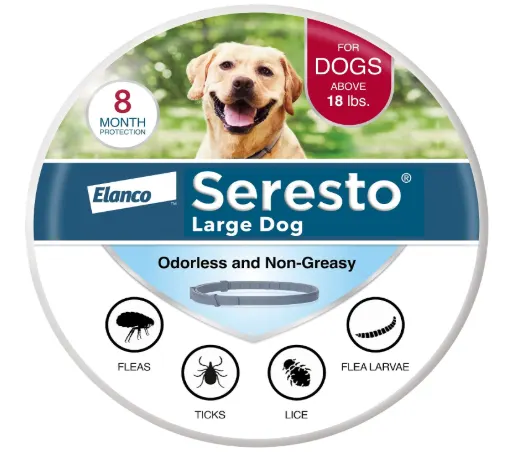
Seresto Flea & Tick Collar
The most studied option among the best flea and tick collars for dogs on the market today, with 8 months of protection and a documented 0.116% adverse event rate based on 2022 EPA data. A reasonable fit for dogs without known chemical sensitivities who need long-duration coverage without monthly reapplication.
Check Current Price on Amazon →⚠️ Not for:
Dogs with a history of skin sensitivity to pesticide products, or households wanting to avoid synthetic neonicotinoids and pyrethroids entirely. Also not a fit for households that can’t commit to the fit-checking and monitoring habits covered later in this guide.
For owners who want the same active-ingredient class as Seresto without the higher price tag, PetArmor Extend is worth knowing about. It uses the identical pairing of imidacloprid and flumethrin, delivers up to 8 months of protection, and typically costs less than Seresto, though it’s a newer entrant without Seresto’s decade-plus of real-world adverse-event data behind it.
PetArmor Extend Flea & Tick Collar
Same active ingredients (imidacloprid + flumethrin) as Seresto, 8 months of protection, typically at a lower price point. A reasonable pick for owners comfortable with the ingredient class who want to spend less without switching chemistry.
Check Current Price on Amazon →⚠️ Not for:
Owners specifically wanting Seresto’s own adverse-event track record, since PetArmor Extend hasn’t been on the market long enough to build the same volume of real-world safety data.
A veterinary toxicologist’s take adds useful context here. Dr. Renee Schmid of the Pet Poison Helpline, cited in earlier AVMA reporting, reviewed hundreds of Seresto-related calls to the hotline and found the vast majority involved dogs that had chewed or ingested a collar rather than a reaction from normal wear. Of those, most developed only mild symptoms like vomiting.
“Both of these products really have a nice safety margin,” she said of imidacloprid and flumethrin.
None of this means adverse reactions never happen. It means the data doesn’t support the collar being dramatically more dangerous than other EPA-registered pet pesticide products among the best flea and tick collars for dogs, based on the agency’s own comparative analysis.
If you buy a Seresto collar, buy it from an authorized retailer, not a third-party marketplace listing with an unusually low price. Elanco has specifically flagged counterfeit collars as a contributor to some adverse event reports, and a counterfeit collar hasn’t gone through any of the safety review discussed above.
Natural and Plant-Based Collars, Where They Fit
Not every dog needs, or should have, a synthetic-pesticide collar, and this is where plant-based options genuinely earn a place among the best flea and tick collars for dogs for the right situation.
Collars built around essential oils like citronella, lemongrass, or peppermint generally offer a gentler profile for dogs with sensitive skin, mild flea exposure, or owners who specifically want to avoid neonicotinoids and pyrethroids. The honest trade-off is duration and strength, and it’s worth being upfront about that rather than pretending natural options match synthetic ones feature for feature.
- Protection windows tend to run shorter, often 4 months compared to Seresto’s 8-month claim.
- Effectiveness against an active, established infestation is generally lower than synthetic options.
- They’re a better fit for prevention and mild exposure than for solving a heavy existing flea problem.
- Skin sensitivity tends to be lower for dogs prone to reactions from stronger synthetic ingredients.
None of that makes natural collars a poor choice among the best flea and tick collars for dogs overall. It makes them the right choice for a specific situation: mild risk, sensitive skin, or a strong preference for avoiding synthetic pesticides, rather than a direct swap-in replacement for every use case a synthetic collar covers. Owners weighing this trade-off often find it useful to think in terms of risk level first, then match the collar type to that risk rather than starting from brand preference.
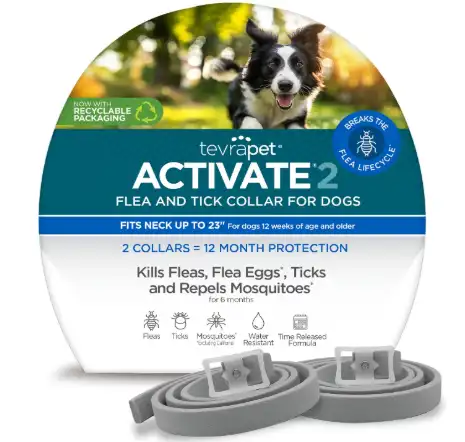
TevraPet Vetality Naturals Flea & Tick Collar
A plant-based option among the best flea and tick collars for dogs using essential oils rather than synthetic pesticides, offering roughly 4 months of protection. A reasonable fit for dogs with sensitive skin, mild exposure risk, or owners who specifically want to avoid neonicotinoids and pyrethroids.
Check Current Price on Amazon →⚠️ NOT FOR: Dogs facing an active, established flea or tick infestation, or households in high tick-density regions needing maximum protection duration. Better suited to prevention than to solving an existing problem.
Wondercide is another plant-based option worth knowing, built around cedarwood and peppermint oil rather than TevraPet’s blend. It’s explicitly clove-free, a detail worth appreciating given how often clove oil shows up in DIY natural remedies with real documented risk. It’s a repellent rather than a kill-on-contact product, offers about 4 months of coverage, and repels mosquitoes for roughly 1 month as a secondary benefit.
Wondercide Flea & Tick Collar
Cedarwood and peppermint oil, clove-free, repels (rather than kills) fleas and ticks for about 4 months, plus mosquitoes for about 1 month. A reasonable fit for owners specifically avoiding synthetic pesticides who understand this is a repellent, not a kill-on-contact product.
Check Current Price on Amazon →⚠️ NOT FOR: Dogs already carrying fleas or ticks, since a repellent doesn’t kill an existing infestation, and for high tick-density regions where a longer-duration synthetic option gives more consistent coverage.
Collar Fit and Sizing, Getting This Right Matters
A collar that doesn’t fit properly doesn’t just look uncomfortable. It can fail to distribute active ingredient correctly or create a genuine safety hazard, which matters just as much as picking the best flea and tick collars for dogs by ingredient alone.
- Measure your dog’s actual neck size before ordering, rather than guessing from their general size category.
- Leave room for two fingers between the collar and your dog’s neck once fastened, snug enough to stay in place without restricting movement.
- Trim excess length according to the manufacturer’s instructions, since a long dangling end is a snagging and chewing risk.
- Recheck fit within the first week, especially on puppies or dogs still growing into their adult size.
- Watch for a properly functioning breakaway or release mechanism, which matters more than most owners realize given the strangulation-risk findings covered above.
A collar sized for “medium dogs” as a broad category is a starting point, not a guarantee. Actual neck measurement beats size-category guessing every time, and it’s a five-minute step that prevents most of the fit-related complaints that show up in reviews of the best flea and tick collars for dogs.
This range is exactly why duration alone shouldn’t decide which of the best flea and tick collars for dogs you choose, without also weighing ingredient type and your dog’s sensitivity.
Cost Per Month, Why the Cheapest Collar Isn’t Always the Best Deal
Price tags on the best flea and tick collars for dogs are misleading if you only look at the upfront number rather than the cost per month of actual protection.
- A $60 collar lasting 8 months works out to roughly $7.50 per month of protection, one of the better values among the best flea and tick collars for dogs at that price point.
- A $20 natural collar lasting 4 months works out to roughly $5 per month, genuinely cheaper per month despite the lower sticker price gap looking smaller than it is.
- A $10 budget collar lasting 6 weeks works out to nearly $27 per month if you keep replacing it to maintain year-round coverage.
Doing this math before buying often changes which option actually makes financial sense, especially for owners managing multiple dogs or a tight pet-care budget. Among the best flea and tick collars for dogs on a per-month basis, the lowest price tag on the shelf isn’t always the winner, and running the numbers yourself takes less time than reading a single product review.
Multi-Pet Household Safety
If your home includes both dogs and cats, choosing among the best flea and tick collars for dogs gets a layer more complicated, and this is a detail that’s easy to miss when comparing products by price alone.
Some dog-specific flea and tick products, collars included, contain ingredients that are safe for dogs but genuinely dangerous for cats. Permethrin is the most well-known example, and while Seresto’s flumethrin is a different pyrethroid compound, the general caution around pyrethroid exposure in cats still applies to close contact between a freshly collared dog and a cat in the household.
- Keep cats from grooming a dog’s neck area where the collar sits, especially in the first few days after application.
- Never repurpose a dog collar for a cat, even in an emergency, regardless of how similar the packaging looks.
- Watch cats in the household for drooling, tremors, or unusual behavior if they’ve had close contact with a newly collared dog, and contact a vet immediately if anything seems off.
- Ask your vet directly about multi-pet safety before choosing a collar if your household includes both species.
This caution isn’t unique to collars. Understanding a dog’s routine care already means factoring in the rest of the household, and grooming habits that bring pets into close contact are exactly where this becomes relevant. Our guide on how to groom a dog at home step by step covers handling routines that naturally reduce this kind of cross-contact.
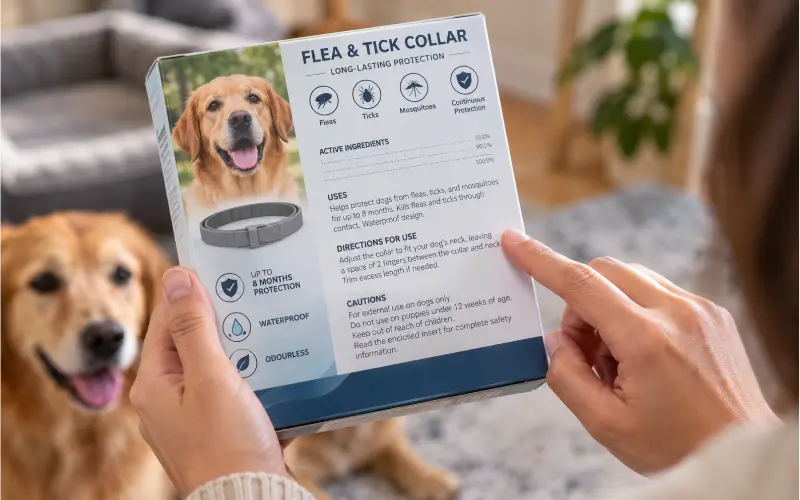
Apply a new collar right before a period when you can supervise pet interactions for a few hours, rather than right before bed when everyone’s unsupervised overnight. Most sensitivity reactions, if they happen, show up early.
If you notice excessive scratching at the collar site, hair loss, redness, or any neurological symptoms like unsteadiness, remove the collar immediately and contact your veterinarian, then report the incident through the EPA’s incident reporting system.
I’m a dog owner sharing personal research and experience, not a veterinarian. This guide draws on published data from the EPA and AVMA, but it doesn’t replace professional veterinary guidance. Always consult your vet before choosing a flea and tick product for your specific dog, especially in a multi-pet household.
Frequently Asked Questions (FAQ)
Is Seresto still safe to use in 2026?
Among the best flea and tick collars for dogs, Seresto remains one of the most studied. Based on the EPA’s completed multi-year review, it remains registered and available, with a 2022 adverse event rate of approximately 0.116%. The EPA required additional label warnings and a five-year registration renewal cycle rather than pulling the product from the market, and continues monitoring incident data going forward.
What are the most common side effects of flea and tick collars?
The most commonly reported adverse effects include itching and skin irritation at the collar site for dogs, and hair changes near the application area for cats. Less common but more serious symptoms include neurological signs like tremors or unsteadiness, which should prompt immediate collar removal and a vet call.
How long do flea and tick collars actually last?
Synthetic collars like Seresto can provide up to 8 months of protection, while plant-based natural collars typically last around 4 months. Budget or lower-concentration collars may need replacement every 1 to 3 months, which changes the actual cost comparison significantly.
Are natural flea and tick collars as effective as synthetic ones?
Natural, plant-based collars generally offer milder, shorter-duration protection compared to synthetic options and are usually better suited to prevention or mild exposure rather than solving an active, established infestation.
Can I use a dog flea collar on my cat in an emergency?
No. Dog-specific flea and tick collars can contain ingredient concentrations that are unsafe for cats, even when the packaging looks similar. Always use a product labeled specifically for your pet’s species, and consult your vet if you’re unsure.
How do I know if a flea and tick collar fits my dog correctly?
Measure your dog’s actual neck size rather than relying on a general size category, and leave room for two fingers between the collar and your dog’s neck once fastened. Recheck the fit within the first week, especially for growing puppies who may outgrow an initial fit quickly.
What should I do if my dog has a reaction to a flea and tick collar?
Remove the collar immediately if you notice excessive scratching, hair loss, redness, or neurological symptoms like unsteadiness. Contact your veterinarian right away, and consider reporting the incident through the EPA’s pesticide incident reporting system.
Which flea and tick collar is actually the cheapest option long-term?
The cheapest collar per month isn’t always the one with the lowest price tag. A longer-lasting collar with a higher upfront cost often works out cheaper per month than a budget collar that needs frequent replacement to maintain the same coverage.
Choosing the Right Collar for Your Dog
That two-hour research rabbit hole I fell into three years ago ended with the collar staying on, and it’s still what I use today. Not because I ignored the concerns, but because I actually read what the data said instead of just the headline, which is exactly the approach worth taking with any of the best flea and tick collars for dogs before you commit to one.
Three things worth carrying forward from this guide.
The EPA’s own completed review found Seresto’s adverse event rate sits around 1 in 1,000 collars, a number that deserves more airtime than the original 2021 headlines ever gave it. Fit and monitoring matter as much as which brand you choose, since a poorly fitted collar creates its own risks separate from the ingredients inside it. And multi-pet households need an extra layer of caution that single-dog homes don’t, particularly around cats and pyrethroid exposure.
For a broader look at reducing flea and tick exposure beyond just collars, our guide on natural flea and tick prevention for dogs covers non-collar approaches worth combining with whatever collar you choose. And if you’re dealing with an active infestation right now rather than just prevention, our guide on getting rid of fleas fast walks through the first-hour steps that matter most.


Pingback: Oral vs Topical Flea and Tick Prevention for Dogs: 99.9% vs 88.4% Effective
Pingback: How to Get Rid of Fleas on Dogs Fast (2026 Guide) - PawWellCare