


My first dog training clicker sat in a drawer for 3 weeks before I figured out I was using it wrong.
That’s genuinely the problem with most dog training aids advice online: it tells you what to buy without explaining what each tool actually does, or which ones are worth skipping entirely.
Walk into any pet store and you’ll find an entire aisle of gadgets promising faster results, half of them genuinely useful, the other half either useless or, in some cases, capable of causing real harm despite being marketed as standard training equipment.
Some training aids genuinely make the process faster and more humane. Others, and this matters more than most guides admit, work by causing discomfort rather than teaching, and the research on which approach actually produces better results is more settled than the marketing for those products suggests.
This guide covers the tools that actually work, organized by what problem they solve, plus an honest section on which popular “training aids” this site won’t recommend and why. No vague “essentials list.” Real research, specific picks, and the reasoning behind each one, including exactly which category of tool fits a specific behavior problem rather than a generic starter kit.
Aids to avoid include shock collars, prong collars, and choke chains.
A 2020 study published in Frontiers in Veterinary Science found reward-based training outperformed e-collar training for both recall and sit commands, even when compared against experienced e-collar trainers.
What Counts as Dog Training Aids?
A training aid is any tool that supports teaching a specific behavior, whether that’s a treat used to reward a sit or a harness used to prevent pulling. Not every aid works the same way, and that distinction genuinely matters.
Force-Free Aids vs Aversive Aids, the Distinction Most Guides Blur
- Force-free aids work by rewarding wanted behavior, clickers, treats, front-clip harnesses, puzzle feeders. The dog chooses to repeat the behavior because it was rewarding.
- Aversive aids work by making an unwanted behavior unpleasant enough to stop, shock collars, prong collars, choke chains. The dog avoids the behavior to avoid discomfort.
The American Veterinary Society of Animal Behavior, the Association of Professional Dog Trainers, and the Certification Council for Professional Dog Trainers all advocate for least-invasive, minimally-aversive training methods as standard practice.
Force-free training aids work by rewarding wanted behavior so a dog chooses to repeat it, while aversive aids like shock collars and prong collars work by making unwanted behavior unpleasant, a distinction that 3 major professional dog-training organizations cite when recommending least-invasive methods as standard practice.
Essential Walking and Outdoor Aids
These training aids matter most in the first few weeks, since walks are where most owners run into their earliest struggles.
Front-Clip Harness
A harness distributes pressure across the chest rather than the neck, a meaningfully safer setup for dogs still learning not to pull.
Two great harnesses for better walks – one premium everyday option and one more budget-friendly choice for dogs that pull.
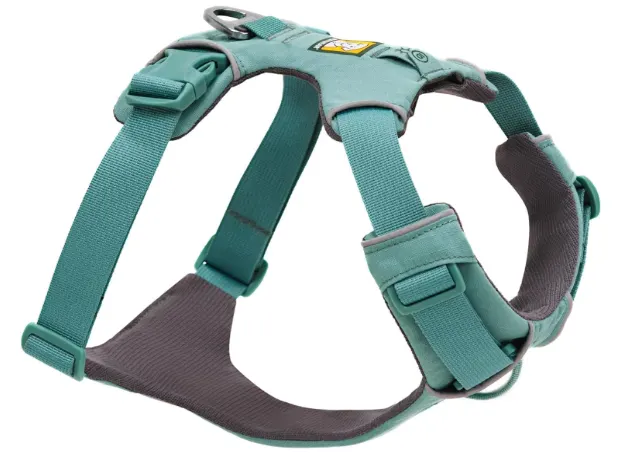
Ruffwear Front Range Harness
A padded everyday harness with front and back leash attachment points, four adjustment points, reflective trim, and an ID pocket. The front connection is designed to help redirect dogs that pull.
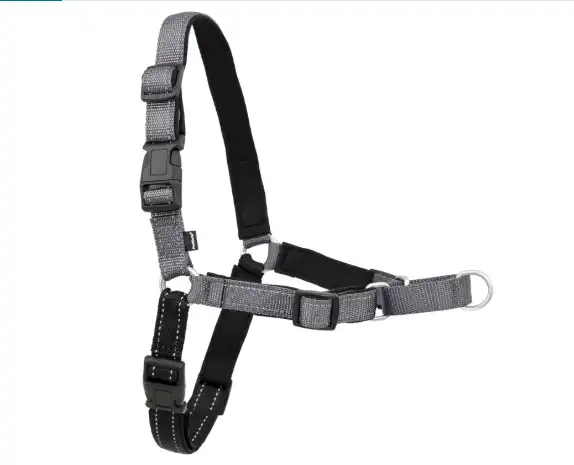
PetSafe Easy Walk Deluxe Harness
A front-chest harness designed to gently steer and redirect pulling. The Deluxe version adds neoprene straps and reflective strips for added comfort and visibility during walks.
If your dog is a moderate puller just starting leash training, the PetSafe Easy Walk can work well as a short-term option. For long-term daily wear or a strong, athletic puller, the Ruffwear Front Range’s Y-front design allows more natural shoulder movement.
Reward-Based Training Aids
The core toolkit for positive-reinforcement training, genuinely inexpensive and effective when used consistently.
Clicker
A clicker marks the exact moment a dog does something right, with more precise timing than a verbal “yes.”
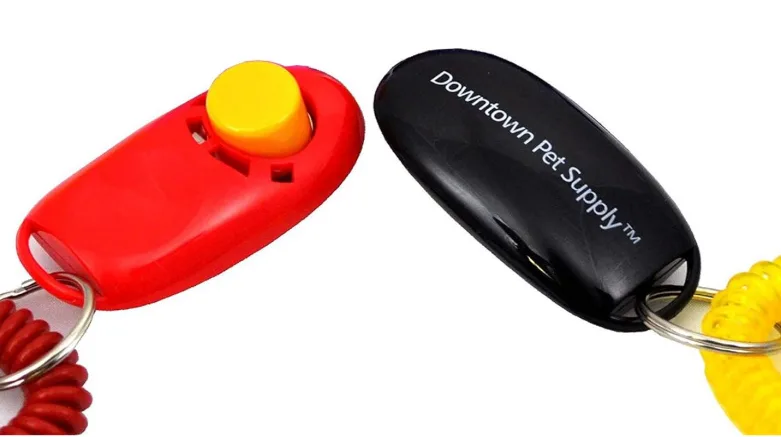
Downtown Pet Supply Training Clickers (2-Pack)
A simple, reliable clicker option for positive-reinforcement training. The two-pack is especially handy when multiple family members are training the same dog or you want to keep one clicker in different locations.
Affiliate Disclosure: PawWellCare may earn a commission if you purchase through this link, at no additional cost to you.
Treat Pouch
A treat pouch keeps rewards accessible for fast, well-timed delivery, genuinely important since reinforcement timing affects how quickly a dog connects the behavior to the reward.
Two practical options for keeping training rewards organized and within easy reach.
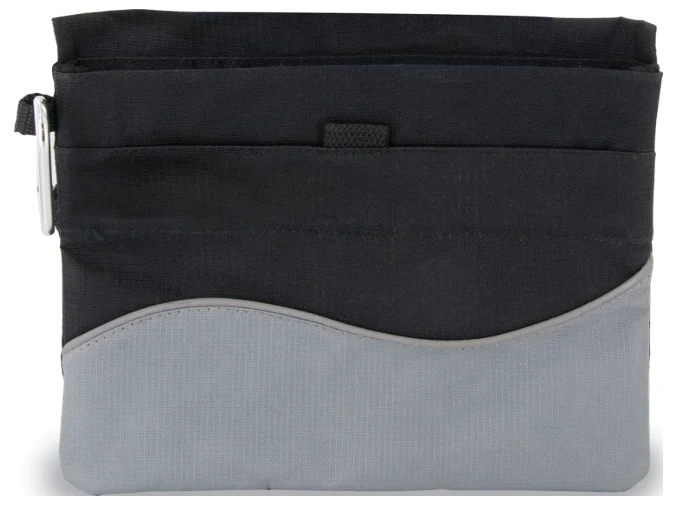
PetSafe Treat Pouch Sport
A practical training pouch with dual compartments, making it easier to separate high-value rewards from everyday treats during training sessions and walks.
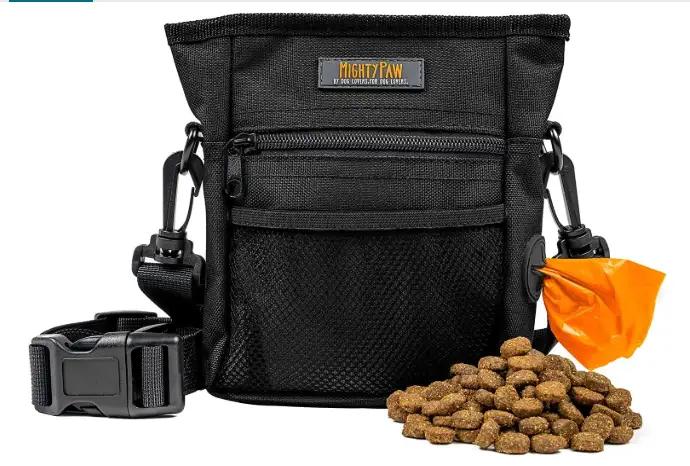
Mighty Paw Training Treat Pouch
A hands-free training pouch with a magnetic closure designed for quick reward access while walking, practicing obedience, or working on new behaviors.
Affiliate Disclosure: PawWellCare may earn a commission if you purchase through these links, at no additional cost to you.
Dog Training Aids by Problem, What to Use and When
Most guides list aids category by category without connecting them to the actual problem you’re trying to solve. This table does that directly.
| Problem | Recommended Aid | Why |
|---|---|---|
| Pulling on leash | Front-clip harness | Redirects momentum without neck strain |
| Not coming when called | Long line + high-value treats | Safe distance practice with guaranteed success |
| Jumping on guests | Clicker + treat pouch | Marks and rewards 4-on-the-floor instantly |
| Destructive chewing | Puzzle feeder or appropriate chew | Redirects the behavior, doesn’t just stop it |
| Excessive barking | Mental-stimulation toys | Often addresses boredom-driven root cause |
| Potty training accidents | Properly sized crate | Dogs generally avoid soiling their sleeping space |
Matching a dog training aid to the specific problem works better than a generic toolkit approach, for example, a front-clip harness for leash pulling, a long line for recall issues, and a puzzle feeder for destructive chewing driven by boredom rather than anxiety.
Recall and Long-Line Aids
Recall training genuinely benefits from a specific tool most new owners don’t know to buy.
A long line, typically 15 to 30 feet, lets a dog practice coming when called at real distance while staying physically safe. This bridges the gap between a 6-foot leash and true off-leash reliability.
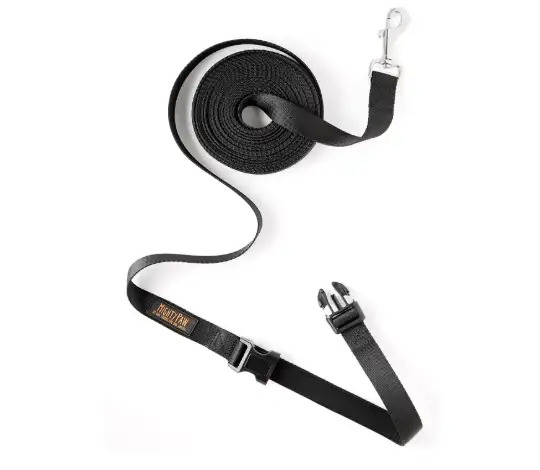
Mighty Paw Long Leash (30 Feet)
A long training leash designed to give your dog more freedom while keeping you connected during recall practice and controlled off-leash training. It features a padded handle and durable nylon construction.
Affiliate Disclosure: PawWellCare may earn a commission if you purchase through this link, at no additional cost to you.
For our step-by-step recall method using this exact tool, read our dog recall training step by step guide.
Indoor and Management Aids
Management aids don’t teach a behavior directly, but they prevent unwanted behavior from being rehearsed while training progresses.
Crate
A properly sized crate supports potty training and gives a dog a secure space of their own, when introduced correctly and never used as punishment.
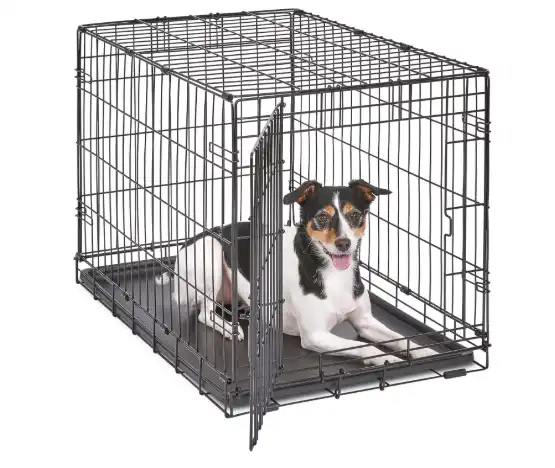
MidWest 30″ Single Door iCrate
A popular starter crate for puppies, with a divider panel that lets you adjust the usable space as your puppy grows. The listing has 111,000+ reviews, making it a widely considered option for new dog owners.
Affiliate Disclosure: PawWellCare may earn a commission if you purchase through this link, at no additional cost to you.
For the complete crate training method, read our guide on how to crate train a dog that hates the crate.
NOTE: Size matters more than most owners expect. A crate should be just large enough for a dog to stand, turn around, and lie down comfortably, not larger. Too much space can encourage using one corner as a bathroom.
Mental-Stimulation Aids
Mental exercise genuinely tires a dog as effectively as physical exercise, and boredom-driven behavior problems often improve once this gap is addressed.
Two practical options for chewing, enrichment, and calmer mealtimes.

KONG Classic Stuffable Dog Toy
One of the most consistently recommended options for chewing and mental stimulation. Stuff it with appropriate treats or food to turn a simple toy into a longer-lasting enrichment activity.

Outward Hound Fun Feeder Slo Bowl
A practical choice for dogs that eat too quickly. The maze-style design slows the pace of eating while adding a little mental engagement to everyday mealtimes.
For a structured program built specifically around mental stimulation as a training tool, read our Brain Training for Dogs review.
Dog Training Aids to Avoid, and Why
This is the section most competing guides either skip or bury in a single line. It deserves more than that.
- Shock collars (e-collars) deliver an electric stimulus to discourage behavior. A 2020 study published in Frontiers in Veterinary Science found that reward-based training outperformed e-collar training on both recall and general obedience, even when the e-collar group was trained by experienced professionals who normally use the tool.
A 2020 study published in Frontiers in Veterinary Science found that reward-based training outperformed electronic collar training on recall and general obedience commands, even when e-collar training was conducted by professional trainers experienced with the tool, refuting the claim that e-collars are more efficient.
- Prong collars apply pinching pressure via metal prongs against a dog’s neck when the dog pulls. This is considered positive punishment in behavioral terms and can cause real physical discomfort or injury with repeated use.
- Choke chains tighten around the neck with leash pressure and carry a genuine risk of tracheal injury, especially with strong pullers or sudden corrections.
The ASPCA’s official position statement on training methods states that humane training relies primarily on lures and rewards, not tools that inflict unnecessary distress.
PRO TIP: If a dog isn’t responding to positive reinforcement methods for a specific behavior problem, that’s a signal to consult a certified professional trainer or applied animal behaviorist, not a signal to escalate to an aversive tool.
Persistent issues often have an underlying cause that punishment alone doesn’t address.
DISCLAIMER: This section reflects positions from major veterinary behavior organizations and published research, not personal testing of these tools. For dogs with serious behavior problems, consult a certified professional trainer or veterinary behaviorist before choosing any training approach.
Training Aids by Age and Stage
Not every aid suits every life stage, a detail most guides skip entirely.
Puppy-Specific Aids
- A properly sized crate with a divider panel, since puppies grow quickly and the crate needs to grow with them.
- Soft, small training treats appropriate for tiny mouths and developing teeth.
- A short, standard leash rather than a long line, since distance work comes after basic leash manners.
Adult and Senior Dog Aids
- Puzzle feeders become more valuable for adult dogs, since mental stimulation needs often outpace physical exercise tolerance as a dog matures.
- A long line remains useful for recall proofing throughout a dog’s life, not just during puppyhood.
- Senior dogs benefit from lower-impact mental enrichment, like slow feeders, over high-energy physical training tools.
Budget Starter Kit vs Complete Kit
Genuinely useful dog training aids don’t require spending heavily upfront. Here’s how the same categories break down at different budget levels.
| Starter Kit (Under $75) | Complete Kit | |
|---|---|---|
| Harness | PetSafe Easy Walk | Ruffwear Front Range |
| Marker | Clicker | Clicker + verbal marker |
| Rewards | Basic treat pouch | Dual-compartment pouch |
| Recall | Standard 6ft leash | 15–30ft long line |
| Enrichment | 1 puzzle toy | Rotating puzzle + slow feeder |
Starting with the budget kit and adding the long line or a second puzzle toy later is a genuinely reasonable approach for most new owners.
When Physical Aids Aren’t Enough
Dog training aids support training, but they don’t replace structured instruction for owners who want a complete, guided program.
For a full comparison of every training program reviewed on this site, including which ones fit specific goals, read our Best Online Dog Training Courses guide.
Common Mistakes When Using Training Aids
Even the right dog training aids can underperform when they’re introduced at the wrong time or in the wrong order.
- Buying a harness or crate sized for “grown into” rather than current size. A too-large fit reduces effectiveness for both.
- Using a clicker without “charging” it first. The clicker is meaningless until paired repeatedly with a treat.
- Introducing a long line before basic leash manners. Distance work works better once a dog understands loose-leash walking on a short leash.
- Treating a puzzle feeder as a one-time purchase. Rotating difficulty and toys keeps mental stimulation genuinely engaging rather than routine.
The most common mistake with training aids is mismatched timing, introducing advanced tools like a long line before a dog has mastered basic leash manners, or using a clicker before it’s been properly paired with rewards, both of which reduce the tool’s actual effectiveness.
Frequently Asked Questions (FAQ )
What are the most important dog training aids for beginners?
A front-clip harness, a clicker, and a treat pouch cover the core of positive-reinforcement training for most new owners. A long line and a puzzle feeder are worthwhile additions once basic leash manners are established.
Are shock collars considered a dog training aid?
Shock collars are marketed as training aids, but a 2020 study in Frontiers in Veterinary Science found reward-based training outperformed e-collar training even when conducted by experienced professionals. Major veterinary behavior organizations recommend avoiding them.
What’s the difference between a clicker and a verbal marker?
Both mark the exact moment a dog does something correctly. A clicker is more consistent and neutral in sound, which helps with precise timing, while a verbal marker like “yes” requires no extra equipment and works just as well once a dog is conditioned to it.
Do I need a long leash for recall training?
A long line, typically 15 to 30 feet, isn’t strictly required but makes recall training significantly safer and more effective, since it allows real-distance practice without risking your dog running off if the recall doesn’t succeed yet.
What training aids should I avoid?
Shock collars, prong collars, and choke chains are the 3 most commonly cited aids to avoid, based on positions from the ASPCA, AVSAB, and published welfare research comparing training outcomes and stress indicators.
Can puzzle toys help with behavior problems?
Yes, particularly for boredom-driven behaviors like excessive barking or destructive chewing. Puzzle feeders provide mental stimulation that can reduce these behaviors, though they aren’t a substitute for addressing anxiety-driven behavior problems.
Building a Toolkit That Actually Works, Final Thoughts
That clicker sitting in my drawer for 3 weeks taught me something worth passing on about dog training aids: the tool only works once you understand what it’s actually doing, not just what it’s called.
Three things to take with you.
- Match the aid to the problem, not the trend. A long line solves a different issue than a puzzle feeder, and buying both without a clear reason wastes money and shelf space.
- Force-free aids have the stronger research behind them. The distinction between reward-based and aversive tools isn’t just philosophical, it shows up in measurable training outcomes.
- A tool is a starting point, not a finish line. The best harness or clicker still needs consistent, correct use to actually change behavior.
For the foundational method every aid in this guide supports, read our positive reinforcement dog training for beginners guide.




Pingback: Positive Reinforcement Dog Training for Beginners — Complete Guide
Pingback: 25 Funniest Halloween Costumes for Dogs (2026 Picks)