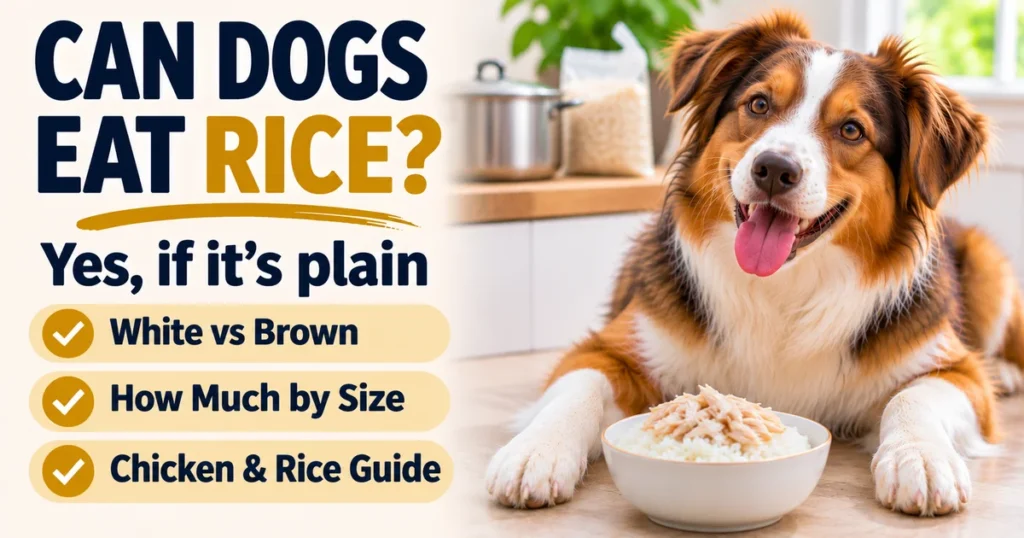
Your dog had a rough night. Maybe it was diarrhea, maybe a bit of vomiting, and now everyone from your neighbor to the internet is saying the same thing: “Just make some chicken and rice.” Or maybe it’s simpler than that, and your dog is staring at your takeout container like it holds the secret to happiness.
So, can dogs eat rice? And if they can, which kind, and how much?
The advice gets confusing fast. Some sites say brown rice is healthier, while others say only white rice works. Some call rice a cheap filler. And then there’s the question of arsenic in rice, which nobody seems to answer clearly.
Here’s the short version. Plain, cooked rice is safe for most dogs. But rice from your own plate often has butter, salt, onion or garlic in it. And chicken and rice can help a mild upset stomach for a few days, but it isn’t a complete diet.
Here’s what you’ll find below:
- Which rice is best, and how much to give for your dog’s size
- How to make chicken and rice the right way for an upset stomach
- When rice isn’t enough, and your dog needs the vet
Yes, dogs can eat rice as long as it’s plain and fully cooked.
White rice is gentle on upset stomachs, while brown rice has about four times more fiber. Keep it to a small extra, like 1 to 2 tablespoons for a toy dog or about ⅓ cup for a large dog.
Is Rice Good for Dogs?
Yes, plain rice is a good, safe food for most dogs. In fact, dogs are built for it better than you might think. A 2013 study comparing dog and wolf DNA found that genes for digesting starch changed as dogs were domesticated, giving dogs a better ability to digest starch than wolves (Axelsson et al., 2013).
One cup of cooked white rice (158 g) has about 205 calories, 4 g of protein, less than 1 g of fiber and almost no fat or sodium, according to USDA FoodData Central.
That makes rice:
- Easy energy. It’s mostly starch, which dogs digest well once it’s cooked.
- Gentle on the stomach. It’s bland and low in fat, which is why vets often use it for short-term tummy trouble.
- A common dog food ingredient. You’ll find rice on the label of many complete dog foods.
The honest part: rice is mostly calories. A complete and balanced dog food already gives your dog everything they need, so extra rice is a filler, not a superfood. Too much of it just adds calories and pushes out the balanced food.
White Rice vs Brown Rice: Which Is Better for Dogs?
Both are safe when they’re plain and cooked. The difference is fiber, and that changes when each one is the better pick. Here’s how they compare per cup, based on USDA data:
- White rice is best for an upset stomach. It’s bland, low in fiber and very easy to digest. That’s why vets choose it for diarrhea. It helps because it’s gentle and starchy, not because of fiber, since white rice has almost none.
- Brown rice is fine for healthy dogs. It has about four times the fiber and more minerals, like magnesium. But the extra fiber makes it harder to digest when your dog’s stomach is upset, and brown rice tends to hold more arsenic, which collects in the outer bran layer.
Jasmine, Basmati, Wild and Parboiled Rice
- Jasmine and basmati: both are long-grain white rice (basmati also comes in brown), so they’re safe when cooked plain.
- Wild rice: technically the seed of a water grass. It’s higher in protein and fiber, and fine in small, plain amounts.
- Parboiled rice: safe, and it loses the most arsenic when you cook it in extra water (more on that below).
How Much Rice Can a Dog Eat?
As an extra on top of your dog’s regular food, keep it small. Use this chart as a guide for plain cooked rice:
Daily treat budget = about 10% of the daily calories for a typical neutered adult dog. Your dog’s real needs depend on age, activity and body shape. This chart is a guide, not a prescription.
Why calories set the limit. Vets advise keeping all treats and extras to no more than 10% of a dog’s daily calories (AAHA). Rice is filling but light on nutrients, so piling it on top of a full bowl adds weight and thins out the balanced diet. A spoonful as a topper a few times a week is plenty.
Not sure how many calories your dog needs in total? This guide on how much to feed your dog by weight will help. And if your vet has suggested a bland diet, that’s different: see the chicken and rice section below.
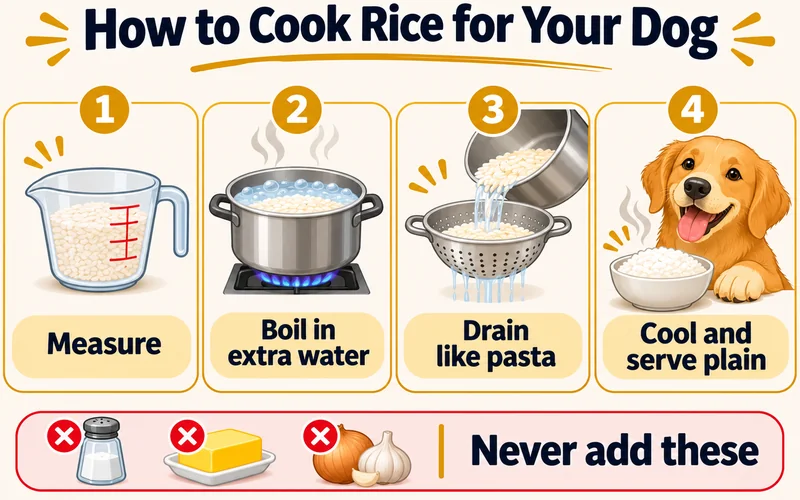
How to Cook Rice for Your Dog
Cooking rice for your dog is simple. The only rule is to keep it completely plain.
- Measure the rice. Rinsing is optional. It washes off loose starch, but it doesn’t remove much arsenic.
- Boil it in lots of extra water, like you’d cook pasta, then drain off the extra water at the end. This cuts the arsenic (see below).
- Add nothing. No salt, butter, oil, broth, onion or garlic.
- Cook it until soft, a little softer than you’d make it for yourself, then let it cool.
- Store it safely. Refrigerate within 2 hours and use within about 4 days, or freeze small portions.
Make it a better topper.
Stir a spoonful of plain rice into your dog’s regular food, mix it with a little plain cooked pumpkin, or pair it with plain scrambled egg. Our guide on whether dogs can eat eggs shows how to cook them safely.
Chicken and Rice for Dogs With an Upset Stomach
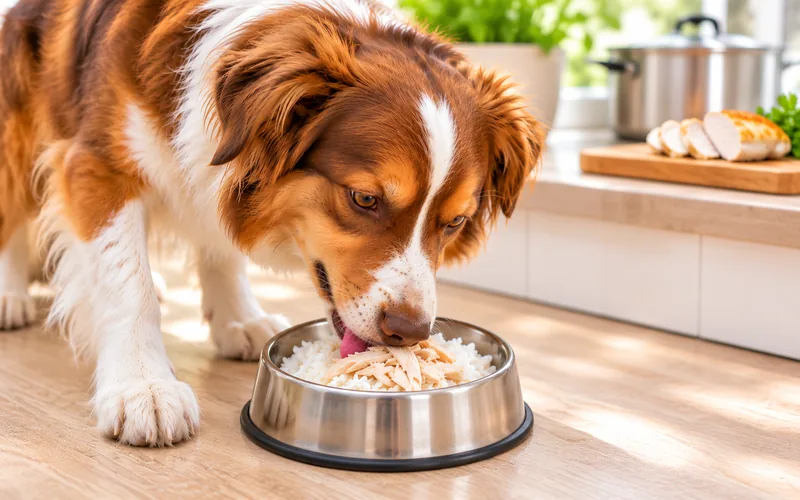
Boiled chicken and rice is the classic home fix for a dog with a mild upset stomach. It’s bland, low in fat and easy to digest. Used the right way, and with your vet’s OK, it can help for a few days.
When it can help: an otherwise bright, adult dog with mild diarrhea or one episode of vomiting.
How to make it:
- Boil boneless, skinless chicken breast in plain water until it’s cooked through, then shred it. Skin, fat and bones stay out.
- Cook plain white rice, not brown, as described above.
- Mix about 2 parts rice to 1 part chicken. This is a common starting point vets suggest, but follow your own vet’s instructions if they differ.
- Cool it to room temperature before serving.
How much to feed: roughly the same total amount as your dog’s usual meal, split into 3 or 4 small meals through the day. Smaller, more frequent meals are easier on a recovering gut, according to VCA’s veterinary nutritionists.
How long: usually 2 to 3 days. Once the stool firms up, mix the chicken and rice back into your dog’s regular food over 3 to 5 days. Our guide on switching dog food without an upset stomach walks you through it.
Chicken and rice is a short-term fix, not a diet.
Board-certified veterinary nutritionists at VCA point out that home-cooked chicken breast and white rice is missing more than 10 essential nutrients. Many vets now prefer a complete veterinary gastrointestinal diet, so ask your vet which is best for your dog.
Call Your Vet Instead If
- Your dog is a puppy, a senior or a very small dog. They can get dehydrated quickly.
- Diarrhea lasts more than 24 to 48 hours, or your dog vomits more than once.
- You see blood in the stool or vomit.
- Your dog is tired, weak or not drinking.
- The belly looks swollen, or your dog keeps trying to vomit with nothing coming up. This can be bloat, which is an emergency.
- You think your dog ate something toxic.
Is the Arsenic in Rice a Problem for Dogs?
For most dogs, no. But it’s worth knowing about. Rice soaks up more arsenic from soil and water than other grains, and brown rice holds more than white because arsenic collects in the outer bran layer.
The good news is that how you cook rice makes a real difference. FDA scientists found that cooking rice in plenty of extra water, then draining it, cut inorganic arsenic by about 40% in white rice, 50% in brown rice and 60% in parboiled rice (Gray et al., 2016). The trade-off: it also washed out about half or more of the added B vitamins and iron in enriched white rice.
There are no dog-specific arsenic limits for rice. For a dog eating a complete dog food, a few spoonfuls of rice now and then isn’t a worry. If you cook rice for your dog often, use the extra-water method and rotate in other plain carbs, like cooked pumpkin or sweet potato.
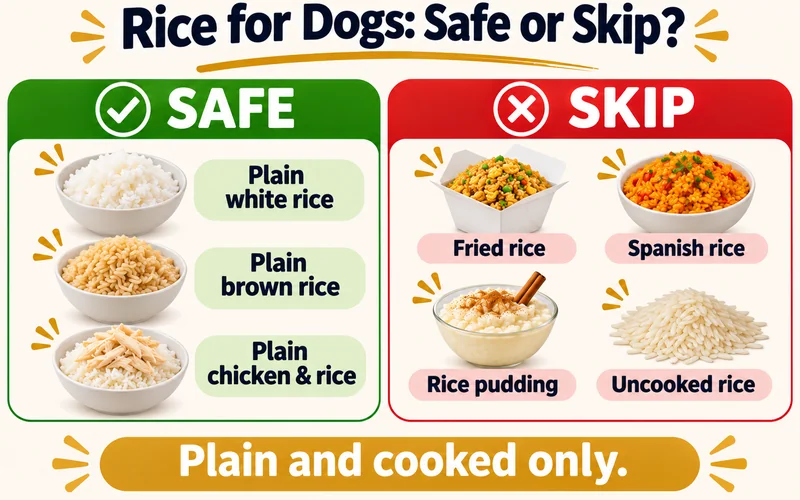
Which Rice Foods Are Safe for Dogs?
Plain rice is safe, but most rice dishes people eat are not. Here’s a quick guide:
5 Rice Mistakes Dog Owners Make
- Sharing seasoned leftovers. Takeout and family rice often have onion, garlic, salt or soy sauce. Onion and garlic can damage a dog’s red blood cells, according to the ASPCA.
- Feeding chicken and rice for weeks. It’s missing key nutrients, so it’s for a few days only.
- Using brown rice for diarrhea. The extra fiber is harder on an upset stomach. Use white.
- Giving big portions. A full cup of white rice is about 205 calories, a lot for a small dog.
- Leaving cooked rice out. Cooked rice left at room temperature can grow bacteria that cause food poisoning. Refrigerate it within 2 hours.
Can Puppies Eat Rice?
Yes, puppies can have a little plain, cooked rice once they’re weaned and eating solid puppy food. Keep it to a small spoonful, because complete puppy food should make up nearly all of their diet. All treats together should stay at or under 10% of their daily calories. See our puppy feeding schedule by age for the basics.
If your puppy has diarrhea, call your vet before trying chicken and rice at home. Puppies can get dehydrated much faster than adult dogs.
When to Skip or Limit Rice
Rice is safe for most dogs, but some dogs need more care:
- Dogs with diabetes. White rice raises blood sugar quickly. Ask your vet before giving any.
- Overweight dogs. If you add rice, cut back on other treats so total calories don’t climb.
- Dogs with a food sensitivity. Rice allergies are uncommon, but they can happen. Watch for itching, ear infections or loose stools, and see our guide to dog allergy symptoms.
- Dogs on a prescription or homemade diet. Adding rice can throw off the balance. Ask your vet first, and see our guide to homemade dog food recipes for why balance matters.
This article is for general information only and is based on independent research, not personal testing.
PawWellCare is not a veterinarian, and this content doesn’t replace professional veterinary care. If your dog has diarrhea or vomiting that lasts more than a day, blood in the stool, or any sign of weakness or bloat, contact your veterinarian right away. Ask your vet before changing the diet of a dog with diabetes or another health condition.
Frequently Asked Questions (FAQ)
Can dogs eat rice every day?
Rice is fine every day when it’s already part of a complete and balanced dog food. As an extra on top of a full meal, a few times a week is better, so it doesn’t add too many calories or crowd out the balanced food.
Is white or brown rice better for a dog with diarrhea?
White rice. It’s lower in fiber and easier to digest, which makes it gentler on an upset stomach. Save brown rice for when your dog is healthy.
How long should I feed my dog chicken and rice?
Usually 2 to 3 days, or as your vet advises. Once the stool is firm, mix it back into the regular food over 3 to 5 days. If diarrhea lasts more than 48 hours, call your vet.
Can dogs eat uncooked rice?
No. Raw rice is hard to digest and can upset your dog’s stomach. If your dog ate a little dry rice from the floor, they’ll most likely be fine, but call your vet if they ate a lot or start vomiting.
Is rice water good for dogs?
Plain, cooled water left over from boiling rice is safe in small amounts, and some owners offer it to a dog with mild diarrhea. It doesn’t replace fresh water or a vet visit, so call your vet if the diarrhea doesn’t improve within a day.
Can dogs eat rice cakes?
Plain, unsalted rice cakes are safe as a small, crunchy treat broken into pieces. Skip flavored ones, like caramel, cheese or chocolate, and anything sugar-free that might contain xylitol.
Can dogs eat eggs and rice together?
Yes. Plain scrambled egg with a little white rice is a gentle meal some vets suggest for a mild upset stomach. Cook the egg fully with no butter or salt. See our guide on whether dogs can eat eggs for amounts.
So, Can Dogs Eat Rice? The Bottom Line
Yes, dogs can eat rice, and it’s one of the safest people foods you can share. Just keep these three rules in mind:
- Plain and fully cooked. No salt, butter, onion, garlic or sauces.
- Small portions. From 1 to 2 tablespoons for a toy dog to about ½ cup for a giant dog, a few times a week.
- Chicken and rice is a short-term fix. Use it for a few days with your vet’s OK, then switch back to complete food.
Next time you cook rice, set a plain spoonful aside before you add anything. And if your dog’s stomach often gets upset, the main food may be the real issue, so our guide to the best dog food for sensitive stomachs is a good next step.