My neighbor’s dog was missing for eleven hours.
She got out through a gap in the fence nobody had noticed. By the time they realized she was gone, she could have been anywhere in a 5-mile radius.
They drove every street, posted on every Facebook group, called every shelter.
Found her at 2 AM — six blocks away, sitting under a parked car.
The next day, he bought a GPS tracker.
“I never want to feel that again,” he told me.
That conversation is what made me research every best GPS dog collar tracker on the market.
Not as an abstract product review — as a genuinely important purchase that could be the difference between finding your dog in 3 minutes or searching for 11 hours.
The GPS tracker market in 2026 has changed significantly.
2G and 3G networks are shutting down. New trackers use GPS plus GLONASS plus Galileo for better accuracy.
Subscription costs vary wildly — from $0 to $200 per year.
And the gap between a $29 AirTag and a $300 satellite tracker is not just price — it is a fundamentally different technology.
This guide compares 6 GPS dog trackers that actually work in 2026 — with honest assessments of tracking accuracy, battery life, subscription costs, and which dog each one is genuinely designed for.
For no subscription, the Apple AirTag ($29, no monthly fee) works as a budget backup in urban areas but is Bluetooth-only — not real GPS.
For large dogs, the Tractive XL offers up to 1 month battery life.
How GPS Dog Trackers Actually Work
Before comparing the best GPS dog collar tracker options, understanding three different tracking technologies prevents buying the wrong type.
Cellular GPS (Tractive, Fi)
Uses GPS satellites for location + cell towers to send data to your phone.
Unlimited range wherever cellular coverage exists.
Requires monthly subscription ($5 to $13/month) for cellular data.
Cellular GPS dog trackers determine location using GPS satellites and transmit data via cell towers — providing live real-time tracking with updates every 2 to 3 seconds and unlimited range, but requiring monthly subscriptions of $5 to $13 per month for the cellular connection.
Bluetooth (Apple AirTag, Tile)
Uses Bluetooth to communicate with nearby smartphones.
Direct range: 30 feet.
Beyond that, relies on other people’s phones passing nearby.
Works in dense urban areas.
Essentially useless in rural settings or parks for tracking a running dog.
No subscription required.
Satellite/Radio (Garmin, Aorkuler)
Communicates via satellite or radio — no cell towers needed.
Works everywhere including deep wilderness.
No subscription.
Significantly more expensive ($250 to $430).
Designed for hunting and working dogs.
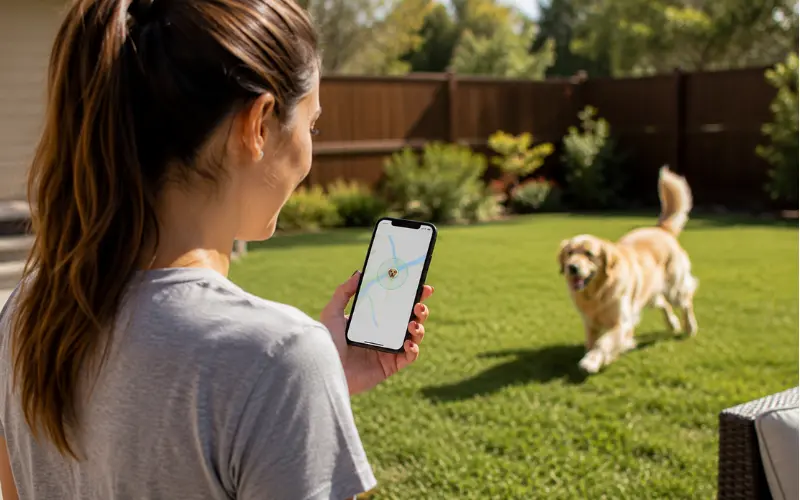
Best GPS Dog Collar Tracker — 6 Picks Compared
Every tracker reviewed includes:
- Tracking technology
- Battery life
- Subscription cost
- Best for whom
- Who should skip it
All Amazon links verified.
1. Tractive Smart Dog GPS Tracker — DOG 6
Live GPS location updates every 2–3 seconds with virtual fence alerts, health monitoring, and global multi-carrier connectivity.
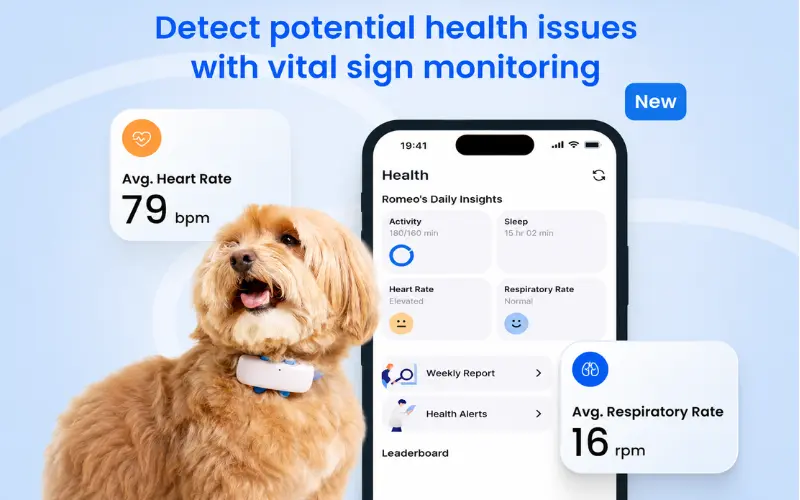
- ✓ Ultra-Fast Live GPS: Real-time tracking refreshes every 2–3 seconds.
- ✓ Virtual Fence Alerts: Instant smartphone notification if your dog leaves safe zones.
- ✓ Health & Behavior Insights: Tracks heart rate, respiration, sleep, and barking patterns.
- ✓ Global Coverage: Automatically switches carriers across 175+ countries.
- ✓ Universal Clip: Lightweight 39g device clips directly to any existing collar.
- Cellular Coverage Needed: Relies on cell towers (not ideal for deep wilderness/no signal).
- Monthly Subscription: Requires cellular plan ($5–$8/mo or ~$60–$100/yr).
- Sizing: Suitable for dogs weighing 8.8 lbs and above.
1. Tractive GPS DOG 6 — Best Overall
The most recommended GPS dog tracker by professional reviewers, Reddit communities, and veterinary staff.
Live tracking updates every 2 to 3 seconds — up to 30 times faster than competitors that update once per minute.
Virtual fence alerts notify you instantly when your dog leaves a preset safe zone.
Health monitoring tracks heart rate, respiratory rate, sleep, activity, and barking patterns.
Works in 175+ countries via multi-carrier cellular network — switches between carriers for best signal automatically.
Battery: up to 2 weeks.
Waterproof. 39 grams.
Fits dogs 8.8 lbs and above.
Clips to any existing collar.
The Tractive GPS DOG 6 provides live location updates every 2 to 3 seconds — up to 30 times faster than competing trackers — with virtual fence escape alerts, heart and respiratory rate monitoring, and multi-carrier connectivity across 175 countries, making it the most feature-complete GPS dog tracker available in 2026.
👉 Tractive Smart Dog GPS Tracker — DOG 6, White — live GPS every 2-3 seconds, virtual fences, health monitoring, bark tracking, waterproof, 39g. Works in 175+ countries. Clips to any collar.
Not ideal for: rural areas with poor cellular coverage — Tractive relies on cell towers.
Also requires monthly subscription ($5 to $8/month) which adds ongoing cost.
Battery needs charging every 1 to 2 weeks depending on usage.
Device price: ~$50
Subscription: $5 to $8/month or ~$60 to $100/year
2. Tractive GPS DOG 6 XL — Best for Large Dogs
Same features as the DOG 6 but with a larger battery designed for dogs 50 lbs and above.
Up to 1 month battery life — significantly less charging than the standard version.
Same live tracking, virtual fences, and health monitoring.
Same multi-carrier connectivity.
Slightly larger and heavier but proportionally appropriate for large breeds.
👉 Tractive XL Smart Dog GPS Tracker — Up to 1-Month Battery — same features as DOG 6 with extended battery. For dogs 50 lbs+. Up to 1 month battery. Waterproof. Collar attachment included.
Not ideal for: small dogs under 50 lbs — the standard DOG 6 is lighter and better proportioned for smaller breeds.
Also still requires subscription.
Device price: ~$70
Subscription: $5 to $8/month
3. Fi Series 3+ Smart Dog Collar — Best Durability
The toughest GPS dog collar on the market.
Stainless steel case rated to withstand over 400 lbs of pull force.
IP68 and IP66K waterproof — genuinely indestructible.
Battery lasts up to 3 months — the longest of any cellular GPS tracker.
The Series 3+ adds AI-driven behavior monitoring and Apple Watch integration.
Built-in LED lights for nighttime visibility.
The main trade-off: location updates are slower than Tractive and escape alerts can lag.
Fi prioritizes battery life over tracking speed.
👉 Fi Series 3+ Smart Dog Tracker Collar — GPS with 6-Month Membership — stainless steel, 400 lb pull force rated, IP68 waterproof, up to 3-month battery, AI behavior monitoring, Apple Watch compatible. LED lights.
Not ideal for: owners who need the fastest possible tracking updates — Fi updates less frequently than Tractive to preserve battery.
Also US-focused — check roaming coverage if traveling internationally.
Device price: ~$100 to $150
Subscription: ~$100/year (or included 6-month trial)
4. Apple AirTag — Best Budget Backup
Not a GPS tracker — but the most popular budget option for dog owners who want basic location awareness without monthly fees.
$29.
No subscription.
Battery lasts a year (user replaceable CR2032).
Leverages Apple’s Find My network — over 1 billion Apple devices worldwide that passively detect and report AirTag locations.
In dense urban areas with many iPhones nearby, an AirTag updates location reasonably well.
In rural areas, parks, or trails with few people — it may not update for hours.
👉 Apple AirTag — 4 Pack — Bluetooth tracker, no subscription, year-long battery, precision finding with iPhone (U1 chip). Best as a budget backup alongside a GPS tracker.
Not ideal for: being your only tracking device.
AirTag is Bluetooth, not GPS — it cannot track a running dog in real time.
Rural areas, forests, and parks with few iPhones nearby make it unreliable.
Android users cannot use AirTags at all.
5. Aorkuler GPS Dog Tracker 2 — Best No Subscription
For owners who refuse monthly fees but still want real GPS tracking — not Bluetooth.
The Aorkuler uses direct radio communication between the collar tracker and a handheld controller.
Works everywhere GPS satellites reach — including deep wilderness, rural farmland, and areas with zero cell coverage.
No cell towers needed.
No subscription.
No phone required for basic tracking — the handheld controller shows distance and direction to your dog.
Range: up to 3.5 miles line-of-sight.
Battery: up to 48 hours active tracking.
30.6 grams.
Waterproof.
👉 Aorkuler GPS Dog Tracker 2 — No Subscription, No Cell Network — direct radio GPS, handheld controller included, no monthly fees, no cell coverage needed. 3.5-mile range. Waterproof. 30.6g. Works everywhere.
Not ideal for: owners who want phone-based live tracking from anywhere.
The Aorkuler uses a dedicated handheld controller — not your phone app.
Range is limited to 3.5 miles.
No health monitoring or activity tracking features.
6. Dogtra Pathfinder 2 Mini — Best for Off-Grid/Rural
The professional-grade option for owners in areas with no cellular coverage.
Combines a GPS tracker with an e-collar in one device — live tracking on a dedicated handheld controller without any cell network dependency.
Up to 9-mile range.
No subscription.
The Pathfinder app works offline with downloadable maps.
Expandable to 21 dogs.
Used by hunters, ranchers, and working dog handlers.
The Dogtra Pathfinder 2 Mini combines GPS tracking with a 9-mile range and offline map capability — operating entirely without cellular networks and monthly subscriptions — making it the only consumer GPS dog tracker designed for truly remote rural and wilderness environments.
👉 Dogtra Pathfinder 2 Mini — GPS Tracking and Training System — GPS + e-collar combo, 9-mile range, offline maps, no subscription, no cell network needed. Expandable to 21 dogs. For dogs 15+ lbs.
Not ideal for: casual pet owners in suburban areas — this is a professional-grade tool at a professional price ($430).
If you have cellular coverage, Tractive provides better live tracking at a fraction of the cost.
The e-collar feature is unnecessary for most pet owners.
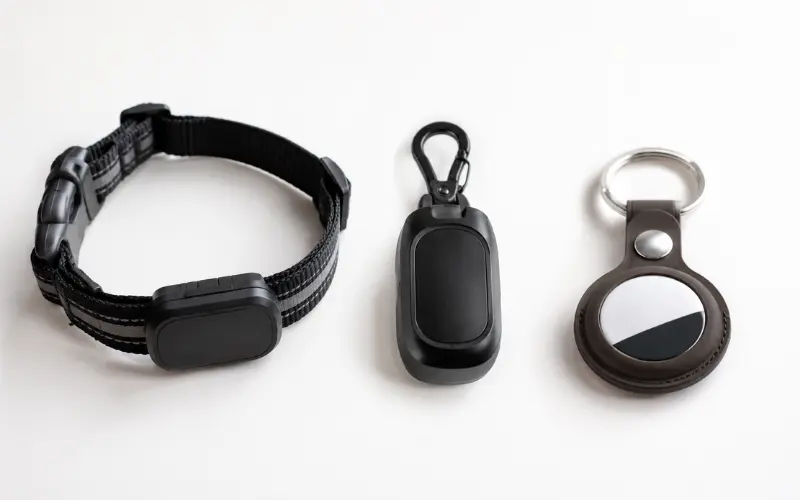
Quick Comparison — Which Tracker Fits Your Dog
How to Choose the Best GPS Dog Collar Tracker
Choosing the best GPS dog collar tracker depends on three things: where you live, your dog’s escape risk, and what you are willing to pay monthly.
Suburban/Urban + Monthly Fee OK → Tractive DOG 6
Best tracking speed, best features, best app.
The subscription cost is $5 to $8 per month — less than a single bag of treats.
If your cellular coverage is good, this is the clear winner.
Budget-Conscious + Urban → Apple AirTag + Holder
At $29 with no subscription, an AirTag is a reasonable backup in dense urban areas.
Pair it with a dedicated collar holder.
Just understand it is NOT GPS and will not help in rural or low-population settings.
Rural/No Cell Coverage → Aorkuler or Dogtra
If you live where cell coverage is unreliable, the Aorkuler ($250) or Dogtra Pathfinder ($430) are the only options that work without cell towers.
The price is higher upfront but there are zero ongoing costs.
Large Dogs + Long Battery → Tractive XL or Fi 3+
For large breeds, the Tractive XL (1 month battery) or Fi Series 3+ (3 month battery) eliminate the hassle of frequent charging.
The three most important factors when choosing a GPS dog collar tracker are cellular coverage in your area, acceptable monthly subscription cost, and your dog’s size — with cellular GPS trackers like Tractive offering the best features for suburban and urban owners, while radio and satellite trackers like Aorkuler and Dogtra serve rural areas with no cell coverage.
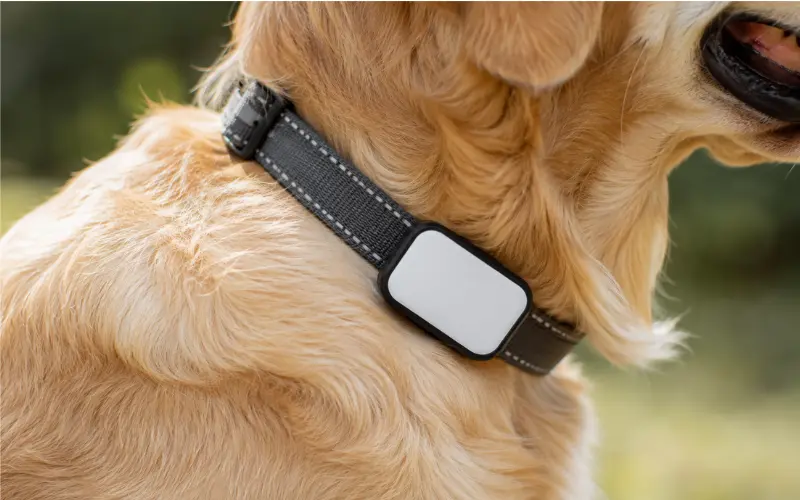
Tractive uses multi-carrier switching which makes it more reliable than single-carrier trackers.
Fi uses AT&T’s LTE-M network — if AT&T coverage is poor in your area, Fi will underperform regardless of how good the hardware is.
The Real Cost — 3-Year Ownership Comparison
The device price is not the real cost of the best GPS dog collar tracker.
Subscription fees over 3 years change the picture completely.
The Aorkuler becomes cheaper than Tractive by year 3.
The AirTag is the cheapest but provides the least capability.
Tractive offers the best daily value for suburban owners who need real-time tracking.
Common GPS Tracker Mistakes Dog Owners Make
Buying an AirTag and thinking it is the best GPS dog collar tracker is the most common mistake.
An AirTag is a Bluetooth proximity finder — not a GPS tracker. It cannot show your dog’s real-time location.
It shows where the tag was last detected by a passing iPhone.
For a dog that is running, this is the difference between “your dog was here 20 minutes ago” and “your dog is here right now.”
Not checking cellular coverage before buying a cellular tracker.
A $50 Tractive in an area with poor cellular signal is worse than a $250 Aorkuler that works on radio.
Check your provider’s coverage map before committing.
Relying only on GPS without proper ID.
A GPS tracker can fail — battery dies, device falls off, signal drops.
Your dog should always wear an ID tag with your phone number AND be microchipped.
GPS is a layer of protection, not a replacement for all other layers.
According to the ASPCA , proper identification — including visible ID tags, microchipping, and GPS tracking — provides multiple layers of protection that work together to maximize the chance of recovering a lost dog quickly.
Skipping the virtual fence setup after purchase.
Every cellular GPS tracker includes virtual fence alerts — but they only work if you set them up.
Spend 5 minutes creating a safe zone around your yard the day the tracker arrives.
This one feature justifies the subscription cost alone.
According to the AKC , dogs that are mentally understimulated are more likely to attempt escape — making mental enrichment through training and puzzle games an important complement to GPS tracking technology.
For preventing boredom-driven escapes alongside GPS tracking, read our guide on how to stop dog separation anxiety when left alone.
For the training foundation that reduces escape behavior, read our guide on positive reinforcement dog training for beginners.
The first escape is the one that matters.
Within 5 minutes of activating any Tractive or Fi tracker, create a safe zone around your property.
You will receive a push notification the instant your dog crosses the boundary — potentially saving hours of searching.
A tracker tells you where your dog is — it does not prevent them from leaving.
If your dog is an active escape artist, fix the root cause (fence gaps, boredom, anxiety) while using GPS as a safety net, not a substitute.
GPS tracker recommendations in this guide are based on published reviews, manufacturer specifications, and verified user feedback.
Technology, coverage, and pricing may change — verify current subscription costs and coverage maps before purchasing.
No GPS tracker guarantees recovery of a lost pet.
Frequently Asked Questions (FAQ)
What is the best GPS tracker for dogs in 2026?
The Tractive GPS DOG 6 is the best overall GPS dog tracker for most owners in 2026.u003cbru003eIt provides live tracking updates every 2 to 3 seconds, virtual fence escape alerts, health monitoring, and works in 175+ countries.u003cbru003eIt requires a subscription of $5 to $8 per month.u003cbru003eFor no-subscription tracking, the Aorkuler 2 ($250) uses radio GPS that works without cell coverage.
Is Apple AirTag a good GPS tracker for dogs?
No — Apple AirTag is a Bluetooth proximity finder, not a GPS tracker.u003cbru003eIt works reasonably well in dense urban areas with many iPhones nearby, but it cannot track a running dog in real time.u003cbru003eIn rural areas or parks with few people, it may not update for hours.u003cbru003eUse it as a cheap $29 backup alongside a real GPS tracker — never as your only tracking device.
Do GPS dog trackers require a monthly subscription?
Most cellular GPS trackers (Tractive, Fi) require a $5 to $13 per month subscription for cellular data.u003cbru003eNo-subscription alternatives include Apple AirTag ($29, Bluetooth only), Aorkuler 2 ($250, radio GPS), and Dogtra Pathfinder 2 ($430, satellite GPS).u003cbru003eSubscription trackers generally offer better features and faster updates.
How accurate are GPS dog trackers?
Modern cellular GPS trackers are accurate to within 6 to 15 feet in optimal conditions.u003cbru003eTractive updates every 2 to 3 seconds for near-real-time accuracy.u003cbru003eFi updates less frequently to preserve battery.u003cbru003eAccuracy decreases indoors, in dense forests, and in urban canyons between tall buildings.u003cbru003eMulti-satellite systems (GPS + GLONASS + Galileo) improve accuracy over single-system trackers.
What happens if my dog’s GPS tracker loses signal?
Cellular trackers store the last known location and resume tracking when the signal returns.u003cbru003eMost trackers show a location history trail so you can see where your dog was before the signal dropped.u003cbru003eVirtual fence alerts are triggered the moment the boundary is crossed — even if tracking becomes intermittent afterward.u003cbru003eBattery-dead trackers stop tracking entirely, so regular charging is essential.
Can I track my dog’s GPS location from anywhere?
Yes — with cellular GPS trackers like Tractive and Fi, you can track your dog from anywhere in the world via the smartphone app.u003cbru003eThe tracker sends location data through cell towers to cloud servers, which your app accesses.u003cbru003eBluetooth trackers (AirTag) only update when nearby Apple devices detect them.u003cbru003eRadio trackers (Aorkuler) require the handheld controller within range.
How long do GPS dog tracker batteries last?
Battery life varies significantly by technology.u003cbru003eApple AirTag: 1 year.u003cbru003eFi Series 3+: up to 3 months.u003cbru003eTractive DOG 6 XL: up to 1 month.u003cbru003eTractive DOG 6: up to 2 weeks.u003cbru003eActive live tracking drains batteries faster than passive monitoring.u003cbru003eMost trackers alert you via the app when the battery is low.
Is a GPS dog tracker worth the money?
For owners of escape-prone dogs, dogs in unfenced properties, or dogs that spend time off-leash — yes.u003cbru003eThe peace of mind and savings in recovery time justify the cost.u003cbru003eThe average cost to find a lost dog without GPS — factoring in time, gas, lost work, and shelter fees — far exceeds the $50-$250 device cost plus subscription fee.u003cbru003eA GPS tracker does not prevent your dog from getting lost, but it dramatically reduces the time and stress of finding them.
Eleven Hours vs Three Minutes — Final Thoughts
Eleven hours.
That is how long my neighbor searched for his dog.
Driving every street.
Posting on Facebook.
Calling shelters.
Eleven hours of pure fear — ended by a stranger who spotted her sitting under a car six blocks away.
The best GPS dog collar tracker would have turned that eleven hours into three minutes.
Open the app.
See the blue dot.
Walk to the blue dot.
Pick up the dog.
Three things to take with you:
Cellular GPS is the standard for most dog owners.
Tractive DOG 6 at $50 plus $5 to $8 per month provides the fastest, most feature-rich tracking available.
If your area has cellular coverage — which most of the US does — this is the baseline.
AirTag is a backup, not a tracker.
At $29 with no subscription, it is worth clipping to your dog’s collar as an extra layer.
But never rely on it as your only tracking device — especially outside dense urban areas.
No tracker replaces fencing, training, and supervision.
GPS tells you where your dog is after they escape.
Training, enrichment, and secure fencing prevent the escape in the first place.
Use both.
For preventing the boredom that drives escape behavior, read our guide on dog recall training step by step.
For the complete approach to keeping your dog safe and healthy year-round, read our guide on keeping your dog healthy and happy.