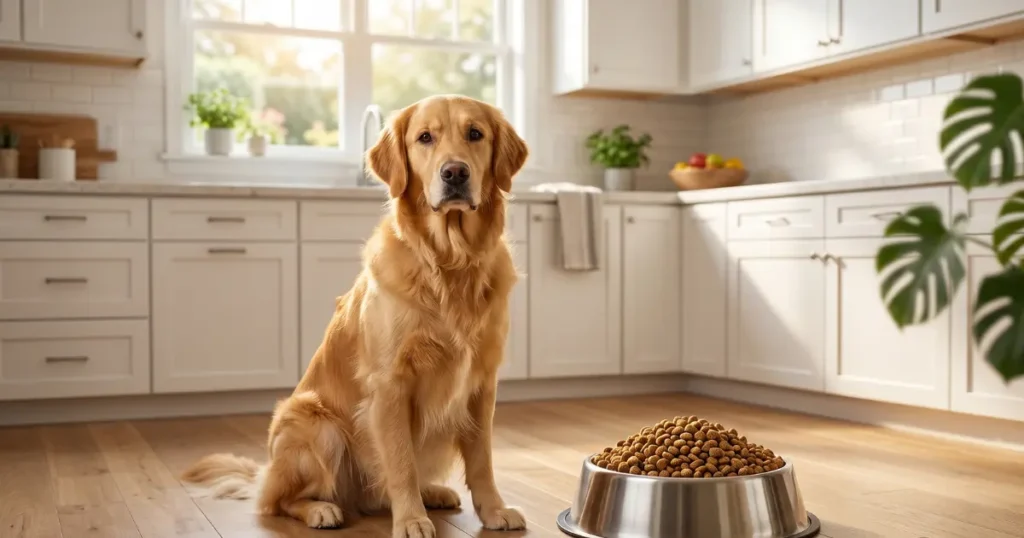
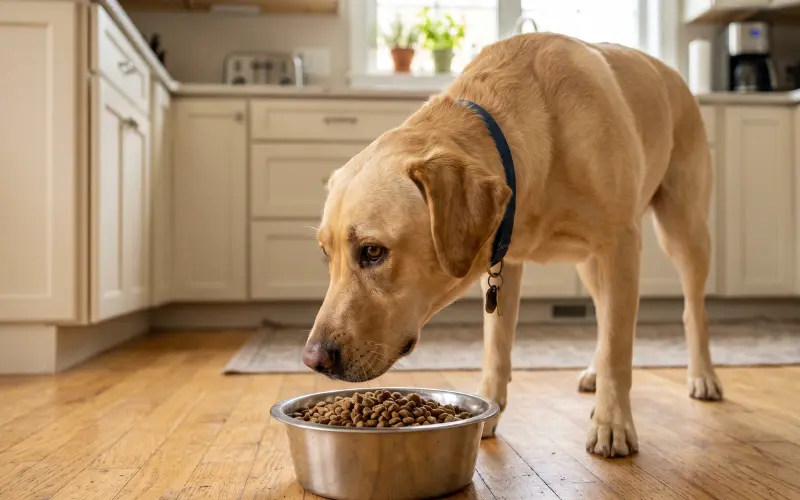
I sat on the kitchen floor for twenty minutes watching my dog stare at his food bowl.
He walked over to it. Sniffed it. Looked at me. Walked away.
Came back to the living room, grabbed his favorite toy, dropped it at my feet, and wagged his tail like nothing in the world was wrong.
Everything about him was completely normal.
He was playful. He was responsive. He greeted me at the door with his usual enthusiasm that morning.
His energy was fine. His eyes were bright. He drank water.
He just would not eat.
I did what every dog owner does — I Googled “why is my dog not eating but acting normal” at 11pm while he slept peacefully beside me and I spiraled through worst-case scenarios.
The vet appointment the next day revealed nothing.
Literally nothing.
“He’s perfectly healthy,” she said. “Some dogs skip meals. If it goes past 48 hours with no eating at all, then we investigate.”
He ate dinner that night like nothing had happened.
That experience taught me something valuable: a dog skipping a meal is not always a crisis.
But it can be — and the difference between “normal skip” and “something is wrong” depends on knowing exactly what to watch for.
This guide covers every reason why your dog might not be eating but acting normal — the harmless causes that resolve on their own, the medical causes that need attention, and the clear timeline for when to stop monitoring and call your vet.
Most dogs resume eating within 12 to 24 hours.
Call your vet if your dog refuses all food for more than 48 hours, or sooner if any other symptoms appear — vomiting, diarrhea, lethargy, or behavior changes.
It Happens More Than You Think — And It Is Usually Fine
The first thing to understand about why is my dog not eating but acting normal is that this is one of the most common concerns dog owners bring to their vet — and the majority of the time, the cause is benign.
A healthy adult dog that skips one or two meals but otherwise behaves completely normally — maintaining energy, drinking water, and showing interest in play — is rarely experiencing a medical emergency, with most appetite dips resolving naturally within 12 to 24 hours without intervention.
Dogs are not machines.
They do not eat the exact same amount at the exact same time every single day with zero variation.
Just like humans have days when they are less hungry, dogs have natural appetite fluctuations that are completely normal.
The concern is warranted when the not-eating is accompanied by other changes — lethargy, vomiting, behavioral shifts, or when it extends past a specific timeline.
A dog that skips breakfast but plays fetch at noon is very different from a dog that skips breakfast and lies in the corner all day.
For the complete approach to monitoring your dog’s overall health patterns, read our complete guide to keeping your dog healthy and happy.
Common Harmless Causes — Why Normal Dogs Skip Meals
If you are wondering why is my dog not eating but acting normal, these harmless causes are the most likely explanation — and none of them require a vet visit.
1. They Are Just Not Hungry
This is genuinely the most common reason — and the one most owners refuse to accept because it feels too simple.
Dogs self-regulate appetite more than we give them credit for.
A dog that had a big meal yesterday, got extra treats during training, or was less active than usual may simply not be hungry at their scheduled feeding time.
2. Treats and Table Scraps Filled Them Up
This is the “mystery” that solves itself when every family member is honest about what they gave the dog that day.
Dad gave a handful of training treats.
The kids shared their afternoon snack.
Mom gave a piece of chicken from dinner prep.
By mealtime, the dog has consumed enough calories from snacks that the bowl of kibble holds no appeal.
One of the most common reasons a dog skips meals but acts normal is hidden calorie intake from treats, training rewards, and table scraps throughout the day — a typical medium-sized dog given 5 to 6 treats daily can consume 20 to 30 percent of their calorie needs before their actual meal.
3. Stress or Environmental Changes
Dogs are sensitive to changes in their environment that most owners underestimate.
A new house. A new baby. A new pet. Visitors staying over. Construction noise. A change in the owner’s work schedule.
Any disruption to routine can temporarily suppress appetite for 1 to 3 days while the dog adjusts.
The key word is temporarily — appetite returns once the dog acclimates to the new normal.
4. Weather and Seasonal Changes
Dogs eat less in hot weather.
Their metabolism naturally slows when temperatures rise — they need fewer calories to maintain body temperature.
A dog that cleans its bowl in January may leave half untouched in July.
This is normal physiology.
It is not a symptom.
5. Food Boredom — Yes, It Is Real
Some dogs — particularly breeds known for intelligence like Border Collies, Poodles, and Australian Shepherds — genuinely lose interest in the same food served daily for months.
This does not mean you need to change food constantly.
A simple topper — warm water, low-sodium bone broth, or a spoonful of plain pumpkin puree — often restores interest immediately.
6. Picky Eating Habits — Often Owner-Created
If your dog has learned that refusing kibble results in you offering something more exciting — chicken, cheese, wet food — they are not sick.
They are negotiating.
This is surprisingly common and is usually unintentionally trained by well-meaning owners who panic at the first skipped meal and immediately upgrade the offering.
Medical Causes — When Not Eating Means Something More
While most cases of why is my dog not eating but acting normal are benign, some medical conditions cause early appetite loss before any other visible symptoms appear.
These are worth knowing because catching them early makes treatment significantly easier.
Dental Pain
Dogs eat through remarkable levels of mouth pain.
But when dental disease reaches a certain threshold — a cracked tooth, a gum abscess, advanced periodontal disease — even a dog willing to endure the discomfort may start refusing hard food or eating more slowly than usual.
Dental disease affects the majority of dogs by age 3, making it one of the most common hidden causes of appetite changes — dogs with mouth pain often continue to eat but may chew more slowly, drop food, favor one side of the mouth, or selectively refuse hard kibble while accepting soft treats.
Signs to watch:
- Eating more slowly
- Dropping food while chewing
- Chewing on one side
- Bad breath that worsens suddenly
- Blood on chew toys
For dental prevention that catches problems early, read our guide on how to clean puppy teeth at home.
Gastrointestinal Issues
An upset stomach that has not yet produced vomiting or diarrhea can suppress appetite while the dog otherwise behaves normally.
Mild gastritis from eating something slightly off — a stick, a piece of garbage on a walk, grass — can cause 24 to 48 hours of reduced appetite.
If the upset stomach progresses to vomiting, diarrhea, or lethargy — it moves from the “monitor” category to the “call the vet” category.
Medication Side Effects
Many common medications suppress appetite as a side effect.
NSAIDs (pain medications), antibiotics, deworming treatments, and certain vaccines all list reduced appetite as a temporary side effect lasting 1 to 3 days.
If your dog recently started a new medication or received vaccinations within the past 48 hours, reduced appetite is expected and usually resolves without intervention.
Pain They Are Hiding
Dogs are genetically wired to mask pain.
A dog that is dealing with joint pain, a soft tissue injury, or early-stage illness may show appetite changes before any other visible symptom.
If appetite loss continues beyond 48 hours with no obvious cause, pain should be investigated — even if the dog appears otherwise normal.
For the complete guide to recognizing hidden pain, read our post on signs your dog is in pain and hiding it.
Kidney or Liver Issues
Early-stage kidney disease and liver problems can cause gradual appetite decline before any other symptoms become visible.
Blood work is required to detect these — they cannot be identified through observation alone.
Intestinal Blockage
If your dog ate a sock, a toy, a bone fragment, or any non-food object — and then stopped eating — this is potentially serious.
Blockages prevent food from passing through the digestive tract and require veterinary intervention, sometimes emergency surgery.
Signs that suggest blockage:
- Refusing all food
- Dry heaving without producing vomit
- Abdominal swelling
- Straining to defecate without producing stool
According to the American Kennel Club, a dog that suddenly refuses food should always be monitored closely — and if the refusal continues beyond 24 hours with any other symptom, or beyond 48 hours even without symptoms, a veterinary evaluation is recommended.
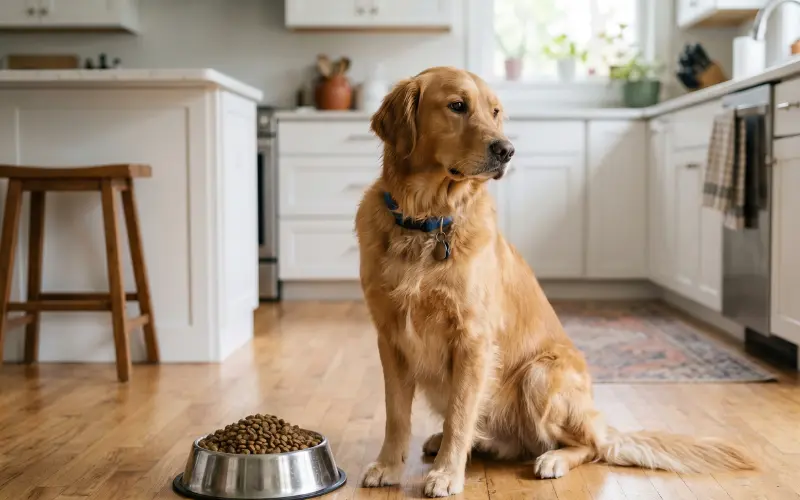
The 48-Hour Rule — Your Decision Timeline
This is the framework I use now — and the one my vet gave me after that first panic-inducing meal skip.
Understanding why is my dog not eating but acting normal becomes manageable with a clear timeline.
0 to 12 Hours — Monitor, Do Not Panic
One skipped meal in an otherwise normal dog is not a concern.
Note the time, observe behavior, and continue your day.
Offer the next meal at the regular time.
Do not supplement with treats, table scraps, or “better” food to entice eating — this creates picky eating habits that make future appetite assessment harder.
12 to 24 Hours — Watch for Companion Symptoms
If a second meal is skipped, start actively watching for any additional symptoms.
Check for:
- Water intake — still drinking normally?
- Energy level — normal activity or notably less?
- Bowel movements — normal stool on schedule?
- Behavior — interactive or withdrawn?
- Physical signs — vomiting, diarrhea, trembling?
If everything else is completely normal, continue monitoring.
24 to 48 Hours — Decision Point
A healthy adult dog can safely go 24 to 48 hours without eating with no medical consequence — provided they are drinking water and showing no other symptoms.
At the 48-hour mark with zero food intake, call your vet regardless of how normal your dog appears.
Some conditions suppress appetite before producing any other visible sign.
A healthy adult dog can safely go 24 to 48 hours without eating if they are drinking water and showing no other symptoms — but food refusal beyond 48 hours always warrants a veterinary evaluation, even if the dog appears otherwise completely normal.
Immediate — Skip the Timeline for These
Do not wait 48 hours if any of these occur alongside the appetite loss:
- Vomiting — especially repeated or containing blood
- Diarrhea — especially bloody or lasting more than 24 hours
- Lethargy — notably less energy than normal
- Visible abdominal swelling or bloating
- Dry heaving without producing vomit
- Known ingestion of a foreign object
- Refusal to drink water
- Any behavior change beyond just not eating
These companion symptoms change the situation from “monitoring” to “vet call today.”
Bring this list to the vet.
The number one thing vets say is frustrating about appetite loss appointments is when owners say “he hasn’t eaten anything” but then cannot account for the 15 treats, the cheese stick, and the piece of steak they gave throughout the day.
An accurate food log makes diagnosis significantly faster.
What to Try at Home Before Calling the Vet
If your dog is within the 0 to 48 hour window, acting completely normal, drinking water, and showing no other symptoms — understanding why is my dog not eating but acting normal often starts with these home strategies that restart appetite naturally.
Warm the Food Slightly
Warming kibble or wet food for 10 to 15 seconds releases aroma compounds that make the food significantly more appealing.
A dog’s sense of smell drives their appetite far more than taste — making the food smell stronger is often all it takes.
Do not microwave in the bowl — warm in a separate container and check temperature before serving.
Food should be warm, never hot.
Add a Simple Topper
A tablespoon of warm, low-sodium chicken broth poured over kibble transforms a boring bowl into something aromatic and appealing.
Plain pumpkin puree (not pumpkin pie filling) adds fiber and a smell change that restarts interest for many dogs.
Do not add anything rich, fatty, or unfamiliar — this can cause stomach upset that turns a simple appetite dip into a genuine digestive problem.
Feed at Consistent Times and Remove Uneaten Food
Put the food bowl down at the scheduled time.
Leave it for 15 to 20 minutes.
If the dog does not eat, pick it up and try again at the next scheduled meal.
This teaches the dog that food is available at set times — not on demand.
It also prevents kibble from sitting out for hours losing freshness and appeal.
Reduce Treat Intake
For the duration of the appetite dip, cut treats to zero or near zero.
This eliminates the “hidden calorie” problem and ensures your dog is genuinely hungry at mealtimes.
Try a Short Walk Before Meals
A 15 to 20 minute walk 30 minutes before mealtime stimulates appetite naturally.
Physical activity triggers hunger signals that can overcome the mild appetite suppression causing the skip.
According to the AKC, picky eating that is behavioral rather than medical can often be resolved by offering a complete and balanced diet at set times, limiting treats, and avoiding the pattern of upgrading food when the dog refuses — which inadvertently teaches the dog that holding out produces better options.
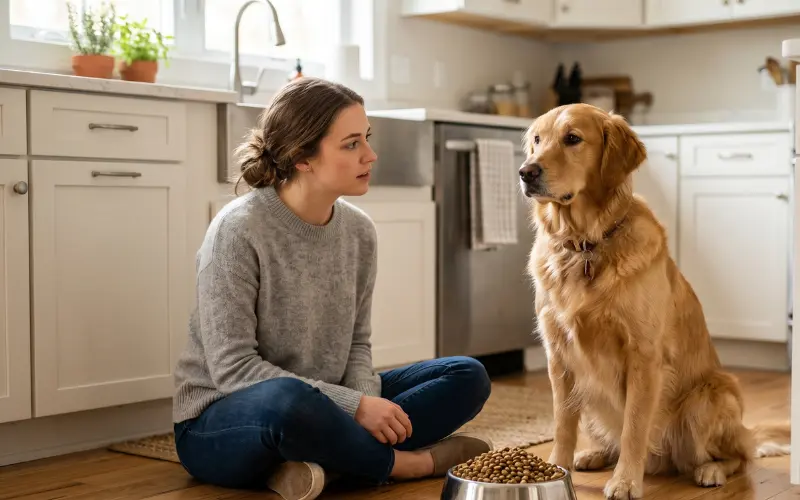
When to Call the Vet — Clear Decision Points
Knowing exactly when a skipped meal becomes a vet call is the most practical part of understanding why is my dog not eating but acting normal — and these clear decision points make the call easier.
Call Within 24 Hours If:
- Appetite loss is accompanied by vomiting, diarrhea, or any other symptom
- Your dog is a puppy under 6 months — puppies cannot go as long without eating as adult dogs because their blood sugar drops faster
- Your dog has a known medical condition like diabetes, kidney disease, or liver disease
- Your dog recently ingested something they should not have — a toy, a sock, a bone fragment
- Your dog is refusing water as well as food
Call Within 48 Hours If:
- Your otherwise healthy adult dog has not eaten anything at all for 2 full days
- Appetite has been gradually declining over several days — eating less and less each day
- Your dog is eating but significantly less than normal for more than 3 to 4 days
Schedule at Next Regular Visit If:
- Your dog skipped one meal and resumed eating normally
- Your dog eats slightly less in hot weather but otherwise behaves normally
- Appetite dips briefly around environmental changes and recovers within 24 hours
According to the ASPCA, changes in appetite combined with other symptoms such as excessive thirst, lethargy, or changes in urination patterns can indicate underlying conditions including diabetes, kidney disease, or hormonal disorders — making veterinary evaluation important when appetite loss is accompanied by any additional behavioral or physical change.
Some dogs that refuse food at home eat readily in the stimulating vet environment due to adrenaline and novelty.
A video of the actual refusal at home gives your vet far more useful diagnostic information than describing it verbally.
Special Cases — Puppies, Seniors, and Breed Differences
The 48-hour rule applies to healthy adult dogs.
Some dogs have tighter timelines.
Puppies Under 6 Months
Puppies cannot regulate blood sugar as effectively as adult dogs.
A puppy that has not eaten for more than 12 hours — particularly toy and small breed puppies — is at risk for hypoglycemia (dangerously low blood sugar).
Signs include weakness, trembling, and lethargy.
Puppies under 6 months old — especially toy and small breeds — should not go more than 12 hours without eating because their small body mass and fast metabolism make them vulnerable to hypoglycemia, a potentially dangerous drop in blood sugar that requires immediate veterinary attention.
Any puppy that has not eaten for 12 hours needs a vet call — do not wait 48 hours.
For the complete puppy feeding approach, read our puppy feeding schedule by age.
Senior Dogs Over 7
Older dogs are more likely to have underlying medical conditions that cause appetite changes.
Kidney disease, dental deterioration, cognitive decline, and arthritis (which makes it painful to bend down to the food bowl) all become more common with age.
A senior dog that stops eating for more than 24 hours warrants a vet conversation even if they appear otherwise normal.
The threshold is tighter because the probability of an underlying condition is higher.
Breed-Specific Patterns
Some breeds are naturally less food-motivated than others.
Sighthounds (Greyhounds, Whippets, Borzoi) and some herding breeds (Collies, Australian Shepherds) are known for selective eating patterns that look like appetite loss but are simply lower food drive.
On the other end, breeds like Labradors, Beagles, and Golden Retrievers are typically voracious eaters.
A Labrador refusing food is more concerning than a Whippet refusing food — because it is further outside their breed norm.
According to the ASPCA, monitoring a dog’s overall health through regular observation of eating patterns, energy levels, and behavior changes is one of the most effective early detection tools available to pet owners.
Common Mistakes Owners Make When Their Dog Stops Eating
These mistakes extend the problem, create bad habits, or delay treatment.
Most owners asking why is my dog not eating but acting normal make at least one of these errors.
Immediately upgrading the food is the most common mistake.
Your dog skips kibble, so you offer chicken.
They skip chicken, so you offer steak.
Within a week, you have a dog that has learned that refusing food produces increasingly better options.
This creates a picky eater — not a medical patient.
Panicking after one skipped meal leads to unnecessary emergency vet visits, unnecessary anxiety, and unnecessary medication.
One skipped meal in an otherwise normal dog is not an emergency.
Force-feeding never works and frequently makes the situation worse.
A dog that is not hungry and has food pushed into their mouth develops negative associations with eating that can persist for weeks.
Adding too many toppers at once overwhelms the digestive system.
One tablespoon of warm broth is helpful.
Chicken plus cheese plus pumpkin plus scrambled eggs on top of kibble is a recipe for a genuine stomach upset.
Ignoring a pattern is the most dangerous mistake.
One skipped meal is nothing.
Three days of reduced appetite is a pattern that needs veterinary attention — even if the dog appears otherwise completely normal.
Some serious conditions like early-stage organ disease, certain cancers, and hormonal disorders cause appetite loss as their first and only symptom for days or weeks before any other sign appears.
A blood panel at the vet can detect what observation alone cannot.
The guidance in this post is based on published veterinary resources from the AKC and ASPCA.
This guide helps you evaluate appetite changes — it does not replace professional veterinary diagnosis.
If your dog refuses food for more than 48 hours, or if appetite loss is accompanied by any other symptom, always consult your veterinarian.
Frequently Asked Questions (FAQ)
How long can a dog go without eating?
A healthy adult dog can safely go 24 to 48 hours without eating as long as they are drinking water and showing no other symptoms.
Beyond 48 hours, a veterinary evaluation is recommended regardless of how normal the dog appears.
Puppies have a much shorter safe window — toy and small breed puppies should not go more than 12 hours without eating due to hypoglycemia risk.
Why is my dog not eating but drinking water?
A dog that refuses food but continues to drink water is typically in the early or mild stages of whatever is causing the appetite change — stress, mild stomach upset, medication side effects, or food boredom.
The fact that they are still drinking is a positive sign, as dehydration combined with food refusal is significantly more concerning.
Monitor for 24 to 48 hours, and call your vet if food refusal continues beyond that window.
Should I be worried if my dog skips one meal?
No — a single skipped meal in an otherwise completely normal dog is rarely cause for concern.
Dogs naturally fluctuate in appetite based on activity level, weather, treats consumed throughout the day, and stress.
Offer the next meal at the regular time without supplementing with treats or table scraps.
If a second and third meal are also refused, begin closer monitoring.
Can stress cause a dog to stop eating?
Yes — stress is one of the most common benign causes of temporary appetite loss in dogs.
Moving to a new home, the introduction of a new pet or family member, loud construction noise, changes in the owner’s schedule, and travel can all suppress appetite for 1 to 3 days.
Appetite typically returns naturally once the dog adjusts to the change.
Why does my dog refuse kibble but eat treats?
A dog that refuses their regular food but eagerly accepts treats is almost certainly a picky eater, not a sick dog.
This is usually a learned behavior — the dog has figured out that refusing meals results in the owner offering something more exciting.
Resolve this by putting kibble down for 15 to 20 minutes, removing it if uneaten, and offering nothing else until the next scheduled meal.
Most dogs begin eating their regular food within 2 to 3 meal cycles when treats are withheld.
When should I take my dog to the vet for not eating?
Take your dog to the vet if they refuse all food for more than 48 hours, if appetite loss is accompanied by any other symptom (vomiting, diarrhea, lethargy, behavioral changes), if your dog is a puppy under 6 months that has not eaten for 12 hours, or if your dog has a pre-existing medical condition.
A single skipped meal with no other symptoms does not require a vet visit.
Does hot weather make dogs eat less?
Yes — dogs naturally eat 10 to 15 percent less during hot weather because their metabolic rate decreases when ambient temperatures are high.
This is normal physiology, not a symptom.
Ensure fresh cool water is always available and consider feeding during the cooler morning and evening hours.
If appetite does not recover when temperatures drop, investigate further.
Could my dog not be eating because of dental problems?
Yes — dental disease is one of the most common and most overlooked causes of appetite changes in dogs.
The majority of dogs over age 3 have some degree of periodontal disease.
Signs of dental-related appetite issues include eating more slowly, dropping food while chewing, favoring one side of the mouth, and refusing hard kibble while accepting soft treats.
Your vet can check for dental problems during a routine exam.
Most of the Time, It Is Nothing — Final Thoughts
Twenty minutes on the kitchen floor.
That is how long I sat watching my dog ignore his food bowl before I convinced myself something was terribly wrong.
He was fine. Completely fine.
He played that evening. He slept normally. He ate the next morning like nothing had happened.
The vet found nothing because there was nothing to find.
Understanding why is my dog not eating but acting normal means accepting two things simultaneously: most of the time, it is completely harmless — and some of the time, it is the first sign of something that needs attention.
The 48-hour rule gives you a framework for telling the difference.
Three things to take with you:
One skipped meal is not a crisis.
Do not panic.
Do not immediately upgrade the food.
Do not rush to the emergency vet.
Note the time, offer the next meal on schedule, and observe.
Most dogs resume eating within 12 to 24 hours with zero intervention.
Watch for companion symptoms, not just the food refusal.
A dog that is not eating but is playing, drinking, and behaving normally is very different from a dog that is not eating and is also lethargic, vomiting, or withdrawn.
The companion symptoms are what determine urgency.
Forty-eight hours is the line.
If a healthy adult dog has not eaten anything at all for 48 hours — even if they appear perfectly fine — call your vet.
Some conditions announce themselves through appetite loss days before any other symptom appears.
A simple blood panel catches what observation cannot.
For the complete preventive health approach that catches problems before they become serious, read our guide on keeping your dog healthy and happy.
For understanding your dog’s nutrition needs that support consistent appetite and overall health, read our complete dog nutrition guide for beginners.