

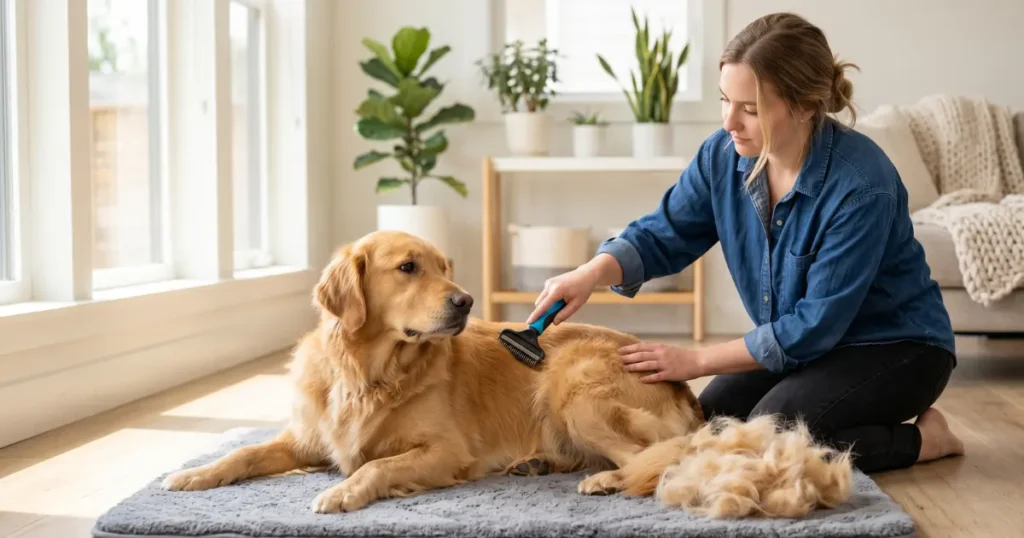
I vacuumed the living room three times in one day.
Three times. And by the evening, there was already a new layer of golden fur drifting across the hardwood like tumbleweed.
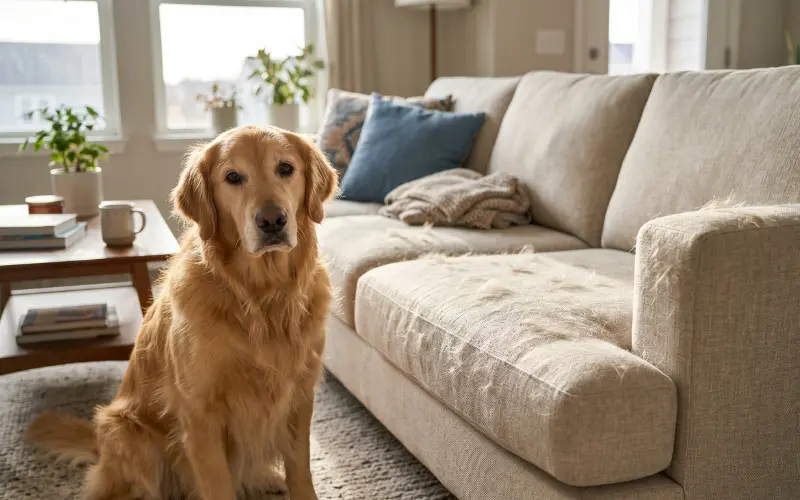
The couch had a permanent fur coating. My black pants were unusable from April through June. I found dog hair in my coffee once.
My Golden Retriever was blowing his undercoat for the first time and I had no idea what was happening or what to do about it. I just kept vacuuming and hoping it would stop.
It does not stop. Not on its own.
What stops it — or more accurately, what controls it — is learning how to deshed a dog at home properly.
Not just brushing the surface coat with a regular brush, which barely touches the problem. Real deshedding reaches the dense undercoat underneath and removes the loose hair before it ends up on your furniture, your clothes, and apparently in your morning coffee.
Once I learned the right technique and started using a proper deshedding tool, the difference was immediate.
Not “slightly less hair.” Dramatically less hair.
FURminator claims up to 90% reduction in loose hair with regular use — and honestly, in my experience, that number is not exaggerated.
This guide covers everything about how to deshed a dog at home. Why dogs shed, which breeds shed the most, the right tools, the step-by-step method, how often to do it, and the one thing you should absolutely never do to a shedding dog.
Work in the direction of hair growth with gentle, short strokes.
Focus on the thickest undercoat areas — neck, back, hindquarters, and tail.
Never shave a double-coated breed — the undercoat insulates against both heat and cold and may not grow back properly if shaved.
Why Dogs Shed — Understanding What Is Actually Happening
Shedding is not a problem to fix. It is a biological process to manage.
Understanding it changes how you approach deshedding entirely.
Double-coated dog breeds shed their undercoat primarily in spring and fall — a process called “coat blowing” — which produces massive amounts of loose fur over 2 to 4 weeks as the dog naturally replaces their seasonal coat.
Most dogs have two layers of fur.
The topcoat — also called guard hair — is the visible outer layer that gives your dog their color and texture. It protects the skin from sun, moisture, debris, and insect bites.
The undercoat is the dense, soft, downy layer underneath.
This is the insulation layer — it keeps your dog warm in winter and, counterintuitively, cool in summer by trapping a layer of air against the skin that regulates body temperature.
Shedding happens when the undercoat reaches the end of its growth cycle and the dead hair detaches from the follicle.
In spring, the thick winter undercoat sheds to make way for a lighter summer coat. In fall, the summer coat sheds and a denser winter coat grows in.
This seasonal transition is called “blowing coat” and it produces the dramatic shedding that covers your entire home in fur for 2 to 4 weeks.
Some dogs — particularly those living indoors with climate control — shed moderately year-round rather than having two intense seasonal blows.
The artificial temperature consistency confuses the natural cycle.
Learning how to deshed a dog at home means removing the loose undercoat before it falls out naturally onto your floors, furniture, and clothing.
Breeds That Shed the Most — Is Your Dog One of Them
Not every dog needs deshedding.
Single-coated breeds — Poodles, Maltese, Bichons, Yorkshire Terriers — have no undercoat to shed and should never be deshedded.
These breeds need regular haircuts instead.
Double-coated breeds are the ones that need how to deshed a dog at home knowledge.
These breeds produce the heaviest shedding and benefit the most from regular deshedding sessions:
Golden Retrievers shed heavily year-round with intense seasonal blows in spring and fall. Their long, dense undercoat produces the classic “fur tumbleweeds” that drift across hardwood floors.
German Shepherds are one of the heaviest shedding breeds — earning the nickname “German Shedders” among owners. Their double coat blows dramatically twice a year.
Labrador Retrievers have a deceptively thick undercoat beneath their short topcoat. They shed constantly and heavily during seasonal transitions.
Siberian Huskies were bred for extreme cold and have one of the densest undercoats of any breed. Their seasonal coat blow is legendary — producing enough loose fur to fill garbage bags.
Australian Shepherds, Bernese Mountain Dogs, Great Pyrenees, Newfoundlands, Samoyeds, Corgis, and Alaskan Malamutes all have substantial double coats that require regular deshedding.
According to the American Kennel Club, the most effective method to manage shedding in double-coated breeds is regular brushing with a deshedding tool that reaches through the topcoat to remove the loose undercoat without cutting or damaging the outer coat.
The Right Deshedding Tools — What Actually Works
A regular slicker brush handles surface grooming well.
But it does not reach the dense undercoat where the real shedding originates.
Knowing how to deshed a dog at home requires the right specialized tools.
Deshedding Tools — Top Picks
FURminator Undercoat Deshedding Tool — Large Dogs, Long Hair — the original and still the most effective deshedding tool on the market.
The stainless steel edge reaches through the topcoat to remove loose undercoat without cutting or damaging the guard hairs.
The FURejector button releases collected hair with one press.
Reduces shedding up to 90% with weekly use.
Available in sizes for small, medium, and large dogs in both short and long hair versions.
Not ideal for: single-coated breeds, such as Poodles, Maltese, and Yorkies, that have no undercoat — the tool has nothing to remove and can damage their single coat.
Also avoid on dogs with skin conditions until cleared by your vet.
The FURminator deshedding tool reduces loose undercoat hair by up to 90% with regular weekly use — reaching through the topcoat to remove dead undercoat without cutting or damaging the protective outer guard hairs.
Hertzko Self-Cleaning Slicker Brush — not a dedicated deshedding tool, but the essential companion brush.
Use the slicker brush first to remove tangles and surface loose hair, then follow with the deshedding tool for the undercoat.
The self-cleaning button retracts bristles for easy cleanup.
Over 90,000 reviews on Amazon.
Not ideal for: replacing a proper deshedding tool — the slicker brush handles surface grooming only.
For heavy shedding breeds, you need both tools.
Maxpower Planet Double-Sided Undercoat Rake — a budget-friendly alternative for dogs with severe matting and heavy undercoat.
The double-sided design features 9 teeth on one side for stubborn tangles and 17 teeth on the other for fine undercoat removal.
Effective on thick coats where the FURminator alone is not enough.
Search Amazon for “Maxpower Planet Pet Grooming Brush Double Sided.”
Not ideal for: dogs with short smooth coats, such as Beagles and Boxers — the deep-reaching teeth are designed for thick double coats and are unnecessary for short-haired breeds.
Deshedding Shampoo and Conditioner — The Bath Boost
Using a deshedding shampoo during bath time loosens the undercoat significantly before you start the brushing process.
This is the step most owners skip — and the one that makes the biggest difference in how much loose fur comes out during the session.
FURminator deShedding Ultra Premium Shampoo — 16 oz — formulated specifically to release loose undercoat during the bath.
Enriched with omega-3 and 6 fatty acids, calendula extract, and papaya leaf extract.
No parabens, no chemical dyes.
Let lather sit for 5 to 10 minutes before rinsing for maximum undercoat release.
Not ideal for: dogs with sensitive or irritated skin — the deshedding formula is more active than a gentle oatmeal shampoo.
For sensitive dogs, read our guide on best dog shampoo for itchy sensitive skin.
FURminator deShedding Ultra Premium Conditioner — 16 oz — pair this with the deshedding shampoo for a complete bath session.
Releases loose undercoat during the bath with omega-3 and 6 fatty acids, chamomile extract, and aloe vera.
OdorCapture 360 technology removes wet dog smell.
No parabens, no chemical dyes.
Not ideal for: frequent use — use monthly as part of the deshedding bath, not for every regular bath.
The bath loosens the undercoat.
The drying separates it from the topcoat.
The deshedding tool removes it.
Skipping the bath means the tool is doing all the work alone — and you will leave significantly more loose fur behind.
How to Deshed a Dog at Home — Step by Step Method
This is the complete deshedding process — from setup to cleanup.
Step 1 — Bathe First for Best Results
If you are doing a full deshedding session — which is ideal during peak shedding season — start with a deshedding shampoo bath.
- Wet the coat completely.
- Apply deshedding shampoo.
- Lather over the entire body.
- Let it sit for 5 to 10 minutes.
- Rinse thoroughly.
- Follow with deshedding conditioner.
- Wait 2 minutes.
- Rinse again.
- Towel dry or blow dry on low heat until the coat is completely dry.
This loosens the undercoat before brushing.
This contact time is what loosens the undercoat from the follicles.
Never use a deshedding tool on a wet coat.
Wet hair clumps together and the tool cannot separate the undercoat from the topcoat effectively.
Wait until fully dry.
Step 2 — Slicker Brush First
Use a slicker brush to remove all tangles, mats, and surface loose hair first.
This prevents the deshedding tool from catching on tangles and pulling painfully.
Run the slicker brush through the entire coat in the direction of hair growth.
This removes surface tangles, loose topcoat hair, and any small mats that would catch on the deshedding tool and cause your dog pain.
This step takes 5 to 10 minutes and makes the actual deshedding process smoother and more comfortable for your dog.
Step 3 — The Actual Deshedding
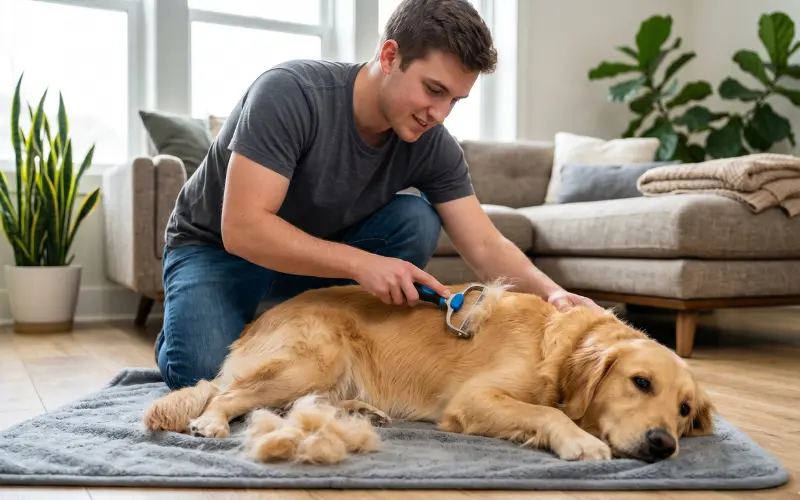
Using the FURminator or undercoat rake, work in the direction of hair growth with gentle, short strokes.
Start at the neck and work systematically toward the tail so you do not miss any area.
Focus on the thickest undercoat areas:
- Neck ruff
- Behind the ears
- Shoulders
- Entire back
- Hindquarters and thighs
- Base of the tail
Spend extra time on these areas.
Short, gentle strokes — not long dragging pulls.
Press the FURejector button every 3 to 5 strokes to clear the collected fur from the tool.
A clogged tool does not deshed effectively.
The most effective deshedding technique is working in the direction of hair growth with short, gentle strokes for 10 to 20 minutes — focusing on the neck, shoulders, back, and hindquarters where the densest undercoat accumulates.
How do you know when you are done?
When the tool starts pulling out significantly less hair with each pass.
The first few strokes produce dramatic clouds of undercoat.
By the end of the session, each stroke pulls almost nothing.
That is when the loose undercoat has been removed.
Most dogs need 10 to 20 minutes for a complete deshedding session.
Large breeds with very thick coats may need 25 to 30 minutes during peak shedding.
Step 4 — Finish With the Slicker Brush
Run the slicker brush through the coat one final time after deshedding.
This smooths the topcoat, distributes natural oils, and picks up any remaining loose hair that the deshedding tool missed.
The coat should look visibly smoother and feel noticeably lighter after this final pass.
Reward your dog generously.
Deshedding is not painful when done correctly, but it requires your dog to stay still for an extended period.
A high-value treat after every session builds positive association.
How Often to Deshed — Complete Schedule
The right frequency depends on the season and your dog’s specific coat type.
Knowing how to deshed a dog at home includes knowing when and how often to do it.
During shedding season, in spring and fall, most double-coated breeds benefit from deshedding 2 to 3 times per week for 2 to 4 weeks.
This is when the coat is blowing and the undercoat is coming out in massive quantities.
Frequent sessions during this window remove the bulk of loose fur before it sheds naturally onto your home.
During non-shedding months, in summer and winter, once a week is sufficient for maintenance.
The undercoat is not actively blowing, so weekly sessions keep loose hair manageable without over-deshedding.
Regular slicker brushing between deshedding sessions — 2 to 3 times per week year-round — keeps the topcoat tangle-free and catches surface loose hair before it drops.
Deshedding baths with deshedding shampoo and conditioner should happen once a month during shedding season and every 6 to 8 weeks during off-season.
More frequent bathing strips natural oils.
Never Shave a Double-Coated Dog — Here Is Why
This is the most important rule about how to deshed a dog at home — and the one most commonly broken.
“Just shave them down for summer” sounds logical.
Less fur, cooler dog, less shedding in the house.
But the science says exactly the opposite.
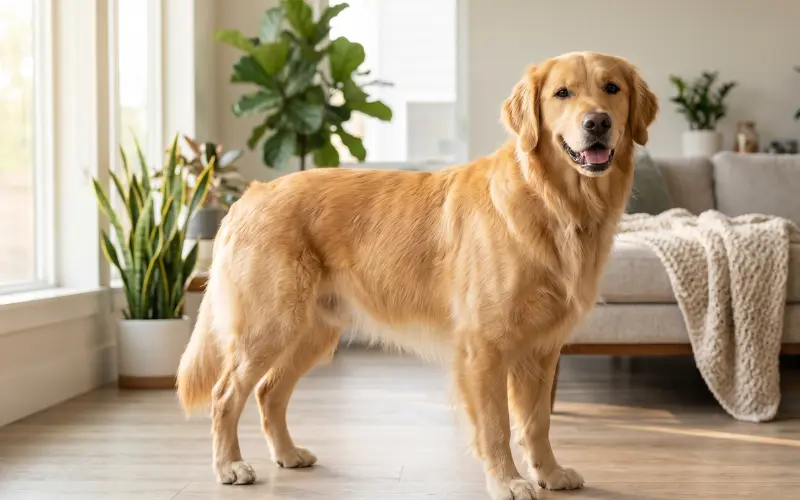
Shaving a double-coated dog does not reduce shedding, does not keep them cooler, and can cause permanent coat damage.
The undercoat grows back faster than the topcoat and can crowd out the protective guard hairs, sometimes permanently.
According to the American Kennel Club, a double coat acts as insulation in both hot and cold weather.
The undercoat traps a layer of air against the skin that regulates body temperature.
When you shave that coat, you remove the insulation layer entirely — making the dog more susceptible to heatstroke in summer and hypothermia in winter.
Shaving also exposes the skin directly to UV radiation — increasing the risk of sunburn and skin cancer in breeds that were never designed to have exposed skin.
The coat damage is often permanent.
When a double coat is shaved, the undercoat grows back first — faster and thicker than before.
The slower-growing topcoat guard hairs get crowded out by the dense undercoat regrowth.
The result is a coat that is rougher, denser, more prone to matting, and less effective at temperature regulation than before it was shaved.
The correct solution to heavy shedding is never shaving.
It is deshedding.
Remove the loose undercoat with the right tool and the remaining coat does exactly what it was designed to do — insulate, protect, and regulate.
Common Deshedding Mistakes
These mistakes reduce the effectiveness of deshedding, damage the coat, or create a dog that dreads the process.
- Using the deshedding tool on a wet coat wastes your time. Wet hair clumps together and the tool cannot separate the undercoat from the topcoat. Always deshed on a completely dry coat — after the bath and full drying.
- Pressing too hard with the tool scrapes the skin and causes irritation, redness, and pain. The deshedding tool should glide through the coat with gentle pressure only. If you are pressing hard enough to see the skin through the fur, you are pressing too hard.
- Deshedding the same spot repeatedly causes brush burn — raw, irritated skin from excessive friction. Work systematically across the entire coat. Each area gets 3 to 5 passes maximum. When the tool pulls less hair, that area is done.
- Using a deshedding tool on a single-coated breed damages their coat. Poodles, Maltese, Bichons, Yorkies, and other single-coated breeds have no undercoat to remove. The deshedding tool would cut and thin their single coat instead.
- Skipping the slicker brush step means tangles catch in the deshedding tool and pull painfully. Always detangle first, deshed second.
- Deshedding too infrequently — only when shedding is already heavy — means you are always catching up rather than staying ahead. Weekly maintenance deshedding prevents the dramatic buildup that covers your home during seasonal blows.
- Shaving instead of deshedding — covered in detail above — is the most damaging mistake. Deshed. Never shave.
The amount of loose undercoat that comes off during a proper deshedding session is genuinely surprising — especially during peak shedding season.
Doing this indoors means that fur drifts through your house for hours afterward despite your best efforts with a vacuum.
A patio, deck, or backyard keeps the mess contained.
Birds will often collect the fur for nesting material — which is a nice bonus.
According to the ASPCA, regular grooming including brushing and deshedding is essential for maintaining a healthy coat and skin — and allows owners to detect skin problems, parasites, and unusual lumps early before they become serious health issues.
Diet and Supplements That Reduce Shedding
What goes into your dog directly affects what comes off of them.
Excessive shedding beyond normal seasonal blowing is often a sign that the diet is not providing adequate nutrition for healthy skin and coat.
Omega-3 fatty acids are the single most effective dietary supplement for reducing excessive shedding.
Fish oil reduces systemic inflammation that triggers abnormal shedding, strengthens the hair follicle, and produces a visibly shinier, healthier coat.
A high-quality protein-based diet supports the production of keratin — the structural protein that makes up each individual hair.
Dogs on low-quality food with protein substitutes often shed more because their coat is not receiving the building blocks it needs to grow strong, durable hair.
Adequate hydration matters too.
A dehydrated dog’s skin dries out, weakens hair follicles, and increases shedding.
Fresh, clean water available at all times is the simplest shedding reduction tool that most owners overlook.
If your dog is shedding excessively outside of normal seasonal blows — losing patches of fur, developing bald spots, or shedding noticeably more than usual — see your vet.
Abnormal shedding can indicate thyroid issues, allergies, skin infections, hormonal imbalances, or nutritional deficiencies that require diagnosis and treatment.
For the complete nutrition foundation that supports healthy coat and skin, read our complete dog nutrition guide for beginners.
According to the American Kennel Club, maintaining a proper grooming routine combined with a high-quality diet rich in omega fatty acids is the most effective long-term strategy for managing shedding in double-coated breeds — more effective than any single grooming session alone.
See your veterinarian before attributing it to normal shedding.
Excessive shedding with skin changes is a health issue, not a grooming issue.
The deshedding techniques in this guide are based on widely accepted grooming practices endorsed by the AKC and ASPCA.
If your dog has skin conditions, coat abnormalities, or excessive unexplained shedding, consult your veterinarian.
Frequently Asked Questions (FAQ)
How often should I deshed my dog?
During shedding season in spring and fall, deshed 2 to 3 times per week for 2 to 4 weeks while the coat is blowing.
During non-shedding months, once a week is sufficient for maintenance.
Regular slicker brushing 2 to 3 times per week between deshedding sessions keeps the topcoat tangle-free and catches surface loose hair.
What is the best deshedding tool for dogs?
The FURminator Undercoat Deshedding Tool is the most widely recommended deshedding tool by veterinarians and professional groomers.
It reduces loose hair from shedding by up to 90% with regular weekly use.
The stainless steel edge reaches through the topcoat to remove loose undercoat without cutting or damaging the guard hairs.
It is available in sizes for small, medium, and large dogs in both short and long hair versions.
Can I shave my double-coated dog to stop shedding?
No — never shave a double-coated breed.
Shaving does not reduce shedding, does not keep the dog cooler, and can cause permanent coat damage.
The undercoat grows back faster and denser than before, crowding out the protective topcoat guard hairs.
The coat loses its ability to insulate against heat and cold, and the exposed skin is vulnerable to sunburn and cancer.
Deshedding with the proper tool is the correct solution.
How long does a deshedding session take?
Most dogs need 10 to 20 minutes for a complete deshedding session.
Large breeds with very thick double coats — Huskies, Great Pyrenees, Newfoundlands — may need 25 to 30 minutes during peak shedding season.
Work in the direction of hair growth with gentle, short strokes.
Stop when the tool is pulling significantly less hair with each pass.
Does bathing help with deshedding?
Yes — significantly.
Bathing with a deshedding shampoo before the deshedding session loosens the undercoat from the follicles, making it dramatically easier to remove with the tool afterward.
The combination of deshedding bath plus deshedding tool removes significantly more loose fur than either method alone.
Let the shampoo sit for 5 to 10 minutes before rinsing for maximum effectiveness.
My dog sheds year-round — is this normal?
For dogs living indoors with climate control, year-round moderate shedding is normal.
The consistent indoor temperature disrupts the natural seasonal shedding cycle, causing a lower-level constant shed instead of two intense seasonal blows.
Weekly deshedding and regular brushing manages this effectively.
If shedding is accompanied by bald patches, skin irritation, or coat changes, see your vet.
Can I deshed a puppy?
Puppies develop their adult double coat between 4 and 8 months of age.
Before this transition, they have a single puppy coat that does not need deshedding.
Once the adult undercoat starts growing in — you will notice increased shedding and a denser feel to the coat — you can begin gentle deshedding sessions with a smaller-sized tool.
Use lighter pressure on puppies than on adult dogs and keep sessions under 10 minutes.
How do I reduce dog hair on furniture and clothes?
Weekly deshedding removes the loose undercoat before it falls out naturally onto your furniture and clothing.
A deshedding bath monthly during shedding season provides additional control.
Between sessions, a lint roller and a quality pet hair vacuum are essential.
Covering furniture with washable throws during peak shedding season is practical.
The most effective long-term strategy is consistent deshedding — removing the hair at the source rather than cleaning it after it falls.
The Fur Stops Here — Final Thoughts
Three vacuum sessions in one day.
A permanent fur coating on the couch.
Dog hair in my coffee.
That was before I learned how to deshed a dog at home properly.
Before the FURminator, before the deshedding shampoo bath, before I understood that the undercoat was the source and the surface brushing was barely touching the actual problem.
Now deshedding takes 15 minutes once a week.
The furniture stays clean between sessions.
The black pants are wearable again.
The coffee is fur-free.
Three things to take with you:
- Deshed, never shave. A double coat insulates against both heat and cold. Shaving removes the insulation, risks permanent coat damage, and does not even reduce shedding. The deshedding tool removes the loose undercoat while leaving the protective topcoat intact — exactly how it is supposed to work.
- Bathe with deshedding shampoo before the tool. This one extra step — letting the shampoo sit for 5 to 10 minutes during the bath — loosens the undercoat from the follicles and makes the deshedding session dramatically more effective. Most owners skip this step. Do not be most owners.
- Weekly consistency beats occasional marathon sessions. One 15-minute deshedding session every week removes more total fur than one 45-minute session once a month — because the loose undercoat never accumulates to the point where it takes over your home.
For the complete home grooming routine including brushing, bathing, nails, ears, and teeth — read our guide on how to groom a dog at home step by step.
And for nail trimming — the other grooming skill that most owners avoid but genuinely matters — read our guide on how to trim dog nails at home.

Pingback: Best Dog Grooming Kit for Home Use — 6 Kits Compared 2026
Pingback: How Often Should You Bathe Your Dog? Complete Guide (2026)