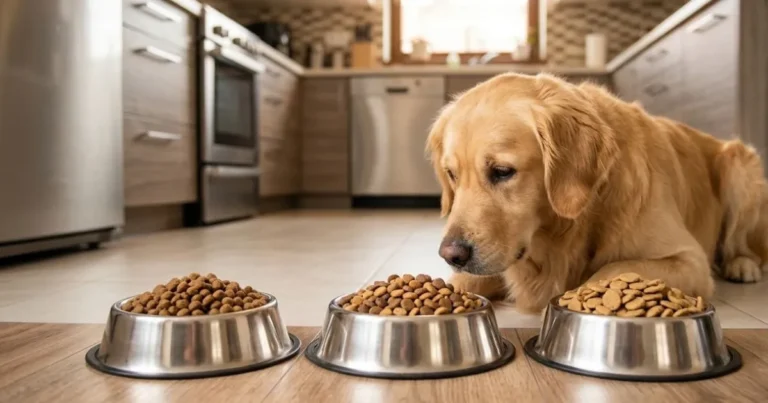
The first time I made my dog’s food from scratch, I felt like a fraud.
I had no idea what ratios to use. I Googled “homemade dog food” and found a hundred different opinions. One recipe was all chicken and rice, another had ten supplements I had never heard of, and a third claimed raw eggs and sardines were the secret.
None of them mentioned whether a vet had reviewed the recipe.
That matters a lot. More than most people realize.
The American Veterinary Medical Association estimates that over 90% of homemade dog food recipes found online are nutritionally incomplete, missing critical nutrients like calcium, zinc, or essential fatty acids that dogs cannot get from whole food ingredients alone.
These homemade dog food recipes Vet Informed are different.
Every recipe in this guide follows veterinary nutritional guidelines, uses whole, real ingredients, and includes the supplementation that most online recipes dangerously skip.
This is not about replacing commercial food entirely for most owners. It is about having reliable, balanced recipes you can use confidently, whether as a regular meal, a topper, or a rotation option.
Let’s cook something your dog will actually love.
Every batch also requires a calcium supplement and a canine multivitamin — without these, homemade food is nutritionally incomplete no matter how fresh the ingredients.
Before You Start Cooking — What Every Dog Owner Must Know
Making homemade dog food recipes Vet Informed requires understanding a few critical things before you ever touch a pan.
Skip this section and your homemade food — no matter how fresh the ingredients — will be nutritionally incomplete for your dog.
Over 90% of homemade dog food recipes online are nutritionally incomplete, missing calcium, zinc, vitamin D, or essential fatty acids that dogs cannot produce or get from whole food alone.
Why Every Homemade Recipe Needs Supplements for Your Dog
This is the part most recipe blogs skip — and it is the most important thing in this entire guide.
Whole food ingredients — even the best chicken, rice, and vegetables — cannot provide everything a dog needs.
The nutrients most commonly missing from unsupplemented homemade diets:
- Calcium — critical for bones and teeth. Meat is naturally low in calcium and high in phosphorus. Without supplementation, homemade diets are almost always dangerously deficient.
- Zinc — supports immune function and skin health.
- Vitamin D — dogs cannot synthesize adequate amounts from sunlight alone.
- Vitamin E — antioxidant protection.
- Essential omega-3 fatty acids — for coat, brain, and joint health.
The fix is straightforward. Add three things to every batch: a calcium supplement, a canine multivitamin, and fish oil. These take the homemade diet from nutritionally risky to genuinely complete.
The Three Must-Have Supplements for Your Dog’s Homemade Food
Every recipe in this guide requires these three. No exceptions, no skipping:
- A calcium supplement — bone meal powder or eggshell calcium powder works well. The Wholesome Pride Organic Eggshell Calcium powder or plain bone meal from any pet store covers this. Add half a teaspoon per pound of meat used.
- A canine multivitamin — Balance IT Canine or Pet-Tabs Complete are widely used by owners feeding homemade diets. Follow the dosage on the package for your dog’s weight.
- Fish oil for omega-3 — wild Alaskan salmon oil in pump form is the most practical. One pump per 20 pounds of body weight, added at serving time, since heat destroys omega-3.
Without these three, every recipe in this guide — and every homemade recipe anywhere online — is incomplete for long-term feeding.
The Right Ratios — Simple and Easy to Remember
Every balanced homemade dog meal follows this formula:
- 40 to 50% — cooked protein (chicken, beef, turkey, fish)
- 25 to 35% — carbohydrates (rice, sweet potato, oats)
- 15 to 25% — vegetables (green beans, carrots, peas)
- Plus supplements with every batch
According to the American Veterinary Medical Association, homemade diets should ideally be formulated with guidance from a board-certified veterinary nutritionist to ensure all requirements are met — especially for dogs on homemade food as their primary diet.
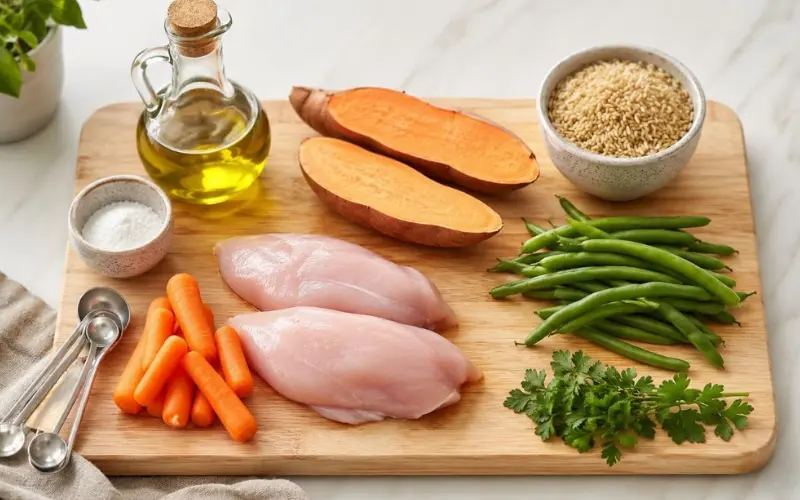
Recipe 1 — Classic Chicken and Rice
This is the foundation recipe — simple, gentle on the stomach, and the one most vets point to as the safest starting point for homemade feeding.
If you only learn one homemade dog food recipe Vet Informed, make it this one.
Ingredients — Makes 7 to 10 meals for a 40-lb dog
- 2 lbs boneless skinless chicken breast or thighs
- 1.5 cups brown rice (uncooked)
- 1 cup green beans (fresh or frozen, no salt)
- 1 cup carrots (diced)
- 1 tablespoon olive oil
- Half teaspoon calcium supplement powder
- 1 canine multivitamin per batch (follow package dosage for your dog’s weight)
- 1 pump fish oil per 20 lbs at serving time
Instructions
- Step 1 — Cook the brown rice according to package directions using water only. Brown rice takes 40 to 45 minutes. No salt, no butter, no broth.
- Step 2 — While rice cooks, boil or bake the chicken until fully cooked with no pink remaining. Internal temperature should reach 165 degrees Fahrenheit. Zero seasoning — dogs do not need it and many seasonings are harmful.
- Step 3 — Steam or boil green beans and carrots until soft, about 8 to 10 minutes.
- Step 4 — Shred or dice the chicken into bite-sized pieces appropriate for your dog’s size.
- Step 5 — Combine chicken, rice, green beans, and carrots in a large mixing bowl. Mix thoroughly.
- Step 6 — Add olive oil, calcium supplement, and multivitamin. Mix again until evenly distributed through the food.
- Step 7 — Let cool completely before serving. Add fish oil at serving time only — heat destroys omega-3, so add it cold to the serving portion.
Serving Sizes by Dog Weight
Measuring portions accurately matters more than most owners realize.
A random scoop or coffee mug can be off by 30 to 50% — which over months leads to either weight gain or nutritional gaps in your dog’s homemade meals.
OXO Good Grips Stainless Steel Measuring Cups Set — these are the same measuring cups I use for every batch. Sturdy, accurate, dishwasher safe, and the markings never fade. One set lasts years.
If your dog gains weight, reduce portions by 10%. If they lose weight, increase slightly.
Storage: Refrigerator 4 to 5 days in an airtight container. Freezer up to 3 months in portion-sized containers. Thaw overnight in the fridge only — never at room temperature.
Recipe 2 — Beef and Sweet Potato
This recipe works well for dogs that do better with beef protein or for owners who want to rotate away from chicken-based meals.
Sweet potato is one of the most digestive-friendly carbohydrates available.
Ingredients
- 2 lbs lean ground beef (90% lean or higher)
- 2 medium sweet potatoes, peeled and cubed
- 1 cup peas (frozen, no salt added)
- 1 cup fresh spinach, roughly chopped
- 1 tablespoon olive oil
- Half teaspoon calcium supplement
- 1 canine multivitamin per batch
- 1 pump fish oil per 20 lbs at serving time
Instructions
- Step 1 — Brown the ground beef in a large skillet over medium heat. Drain all excess fat thoroughly. No seasoning of any kind.
- Step 2 — Boil or bake the sweet potato cubes until fully soft, about 15 to 20 minutes.
- Step 3 — Steam the peas and wilt the spinach together for 3 to 5 minutes.
- Step 4 — Combine beef, sweet potato, peas, and spinach in a large bowl. Mash the sweet potato slightly so it distributes throughout the meat.
- Step 5 — Add olive oil, calcium supplement, and multivitamin. Mix thoroughly.
- Step 6 — Cool completely before serving. Add fish oil at serving time.
Why Sweet Potato Works So Well
Sweet potato provides easily digestible complex carbohydrates, is high in beta-carotene and vitamin A, contains natural prebiotic fiber that supports gut health, and is extremely gentle on sensitive stomachs.
For dogs that have digestive issues on grain-based recipes, sweet potato is often the best carbohydrate alternative.
Spinach is nutritious but feed in moderation — high oxalate content means it should never be the primary vegetable. One cup per batch is appropriate.
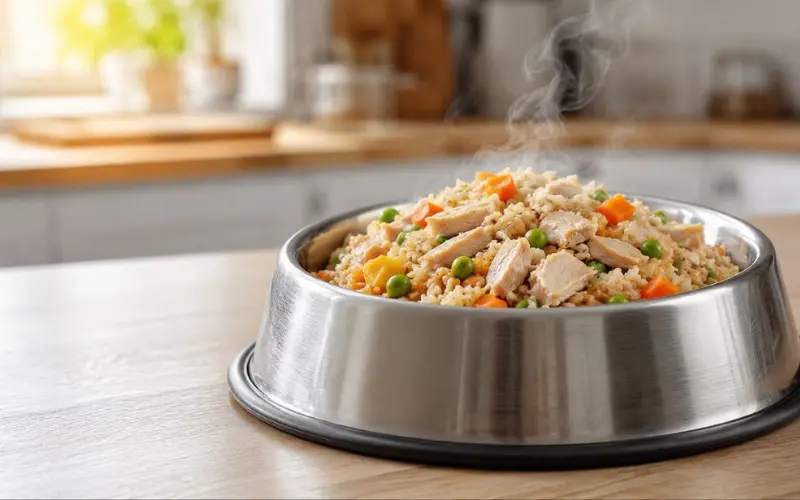
Recipe 3 — Turkey and Oats (Best for Sensitive Stomachs)
This is the lightest recipe in the guide — ideal for dogs with sensitive stomachs, dogs recovering from digestive upset, or senior dogs with slower digestion.
Turkey and oats is the gentlest protein-carb combination available in homemade feeding.
Ingredients
- 2 lbs ground turkey (lean)
- 2 cups rolled oats (uncooked)
- 1 cup zucchini, diced
- Half cup blueberries (fresh or frozen)
- 1 tablespoon coconut oil
- Half teaspoon calcium supplement
- 1 canine multivitamin per batch
- Fish oil not needed separately — optional since salmon oil can still be added for extra omega-3
Instructions
- Step 1 — Cook the oats according to package directions using water only. No milk, no sugar, no salt.
- Step 2 — Brown ground turkey in a skillet over medium heat. Drain any accumulated fat. No seasoning.
- Step 3 — Steam the zucchini until tender, about 5 to 7 minutes.
- Step 4 — Combine turkey, oats, zucchini, and blueberries in a large bowl. Mix thoroughly.
- Step 5 — Add coconut oil, calcium, and multivitamin. Mix again. Cool completely before serving.
Why This Is Great for Sensitive Dogs
Turkey is one of the leanest proteins available and is very easy to digest.
Oats are a prebiotic-rich carbohydrate that feeds healthy gut bacteria. Zucchini is extremely low-calorie and gentle on the stomach.
Blueberries provide antioxidants without any digestive stress — and most dogs genuinely love the taste.
For more options specifically designed for digestive sensitivity, read our complete guide on best dog food for sensitive stomach.
Set aside a dedicated meal-prep session each week, prepare multiple servings at once, and store them in portion-sized containers for easy feeding throughout the week.
Refrigerate meals that will be used within a few days and freeze additional portions for later use according to food-safety guidelines.
Having ready-to-serve meals available can reduce daily preparation time and help maintain consistency in your dog’s feeding routine.
Recipe 4 — Fish and Potato (Allergy-Friendly)
This recipe uses fish as a novel protein — ideal for dogs with chicken or beef allergies who have never been exposed to fish as a primary protein source.
It also naturally provides omega-3 fatty acids from the fish itself, making the fish oil supplement optional for this recipe.
Ingredients
- 2 lbs white fish — cod, tilapia, or pollock, boneless (check carefully for bones)
- 3 medium white potatoes, peeled and cubed
- 1 cup green beans, fresh or frozen
- Half cup plain pumpkin puree (not pumpkin pie filling)
- 1 tablespoon olive oil
- Half teaspoon calcium supplement
- 1 canine multivitamin per batch
Instructions
- Step 1 — Bake or steam the fish until fully cooked and flaky, about 15 to 20 minutes at 375 degrees. No seasoning. Check carefully for bones after cooking.
- Step 2 — Boil the potato cubes until fully soft, about 15 minutes. Drain and mash slightly.
- Step 3 — Steam the green beans until tender, about 8 minutes.
- Step 4 — Flake the fish into small pieces. Combine with potatoes, green beans, and pumpkin puree. Mix.
- Step 5 — Add olive oil, calcium, and multivitamin. Cool completely before serving.
Why This Works for Allergic Dogs
Many dogs allergic to chicken or beef have simply never been exposed to fish as a protein source.
The immune system has no prior sensitization to fish protein — which means no allergic response. This is the concept of a novel protein diet and it is the same approach veterinary dermatologists use for allergy elimination trials.
For the complete guide on food allergies in dogs, read our guide on best dog food for puppies with allergies.
What Is Safe and What to Avoid in Homemade Dog Food
Not every ingredient you might consider adding is safe.
This is the complete reference for ingredients that work and ingredients that genuinely endanger your dog.
Safe Ingredients to Use
- Proteins — Chicken, turkey, lean beef, salmon, cod, tilapia, plain cooked eggs. Always cooked thoroughly, no bones, zero seasoning.
- Carbohydrates — Brown rice, white rice, sweet potato, rolled oats, regular potato, barley, quinoa. Always fully cooked. No salt, no butter, no broth.
- Vegetables — Green beans, carrots, peas, zucchini, plain pumpkin puree, spinach in moderation, broccoli in small amounts, cucumber. Steamed or boiled, no seasoning.
- Fruits — Blueberries, apple slices without seeds, watermelon without seeds or rind. Small amounts only — maximum 5% of the meal due to natural sugar content.
- Healthy fats — Olive oil, coconut oil, fish oil, flaxseed oil. One tablespoon per batch for cooking oils. Fish oil at serving time only.
Never Put These in Homemade Dog Food
- Onions and garlic — Toxic in all forms, damages red blood cells.
- Grapes and raisins — Causes acute kidney failure, even one grape can be dangerous.
- Chocolate — Theobromine is toxic.
- Xylitol — Artificial sweetener found in some peanut butter, causes liver failure.
- Cooked bones — Splinter and cause internal injuries.
- Salt, pepper, any seasoning — Unnecessary and harmful.
- Butter, cream, heavy dairy — Too rich, can cause pancreatitis.
- Nutmeg — Toxic to dogs.
- Corn on the cob — The cob itself causes intestinal blockage.
For the complete list of dangerous human foods, read our guide on what human foods are toxic to dogs.
Long-term exclusive homemade feeding without professional guidance can lead to nutritional deficiencies that develop gradually over months and may not be obvious until significant health problems have occurred.
Use the BalanceIT Recipe Generator as a free starting point to check your recipe before feeding.
Common Homemade Dog Food Mistakes
These mistakes are the reason most homemade dog food recipes found online are actually dangerous for long-term feeding, and the reason many owners go back to commercial food after their dog develops health problems they cannot explain.
The Calcium Mistake: Most Dangerous
This one deserves its own section.
Meat is naturally very low in calcium but high in phosphorus. A homemade diet of meat and rice without calcium supplementation creates a severe calcium-to-phosphorus imbalance that causes bone weakening and fractures in puppies, dental problems in adult dogs, muscle weakness, and potential organ damage over months.
The fix is simple and inexpensive: half a teaspoon of bone meal powder or eggshell calcium powder per pound of meat.
Every batch. Without exception.
Skipping the Multivitamin
Even a perfectly balanced recipe of chicken, rice, and vegetables will be missing zinc, vitamin D, vitamin B12, and other trace nutrients that dogs need.
These deficiencies develop slowly, often not visible until months of feeding.
A canine multivitamin added to each batch costs pennies per serving and eliminates this risk entirely.
Using Only One Protein Source
Feeding only chicken every single day for months creates a risk of developing a chicken sensitivity, ironic for an owner trying to give their dog better food.
Rotate between 2 to 3 protein sources: chicken one week, beef the next, fish the third.
This rotation provides broader nutritional coverage and prevents protein sensitization over time.
Adding Seasoning
Dogs do not need seasoning.
Their sense of smell is thousands of times stronger than ours; plain food is intensely flavorful to them.
Salt, pepper, garlic powder, onion powder, and virtually any seasoning used in human cooking are either unnecessary or genuinely harmful.
Cook everything completely plain.
When NOT to Use Homemade Food as a Sole Diet
Homemade feeding is not appropriate as the only diet for:
- For growing puppies, nutritional requirements are extremely precise
- Pregnant or nursing dogs have significantly higher demands
- Dogs with diagnosed conditions requiring therapeutic diets
- Owners who cannot commit to consistent supplementation every single batch without fail
According to the American Kennel Club, homemade diets can be healthy for adult dogs when properly supplemented and veterinarian-reviewed, but improperly formulated homemade diets are one of the leading causes of nutritional deficiency in dogs whose owners believe they are feeding well.

Enter your ingredients and your dog’s weight, and the tool helps identify which supplements may be needed and in what amounts.
This can be a useful starting point when evaluating homemade dog food recipes and usually takes only a few minutes to use.
If your dog eats a fully homemade diet long term, discuss routine wellness testing and nutritional monitoring with your veterinarian to help identify potential deficiencies early.
How to Use Homemade Food: Full Meals vs Toppers
Not every owner needs to go fully homemade.
Three approaches all work, and the topper method is where most owners should start.
Full Homemade Diet
Full homemade diet means 100% homemade meals with complete supplementation every batch.
This works well for committed owners who have consulted their vet and understand the nutritional requirements.
It requires consistency, every batch, every time, no skipping supplements.
The Topper Approach
The topper approach, 20 to 30% of the meal, means adding homemade food on top of regular high-quality kibble.
This is the safest and most practical entry point for most owners.
The commercial food ensures nutritional completeness while the fresh homemade food adds variety, whole food benefits, and palatability that most dogs noticeably enjoy.
No additional supplements are needed when commercial kibble is still the primary food.
Rotation
Rotation, 2 to 3 days per week homemade, means alternating between homemade meals and commercial food on a weekly schedule.
Works well for owners who want the benefit of fresh food without the commitment of full daily preparation.
Most owners do best starting with the topper approach.
It takes 15 minutes of prep per week, carries minimal nutritional risk, and lets you observe how your dog responds to fresh food before committing to full homemade preparation.
According to the ASPCA, supplementing a nutritionally complete commercial diet with small amounts of fresh whole food provides variety and additional nutrition without the balancing challenges of a full homemade diet.
The recipes in this guide are based on widely accepted nutritional ratios and supplementation guidelines endorsed by veterinary nutrition resources.
Every dog has unique needs — always consult your veterinarian before switching to a homemade diet, especially for puppies, senior dogs, or dogs with health conditions.
Frequently Asked Questions (FAQ)
Is homemade dog food better than commercial kibble?
Not automatically. High-quality commercial kibble from brands like Purina Pro Plan, Hill’s Science Diet, or Royal Canin meets AAFCO standards and is formulated by veterinary nutritionists — providing complete nutrition in every bag.
Properly supplemented homemade food can be equally nutritious with the benefit of fresh whole ingredients.
Improperly balanced homemade food — which describes most online recipes — is significantly worse than quality commercial food.
Do I really need to add supplements to homemade dog food?
Yes — every single batch, without exception.
Calcium is the most critical: meat-heavy diets without calcium supplementation cause bone disease that develops gradually over months. Add a calcium supplement, a canine multivitamin, and fish oil to every batch.
Skipping supplements because the recipe “looks balanced” is the single most dangerous mistake in homemade feeding.
How much homemade food should I feed my dog per day?
Feed approximately 2 to 3% of your dog’s ideal body weight in homemade food per day, split into 2 meals. A 50-pound dog needs roughly 1 to 1.5 pounds of food daily.
Adjust based on body condition — if weight increases, reduce portions by 10%. If weight drops, increase slightly.
For exact amounts by weight, read our guide on how much should I feed my dog by weight.
Can I feed homemade food to my puppy?
Homemade food as the sole diet is not recommended for growing puppies.
Puppies have extremely precise calcium-to-phosphorus ratio requirements for bone development that are very difficult to achieve consistently with homemade food. A high-quality puppy-specific commercial formula is significantly safer as the primary food.
Homemade food used as a small topper — up to 10% of the meal — on puppy kibble is fine.
How long does homemade dog food last in the fridge?
Properly stored homemade dog food lasts 4 to 5 days in the refrigerator in an airtight container. Freeze individual portions for up to 3 months.
Always thaw in the refrigerator overnight — never at room temperature, which promotes bacterial growth. Discard any food left at room temperature for more than 2 hours.
Can I use raw meat in homemade dog food?
These recipes use cooked meat only.
Raw meat carries Salmonella and E. coli risk that can affect both your dog and your family through cross-contamination. The AVMA advises against raw feeding due to documented bacterial risks.
If you choose to explore raw feeding, work with a veterinary nutritionist for proper handling and formulation — it is a separate methodology from the cooked recipes in this guide.
What is the cheapest homemade dog food recipe?
The Chicken and Rice recipe is the most affordable option.
Buying chicken thighs in bulk rather than breasts (equally nutritious, significantly cheaper) and using brown rice as the primary carbohydrate keeps daily cost between $2 to $4 for a 50-pound dog.
Supplements add roughly $15 to $20 per month. This is comparable to mid-range commercial kibble while providing fresh whole food ingredients.
Can I just feed my dog plain chicken and rice every day?
Only as a short-term bland diet for digestive upset — 2 to 3 days maximum.
As a long-term sole diet, unsupplemented chicken and rice is dangerously deficient in calcium, zinc, vitamin D, and essential fatty acids. If chicken and rice is your preferred recipe, add the calcium supplement, multivitamin, fish oil, and vegetables listed in Recipe 1.
Plain chicken and rice without supplements is not a complete diet.
Real Food, Real Health — Final Thoughts
The look on my dog’s face the first time I put a bowl of freshly made chicken and rice in front of him — after months of the same kibble — said everything.
He ate it in about 90 seconds. Then licked the bowl across the kitchen floor for another two minutes.
Finding reliable homemade dog food recipes Vet Informed is not about proving you care more than other dog owners. It is about having genuine confidence in what goes into the bowl — whether that is a full homemade meal or a wholesome topper on quality kibble.
Three things to take with you:
- Supplements every batch — calcium, multivitamin, fish oil. Whole food alone is not complete. This one rule is the difference between safe homemade feeding and nutritionally dangerous homemade feeding.
- Start with the topper approach — 20 to 30% homemade on quality kibble. It gives you fresh food benefits without nutritional risk. Most owners do best here.
- Use BalanceIT.com — five minutes of checking replaces years of guessing whether your recipe actually meets your dog’s needs.
For the complete nutrition foundation — what to feed, how to read labels, and how to choose the right food — read our complete dog nutrition guide for beginners.