I switched my dog’s food on a Tuesday.
By Wednesday night, the diarrhea started.
By Thursday morning, he had vomited twice and refused breakfast entirely.
By Friday, I was at the vet with a $200 bill and the exact same advice I could have followed for free if I had known it two days earlier.
“Did you transition gradually?” the vet asked.
I had not.
I had dumped the old food and poured in the new.
Cold turkey.
Because nobody told me that was a problem.
If you are reading this before making the switch, you are already ahead of where I was.
Knowing how to switch dog food without upset stomach is genuinely one of the simplest things in dog ownership — but only when you follow the right process.
Skip the process and you almost guarantee a few miserable days for both you and your dog.
This guide gives you the exact method, the day-by-day ratio, what to watch for during the transition, and what to do if things go wrong along the way.
Seven to ten days.
That is all it takes.
Use this transition schedule: Days 1–2: 75% old food / 25% new food, Days 3–4: 50% old food / 50% new food, Days 5–7: 25% old food / 75% new food, and Days 8–10: 100% new food.
If your dog develops loose stools, vomiting, or digestive discomfort at any stage, remain at the current ratio for an additional 2 days before moving forward.
A slower transition is almost always better than changing foods too quickly.
Why You Cannot Switch Dog Food Cold Turkey
This is the question most new dog owners never think to ask until after the damage is done. Here is the biological reason how to switch dog food without upset stomach requires patience.
A dog’s digestive system relies on specific gut bacteria adapted to their current diet. Switching food suddenly disrupts this bacterial balance, causing diarrhea, vomiting, and digestive distress that can last 3 to 5 days.
The Gut Bacteria Explanation — Simple Version
Your dog’s digestive system contains billions of bacteria specifically adapted to break down the food they eat every day. Different food formulations require different bacterial populations to digest properly.
When you switch food abruptly, the existing bacteria cannot process the new food efficiently. The result is fermentation, gas, loose stools, and often vomiting — not because the new food is bad, but because the gut was not given time to adjust its bacterial composition.
A gradual transition gives the gut bacteria time to shift populations slowly — adapting to the new food without the digestive chaos that comes from a sudden change.
What Actually Happens During a Sudden Switch
- Day 1: Dog may eat normally, but digestion begins struggling with unfamiliar ingredients
- Day 2: Loose stools or diarrhea often start as gut bacteria are overwhelmed
- Day 3: Vomiting may begin, dog may refuse food, energy drops
- Day 4 to 5: Symptoms typically begin resolving as gut bacteria finally start adjusting
- Day 5 to 7: Most dogs recover — but 5 days of unnecessary misery could have been avoided entirely
Which Dogs Are Most Sensitive to Food Changes
Some dogs handle food changes better than others. These dogs need an even slower transition:
- Puppies under 6 months — developing digestive system
- Senior dogs over 7 years — slower digestive adaptation
- Dogs with known sensitive stomachs
- Small breeds — Chihuahua, Yorkie, Pomeranian — faster metabolism, less digestive buffer
- Dogs with history of pancreatitis or IBD
- Dogs that have been on the same food for years
For sensitive dogs, extend the transition to 14 days instead of 7 to 10. Slower is always safer.
According to the American Kennel Club, gradual food transitions over 7 to 10 days are recommended for all dogs regardless of age or health status — and even longer transitions for dogs with known digestive sensitivities.
According to the American Kennel Club, all food transitions should happen gradually over a minimum of 7 days, with longer timelines for dogs with sensitive stomachs or known digestive issues.
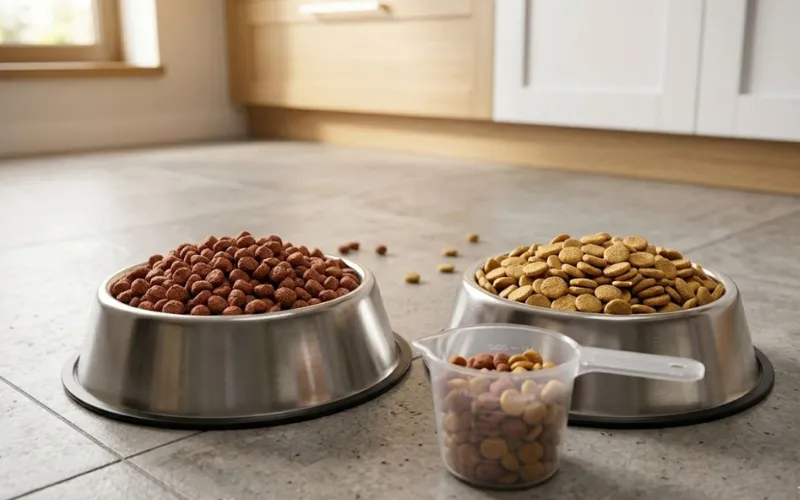
How to Switch Dog Food Without Upset Stomach — Step by Step
This is the exact method.
Follow it precisely and your dog will transition smoothly with zero digestive problems in almost every case.
Days 1 to 2 — The 75/25 Ratio
For the first two days, every meal should be:
- 75% old food
- 25% new food
- Mixed thoroughly together in the bowl
Most dogs will not even notice the change at this ratio.
Stool should remain normal.
If your dog sniffs the bowl suspiciously and hesitates — that is fine.
Most dogs eat within a few minutes once they start.
What to watch for:
- Stool should remain firm and normal
- Eating pace should stay roughly the same
- No vomiting, no excessive gas
If everything is normal after 2 days — move to the next ratio.
Days 3 to 4 — The 50/50 Ratio
Now your dog is eating half old food, half new food:
- 50% old food
- 50% new food
- Mixed thoroughly
This is the stage where you are most likely to see minor digestive changes — slightly softer stools or a bit more gas than usual.
This is normal and not a reason to go backward.
When to worry at this stage:
- Watery diarrhea — not just soft stools
- Vomiting more than once
- Complete food refusal
- Lethargy or significant behavior change
If any of these appear — go back to 75/25 for 2 more days and try 50/50 again after that.
Days 5 to 7 — The 25/75 Ratio
Almost there:
- 25% old food
- 75% new food
- Mixed thoroughly
By this stage your dog’s gut bacteria have had 5 days to adapt to the new food.
Stools should be firming back up.
Eating behavior should be completely normal.
Days 8 to 10 — 100% New Food
Full switch:
- 100% new food
- No old food remaining
- Normal feeding schedule
Your dog should now be eating the new food with completely normal digestion.
Continue monitoring for one more week to confirm the new food is genuinely working well long-term.
Complete Transition Schedule — Quick Reference
For the first 2 days, feed a mixture of approximately 50% plain cooked white rice and 50% new food.
For Days 3–4, reduce the rice to 25% and increase the new food to 75%.
By Day 5, most healthy dogs can move to 100% new food if stools remain normal and appetite is unchanged.
This approach can be helpful in emergencies, but a traditional gradual transition using both foods remains the preferred method whenever possible.
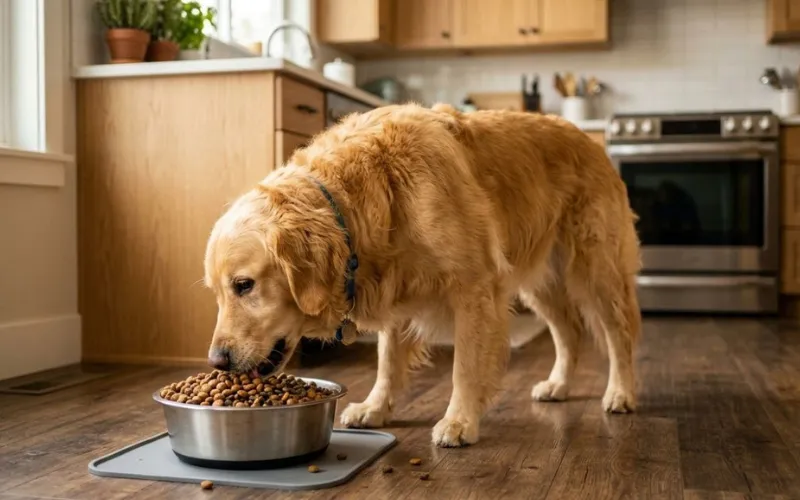
What to Do If Your Dog Gets an Upset Stomach During the Switch
Even with the gradual method, some dogs experience mild digestive upset during the transition.
Here is exactly what to do for each symptom.
Symptom Response Guide
The Bland Diet Bridge — When Stomach Needs a Reset
If your dog’s stomach needs a reset during the transition, use the bland diet for 24 to 48 hours:
- Boiled plain chicken — no skin, no seasoning — mixed with plain white rice
- 50/50 ratio of chicken and rice
- Feed small frequent meals — 4 to 5 per day instead of 2
- After 24 to 48 hours of firm stools on bland diet — restart the transition at the 75/25 ratio
According to the ASPCA, a bland diet of boiled chicken and white rice is the recommended first response for mild digestive upset in dogs — providing easily digestible nutrition while the stomach recovers.
When the New Food Simply Does Not Agree
Sometimes the transition method is perfect but the new food itself is not right for your dog.
Signs the food is the problem rather than the transition speed:
- Digestive issues persist beyond 2 weeks on full new food
- Chronic loose stools that never fully firm up
- Scratching, hot spots, or ear infections after switch — possible food allergy
- Dog consistently refuses the food after full transition
- Energy level drops noticeably on the new food
If these signs appear, return to the previous food and consult your vet before trying a different brand.
Common Reasons You Might Need to Switch Dog Food
Understanding why you are switching helps you choose the right new food — and knowing how to switch dog food without upset stomach makes the process simple no matter the reason.
Most Common Switching Reasons
- Life stage change — puppy to adult food at 12 months, adult to senior food at 7 years
- Veterinary recommendation — specific health condition requires different nutrition
- Allergy or sensitivity discovered — itching, digestive issues, ear infections
- Better quality food available — upgrading from grocery brand to premium
- Cost change — finding equivalent quality at better price
- Availability issue — current food discontinued or unavailable
- Post spay/neuter — caloric needs drop 25 to 30%
Every single one of these reasons requires the same gradual transition method.
No exceptions.
When to Switch Puppy Food to Adult Food
This is one of the most common transitions and one that many owners get wrong:
- Small breeds — Chihuahua, Yorkie, Maltese: switch at 9 to 12 months
- Medium breeds — Beagle, Cocker Spaniel, Bulldog: switch at 12 months
- Large breeds — Labrador, Golden Retriever, German Shepherd: switch at 12 to 15 months
- Giant breeds — Great Dane, Saint Bernard: switch at 18 to 24 months
Always confirm the timing with your veterinarian based on your specific dog’s growth rate and body condition.
Common Food Switching Mistakes That Cause Problems
Mistakes Quick Reference
❌ Switching Food Cold Turkey
Why It Causes Problems: Gut bacteria need time to adapt to a new diet.
Fix: Use a gradual 7–10 day transition whenever possible.
❌ Switching During Stressful Events
Why It Causes Problems: Travel, moving, boarding, or routine changes can increase digestive stress.
Fix: Wait until your dog is settled before introducing a new food.
❌ Changing Multiple Things at Once
Why It Causes Problems: It becomes difficult to identify the source of any digestive issue.
Fix: Change only one variable at a time, starting with the food.
❌ Progressing Too Fast After Soft Stools
Why It Causes Problems: Digestive upset may worsen if the transition continues too quickly.
Fix: Stay at the current food ratio until stools return to normal.
❌ Giving Up Too Early
Why It Causes Problems: Mild digestive adjustments are common during a food transition.
Fix: Monitor your dog closely and allow a few days for adaptation unless symptoms become severe.
The Timing Mistake — Switching During Stress
Never switch dog food during:
- The first week in a new home — especially rescue dogs
- While boarding or traveling
- During illness or recovery
- Within 2 weeks of vaccination
- During a major household change — new baby, moving
Stress already disrupts digestion.
Adding a food change on top of environmental stress doubles the risk of stomach upset.
The Comparison Mistake — Expecting Same Stool on New Food
Different foods produce different looking stools.
The new food may produce slightly different colored, sized, or textured stools than the old food — and that is completely normal.
What matters is consistency, not appearance.
Firm, well-formed stools on the new food — regardless of color or size — means the food is working.
Choosing the Right New Food — Quick Guide
Since you are already learning how to switch dog food without upset stomach, here is a quick checklist for choosing the right new food before you begin the transition.
What to Check Before Buying
- AAFCO statement present — “complete and balanced” for your dog’s life stage
- Named meat protein as first ingredient
- Appropriate for your dog’s age — puppy, adult, or senior formula
- Appropriate for your dog’s breed size — small, medium, large, or giant breed formula
- No ingredients your dog has shown sensitivity to
Reliable Brands to Consider
These brands consistently meet quality standards with veterinary nutritionists on staff:
- Purina Pro Plan — extensive feeding trial data
- Hill’s Science Diet — developed by veterinary nutritionists
- Royal Canin — breed and condition specific formulas
- Eukanuba — strong research background
- Iams — solid affordable option
For the complete guide on reading labels and choosing food — read our complete dog nutrition guide for beginners.
If the food doesn’t agree with your dog or simply isn’t a good fit, replacing a small bag is far less expensive than being stuck with a large bag your dog cannot eat.
Once your dog has successfully completed the transition and is maintaining normal stools, appetite, energy levels, and body condition, you can confidently move to larger, more economical bag sizes.
This simple habit helps reduce waste, lowers the risk of expensive feeding mistakes, and can save a surprising amount of money over your dog’s lifetime.
According to the American Veterinary Medical Association, choosing a food with an AAFCO nutritional adequacy statement and from a manufacturer with quality control standards is the most reliable way to ensure your new food meets your dog’s nutritional needs.
Many therapeutic and prescription diets are specifically formulated to support particular medical conditions and nutritional requirements.
Switching to a different food without professional guidance may interfere with your dog’s treatment plan or nutritional management.
When a medical condition is involved, dietary changes should always be discussed with your veterinarian to ensure they are appropriate for your dog’s individual needs.
The food transition methods described in this guide are based on widely accepted feeding practices and general recommendations from organizations such as the AKC, ASPCA, and AVMA.
Every dog responds differently to dietary changes based on age, breed, health status, food sensitivities, and digestive health.
If your dog has a medical condition, a history of food intolerance, or develops severe digestive symptoms during a food transition, consult your veterinarian for individualized guidance.

Frequently Asked Questions (FAQ)
How long does it take to switch dog food safely?
The standard safe transition takes 7 to 10 days using a gradual ratio method — starting at 75% old food and 25% new food, moving to 50/50, then 25/75, and finally 100% new food.
Dogs with sensitive stomachs may need 14 days.
Puppies under 6 months and senior dogs over 7 should always use the slower timeline.
Rushing the transition to save time almost always results in digestive upset that takes longer to resolve than the transition itself would have taken.
What if my dog has diarrhea during the food switch?
Slightly soft stools for 1 to 2 days are normal during any food transition and not a reason to stop.
If stools become watery diarrhea, go back one ratio step — for example from 50/50 to 75/25 — and hold there for 2 to 3 extra days before attempting the next ratio again.
If watery diarrhea persists for more than 2 days at the lower ratio, return to the old food entirely and consult your veterinarian before trying the new food again.
Can I switch dog food without mixing?
This is not recommended.
Switching without mixing — cold turkey — disrupts gut bacteria suddenly and causes diarrhea, vomiting, and food refusal in most dogs.
Even dogs with “iron stomachs” can develop digestive problems from abrupt food changes.
The 7 to 10 day gradual method takes minimal effort and prevents almost all transition-related stomach issues.
My dog refuses to eat the new food — what should I do?
Some dogs are hesitant about new food.
Try warming the new food slightly with warm water to release the smell — smell drives a dog’s appetite more than taste.
You can also try a different flavor from the same brand, or add a small amount of low-sodium chicken broth to the mixed food.
If refusal continues beyond 3 days, the flavor or protein source may simply not appeal to your dog.
Try a different protein — if the new food is chicken based, try beef or fish instead.
How do I know the new food is working for my dog?
Signs the new food agrees with your dog after the transition is complete: firm well-formed stools, consistent energy levels, shiny coat with no new dryness or dullness, normal appetite at mealtimes, no vomiting or digestive issues, no new scratching or skin irritation.
Give the new food at least 4 to 6 weeks after completing the transition before making a final judgment — some benefits like improved coat quality take several weeks to become visible.
Should I switch food if my dog seems fine on current food?
If your dog is healthy, energetic, has a shiny coat, firm stools, and maintains a healthy weight on their current food — there is no need to switch.
Many owners switch foods unnecessarily because of marketing or trends.
The only reasons to switch are: life stage change, veterinary recommendation, confirmed allergy, genuine quality concern with current food, or availability issues.
“Fine” is the goal — not constant optimization.
Can I mix two different brands of dog food permanently?
Yes — mixing two foods permanently is fine as long as both meet AAFCO standards and you maintain consistent ratios at each meal.
Some owners mix kibble with a small amount of wet food for palatability and added moisture.
Keep the ratio consistent so your dog’s digestive system knows what to expect.
Changing the ratio frequently can cause the same digestive issues as switching food entirely.
How often should I change my dog’s food?
Most dogs do well staying on the same food for extended periods — months or even years — as long as the food meets their nutritional needs for their current life stage.
The only necessary changes are at life stage transitions: puppy to adult at 12 months, adult to senior at 7 years, and any veterinary-recommended changes.
Frequent unnecessary switching creates chronic digestive instability and should be avoided.
A Smooth Switch Every Time — Final Thoughts
That $200 vet visit could have been a $0 seven-day transition.
The diarrhea, the vomiting, the worry — all of it was completely avoidable with a simple ratio and a little patience.
Now that you know exactly how to switch dog food without upset stomach — here are your three key takeaways:
- Never switch cold turkey — your dog’s gut needs 7 to 10 days to adapt its bacterial balance to new food. Rushing this process almost always causes digestive upset that is worse and lasts longer than the transition would have.
- Soft stools are normal, watery diarrhea is not — slightly soft stools for 1 to 2 days during the transition are expected and not a reason to stop. Watery diarrhea means slow down. Vomiting means go back one step.
- Buy small first — test the new food with the smallest bag available before committing to bulk. Your dog’s opinion matters more than the marketing on the bag.
For the complete foundation of everything covered here — what to look for in dog food, how to read labels, and how much to feed — read our complete dog nutrition guide for beginners.
And if your puppy is still in the weaning stage and not yet on solid food — read our guide on when do puppies start eating solid food for the complete weaning process.